Docaro

AI Generated Code of Conduct for use in Singapore
PDF & Word - 2026 Updated
Discover how our AI tool generates a customized Code of Conduct and Ethics Policy tailored for businesses in Singapore, ensuring compliance with local regulations and promoting ethical practices.
Free instant document creation.
Compliant with Singapore law.
No sign up or monthly subscription.

Docaro Pricing

Basic
Free
Document Generation
No Sign Up
No Subscription
Download Watermarked PDF
Premium
$4.99 USD
Document Generation
No Sign Up
No Subscription
Download Clean PDF
Download Microsoft Word
Download HTML
Download Text
Email Document
Generate your document for free. Only pay if you like the result and need an un-watermarked version.

When do you need a Code of Conduct in Singapore?

  • Starting a New Company
    A code of conduct sets clear expectations for employee behavior right from the beginning, helping to build a positive work culture.
  • Expanding Your Team
    As your workforce grows, a code ensures everyone understands the rules, reducing misunderstandings and conflicts.
  • Facing Ethical Challenges
    It provides guidelines to handle tough decisions, like conflicts of interest, keeping your business on the right path.
  • Meeting Business Standards
    Many partners and clients in Singapore expect a code, showing your company is committed to fair practices.
  • Protecting Your Reputation
    A well-drafted code helps prevent issues that could harm your brand, ensuring trust from customers and stakeholders.
  • Ensuring Compliance
    It aligns your operations with local expectations, avoiding potential problems and supporting smooth business growth.

Singaporean Legal Rules for a Code of Conduct

  • Companies Act Obligations
    Under Singapore's Companies Act, businesses must promote ethical practices to avoid penalties for misconduct.
  • Corruption Prevention
    The Prevention of Corruption Act requires companies to implement codes that deter bribery and ensure transparent dealings.
  • Whistleblower Protections
    Singapore law encourages codes to include safe channels for reporting unethical behavior without fear of retaliation.
  • Data Privacy Rules
    The Personal Data Protection Act mandates that codes address handling personal information responsibly and securely.
  • Employment Standards
    Codes should align with the Employment Act by promoting fair treatment, non-discrimination, and safe workplaces.
  • Financial Reporting Integrity
    For listed companies, the Securities and Futures Act requires codes to uphold honest financial disclosures and insider conduct.
Important

Failing to align the code of conduct with Singapore's regulatory framework, such as PDPC guidelines for data protection, may expose the organization to compliance risks and penalties.

What a Proper Code of Conduct Should Include

  • Honesty and Integrity
    Employees must act truthfully in all business dealings to build trust and avoid misleading others.
  • Respect for Others
    Treat colleagues, customers, and partners with fairness and dignity, free from discrimination or harassment.
  • Conflict of Interest
    Disclose any personal interests that could influence company decisions to ensure unbiased actions.
  • Confidential Information
    Protect sensitive company data and only share it when authorized to maintain security.
  • Compliance with Laws
    Follow all Singapore regulations and company rules to operate ethically and legally.
  • Fair Competition
    Compete honestly without using unfair tactics or insider information.
  • Responsible Use of Assets
    Use company resources like equipment and funds only for legitimate business purposes.
  • Reporting Issues
    Speak up about any violations or concerns without fear of retaliation to keep the workplace ethical.

Why Free Templates Can Be Risky for Code of Conduct

Free templates for codes of conduct and ethics policies often provide a one-size-fits-all approach that fails to address the unique needs of your organization. These generic documents may overlook Singapore-specific regulatory requirements, industry standards, and your company's particular culture and operations, potentially exposing you to compliance risks, legal vulnerabilities, and reputational damage.

An AI-generated bespoke code of conduct ensures a tailored document that incorporates your organization's specific details, aligns with local Singapore laws, and reflects your unique values and business practices. This customized approach delivers a precise, relevant policy that enhances compliance, protects your interests, and fosters a strong ethical framework.

Generate Your Bespoke Code of Conduct in 4 Easy Steps

1
Answer a Few Questions
Our AI guides you through the info required.
2
Generate Your Document
Docaro builds a bespoke document tailored specifically on your requirements.
3
Review & Edit
Review your document and submit any further requested changes.
4
Download & Sign
Download your ready to sign document as a PDF, Microsoft Word, Txt or HTML.

Why Use Our AI Code of Conduct Generator?

Fast Generation
Quickly generate a comprehensive Code of Conduct, eliminating the hassle and time associated with traditional document drafting.
Guided Process
Our user-friendly platform guides you step by step through each section of the document, providing context and guidance to ensure you provide all the necessary information for a complete and accurate Code of Conduct.
Safer Than Legal Templates
We never use legal templates. All documents are generated from first principles clause by clause, ensuring that your document is bespoke and tailored specifically to the information you provide. This results in a much safer and more accurate document than any legal template could provide.
Professionally Formatted
Your Code of Conduct will be formatted to professional standards, including headings, clause numbers and structured layout. No further editing is required. Download your document in PDF, Microsoft Word, TXT or HTML.
Compliance with Singaporean Law
Rest assured that all generated documents meet the latest legal standards and regulations of Singapore, enhancing trust and reliability.
Cost-Effective
Save money by generating legally sound Code of Conduct without the need for expensive legal services or consultations.
Get Started for Free - No Sign Up or Monthly Subscription Required
No payment or sign up is required to start generating your Code of Conduct. Generate and download a watermarked version of your document for free. Pay only if you want to remove the watermark and gain full access to your document. No monthly subscriptions or hidden fees. Pay once and use your document forever.
Need to Generate a Code of Conduct in a Different Country?
Choose country:

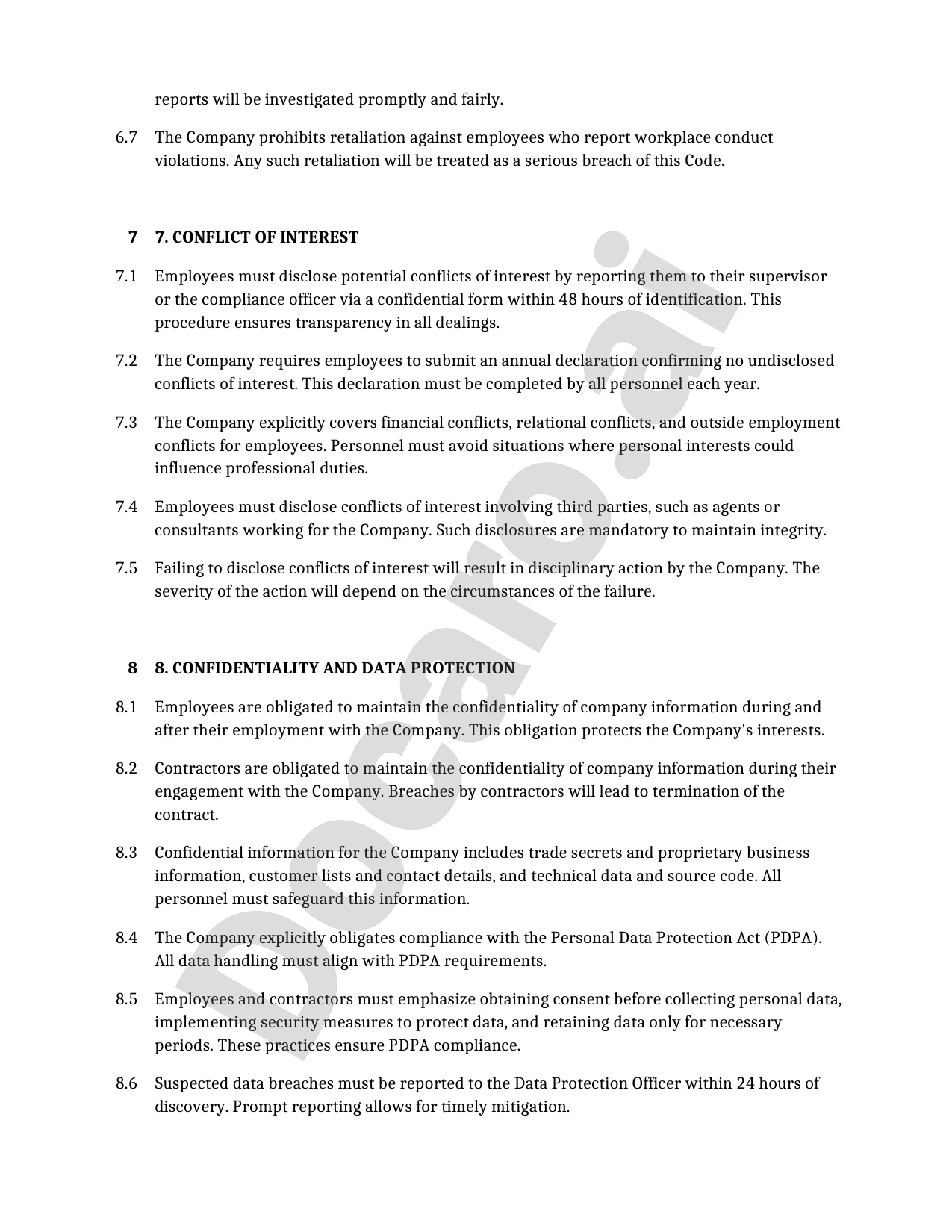
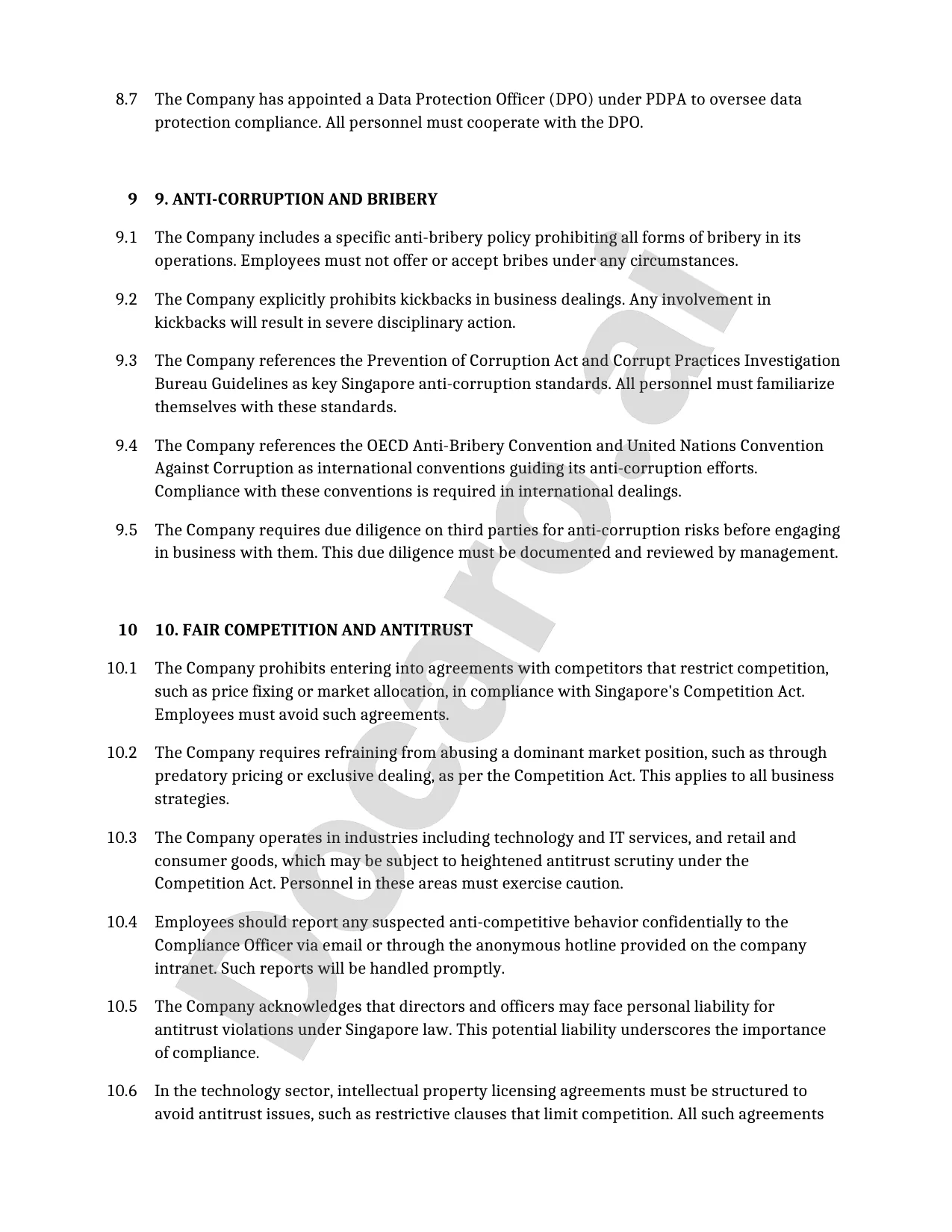
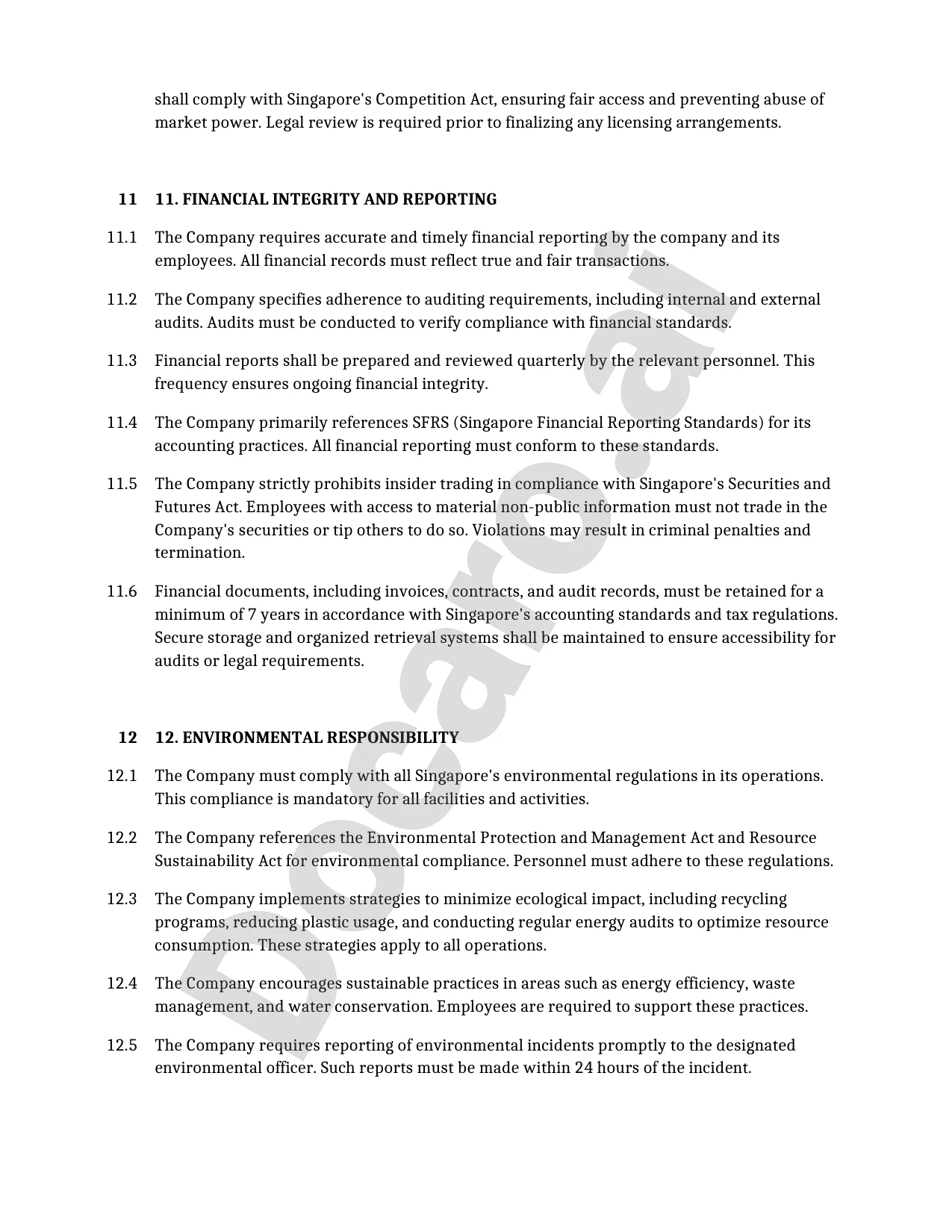
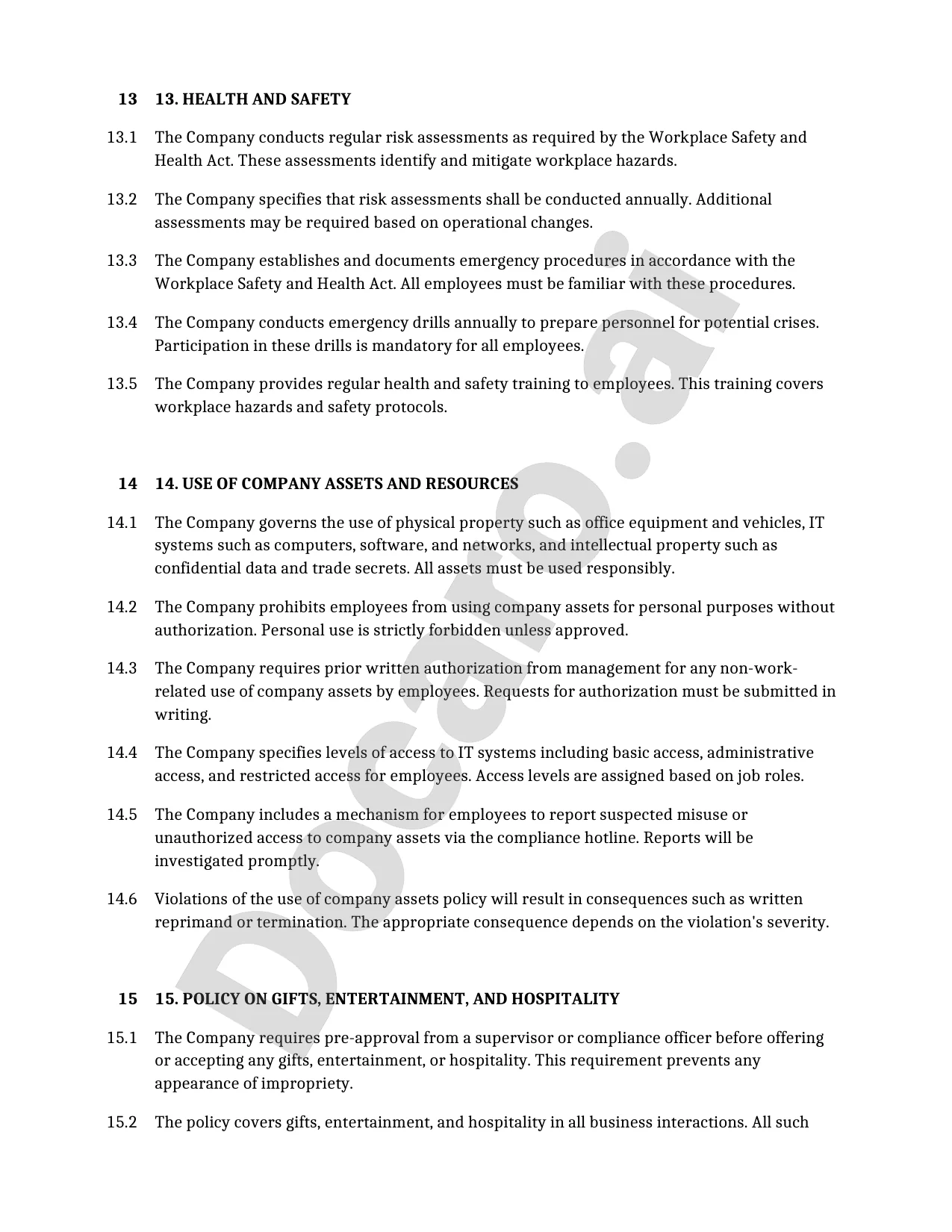
Free Example Code of Conduct Template

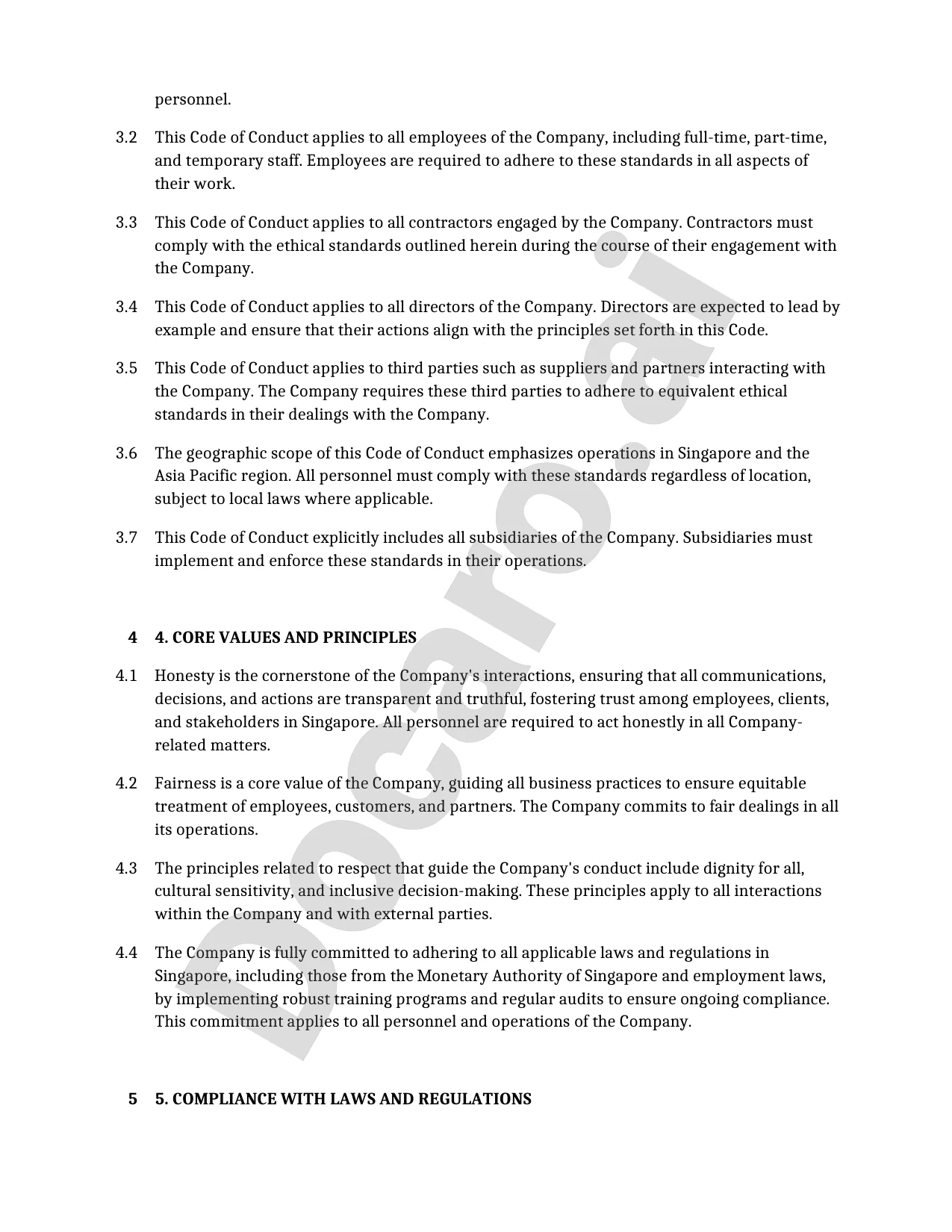
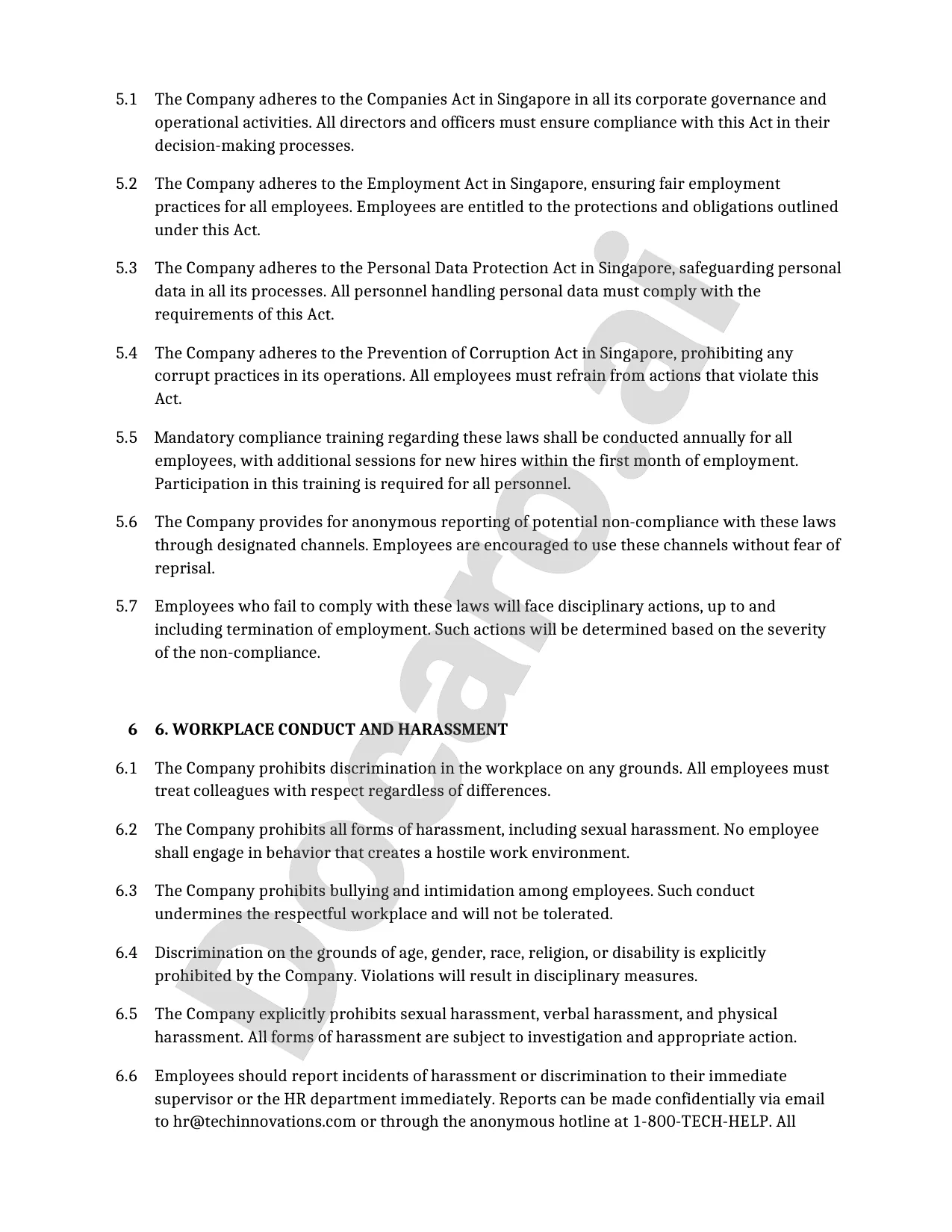
Below is a free template example of a Code of Conduct for use in Singapore generated by our AI model.

The clauses in your actual Code of Conduct will vary from this example as they will be entirely bespoke to your requirements as set out in the questionnaire you complete.
Page 1

Singapore Compliance Legislation

Your AI Generated Code of Conduct will be checked for compliance against the following legislation and regulations:

What is a Code of Conduct in Singapore's corporate context?

A Code of Conduct in Singapore is a foundational corporate document that outlines the ethical standards, principles, and behavioral expectations for employees and stakeholders within an organization. It serves as a practical guide to ensure that all business activities align with integrity and accountability, helping companies navigate complex decisions in a dynamic business environment.

The primary purpose of a Code of Conduct is to promote ethical behavior, ensure compliance with Singapore laws, and cultivate a positive workplace culture. By embedding values such as fairness, respect, and transparency, it minimizes risks of misconduct and builds trust among employees, clients, and regulators.

Under Singapore's regulatory framework, including the Companies Act, a robust Code of Conduct is essential for demonstrating good corporate governance and adherence to obligations like anti-corruption measures. For authoritative guidance, refer to the ACRA website or the SGX corporate governance resources, which emphasize ethical practices for listed companies.

To create a tailored Code of Conduct that fits your organization's unique needs, consider using bespoke AI-generated corporate documents through Docaro, ensuring relevance and customization without relying on generic templates.

"Codes of Conduct are essential safeguards in Singapore's corporate landscape, serving as proactive measures to deter misconduct, foster ethical decision-making, and ensure compliance with laws like the Prevention of Corruption Act," states Professor Mak Yuen Teen, a leading expert in corporate governance at the National University of Singapore. To strengthen your organization's framework, seek bespoke AI-generated corporate documents tailored to your needs via Docaro.

When should a company in Singapore adopt a Code of Conduct?

In high regulatory industries like finance in Singapore, a robust Code of Conduct is essential for corporations to navigate stringent rules from the Monetary Authority of Singapore (MAS). For instance, banks and financial institutions must adhere to anti-money laundering protocols, where a clear code ensures compliance and prevents penalties.

For tech companies operating in Singapore's innovation-driven ecosystem, a Code of Conduct is crucial amid data privacy laws under the Personal Data Protection Act (PDPA). Scenarios include handling sensitive user data in AI and fintech applications, where violations could lead to hefty fines and operational disruptions.

Multinational firms with a presence in Singapore benefit from a tailored Code of Conduct to align global operations with local ethical standards and the Accounting and Corporate Regulatory Authority (ACRA) guidelines. This is vital during cross-border mergers or expansions, fostering uniform behavior across diverse teams.

Implementing a Code of Conduct offers key benefits such as risk mitigation by reducing legal exposures and reputation enhancement through demonstrated ethical commitment. Corporations can leverage bespoke AI-generated documents via Docaro to create customized codes that address specific industry needs, ensuring long-term trust and sustainability.

When should it not be used?

In small startups with minimal staff, such as teams of fewer than five members, a standalone Code of Conduct might not be necessary. Existing informal relationships and daily interactions often suffice to maintain ethical standards, avoiding unnecessary administrative overhead.

When industry standards or detailed contracts already cover behavioral expectations, a separate Code of Conduct becomes redundant. For instance, sectors like finance in Singapore adhere to guidelines from the Monetary Authority of Singapore, which outline professional conduct comprehensively.

Instead of a standalone document, integrate conduct principles into broader policies like employee handbooks or HR guidelines. This approach ensures cohesion and relevance, and for tailored integration, consider bespoke AI-generated corporate documents using Docaro to customize for your organization's needs.

Using bullet points can clarify integration steps:

  • Review existing policies for gaps in ethical coverage.
  • Embed conduct rules within operational or compliance sections.
  • Consult Singapore-specific resources, such as the Ministry of Manpower guidelines, to align with local employment laws.

What are the key clauses to include in a Singapore corporate Code of Conduct?

Anti-corruption provisions are crucial in corporate documents to ensure compliance with Singapore's Prevention of Corruption Act (PCA), which prohibits bribery and corrupt practices in both public and private sectors. These clauses typically require employees and partners to avoid offering, accepting, or soliciting bribes, with clear reporting mechanisms for suspected violations, and reference the Prevention of Corruption Act for legal backing.

Conflict of interest disclosures mandate that individuals reveal any personal interests that could influence professional decisions, promoting transparency in Singapore's business environment. Such provisions often include annual disclosure forms and recusal from related decisions, aligning with ethical standards under the Companies Act to prevent undue influence.

Confidentiality requirements protect sensitive information by obligating parties to safeguard trade secrets and proprietary data, with penalties for breaches. In Singapore, these clauses draw from the Personal Data Protection Act, ensuring non-disclosure during and after employment or partnerships.

Harassment prevention clauses establish zero-tolerance policies against workplace harassment, including sexual and discriminatory behavior, in line with Singapore's efforts to foster safe environments. They outline investigation procedures, training obligations, and remedies, supporting the Ministry of Manpower guidelines on workplace fairness.

For robust protection, opt for bespoke AI-generated corporate documents using Docaro, tailored to specific needs rather than generic templates.

What key exclusions should be considered?

In drafting corporate documents in Singapore, potential exclusions such as carve-outs for business practices permitted under law are essential to ensure compliance with local regulations like the Competition Act. These carve-outs might exempt activities like joint ventures or mergers that receive approval from the Competition and Consumer Commission of Singapore (CCCS), preventing the document from inadvertently restricting lawful operations.

Limitations on liability should be carefully included to cap exposure for issues like negligence or data breaches, aligning with Singapore's Companies Act and contract law principles. For instance, exclusions for indirect damages can protect businesses while still adhering to mandatory statutory liabilities, but they must be clearly worded to avoid unenforceability under public policy.

Balancing comprehensiveness with practicality in a Singapore context involves tailoring exclusions to the specific industry and risks, ensuring the document is thorough yet not overly burdensome. Opt for bespoke AI-generated corporate documents using Docaro to create customized agreements that efficiently incorporate these elements without generic templates.

What are the key rights and obligations outlined in this document?

In Singapore, the Employment Act provides employees with essential whistleblower protections under the Protection from Harassment Act and related guidelines, shielding them from retaliation when reporting workplace violations in good faith. Employers must ensure a safe reporting environment, allowing anonymous submissions where feasible, as outlined by the Ministry of Manpower (MOM).

Employees have the obligation to report violations promptly, including breaches of the Personal Data Protection Act (PDPA), to prevent harm and comply with legal duties. Failure to report known issues can lead to personal liability, emphasizing the importance of timely disclosure to internal channels or authorities like the Personal Data Protection Commission.

Employers hold the right to enforce their code of conduct through disciplinary measures, ensuring compliance with the Employment Act's fair dismissal procedures. They are obligated to provide regular training on PDPA and whistleblowing policies, fostering an ethical workplace culture as recommended by MOM guidelines.

For customized corporate documents on employee rights and obligations, consider bespoke AI-generated solutions using Docaro to tailor policies to your organization's needs in alignment with Singapore's Employment Act and PDPA.

Are there recent or upcoming legal changes affecting Codes of Conduct in Singapore?

In Singapore, the Personal Data Protection Act (PDPA) has seen key enhancements in 2023, with mandatory data breach notification requirements now enforced to strengthen data security for corporations. These updates directly influence corporate Codes of Conduct by mandating stricter privacy protocols and employee training on data handling.

Under Monetary Authority of Singapore (MAS) guidelines, anti-money laundering (AML) regulations were updated in 2024 to include enhanced customer due diligence and risk assessments for financial institutions and related entities. This impacts Codes of Conduct by requiring firms to integrate robust AML compliance measures, such as ongoing monitoring and reporting obligations, to prevent illicit activities.

With no major overhauls in these areas recently, there remains a strong ongoing emphasis on ESG compliance in Singapore's regulatory landscape. Corporations are encouraged to embed environmental, social, and governance principles into their Codes of Conduct, aligning with guidelines from the Singapore Exchange (SGX) for sustainable business practices.

How can a company get started with implementing a Code of Conduct in Singapore?

1
Draft the Code of Conduct
Engage Docaro to generate a bespoke Code of Conduct tailored to your Singapore company's needs, then consult legal experts for compliance review.
2
Approve Internally
Present the reviewed draft to senior management and the board for approval, incorporating any necessary revisions based on feedback.
3
Roll Out and Train
Distribute the approved Code company-wide, and conduct mandatory employee training sessions to ensure understanding and adherence.
4
Implement Monitoring
Establish ongoing monitoring mechanisms, such as annual audits and reporting channels, to enforce and update the Code as required.

How does this relate to broader Singapore codes and compliance resources?

In Singapore, the Code of Conduct for Public Servants establishes essential ethical standards for government employees, emphasizing integrity, accountability, and public service excellence. This framework ensures transparency and trust in public administration, drawing parallels to broader public sector guidelines that promote fair governance.

For businesses, the Singapore Business Code of Conduct outlines key principles like corporate responsibility and ethical decision-making to foster sustainable operations. Companies are encouraged to align with these standards to build credibility, as detailed in resources on business principles, and for authoritative insights, refer to the Accounting and Corporate Regulatory Authority (ACRA) website.

Workplace compliance in Singapore ties these codes together by focusing on practical implementation, including anti-corruption measures and employee rights under the Employment Act. Organizations can enhance adherence through tailored strategies, with tips available at workplace compliance, and further guidance from the Ministry of Manpower (MOM).

  • Integrate bespoke AI-generated corporate documents using Docaro to customize policies aligned with Singapore's codes, ensuring relevance and efficiency.
  • Leverage these connections to mitigate risks and promote a culture of ethical compliance in both public and private sectors.

Code of Conduct FAQs

A Code of Conduct and Ethics Policy is a foundational corporate document that outlines the ethical standards, behavioral expectations, and compliance guidelines for employees and stakeholders in a Singapore-based company. It ensures alignment with Singapore's legal frameworks like the Companies Act and promotes a culture of integrity.

Document Generation FAQs

Docaro is an AI-powered legal and corporate document generator that helps you create fully formatted, legally sound contracts and agreements in minutes. Just answer a few guided questions and download your document instantly.
You Might Also Be Interested In
A Document Outlining Company Policies, Employee Rights, And Workplace Rules.
A Corporate Policy Outlining Commitments To Fostering Diverse Workplaces, Ensuring Equitable Opportunities, And Promoting Inclusive Practices.
A Corporate Policy Outlining Guidelines For Employees Working Remotely, In-office, Or In A Hybrid Model To Balance Flexibility And Productivity.
A Corporate Policy Outlining Rules For Appropriate Use Of IT Resources And Systems.
A Policy Outlining How An Organization Manages, Stores, And Disposes Of Data And Records To Ensure Compliance And Efficiency.
A Corporate Policy Outlining Procedures For Employees To Report Misconduct, Ensuring Confidentiality And Protection Against Retaliation.
A Policy Document Outlining Procedures For Handling Employee Misconduct And Workplace Complaints In Singapore Companies.
A Corporate Document Outlining Policies, Procedures, And Guidelines To Ensure Employee Safety And Compliance With Health Regulations In The Workplace.
A Document Outlining The Responsibilities, Duties, Required Skills, And Qualifications For A Specific Job Role.
A Performance Improvement Plan (PIP) Is A Formal Document Outlining An Employee's Performance Issues And A Structured Plan With Goals And Timelines To Help Them Improve, Often Used Before Potential Termination.
A Corporate Document Outlining The Principles And Approach To Employee Compensation, Including Pay Structures, Incentives, And Alignment With Business Goals.
A Corporate Document Outlining The Rationale And Justification For Promoting An Employee, Including Performance Details And Business Needs.
A Form Used By Companies To Gather Feedback From Departing Employees About Their Experiences And Reasons For Leaving.
A Documented Set Of Instructions Detailing How To Perform Routine Operations Consistently And Efficiently In An Organization.
A Document Outlining Procedures For Detecting, Responding To, And Recovering From Security Incidents In An Organization.
A Strategic Document Outlining Procedures To Maintain Operations During Disruptions And Restore Systems After Disasters.
A Corporate Document Outlining Rules, Procedures, And Responsibilities To Protect An Organization's Information Systems From Cyber Threats.
A Document Outlining Procedures And Standards To Ensure Product Or Service Quality In An Organization.
A Corporate Document Outlining A Company's Performance And Initiatives In Environmental, Social, And Governance Areas To Demonstrate Sustainability And Ethical Practices.

Related Articles

Explore the essential principles of Singapore's Code of Conduct for Public Servants. Learn how it promotes integrity, accountability, and ethical behavior in public service.
Explore the key principles of the Singapore Business Code of Conduct. Learn how these guidelines promote ethical practices, integrity, and compliance in Singapore\u0027s business environment.
Learn how to comply with Singapore's Workplace Code of Conduct. This guide covers key requirements, best practices, and tips for maintaining a fair and productive work environment in compliance with MOM guidelines.