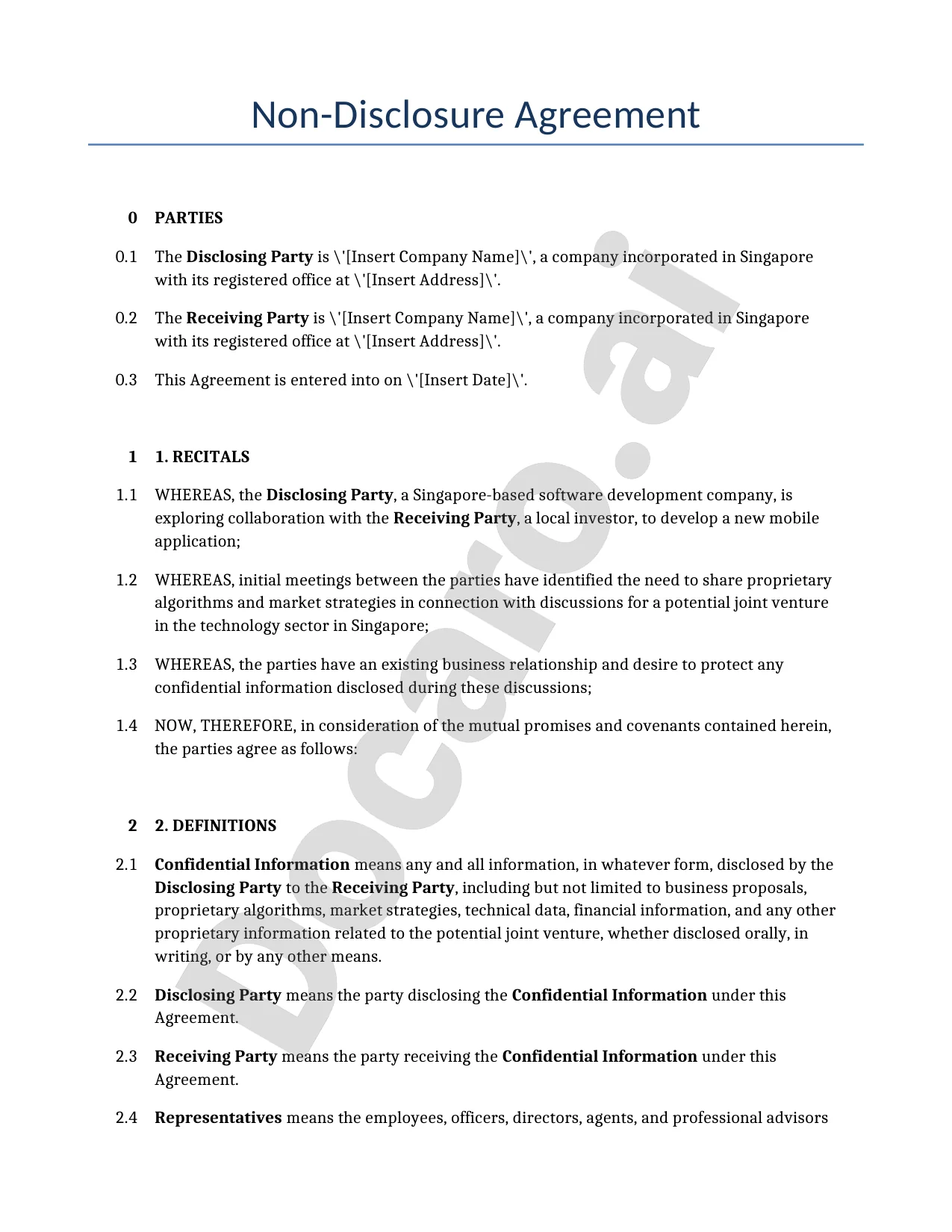
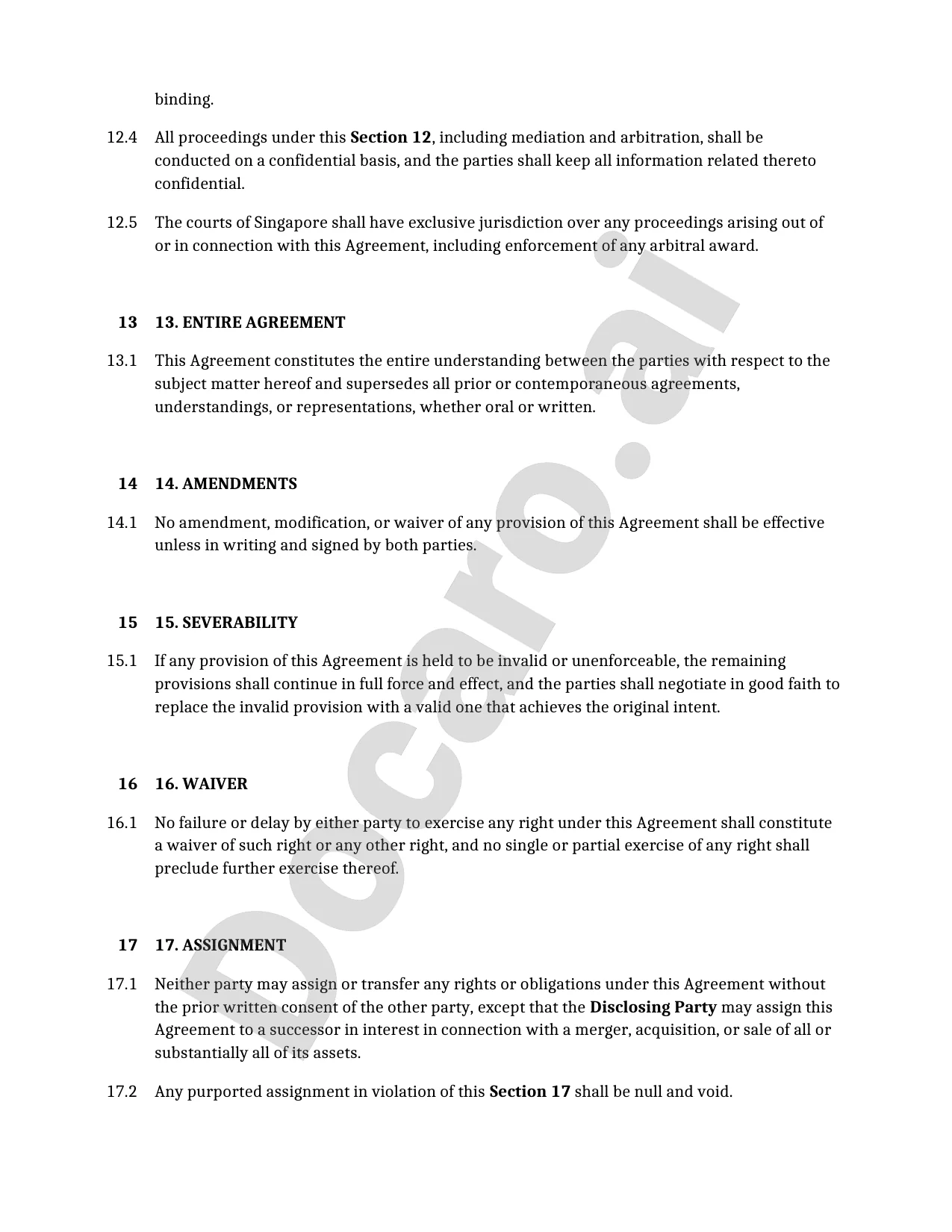
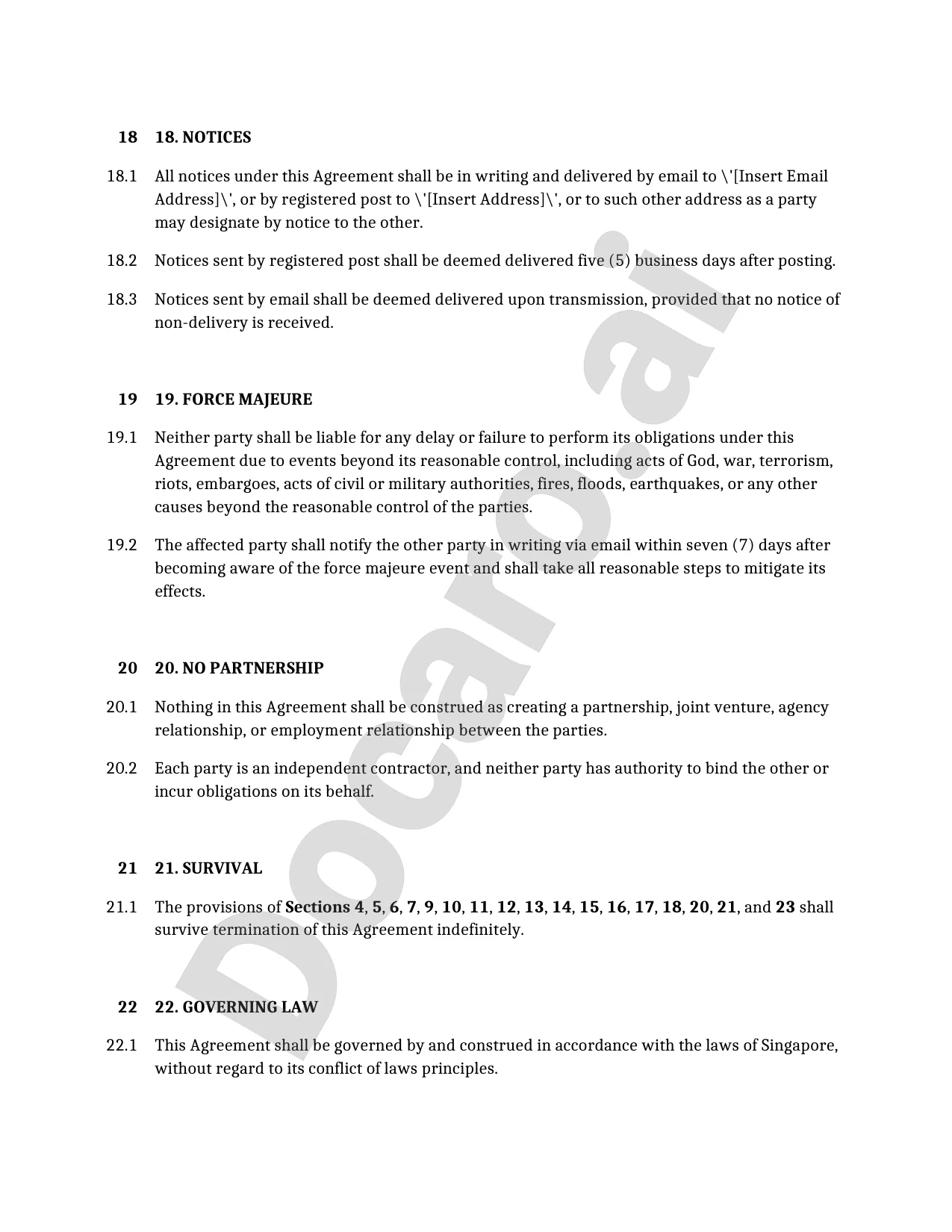
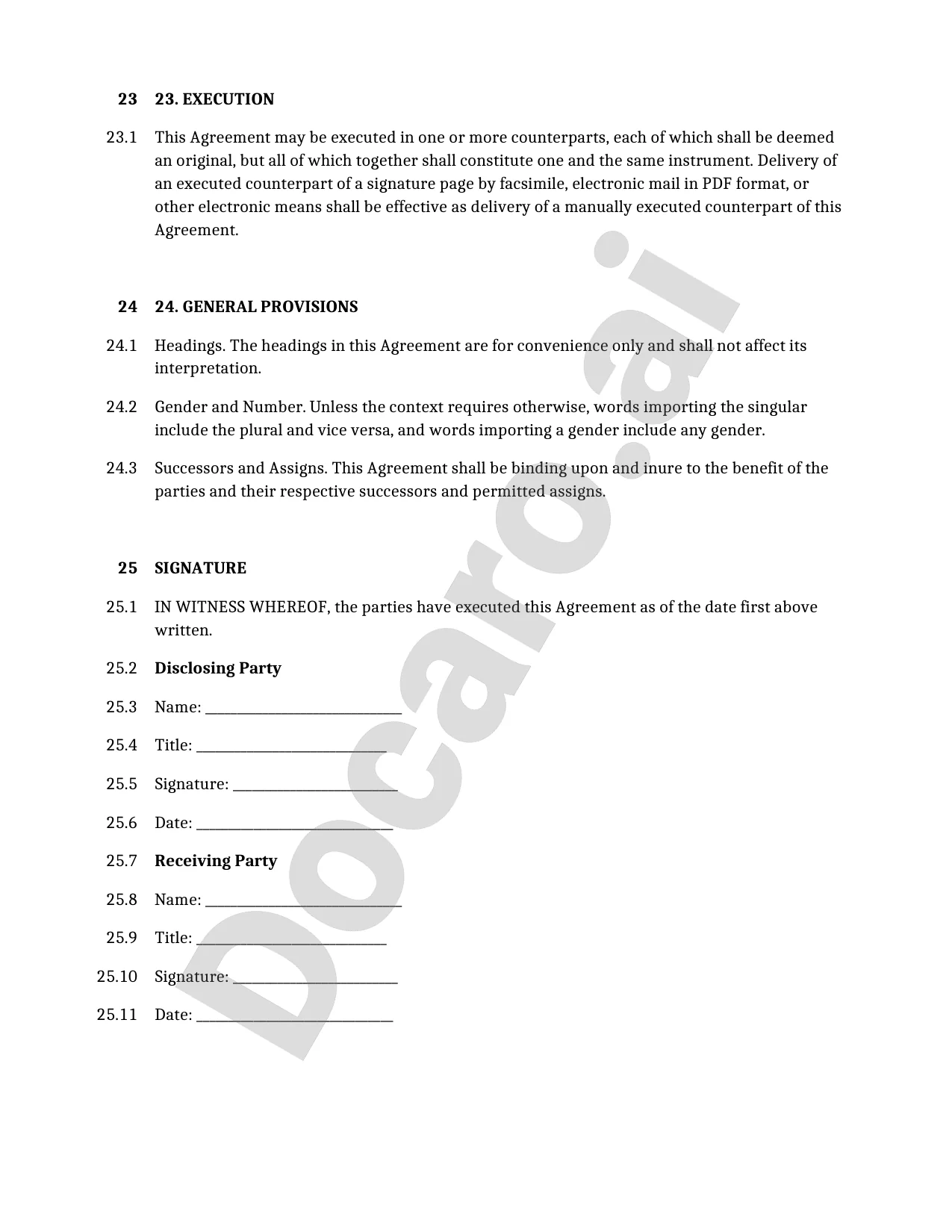
What is a Non-Disclosure Agreement in Singapore?
A Non-Disclosure Agreement (NDA) is a legal contract that prohibits parties from sharing confidential information with unauthorized individuals. In Singapore, NDAs play a crucial role in safeguarding sensitive business data, trade secrets, and proprietary details during collaborations, negotiations, or employment.
Under Singapore law, the primary purpose of an NDA is to protect confidential information from misuse or unauthorized disclosure, enforcing obligations through civil remedies like injunctions or damages. This aligns with broader statutory protections, such as the Personal Data Protection Act (PDPA), which specifically governs the handling of personal data to ensure privacy and prevent breaches.
For robust protection, businesses should opt for bespoke AI-generated legal documents using Docaro, tailored to specific needs rather than generic templates. This approach ensures compliance with Singapore's legal framework, including the PDPA, while addressing unique confidentiality risks.
"In the dynamic landscape of Singapore's business transactions, non-disclosure agreements are essential for safeguarding sensitive information and fostering trust between parties. I strongly recommend utilizing bespoke AI-generated legal documents through Docaro to ensure your NDAs are precisely tailored to your specific needs, providing robust protection under Singapore law." - Dr. Lim Wei Ming, Senior Partner at Straits Law LLP
When should you use an NDA in Singapore, and when should you avoid it?
In Singapore business negotiations, an NDA is essential to protect sensitive information like trade secrets or financial data shared between parties exploring potential deals. For instance, during merger talks or joint venture discussions, it ensures confidentiality without derailing the process.
When forming business partnerships in Singapore, NDAs safeguard proprietary strategies and intellectual property from being misused by collaborators. They are particularly crucial in tech or innovation sectors where ideas drive competitive advantage.
During employee onboarding in Singapore, NDAs are vital for roles involving access to confidential company information, such as R&D or client data, preventing leaks post-employment. This is common in industries like finance and pharmaceuticals to maintain compliance with local data protection laws.
NDAs may not be suitable for public information sharing in Singapore, where details already available through open sources like government reports require no additional protection. Similarly, when trust is established by other means, such as long-term contracts or mutual industry standards, an NDA might add unnecessary bureaucracy; for tailored agreements, consider bespoke AI-generated legal documents using Docaro to fit specific needs.

What are the key clauses to include in a Singapore NDA?
A Non-Disclosure Agreement (NDA) under Singapore law is a vital contract to protect sensitive information in business dealings. Key elements include clearly defining confidential information, which typically covers trade secrets, business plans, and proprietary data, excluding publicly available or independently developed information. For a detailed breakdown, explore essential NDA components in Singapore.
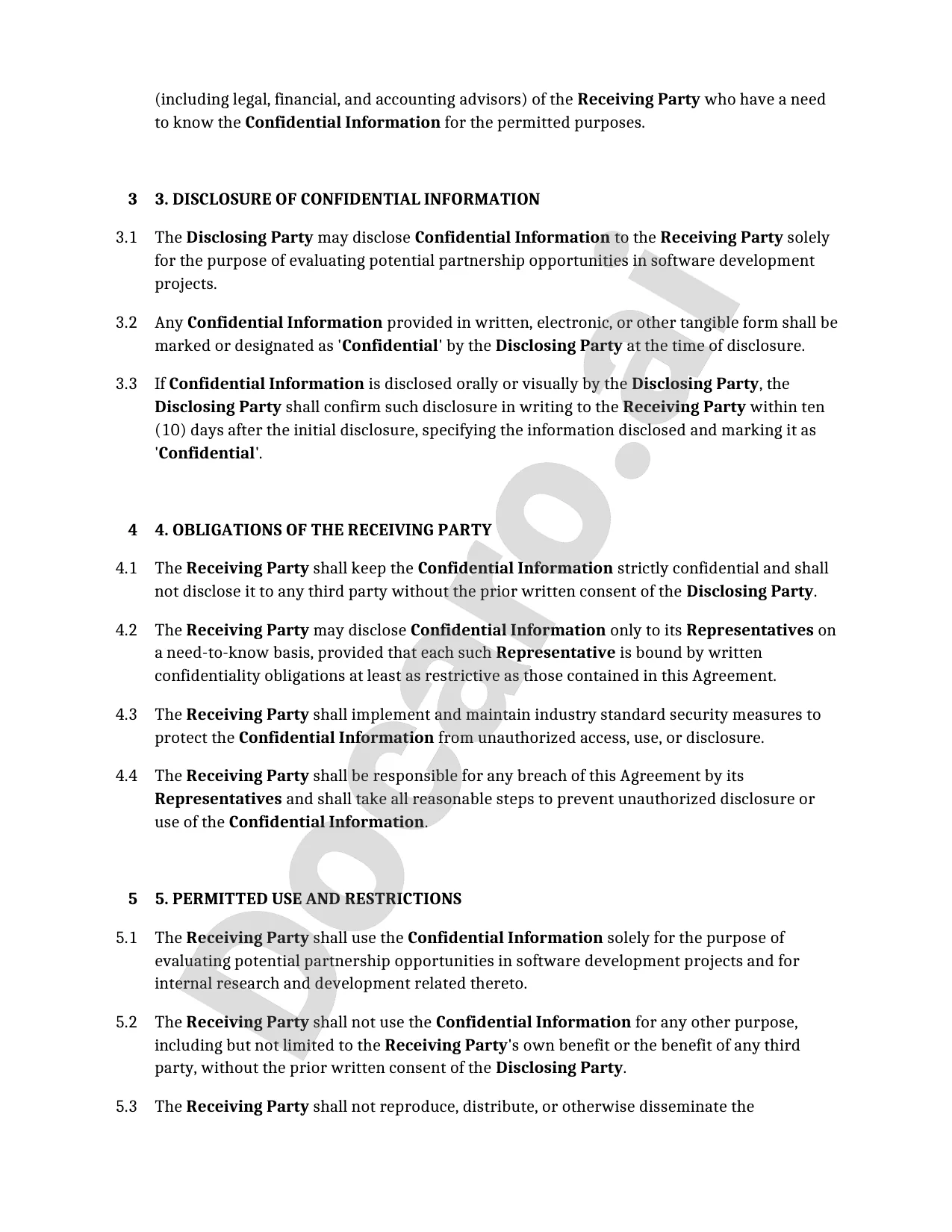
The obligations of the parties form the core of an NDA, requiring the receiving party to maintain secrecy, use the information only for specified purposes, and implement reasonable security measures. These clauses ensure compliance with Singapore's legal standards, such as those under the Personal Data Protection Act for any personal data involved.
Duration specifies how long confidentiality obligations last, often extending beyond the agreement's term—typically 2 to 5 years for trade secrets, aligning with Singapore's emphasis on perpetual protection for truly proprietary information. This prevents indefinite restrictions while safeguarding long-term value.
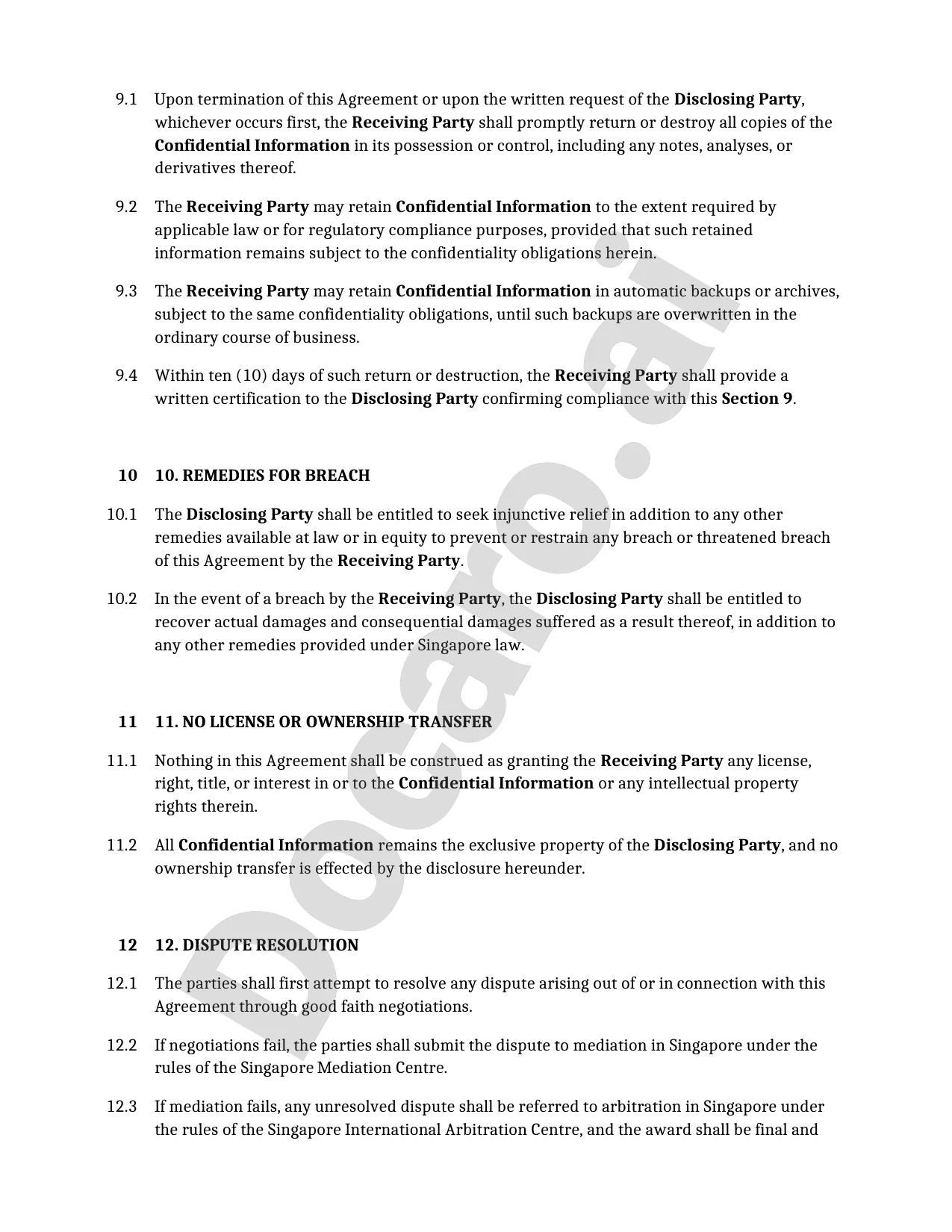
Remedies for breach outline consequences like injunctive relief, monetary damages, and indemnification, enforceable under Singapore contract law. Parties should opt for bespoke AI-generated legal documents using Docaro to tailor these clauses precisely to their needs, ensuring robust protection without relying on generic templates.
What are the key rights and obligations of the parties in an NDA?
In a Singapore NDA, the disclosing party holds the primary obligation to clearly identify and mark confidential information shared with the receiving party, ensuring it is protected under the agreement's terms. This party also has the right to enforce the NDA by seeking remedies such as injunctions or damages in Singapore courts if a breach occurs, emphasizing the importance of tailored agreements like those generated via Docaro AI legal tools for precise enforcement.
The receiving party in a Singapore non-disclosure agreement must uphold strict duties to maintain secrecy, including using the information solely for the agreed purpose and implementing reasonable security measures to prevent unauthorized disclosure or use. Obligations extend to notifying the disclosing party of any potential breaches and returning or destroying confidential materials upon request or agreement termination.
Both parties share mutual rights and obligations in a Singapore NDA, such as limiting disclosures to necessary personnel bound by similar confidentiality terms and excluding publicly available or independently developed information from protection. To ensure compliance with Singapore's legal framework, including the Personal Data Protection Act where applicable, parties should opt for bespoke AI-generated documents through Docaro platform rather than generic templates.
What are the key exclusions in a Singapore NDA?
Non-Disclosure Agreements (NDAs) in Singapore are essential contracts for protecting confidential information, but they commonly include exclusions to ensure fairness and enforceability under Singapore contract law. These exclusions prevent parties from being unduly restricted, aligning with principles of freedom of contract and public policy that avoid overly broad restraints.
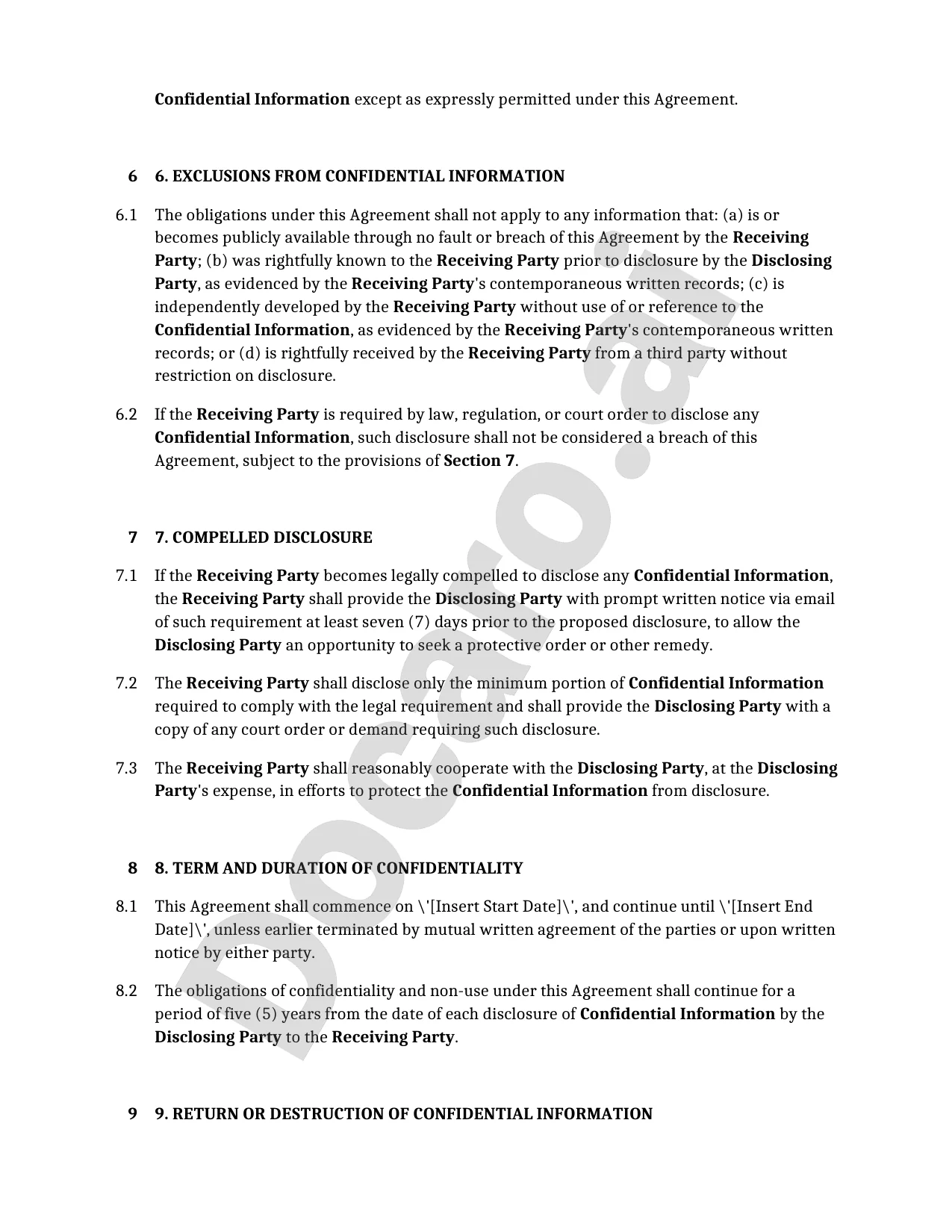
One key exclusion is for information already public, where details that are publicly known or become public through no fault of the receiving party are not deemed confidential. This is crucial under Singapore law, as it upholds the principle that NDAs cannot protect what is already accessible, preventing claims over non-secret data and ensuring the agreement's validity.
Another common exclusion covers independently developed information, allowing parties to use knowledge they create without reference to the disclosed secrets. In Singapore's contract framework, this promotes innovation and prevents unfair monopolies on ideas, as courts assess such exclusions to confirm the NDA's reasonableness and avoid implied warranties of exclusivity.
Other typical exclusions include information received from third parties without restriction or required to be disclosed by law, which safeguard against liability for unavoidable disclosures. Under Singapore law, incorporating these ensures the NDA is balanced, enforceable, and compliant with statutory obligations like those in the Personal Data Protection Act, emphasizing the need for bespoke AI-generated legal documents using Docaro tailored to specific needs.
Are there recent or upcoming legal changes affecting NDAs in Singapore?
Singapore's legal framework for NDAs has seen notable updates through the Personal Data Protection (Amendment) Act 2020, which expanded obligations for handling personal data in confidentiality agreements. These changes require organizations to incorporate stronger data protection clauses to mitigate risks of breaches, ensuring compliance with the enhanced privacy rules effective since February 2021.
Looking ahead, the Intellectual Property (Amendment) Bill proposed in late 2023 aims to strengthen IP enforcement, potentially impacting NDA provisions related to trade secrets and proprietary information. Businesses drafting NDAs should prepare for these IP regulations by including robust mechanisms for dispute resolution and cross-border protection.
For optimal compliance, consider using bespoke AI-generated legal documents via Docaro to tailor NDAs to these evolving laws, rather than relying on generic templates.
How can you draft an enforceable NDA in Singapore?
1
Research NDA Requirements
Learn Singapore's legal standards for NDAs by reading our guide on [drafting enforceable NDAs in Singapore](/en-sg/a/how-to-draft-enforceable-nda-singapore). Use Docaro for bespoke AI-generated documents.
2
Consult a Lawyer
Engage a qualified Singapore lawyer to review your specific needs and ensure compliance with local laws like the Contracts Act.
3
Incorporate Key Clauses
Add bespoke clauses via Docaro for confidentiality, obligations, exclusions, term, and remedies, tailored to your agreement.
4
Finalize and Execute
Revise with lawyer's input, generate final version in Docaro, and have parties sign the enforceable NDA.
What common mistakes should you avoid when creating an NDA in Singapore?
When drafting NDAs under Singapore law, a common pitfall is using overly broad definitions for confidential information, which can lead to unenforceability if they encompass trivial or publicly available data. To prevent this, clearly define the scope with specific examples and exclusions, ensuring the NDA aligns with Singapore's legal standards for protecting trade secrets.
Another frequent mistake is omitting a governing law clause, potentially causing disputes over jurisdiction in Singapore courts. Always include an explicit clause specifying Singapore law and jurisdiction to avoid ambiguity in enforcement.
Additional pitfalls include inadequate duration for confidentiality obligations or failing to address exceptions like disclosures required by law. Mitigate these by tailoring the NDA's terms to the specific business context, using bespoke AI-generated legal documents via Docaro for precision.
For more insights on common mistakes to avoid in Singapore NDAs, explore best practices to strengthen your agreements.
You Might Also Be Interested In
A Legally Binding Agreement Outlining The Terms And Conditions Of Employment Between An Employer And Employee.
A Legal Contract Outlining The Terms Of Service Between A Client And An Independent Contractor In Singapore.
A Legal Contract Between An Employer And Employee That Prohibits The Disclosure Of Confidential Information To Protect Business Secrets.
A Contractual Provision Restricting An Individual From Engaging In Competitive Activities Against Their Former Employer For A Specified Period And Area.
A Formal Document From An Employer Extending A Job Offer With Key Employment Terms.
A Document Outlining Company Policies, Employee Rights, And Workplace Rules.
A Formal Notice From An Employer To An Employee Stating The End Of Their Employment Contract.
A Contract Outlining Terms Of An Internship, Including Duties, Duration, Compensation, And Confidentiality.
A Legal Contract Outlining Terms For Employees Working Remotely, Including Schedules, Responsibilities, And Support Provisions.
A Legal Document Outlining The Terms Of Engagement Between A Freelancer And Client For Specific Services.
A Flexible Employment Agreement Where Workers Are Not Guaranteed Minimum Hours And Are Called Upon As Needed By The Employer.
A Formal Document Notifying An Employer Of An Employee's Intent To Resign From Their Position, Typically Including The Last Working Day.
A Written Endorsement By A Person Of Authority Attesting To Another's Skills, Character, Or Qualifications For Employment, Education, Or Legal Purposes.