Why Free Templates Can Be Risky for Sale of Business Agreement
Most free templates for business sale agreements are generic and do not account for Singapore's specific legal requirements, such as those under the Companies Act or stamp duty regulations. Using incorrect wording can lead to unenforceable clauses, disputes over asset transfers, tax liabilities, or failure to comply with local business laws, potentially resulting in costly legal challenges.
Our AI-generated bespoke business sale agreements are tailored to your unique details and Singapore's legal framework, ensuring precise, compliant language that protects your interests, minimizes risks, and provides a professional, customized document ready for execution.
What is a Sale of Business Agreement in Singapore?
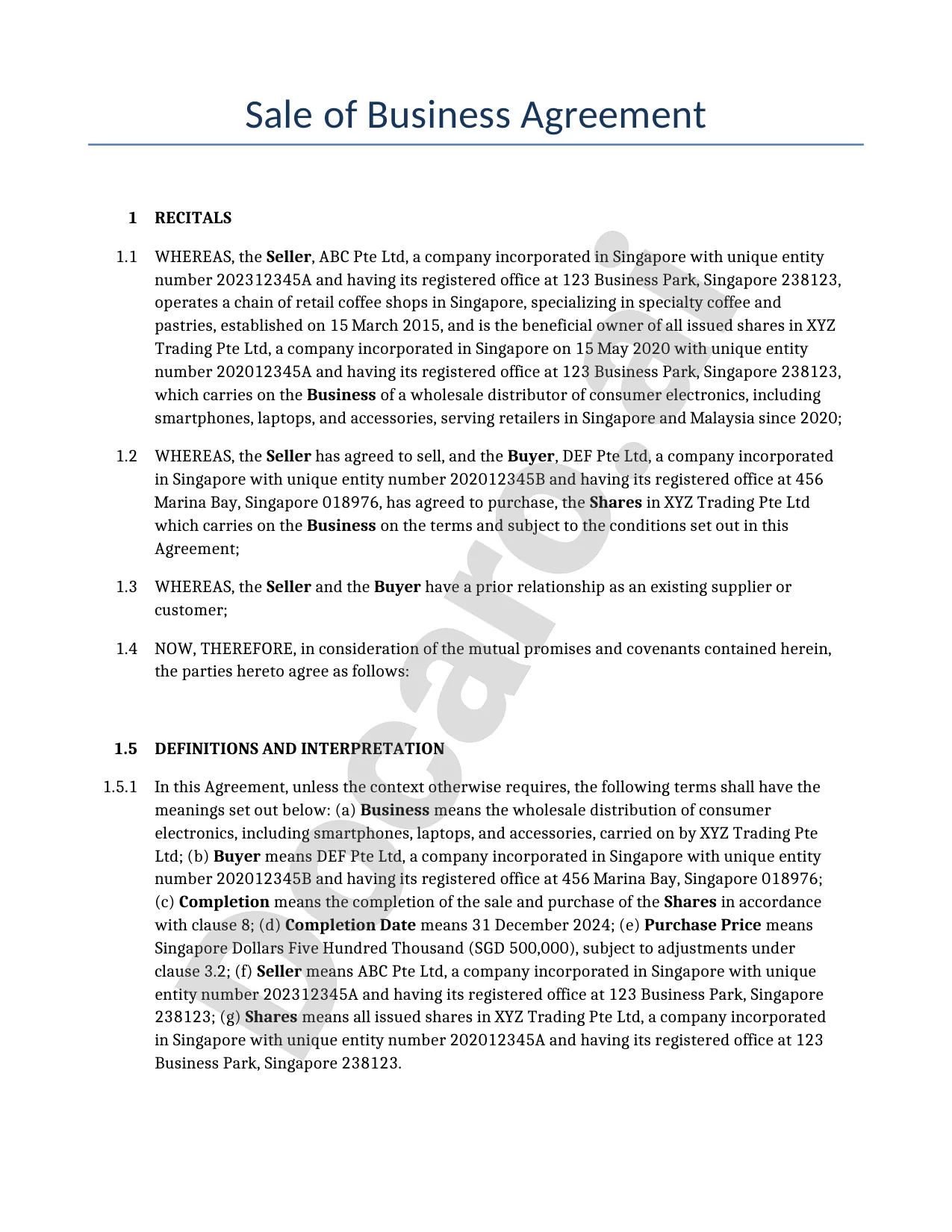
A Sale of Business Agreement is a legal contract that outlines the terms for transferring ownership of a business from a seller to a buyer. In the context of Singaporean law, it serves to protect both parties by clearly defining assets, liabilities, and obligations during the transaction.
The primary purpose of this agreement is to facilitate a smooth transfer of business ownership, ensuring all intellectual property, goodwill, and physical assets are properly conveyed. It helps mitigate disputes by specifying payment terms, warranties, and post-sale conditions, aligning with Singapore's emphasis on transparent commercial dealings.
Under Singaporean statutes, the Sale of Goods Act governs the sale of tangible business assets like inventory and equipment, implying warranties of title and quality. Meanwhile, the Companies Act regulates aspects involving corporate entities, such as share transfers or dissolution, requiring compliance for valid ownership shifts.
- Key elements include detailed asset schedules to avoid omissions.
- It often incorporates non-compete clauses to safeguard the buyer's interests.
- For customized needs, consider bespoke AI-generated legal documents using Docaro to ensure precision.
When should you use a Sale of Business Agreement in Singapore?
A Sale of Business Agreement is essential when transferring business assets in Singapore, such as equipment, inventory, or intellectual property, to ensure clear ownership rights and minimize disputes between buyer and seller. This agreement outlines the terms of the asset sale, protecting both parties from unforeseen liabilities.
Another critical scenario involves selling goodwill of a business, which includes customer relationships, brand reputation, and ongoing contracts, requiring a detailed agreement to value and transfer these intangible assets accurately. Without it, sellers risk losing value, while buyers may inherit unresolved obligations.
When selling shares in a business, particularly in incorporated entities like private limited companies, a Sale of Business Agreement is vital to define share transfer conditions, warranties, and post-sale governance. For insights into the key elements of a Sale of Business Agreement in Singapore, explore Key Elements of a Sale of Business Agreement in Singapore.
- Use bespoke AI-generated legal documents via Docaro for customized protection in these transactions.
- Consult professionals to tailor agreements to specific business needs in Singapore.
When should you avoid using this agreement?
A Sale of Business Agreement may not be suitable for partial asset sales, where only specific components like equipment or intellectual property are transferred, as this requires a more targeted Asset Purchase Agreement to delineate ownership and liabilities precisely. In such cases, risks include incomplete transfers leading to disputes over remaining assets, and an alternative is consulting professionals for customized documentation via Docaro AI legal generation to ensure comprehensive coverage.
For mergers, a Sale of Business Agreement falls short because it typically involves a straightforward sale rather than the integration of two entities, necessitating a Merger Agreement to address share exchanges, governance, and operational synergies. Potential risks involve regulatory oversights or cultural clashes post-merger, with alternatives like stock swaps or joint ventures offering flexible paths forward.
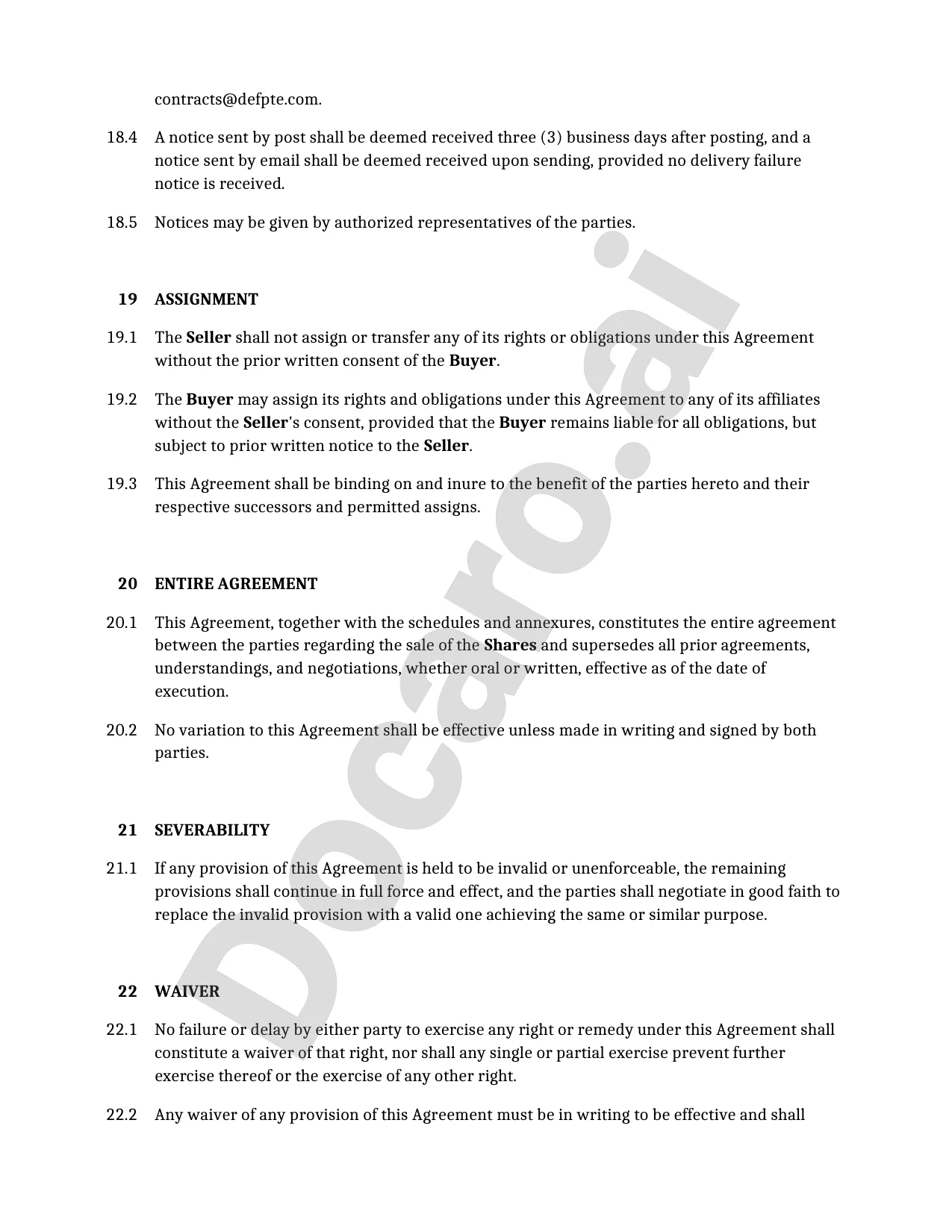
When regulatory approvals are required, such as in industries like finance or healthcare, a standard Sale of Business Agreement might overlook compliance hurdles from bodies like the FTC or SEC, potentially delaying or voiding the transaction. Risks include fines or deal failure due to non-compliance, and alternatives involve incorporating conditional clauses in bespoke agreements generated through Docaro to build in approval contingencies.
What are the key clauses in a Sale of Business Agreement?
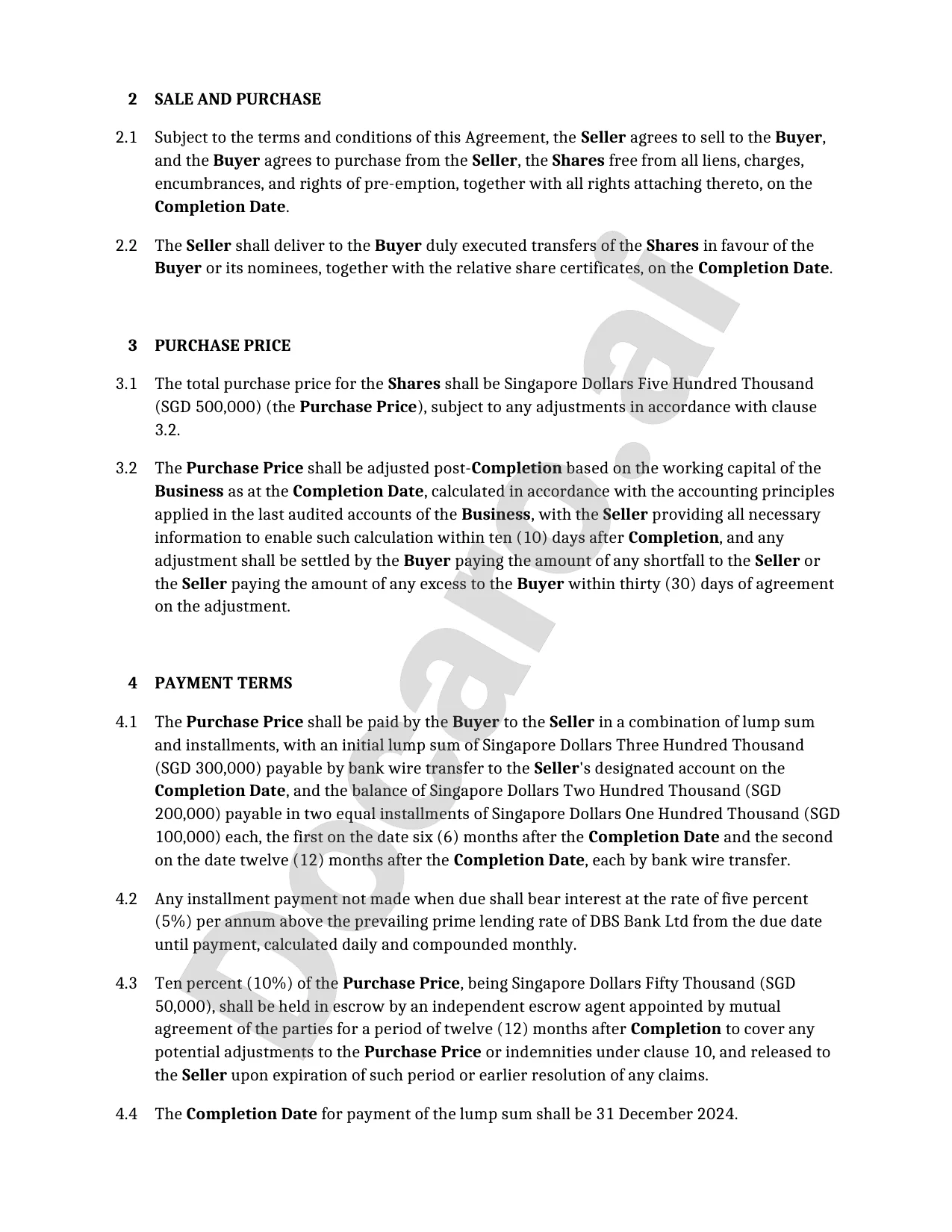
When selling a business in Singapore, the sale and purchase agreement must include essential clauses to protect both parties. Key among these is the purchase price clause, which specifies the total amount, payment terms, including any installments or adjustments based on working capital, ensuring clarity on financial obligations.
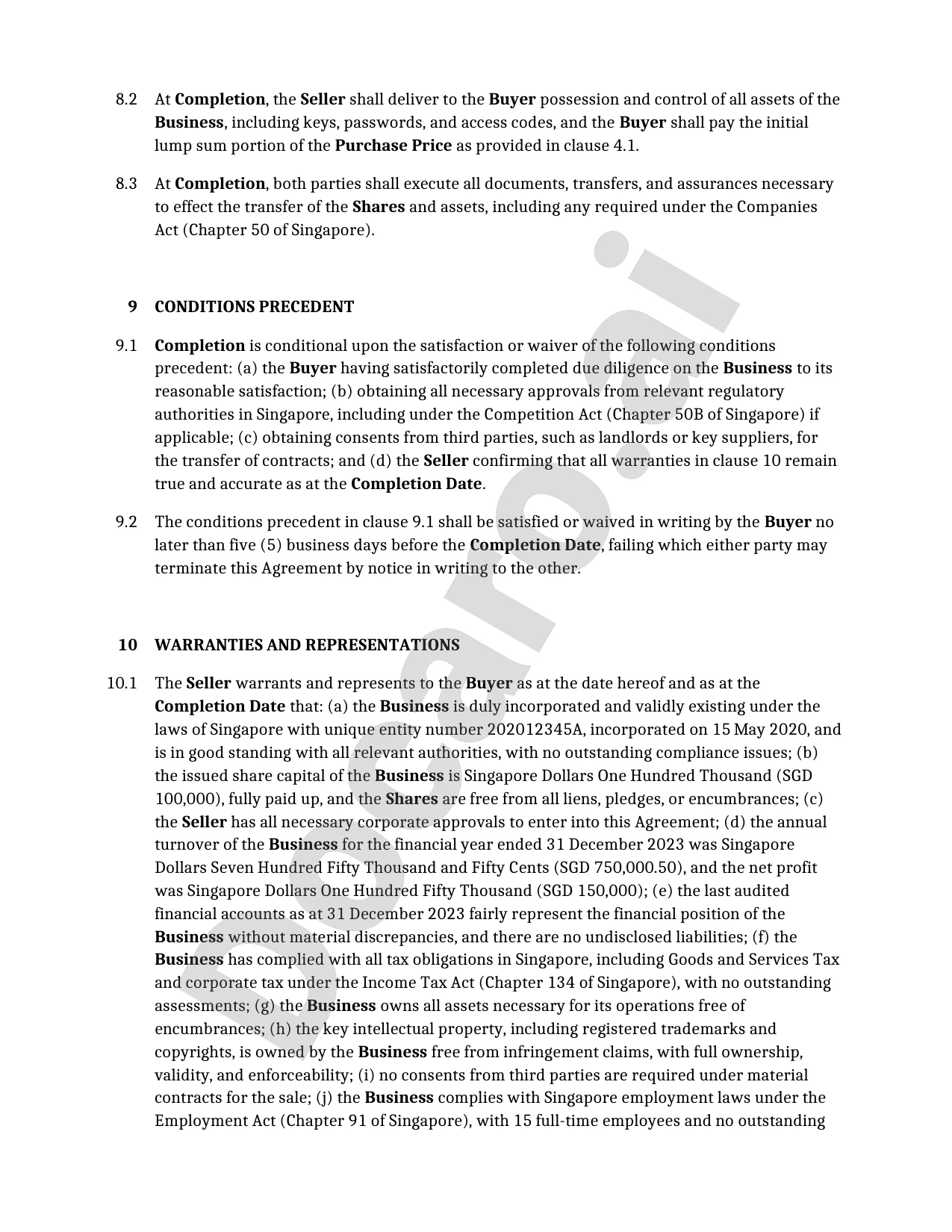
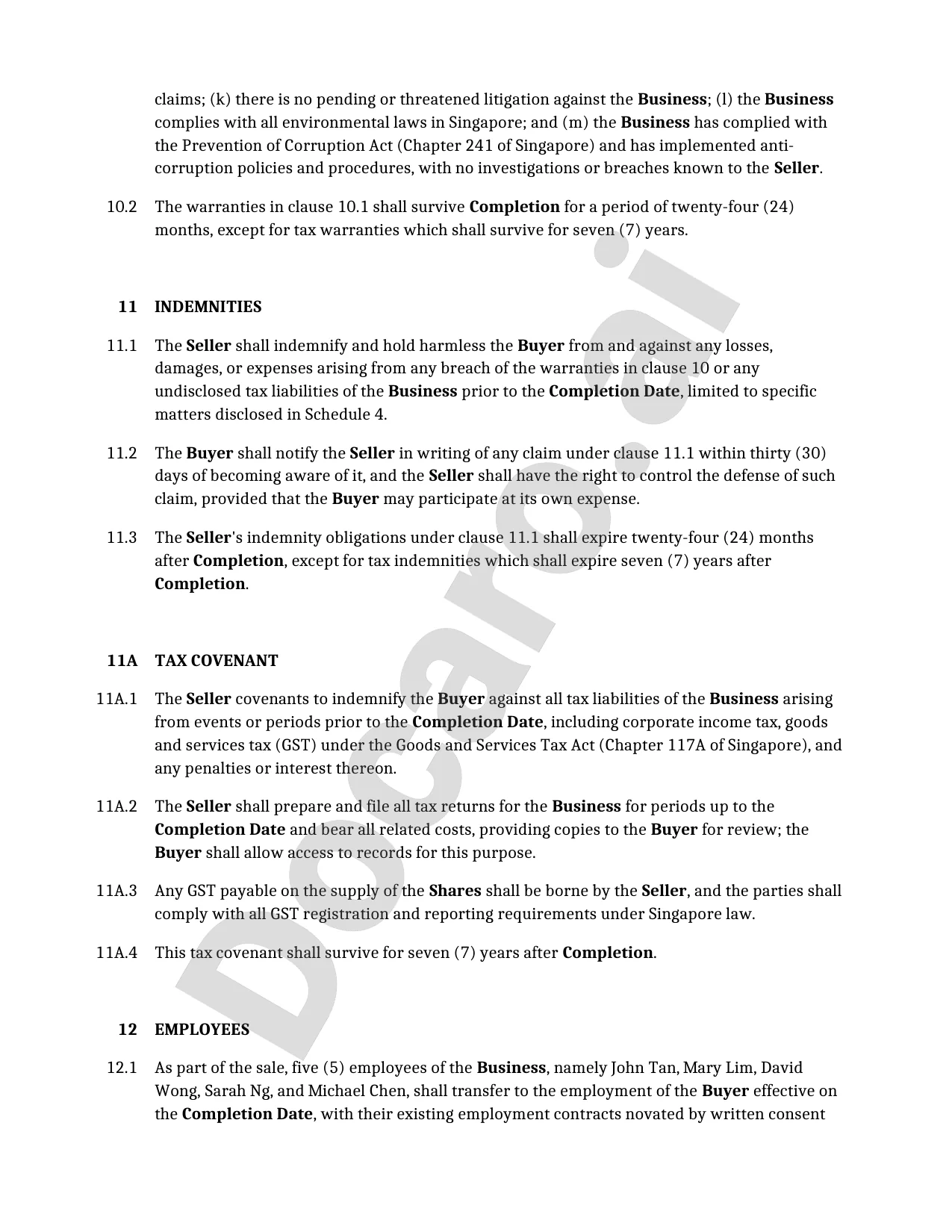
Warranties are crucial, where the seller provides assurances about the business's financial health, assets, liabilities, and compliance with laws, allowing the buyer to verify representations post-sale. Indemnities follow, obligating the seller to compensate the buyer for losses arising from breaches of warranties or pre-completion issues, mitigating risks in the transaction.
Completion conditions outline the prerequisites for finalizing the sale, such as obtaining necessary approvals, transferring assets, and settling debts, which must be met to avoid delays. For detailed legal requirements for selling a business in Singapore, refer to the guide on Legal Requirements for Selling a Business in Singapore.
To ensure these clauses are tailored to your specific needs, opt for bespoke AI-generated legal documents using Docaro, providing customized protection over generic options.
"In Singapore's dynamic business sales landscape, clear and precise warranties are essential to shield both buyers from unforeseen liabilities and sellers from unwarranted post-sale disputes. For robust protection, I recommend commissioning bespoke AI-generated legal documents via Docaro to ensure they are tailored precisely to your transaction's unique needs." – Dr. Lim Wei Shen, Senior Partner, Straits Law LLP
What are the key rights and obligations of the parties?
In business transactions, the seller's rights include receiving full payment and transferring ownership free from undue interference, while their primary duties involve disclosing all material facts about the business or asset to avoid misrepresentation. Sellers must provide accurate financial records, operational details, and any known risks, ensuring transparency to build trust and comply with legal standards.
Conversely, the buyer's rights encompass access to thorough information for informed decision-making, with key duties centered on conducting due diligence to verify the seller's disclosures through audits, inspections, and legal reviews. This process helps buyers identify potential liabilities, negotiate terms, and mitigate risks before finalizing the purchase.
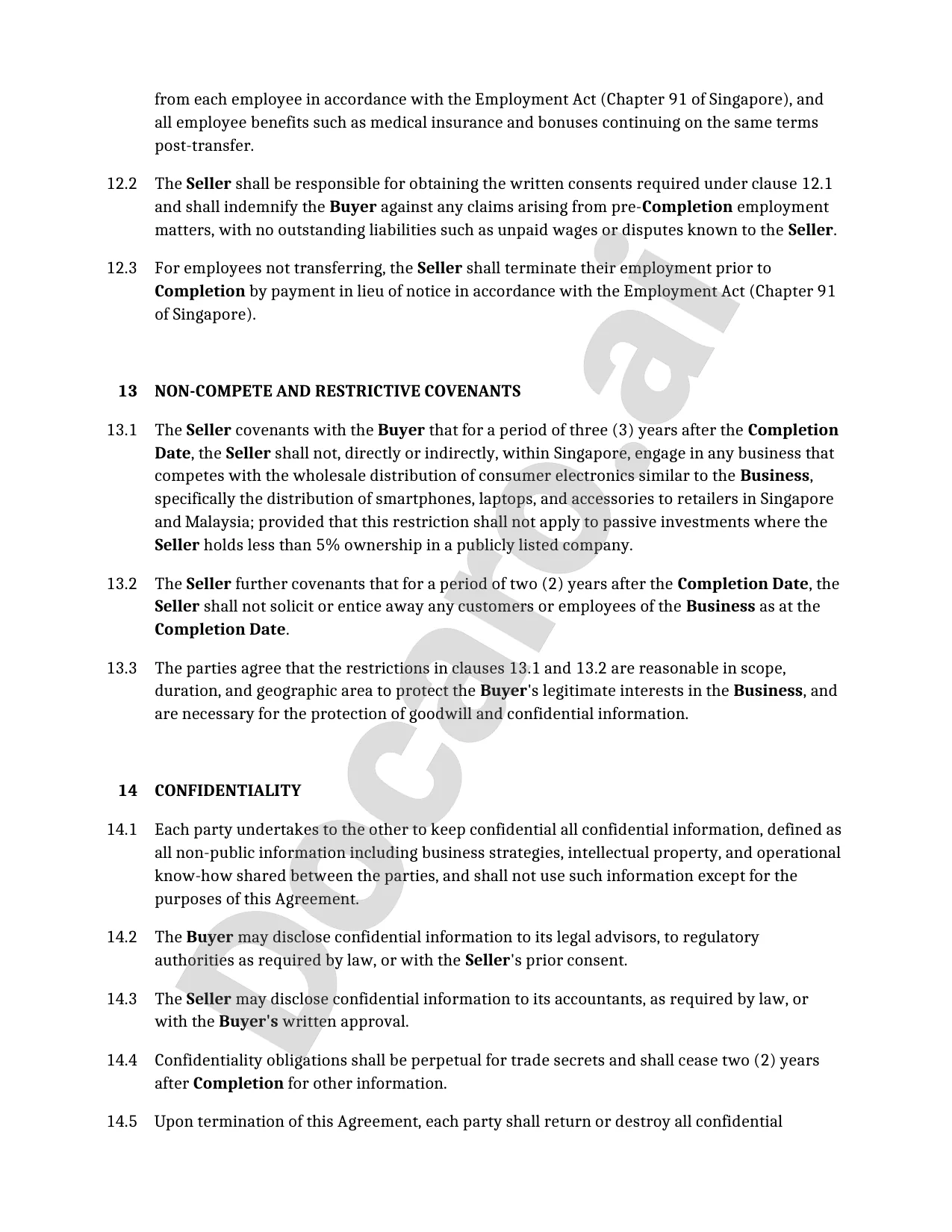
Post-sale obligations often include non-compete clauses, where sellers agree not to engage in competing activities for a specified period and geographic area to protect the buyer's investment. These clauses, along with warranties and indemnification duties, ensure ongoing compliance and support a smooth transition, fostering long-term business stability.
For customized legal protection in these matters, consider bespoke AI-generated legal documents via Docaro platform, tailored precisely to your transaction's unique needs.
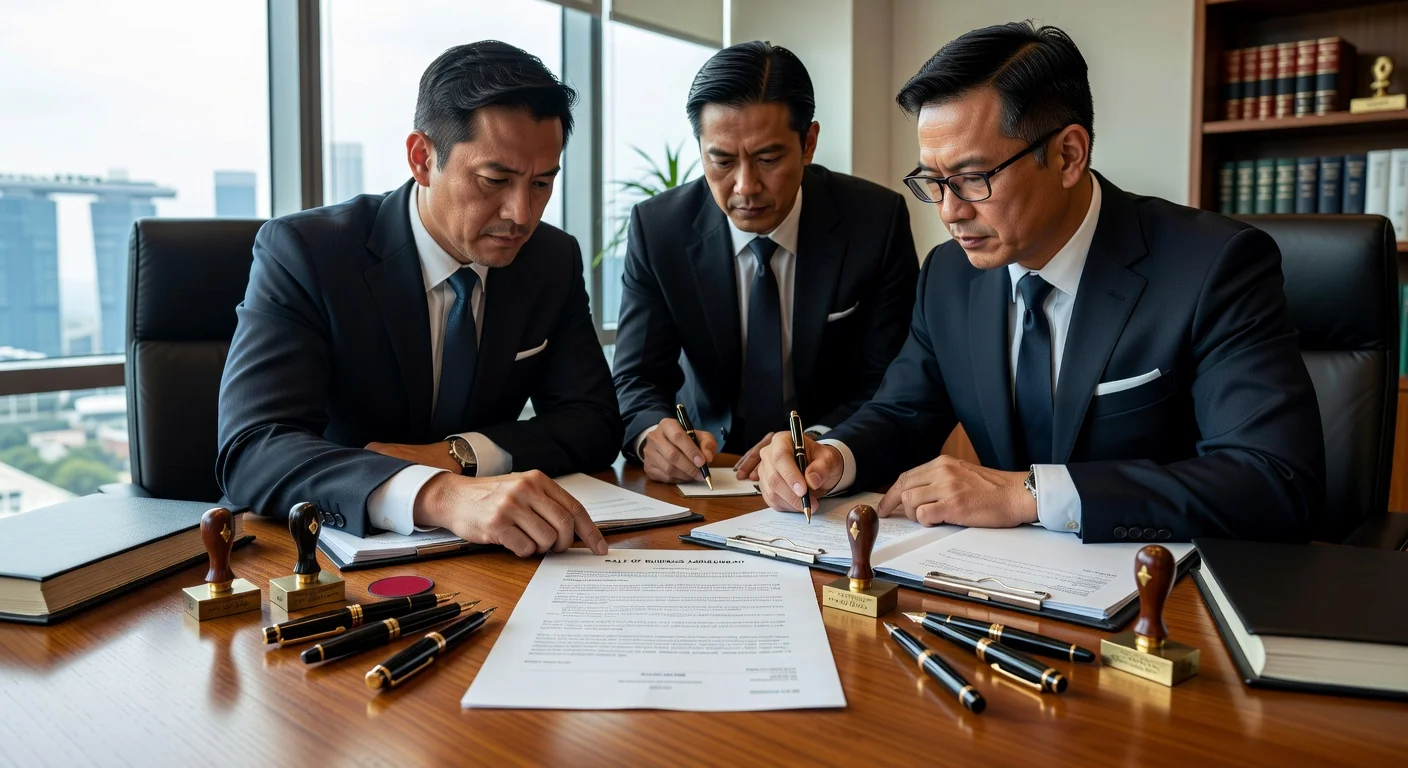
What key exclusions should be included in the agreement?
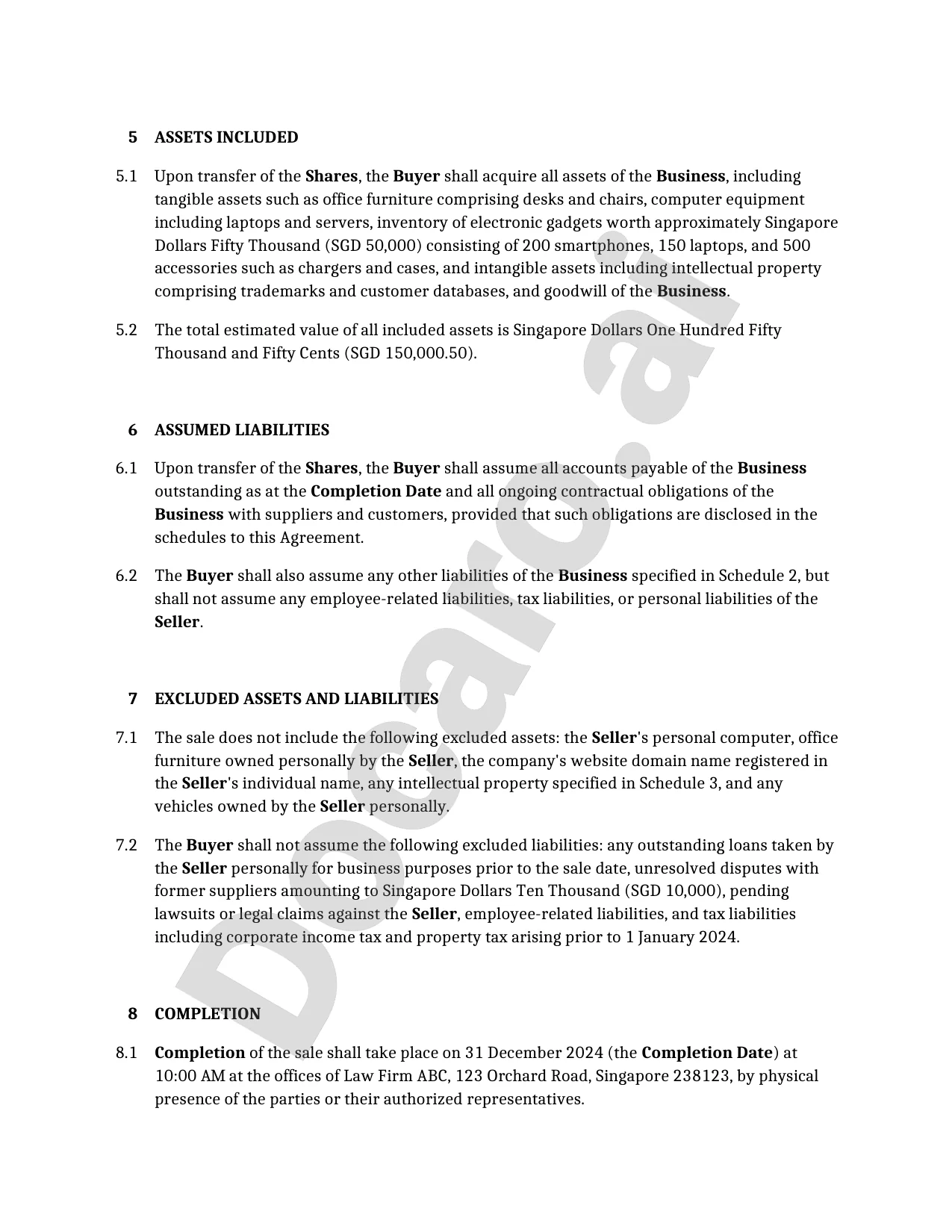
In Singapore's dynamic business landscape, important exclusions in mergers and acquisitions (M&A) deals are crucial for protecting parties from unforeseen risks. These exclusions, such as liabilities not transferred, ensure that buyers do not inherit hidden debts or obligations from the seller, safeguarding financial stability under the Companies Act.
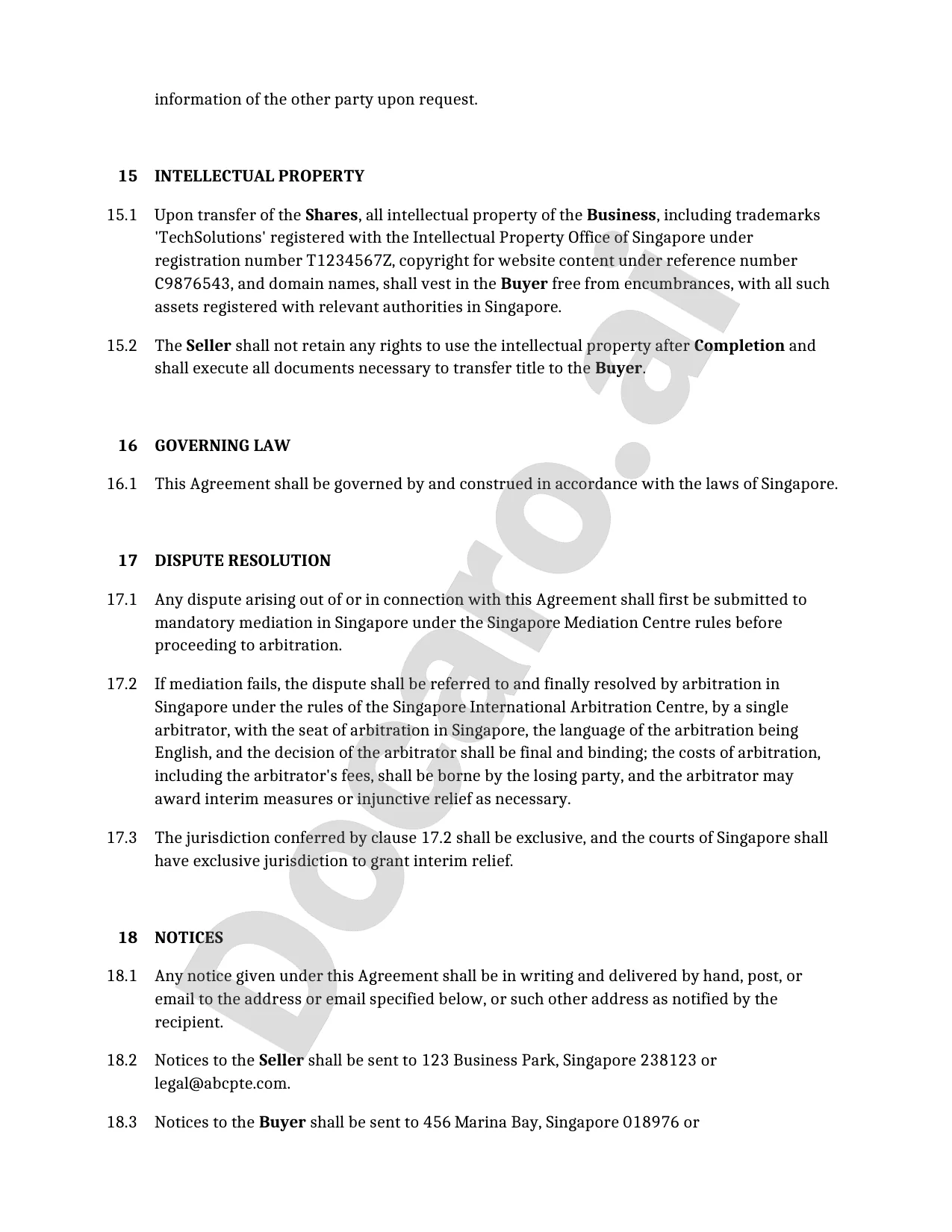
Intellectual property carve-outs are another key exclusion, where specific patents, trademarks, or copyrights remain with the seller to preserve core assets. This matters in Singapore's innovation-driven economy, as it prevents disputes over IP ownership and supports compliance with the Intellectual Property Office of Singapore (IPOS) regulations, allowing seamless business transitions.
Employee contracts often feature exclusions to avoid automatic transfer of personnel liabilities under Singapore's Employment Act. By carving out certain contracts, companies mitigate risks like unfulfilled severance obligations or disputes, ensuring that only vetted workforce elements are assumed, which is vital for operational continuity in competitive markets.
For tailored exclusions in Singapore M&A, consider using bespoke AI-generated legal documents via Docaro platform to customize agreements precisely to your needs, enhancing protection and efficiency.
Are there recent or upcoming legal changes affecting Sale of Business Agreements in Singapore?
In Singapore, the Personal Data Protection Act (PDPA) underwent significant amendments in 2020, enhancing obligations for data portability and mandatory breach notifications. As of March 2026, no major new amendments have been enacted, though ongoing consultations focus on cross-border data transfers to align with global standards like GDPR.
Regarding corporate governance impacting business sales, the Companies Act was updated in 2023 to strengthen shareholder rights and director duties during mergers and acquisitions. These changes emphasize transparency in deal disclosures, but no substantial upcoming revisions are anticipated in the near term.
Business owners preparing for sales should prioritize compliance with these laws to mitigate risks. For tailored legal documents, consider using Docaro's AI-generated solutions to ensure precision and efficiency.
How can you draft and execute a Sale of Business Agreement effectively?
1
Draft the Agreement
Use Docaro to generate a bespoke Sale of Business Agreement tailored to your Singapore transaction details and requirements.
2
Review for Mistakes
Consult a Singapore lawyer to review the draft, and read about [Common Mistakes to Avoid in Singapore Business Sale Agreements](/en-sg/a/common-mistakes-singapore-business-sale-agreements) for guidance.
3
Finalize and Execute
Incorporate lawyer's feedback into the Docaro-generated document, then sign and execute the agreement with all parties involved.
4
Complete Post-Execution
Handle transfer of assets, notify relevant authorities in Singapore, and ensure all compliance obligations are met promptly.
You Might Also Be Interested In
A Contract Outlining The Terms For Consultancy Services Provided By An Independent Contractor.
A Contract Outlining The Rights, Obligations, And Governance Rules Among Shareholders Of A Company.
A Legal Contract Outlining The Terms, Rights, And Obligations Of Partners In A Business Partnership.
A Shareholders' Agreement Is A Contract Among Shareholders Of A Private Limited Company Outlining Ownership, Management, And Operational Rules.
A Constitution Is The Foundational Document For A Company In Singapore, Outlining Its Structure, Objectives, And Internal Rules.
A Constitution Is The Foundational Document Governing A Company's Internal Management, Operations, And Member Rights In Singapore.
A Legal Contract Outlining The Terms For Buying And Selling Shares In A Company.
A Formal Decision Or Action Approved By The Board Of Directors Of A Company, Documented In Writing.
A Founders' Agreement Is A Legal Contract Outlining The Rights, Obligations, And Roles Of Company Founders, Including Equity Distribution, Decision-making, And Dispute Resolution.
A Legal Contract Outlining The Terms For The Sale And Purchase Of Specific Assets Between Parties.
A Legal Document That Alters The Terms Of An Existing Deed Or Agreement, Commonly Used In Property Or Inheritance Matters.
A Legal Contract Outlining The Terms For The Sale And Transfer Of Property Ownership From Seller To Buyer.
A Formal Receipt Is A Legal Document Issued By A Seller To A Buyer, Confirming Payment For Goods Or Services And Serving As Proof Of Transaction.
A Tax Invoice Is A Formal Document Issued By GST-registered Businesses In Singapore To Charge Customers For Goods Or Services, Including GST Details For Tax Compliance.
A Legal Contract Outlining The Terms Under Which One Party Provides Services To Another.
A Legal Document Used To Transfer Ownership Of Shares In A Company From One Party To Another, Typically Required For Registration With The Company.
A Document Outlining Measures To Protect Individuals, Especially Vulnerable Groups Like Children, From Harm And Abuse In Organizational Settings.
A Non-binding Document Outlining Preliminary Terms And Intentions For A Potential Business Deal Or Agreement.