What is a Settlement Agreement in Singapore?
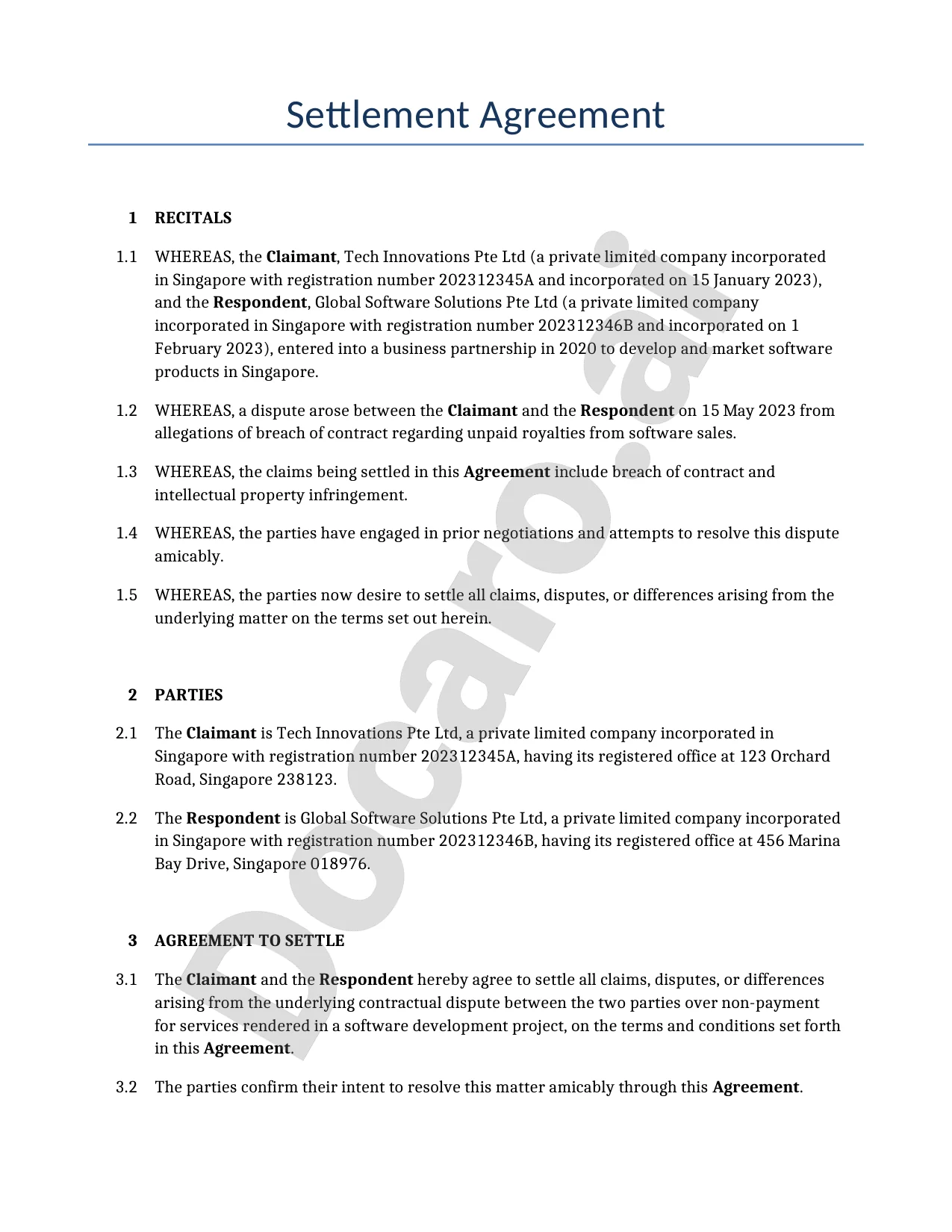
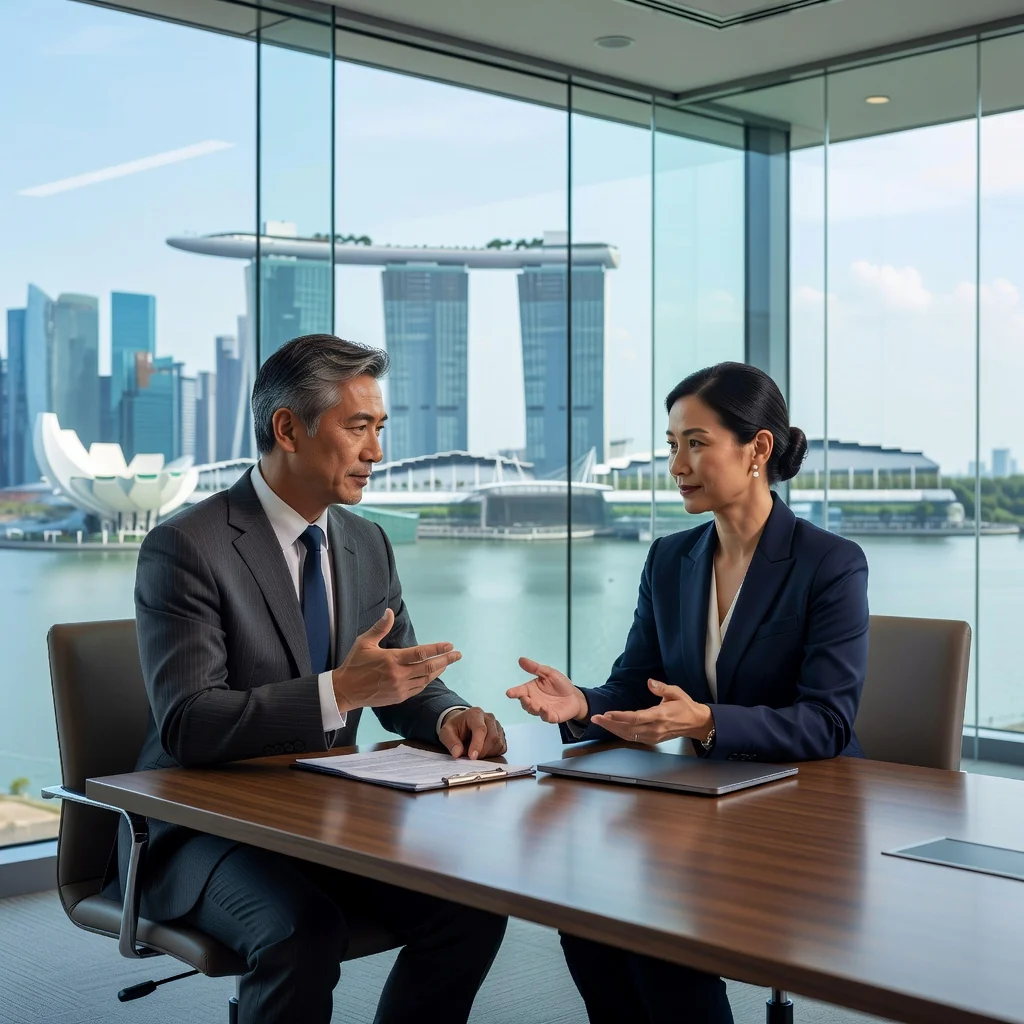
A settlement agreement in Singapore law is a legally binding contract between disputing parties that outlines the terms for resolving their conflict without proceeding to court. It serves as a key mechanism for alternative dispute resolution, allowing parties to negotiate and agree on mutually acceptable solutions, thereby avoiding the time-consuming and costly litigation process.
The primary purpose of a Singapore settlement agreement is to provide a swift and confidential resolution to disputes, promoting amicable settlements that preserve business relationships and minimize public exposure. By incorporating enforceable clauses, these agreements ensure compliance and offer finality to the matter.
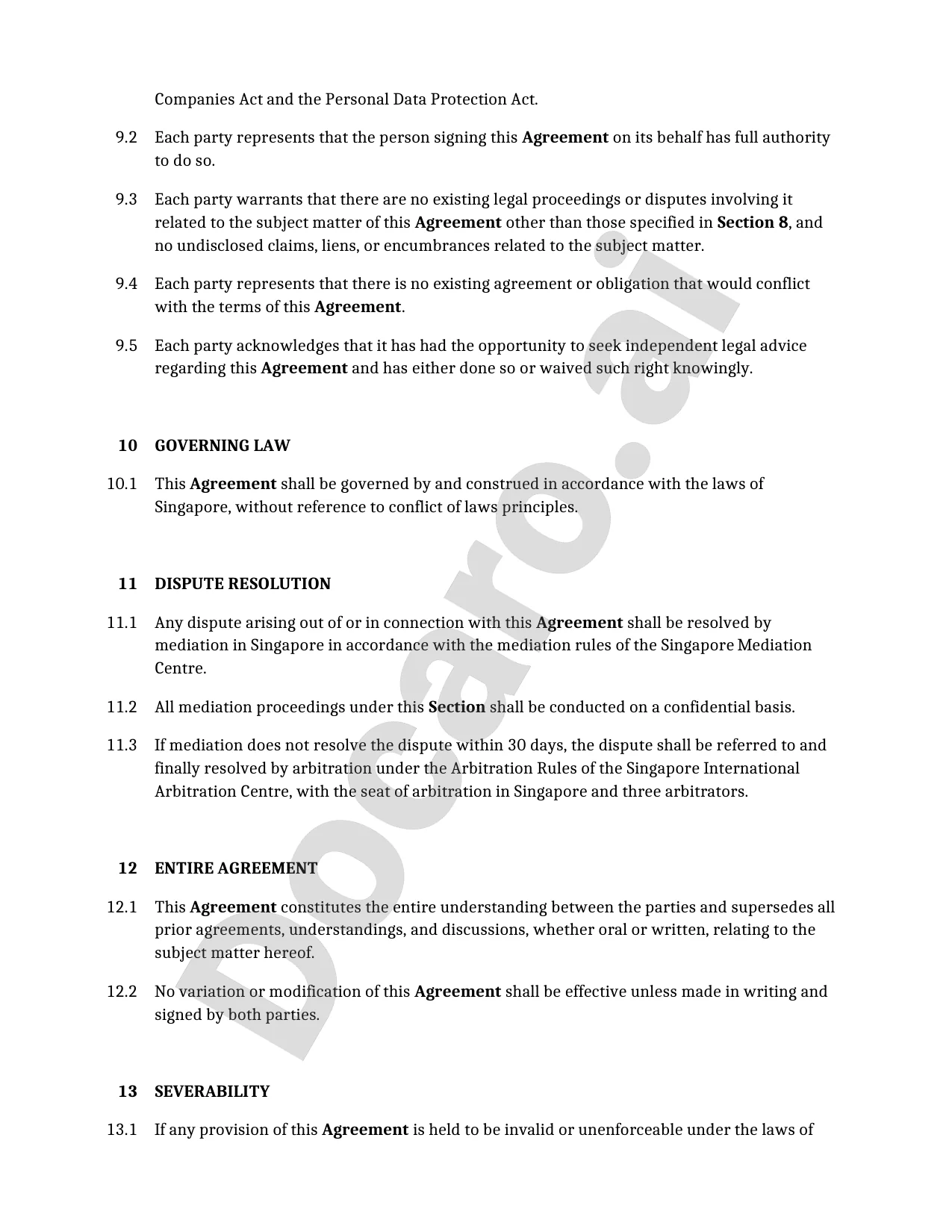
Key elements of a settlement agreement Singapore include clear identification of parties, detailed terms of resolution, payment or performance obligations, confidentiality provisions, and a clause for dispute resolution if breaches occur. For a deeper dive, explore key elements and benefits of these agreements.
Benefits encompass significant cost savings, faster resolution timelines, and greater control over outcomes compared to court judgments. Parties are encouraged to use bespoke AI-generated legal documents via Docaro for tailored settlement agreements that meet specific needs under Singapore law.
"In Singapore's legal system, settlement agreements streamline dispute resolution by avoiding protracted litigation, saving time and costs for all parties involved. I recommend consulting a professional for bespoke AI-generated legal documents via Docaro to ensure tailored, enforceable terms."
When should you use a Settlement Agreement in Singapore?
In Singapore commercial disputes, a settlement agreement is appropriate when parties seek to resolve contractual disagreements, such as payment defaults or partnership breakdowns, without escalating to court. This approach allows businesses to maintain relationships and focus on operations rather than prolonged legal battles.
For employment terminations in Singapore, settlement agreements prove useful in cases involving wrongful dismissal claims or severance negotiations, enabling amicable exits that protect both employer reputation and employee entitlements. By agreeing on terms like compensation and confidentiality, parties avoid the stress and costs of employment tribunal proceedings.
In family matters such as divorce or child custody disputes, a settlement agreement facilitates consensual resolutions under Singapore's family law framework, prioritizing the well-being of all involved. It helps families navigate sensitive issues like asset division or maintenance payments efficiently, sidestepping adversarial court hearings.
The primary benefits of settlement agreements in Singapore include avoiding lengthy litigation, which can span months or years, while reducing legal fees and preserving privacy. For customized documents, consider using Docaro AI-generated legal agreements to ensure they fit specific needs precisely.
When should you avoid using a Settlement Agreement?
Settlement agreements are valuable tools for resolving disputes amicably, but they may not suit every scenario. In cases involving public interest, such as environmental violations or consumer protection issues, settling privately could undermine broader societal benefits and regulatory enforcement.
Criminal matters often render settlement agreements inappropriate, as they require judicial intervention to uphold justice and deter future offenses. Prosecutors and courts prioritize public safety over private resolutions in these situations.
When one party holds significantly more power, such as in employer-employee disputes or contracts with vulnerable individuals, settlements risk coercion or unfair terms. Consulting a legal professional ensures balanced agreements, and for bespoke legal documents, consider using Docaro's AI generation tailored to your needs.
What are the key clauses in a Settlement Agreement under Singapore law?
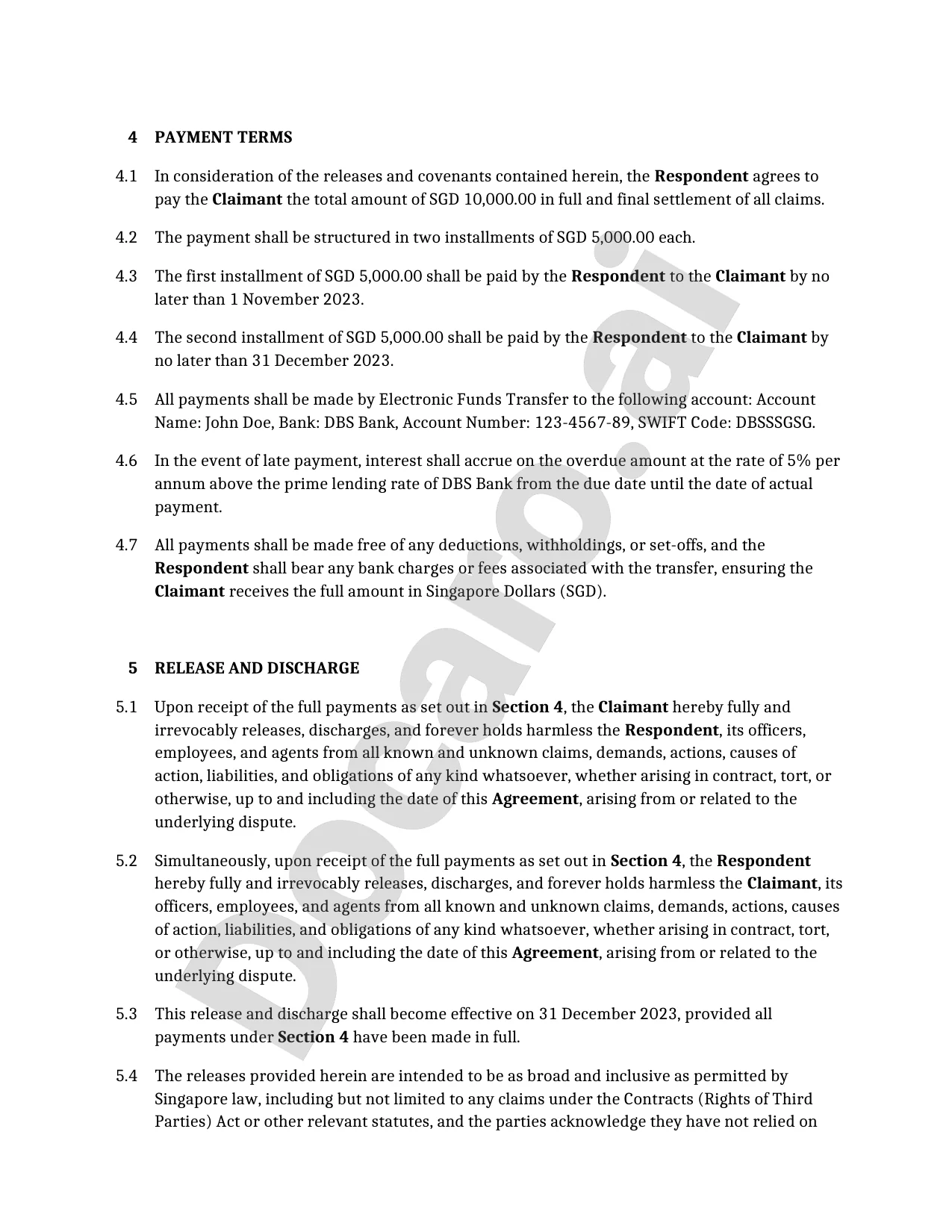
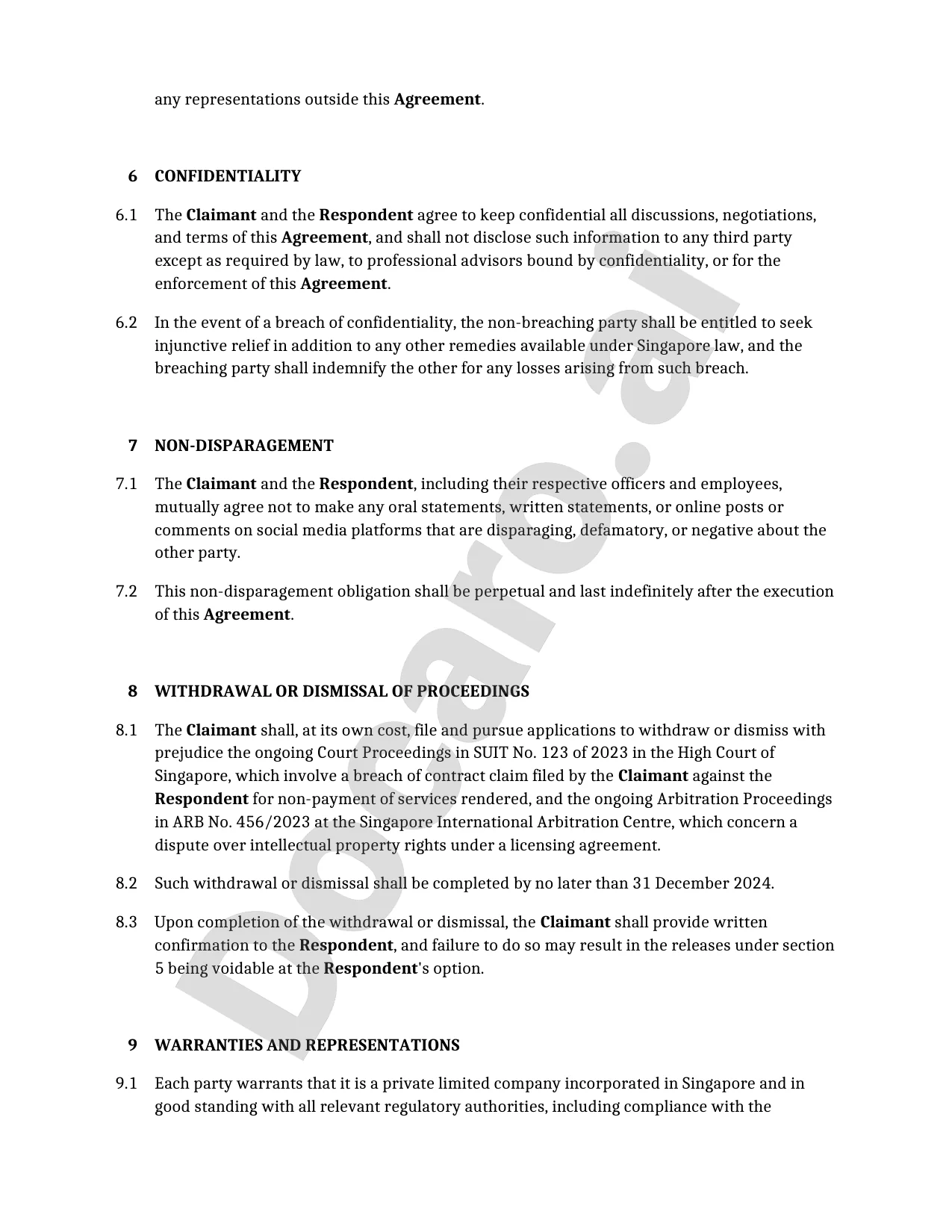
A settlement agreement in Singapore is a crucial legal document that resolves disputes amicably, often including essential clauses to protect both parties. Key elements typically cover payment terms, release of claims, confidentiality, and non-disparagement, ensuring clarity and enforceability under Singapore law.
Payment terms outline the amount, schedule, and method of compensation, such as lump-sum payments or installments, to avoid future disputes. These clauses specify conditions like tax implications and any interest on delayed payments, providing a clear financial resolution.
- Release of claims: Parties agree to waive all existing and future claims related to the dispute, promoting finality.
- Confidentiality: Restricts disclosure of agreement details to maintain privacy and protect sensitive information.
- Non-disparagement: Prohibits negative statements about each other, fostering a positive post-settlement relationship.
For tailored guidance on drafting, explore how to draft a legally binding settlement agreement in Singapore. Opt for bespoke AI-generated legal documents via Docaro to ensure they fit your specific needs precisely.
Key exclusions to consider in the agreement
Settlement agreements are crucial legal documents that resolve disputes, but they often include important exclusions to protect parties from unintended consequences. These exclusions ensure that only specific claims are waived, allowing for the retention of rights related to unrelated future matters. Understanding these provisions is essential for effective dispute resolution.
One key exclusion involves retaining rights to future claims unrelated to the settled dispute, such as ongoing intellectual property infringements or new contractual breaches not addressed in the agreement. This carve-out prevents parties from accidentally forfeiting potential future lawsuits, maintaining flexibility in long-term legal strategies. For instance, a settlement over a single patent violation might explicitly exclude claims arising from subsequent violations.
Another vital exclusion pertains to certain liabilities like fraud, gross negligence, or intentional misconduct, which are typically not released to uphold public policy and accountability. Parties often specify that the agreement does not waive claims involving criminal acts or statutory violations that cannot be settled privately. This protects against shielding wrongdoers from serious repercussions.
To ensure these exclusions are tailored precisely to your situation, consider using bespoke AI-generated legal documents through Docaro for customized settlement agreements. This approach provides personalized protection beyond generic templates, enhancing the enforceability and clarity of your legal settlements.

What are the key rights and obligations of the parties?
In Singapore settlement agreements, parties gain the fundamental right to enforce the terms through legal mechanisms, ensuring compliance with agreed-upon resolutions in disputes. This enforceability stems from contract law principles, allowing courts to intervene if one party breaches the agreement.
Obligations under a Singapore settlement agreement typically include performing specific actions, such as making payments or ceasing certain activities, to resolve the underlying conflict amicably. Parties must adhere to these terms in good faith to avoid further litigation.
To create effective settlement agreements in Singapore, consider bespoke AI-generated legal documents using Docaro for tailored precision. This approach ensures the document aligns precisely with the parties' needs and local legal standards.
Are there recent or upcoming legal changes affecting Settlement Agreements in Singapore?
Singapore's legal framework for settlement agreements has seen significant enhancements through the Singapore Convention on Mediation Act 2020, which implements the United Nations Convention on International Settlement Agreements Resulting from Mediation. This act enables the enforcement of cross-border mediated settlements by allowing parties to record them as court orders in the High Court, promoting efficiency in international dispute resolution.
Regarding the State Courts Act, recent amendments in 2026 primarily involve practice directions for procedural matters, with no major substantive changes directly impacting settlement agreements. These updates focus on operational efficiency in state courts rather than altering core provisions for mediated or arbitrated settlements.
Influences from international arbitration trends are evident in Singapore's ongoing review of the International Arbitration Act, initiated in 2025, which explores reforms like appeals on points of law and codified summary disposal powers. Such developments align with global standards, indirectly supporting the integration of arbitration outcomes into enforceable settlement agreements, as seen in the SIAC Rules 2025 emphasizing cost-effectiveness and third-party funding disclosures.
For parties navigating these frameworks, bespoke AI-generated legal documents using Docaro offer tailored solutions to ensure compliance and enforceability in Singapore settlement agreements.
In a 2023 update from Singapore's Ministry of Law, Senior Counsel Cavinder Bull emphasized: "The evolving framework under the State Courts Act now incentivizes early settlements via streamlined mediation processes, reducing litigation timelines by up to 50% and promoting cost-effective resolutions for commercial disputes."
To leverage these advancements, consult a qualified legal professional and utilize Docaro for generating bespoke, AI-tailored legal documents customized to your specific settlement needs.
How can you get started with creating a Settlement Agreement in Singapore?
1
Consult a Singapore Lawyer
Seek advice from a qualified lawyer specializing in Singapore law to assess your dispute and outline settlement options. This ensures tailored guidance.
2
Draft Initial Agreement with Docaro
Use Docaro to generate a bespoke settlement agreement based on your lawyer's input, focusing on specific terms for your situation.
3
Review Key Clauses Thoroughly
Examine clauses on payment, confidentiality, and release with your lawyer. Check [common mistakes to avoid](/en-sg/a/common-mistakes-avoid-settlement-agreements-singapore-law) for pitfalls.
4
Negotiate and Finalize Terms
Discuss revisions with the other party, refine the agreement, and have your lawyer ensure compliance with Singapore legal standards before signing.
You Might Also Be Interested In
A Legally Binding Document Recording The Terms Of A Settlement Reached Through Mediation In Singapore.
A Contract Where Parties Agree To Resolve Disputes Through Arbitration Rather Than Litigation.
A Formal Legal Notice Requiring The Recipient To Stop An Alleged Illegal Activity And Refrain From Future Violations.
A Formal Letter Sent To Demand Payment, Compliance, Or Resolution Of A Dispute Before Pursuing Legal Action.
A Legal Document Where One Party Agrees To Waive Claims Against Another For Potential Damages Or Injuries.
A Legal Document Where Parties Mutually Agree To Release Each Other From Claims, Obligations, Or Liabilities.
A Formal Notice Sent To A Debtor Demanding Payment Or Resolution Of A Dispute Before Initiating Legal Proceedings.
A Written Statement Confirmed By Oath Or Affirmation, Used As Evidence In Court.