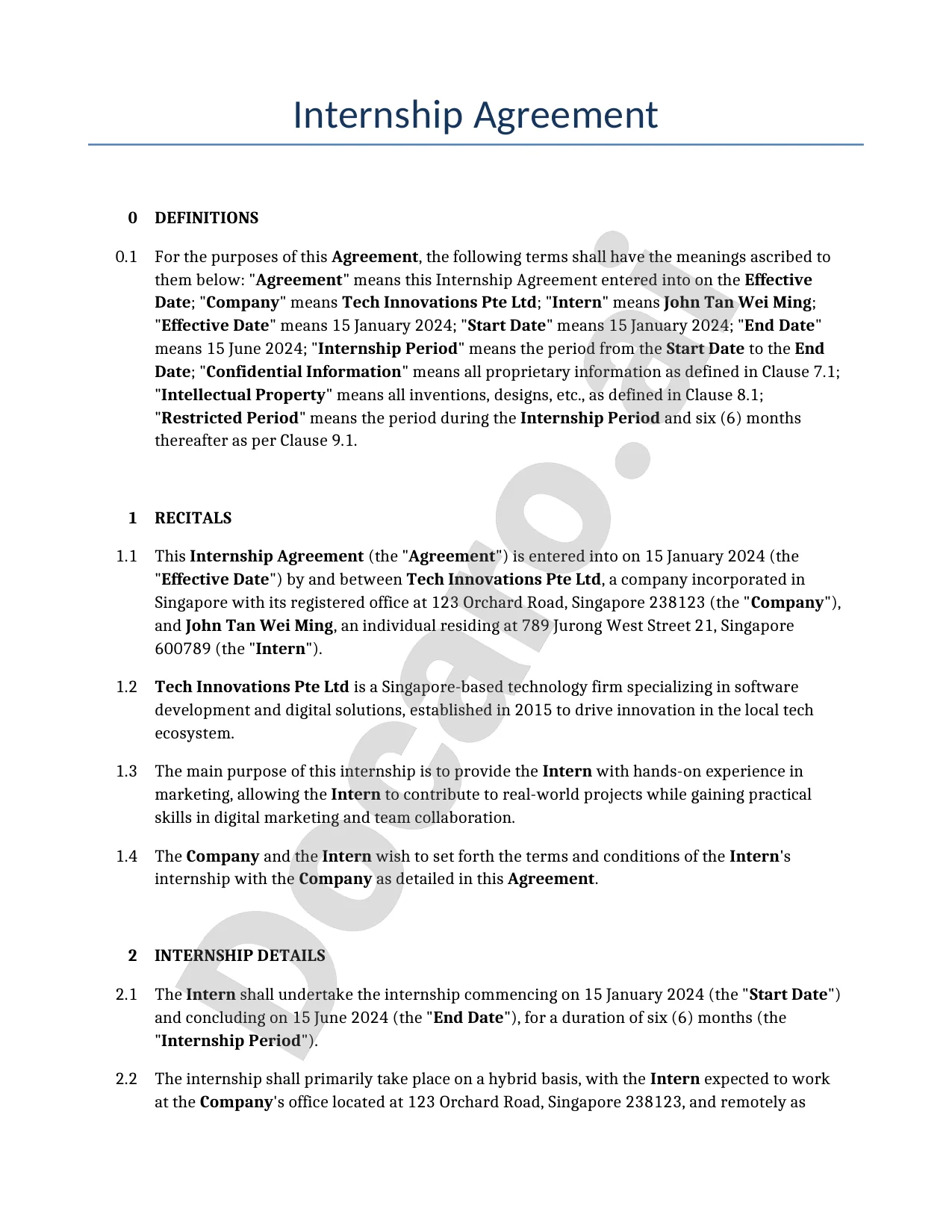
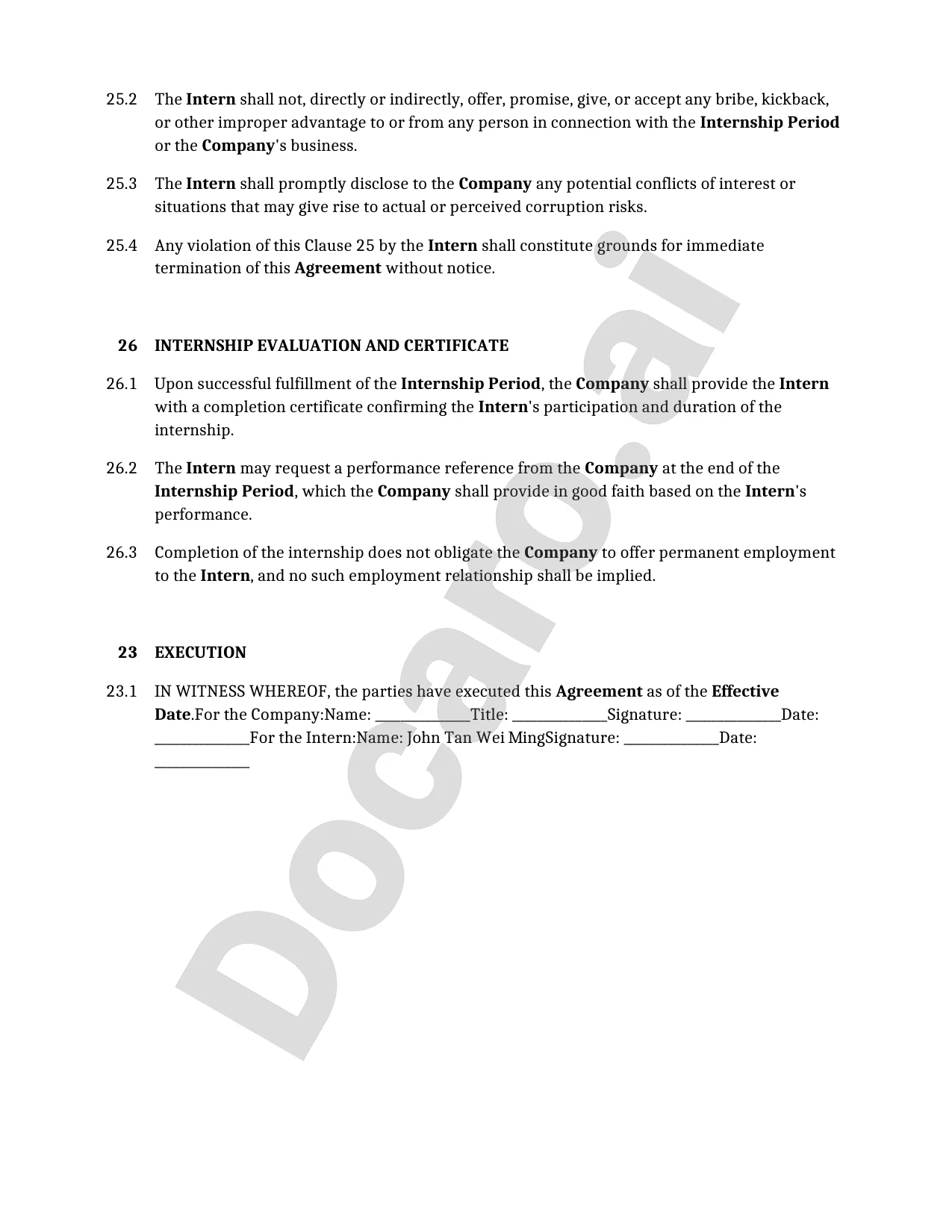
What is an Internship Agreement in Singapore?
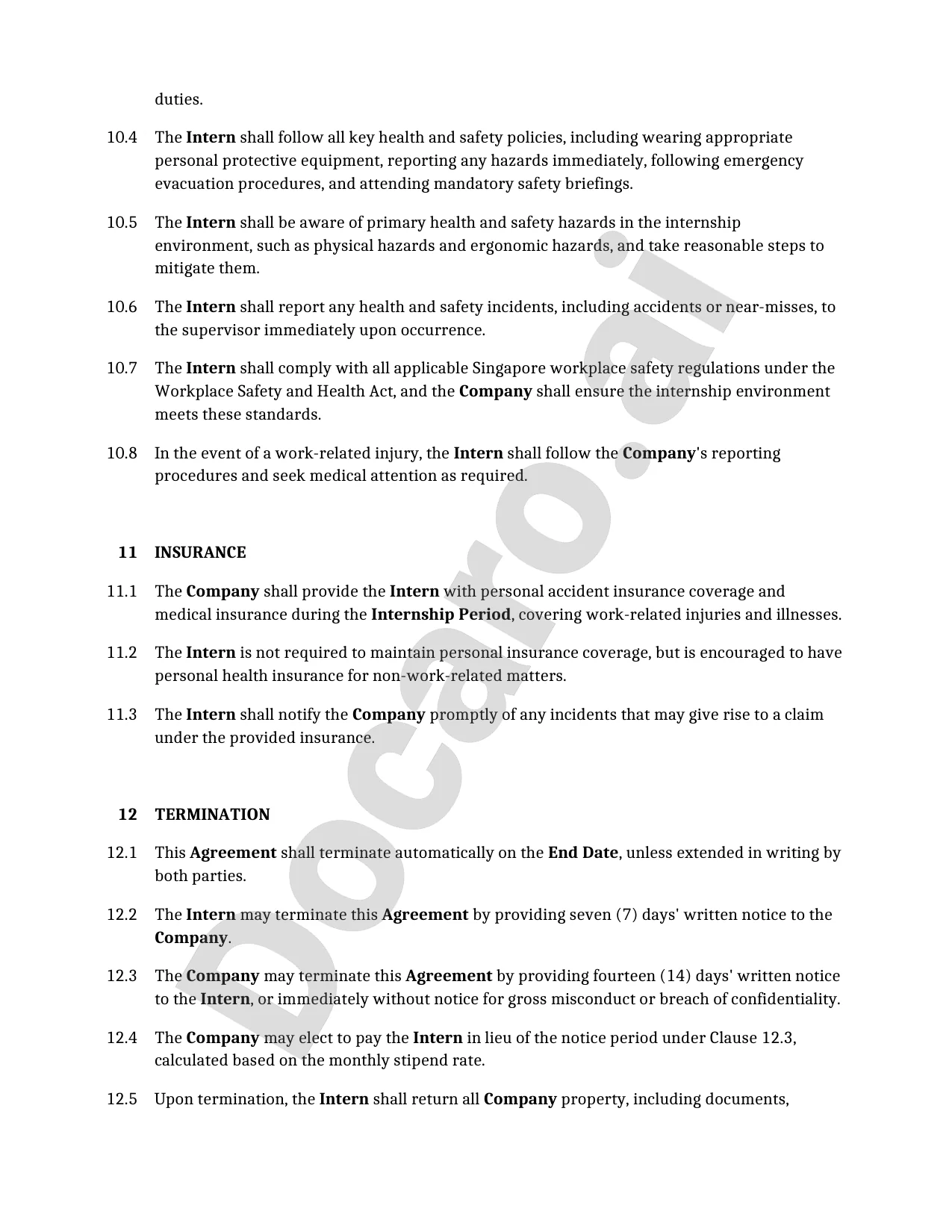
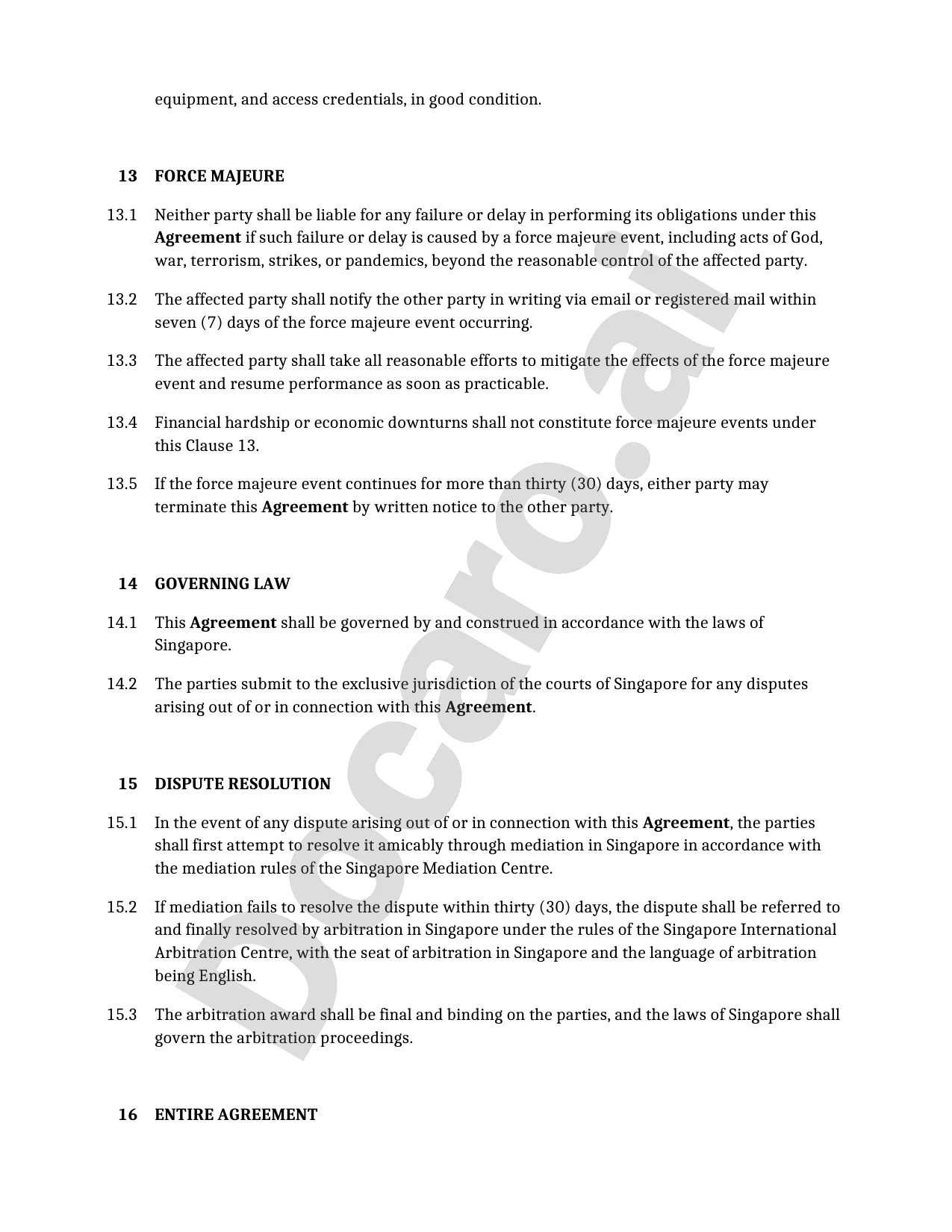
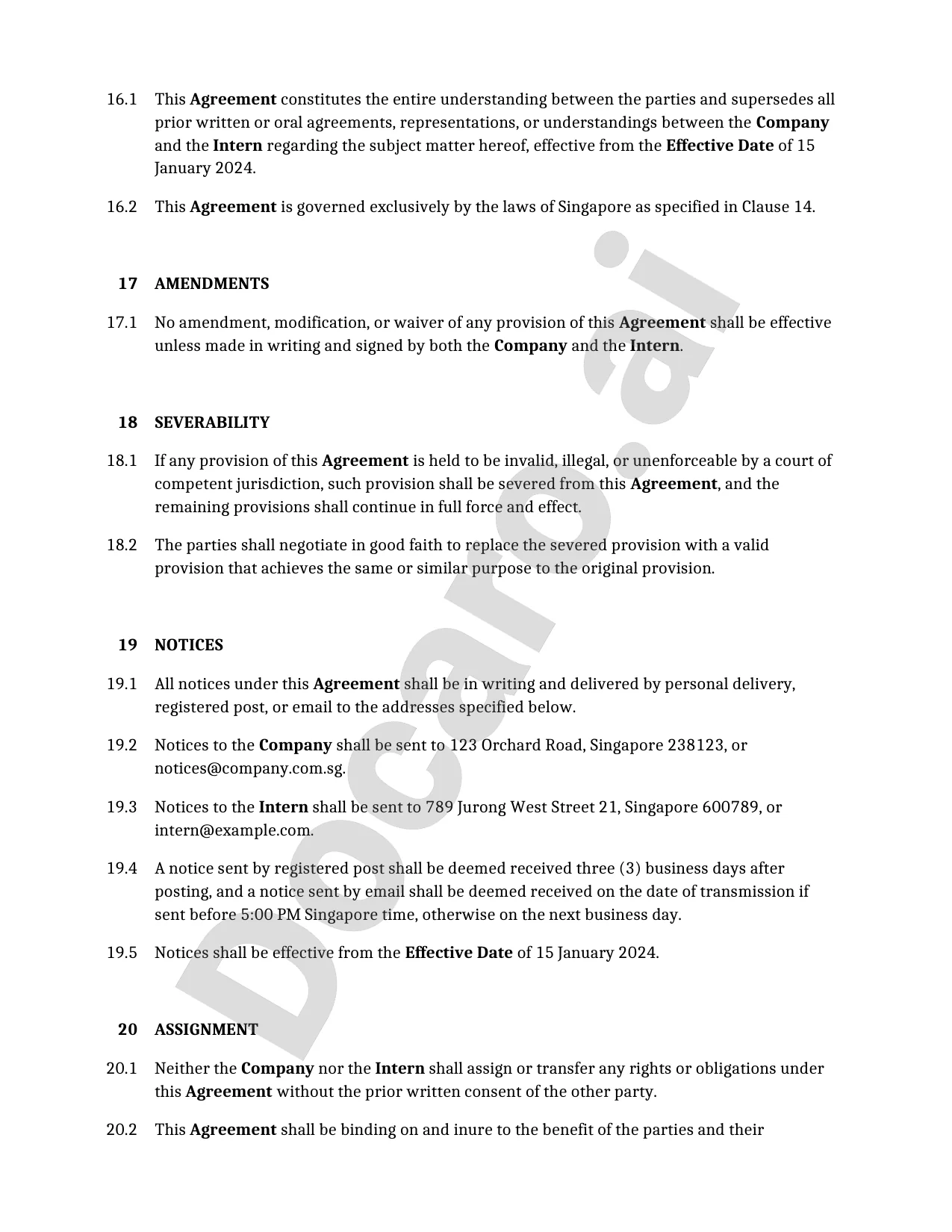
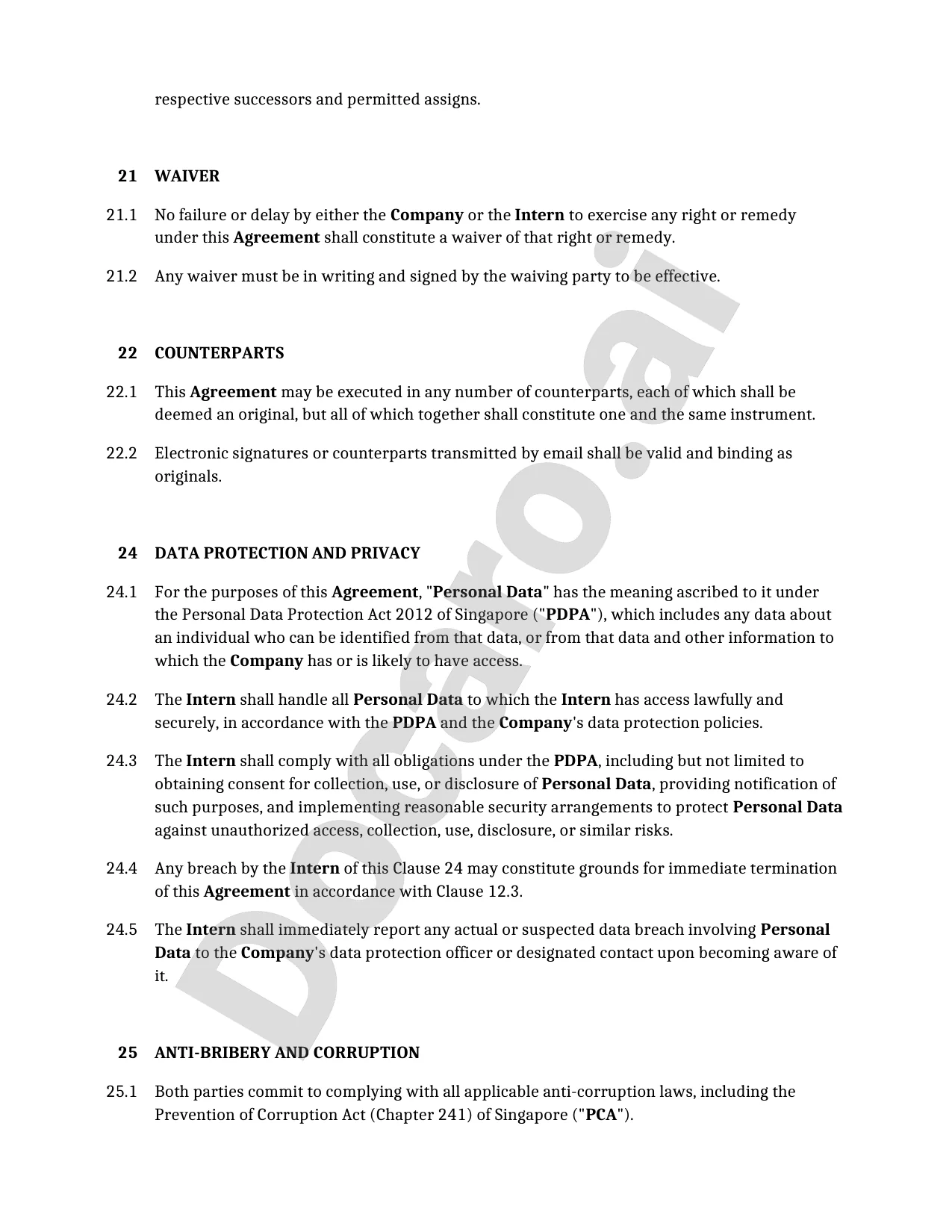
An internship agreement in Singapore is a legal document that outlines the terms between a company and an intern, ensuring clarity on the arrangement under Singapore employment law. Its primary purpose is to define the scope of the internship, protecting both parties from misunderstandings while complying with regulations from the Ministry of Manpower (MOM).
Unlike a standard employment contract, which establishes a formal employer-employee relationship with entitlements like CPF contributions and paid leave, an internship agreement typically treats the role as a learning opportunity without full employee benefits. This distinction is crucial for short-term placements, especially for students or recent graduates, avoiding unintended liabilities for the employer.
Key elements of an internship agreement Singapore include duration, responsibilities, and compensation details. For a deeper dive into these core components, consider consulting tailored legal resources.
To ensure compliance and customization, opt for bespoke AI-generated legal documents via Docaro rather than generic options, safeguarding your specific needs under Singapore law.
When Should You Use an Internship Agreement in Singapore?
An internship agreement in Singapore is particularly appropriate for short-term placements in companies, where students or recent graduates gain hands-on experience in professional environments like finance or tech firms. These agreements ensure clarity on roles, duration, and expectations, making them ideal for structured learning opportunities lasting a few weeks to six months.
In educational institutions, such as polytechnics or universities partnering with industry, an internship agreement outlines academic credit requirements and supervision details, protecting both interns and supervisors from misunderstandings. For non-profits, these agreements facilitate volunteer-based internships focused on social impact, specifying tasks like community outreach without implying formal employment.
The key benefits of an internship agreement include providing structure and protection for interns by defining compensation, if any, working hours, and intellectual property rights, while shielding employers from liability issues. Employers gain assurance on confidentiality and performance standards, fostering a secure environment for skill development.
To create a tailored internship agreement in Singapore, consider using Docaro for AI-generated legal documents, ensuring compliance with local labor laws like the Employment Act.
When Should You Avoid Using an Internship Agreement?
In Singapore employment law, an internship agreement should not be used when the role mirrors full-time employment, such as involving fixed hours, ongoing responsibilities, and direct supervision typical of a permanent position. Instead, a standard employment contract is required to comply with the Employment Act, ensuring entitlements like paid leave and CPF contributions.
For unpaid volunteer work lacking formal structure, such as casual community service without defined duties or oversight, an internship agreement is inappropriate as it implies a structured learning experience. Opt for a simple volunteer acknowledgment to avoid implying any employment relationship.
Misclassifying roles can lead to significant legal risks in Singapore, including penalties for non-compliance with minimum wage laws or unfair dismissal claims if the intern is treated as an employee. Employers may face fines from the Ministry of Manpower or back payments, underscoring the need for bespoke AI-generated legal documents using Docaro to tailor agreements accurately.
"Distinguishing internships from formal employment is crucial under Singapore law to avoid penalties from the Ministry of Manpower, such as fines up to SGD 10,000 or imprisonment; always consult a legal expert for tailored advice," says Dr. Lim Wei Shen, senior partner at a leading Singapore law firm. For compliant documentation, opt for bespoke AI-generated legal documents via Docaro to ensure precision and adherence to regulations.
What Are the Key Clauses in an Internship Agreement?
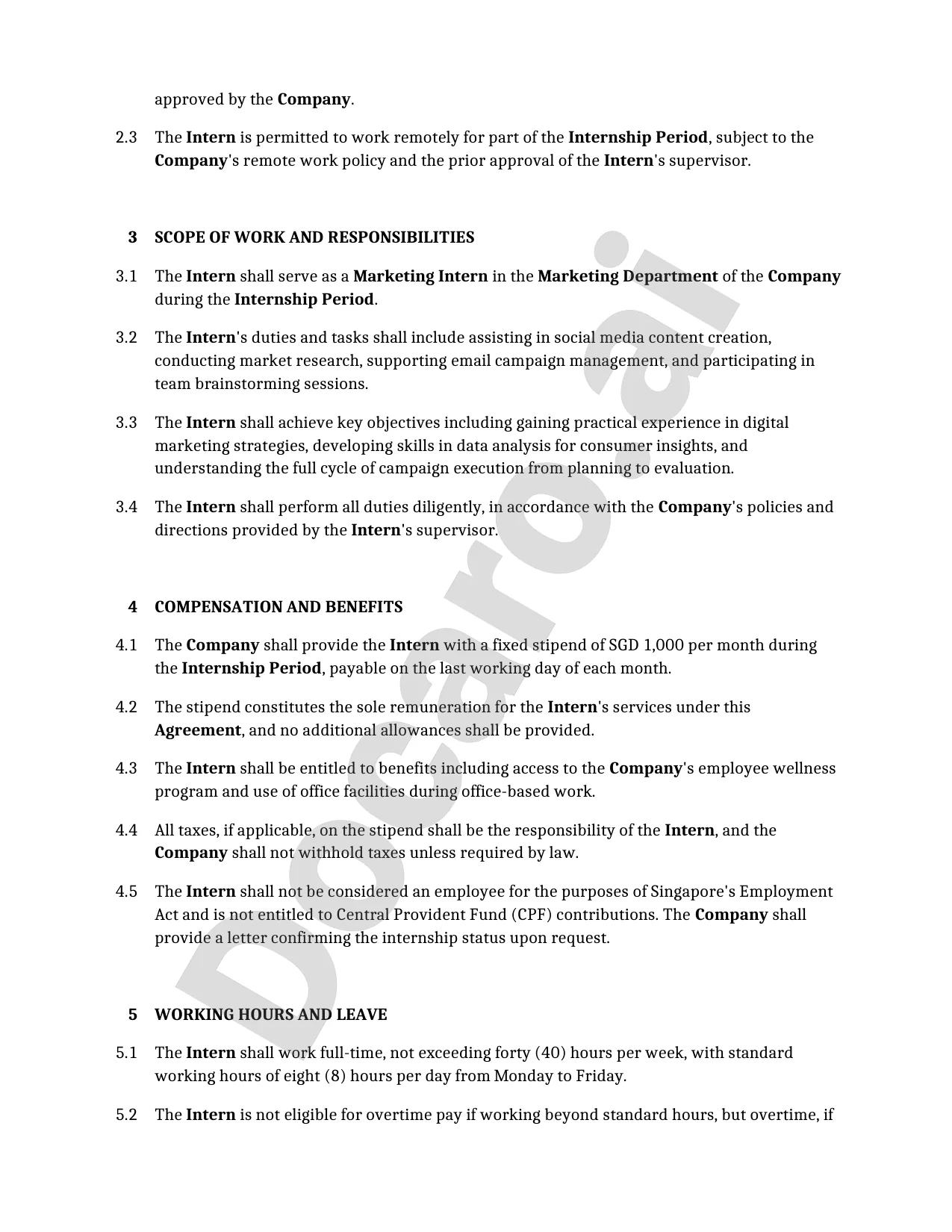
An internship agreement under Singapore law typically outlines the duration of the internship, specifying a fixed period such as 3 to 6 months to ensure clarity for both the intern and the employer. This clause helps prevent disputes by defining start and end dates, often including provisions for extensions if mutually agreed upon.
The scope of work clause details the intern's responsibilities, learning objectives, and any supervision arrangements, aligning with Singapore's emphasis on educational value in internships. It ensures the role provides meaningful experience without exploiting the intern as unpaid labor.
Regarding compensation, many internships in Singapore are unpaid, especially for students, but agreements should specify if any stipend, allowances, or benefits like transport reimbursement apply. For paid internships, the clause must comply with minimum wage guidelines where relevant, promoting fair treatment.
Termination conditions include notice periods, typically 1 week for short-term internships, and grounds for early ending such as misconduct or completion of objectives. For full compliance with Singapore's employment laws, including protections against discrimination, refer to legal requirements for internship agreements in Singapore; always opt for bespoke AI-generated legal documents using Docaro to tailor to your specific needs.
Common Optional Clauses to Consider
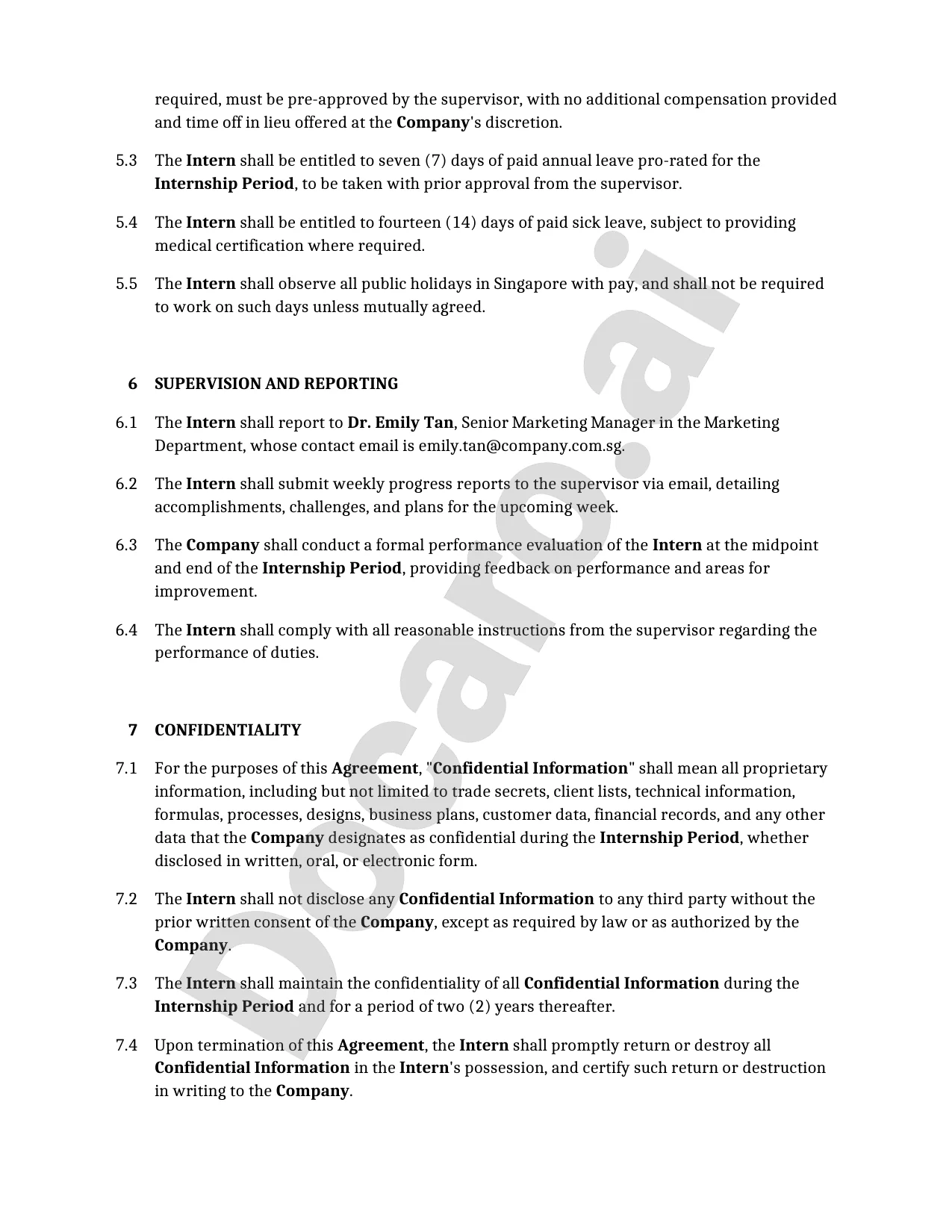
In internship agreements in Singapore, confidentiality clauses are essential to protect sensitive company information shared with interns. These provisions require interns to maintain secrecy of proprietary data, preventing unauthorized disclosure during and after the internship, which is particularly relevant in competitive industries like technology and finance.
Intellectual property rights clauses in Singapore internship contracts ensure that any inventions, designs, or works created by interns belong to the employer. This is crucial for safeguarding the company's innovations, as interns often contribute ideas while gaining practical experience, aligning with Singapore's robust IP laws under the Intellectual Property Office.
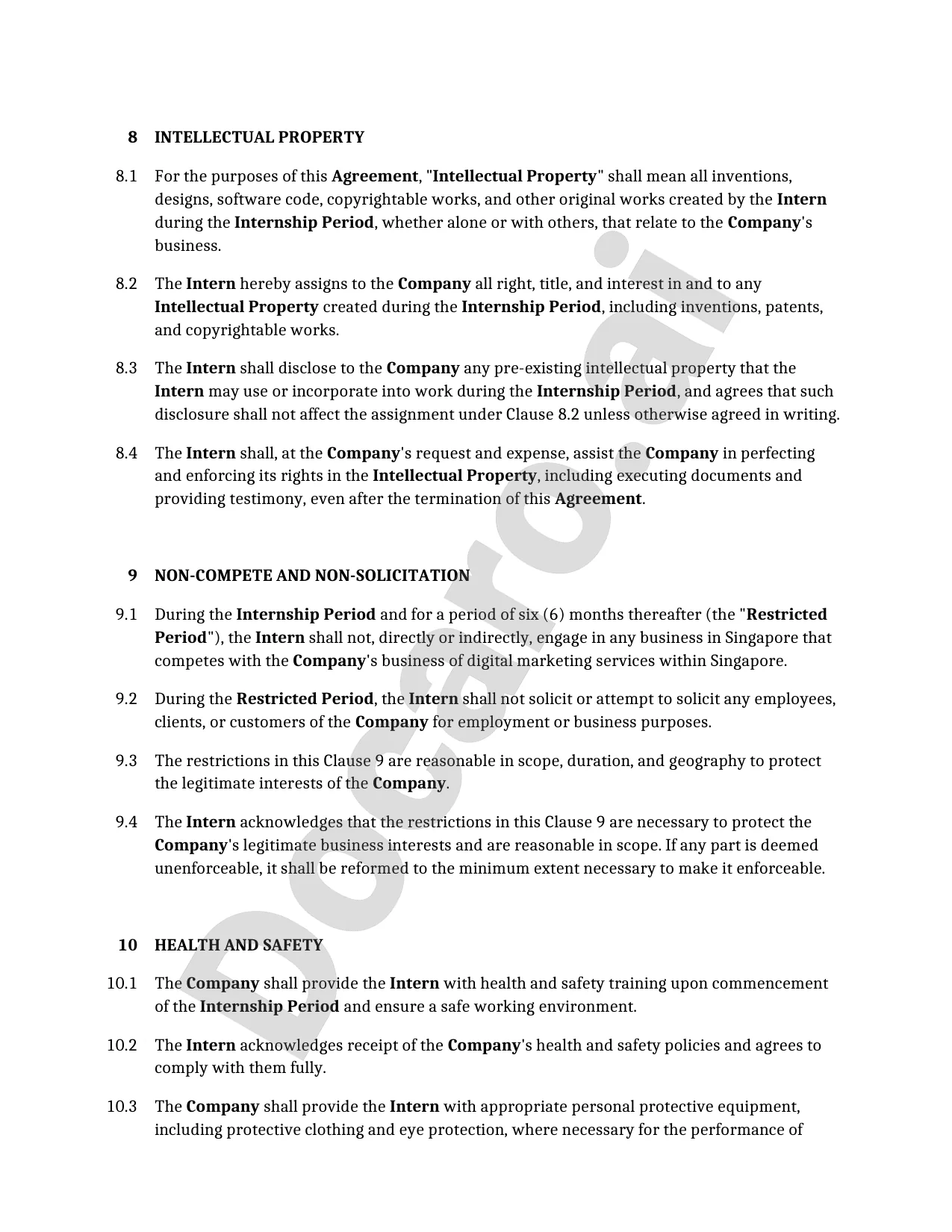
Non-compete provisions may restrict interns from joining rival firms or starting competing ventures for a specified period post-internship. While enforceable in Singapore if reasonable in scope, duration, and geography, these clauses protect business interests without unduly limiting the intern's career mobility, especially in high-stakes sectors.
For tailored internship agreements in Singapore, consider using Docaro's AI-generated legal documents to create bespoke clauses that fit specific needs, ensuring compliance and relevance without relying on generic options.

What Are the Key Rights and Obligations of Parties in an Internship Agreement?
In Singapore, internship agreements are governed by the Employment Act for interns earning up to SGD 2,600 monthly, ensuring basic rights and obligations for both parties. Interns have the right to a safe working environment under the Workplace Safety and Health Act, while employers must provide necessary training and supervision to prevent hazards.
Employers bear the duty to outline clear terms in the internship contract, including working hours, compensation if applicable, and learning objectives, as per guidelines from the Ministry of Manpower (MOM). Interns are obligated to adhere to company policies, perform assigned tasks diligently, and maintain confidentiality during and after the internship period.
For comprehensive legal protection, interns and employers should use bespoke AI-generated documents via Docaro platform to tailor agreements to specific needs, rather than generic templates. This ensures compliance with Singapore's employment laws and minimizes disputes.
Rights of the Intern
1
Review Internship Agreement
Carefully read your internship contract to identify key terms on rights, duties, compensation, and termination clauses.
2
Document Potential Violations
Keep detailed records of any instances where your rights, such as fair pay or safe working conditions, appear to be infringed.
3
Generate Custom Legal Document with Docaro
Use Docaro to create a tailored AI-generated legal notice or demand letter asserting your rights based on the agreement.
4
Seek Authority Advice if Needed
If issues persist, consult labor authorities or legal experts for guidance on enforcing your documented rights.
Obligations of the Employer
Employers hold critical key obligations when hiring young workers, including providing adequate supervision to ensure safety and proper training in the workplace. This involves assigning experienced mentors and conducting regular check-ins to prevent accidents and foster skill development, aligning with child labor laws compliance.
Adhering to work hour limits is essential to protect young employees from overwork, such as restricting shifts to no more than 8 hours per day and prohibiting work during school hours for minors under 16. Compliance tips include using scheduling software to track hours and consulting state-specific regulations to avoid penalties.
Ensuring no exploitation means paying fair wages, avoiding hazardous tasks, and respecting workers' rights to breaks and education. Employers should implement clear policies against discrimination and harassment, while documenting all agreements to demonstrate ethical practices.
For robust compliance, generate bespoke legal documents using Docaro AI, tailored to your business needs for employment contracts and policies. Regularly review operations with legal experts to stay updated on evolving labor standards and minimize risks.

Are There Any Key Exclusions in Internship Agreements?
In Singapore internship agreements, key exclusions often limit the scope to short-term training without providing full employee benefits like paid leave, medical insurance, or CPF contributions, ensuring interns are not treated as permanent staff.
These agreements typically exclude long-term commitments, such as guaranteed extensions or post-internship employment, and may disclaim liability for risks like workplace injuries if not covered by mandatory insurance, protecting companies from extended obligations.
Seek legal counsel for custom exclusions in Singapore internship agreements when dealing with specialized industries, international interns, or unique intellectual property concerns to ensure compliance with local laws like the Employment Act.
For tailored solutions, consider bespoke AI-generated legal documents via Docaro platform to create precise internship agreement exclusions that fit your specific needs.
What Recent or Upcoming Legal Changes Affect Internship Agreements in Singapore?
Singapore's labor laws for internship agreements remain stable under the oversight of the Ministry of Manpower (MOM), with no major updates announced as of March 2026. The fair consideration framework continues to emphasize equal treatment for all job seekers, including interns, ensuring that opportunities are advertised openly to promote diversity and prevent discrimination.
Regarding remote work provisions, current regulations allow flexibility for internships, but employers must still comply with standard employment terms like working hours and safety guidelines, even in hybrid setups. MOM's guidelines from 2023 persist without significant revisions, supporting work-life balance while maintaining productivity.
For drafting effective internship agreements in line with these rules, consider using bespoke AI-generated legal documents via Docaro to tailor terms precisely to your needs.
Refer to MOM's resources for the latest on drafting internship agreements for Singapore employers under existing frameworks.
How Can You Draft an Effective Internship Agreement? Steps to Get Started
1
Consult Legal Requirements
Research Singapore's employment laws for internships, including MOM guidelines and IP protection, to ensure compliance.
2
Identify Key Parties
List the company, intern's full details, and any supervisors involved to define all parties clearly.
3
Outline Terms Using Docaro
Use Docaro to generate a bespoke AI-powered internship agreement covering duration, duties, compensation, and confidentiality.
4
Get Professional Review
Have the drafted agreement reviewed by a Singapore-qualified lawyer for accuracy and legal enforceability.