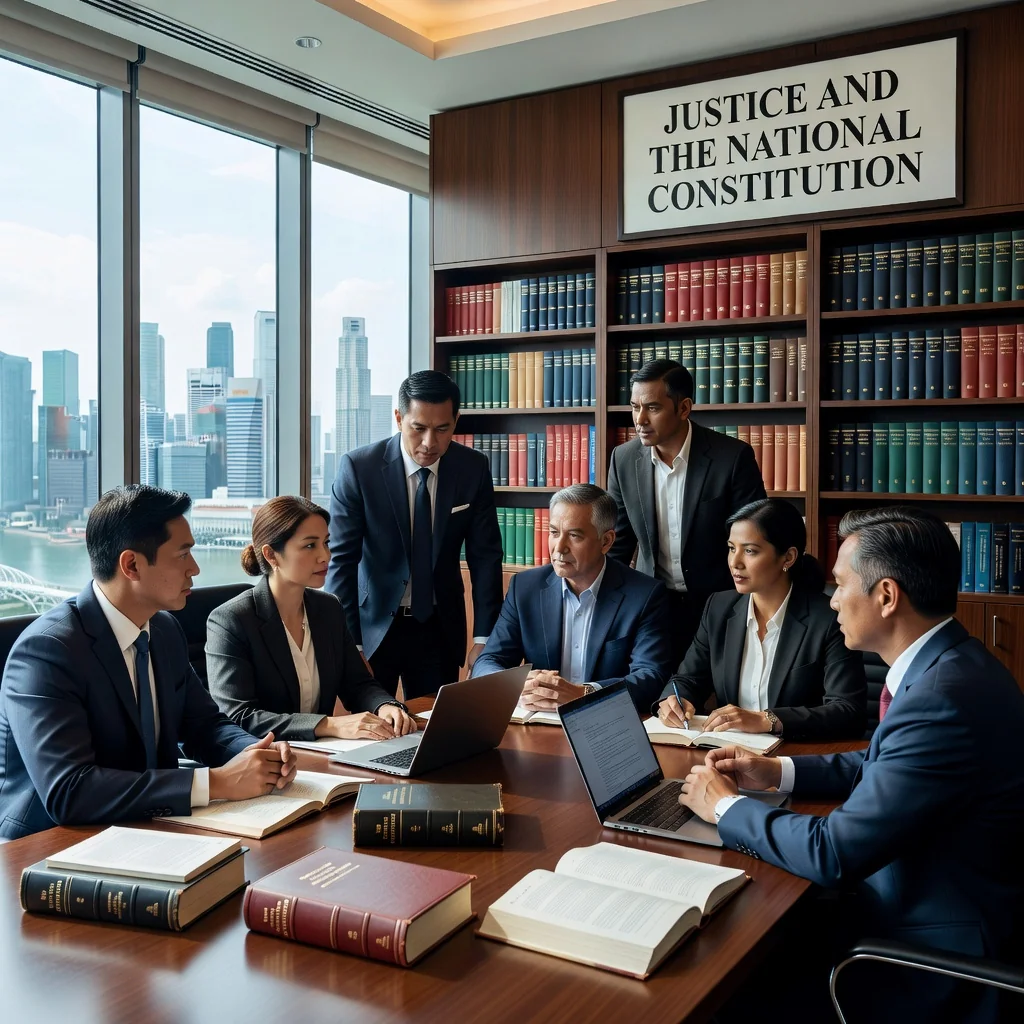
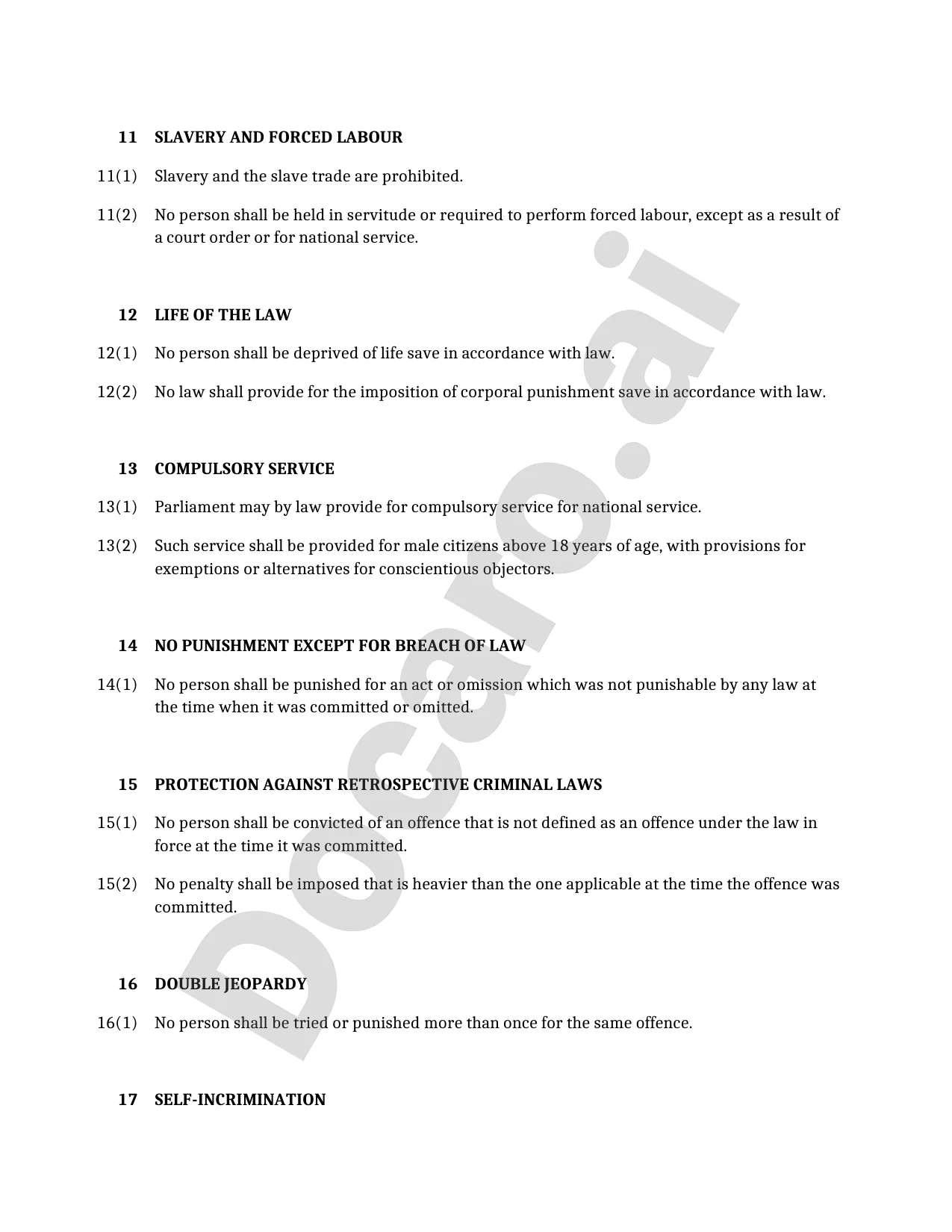
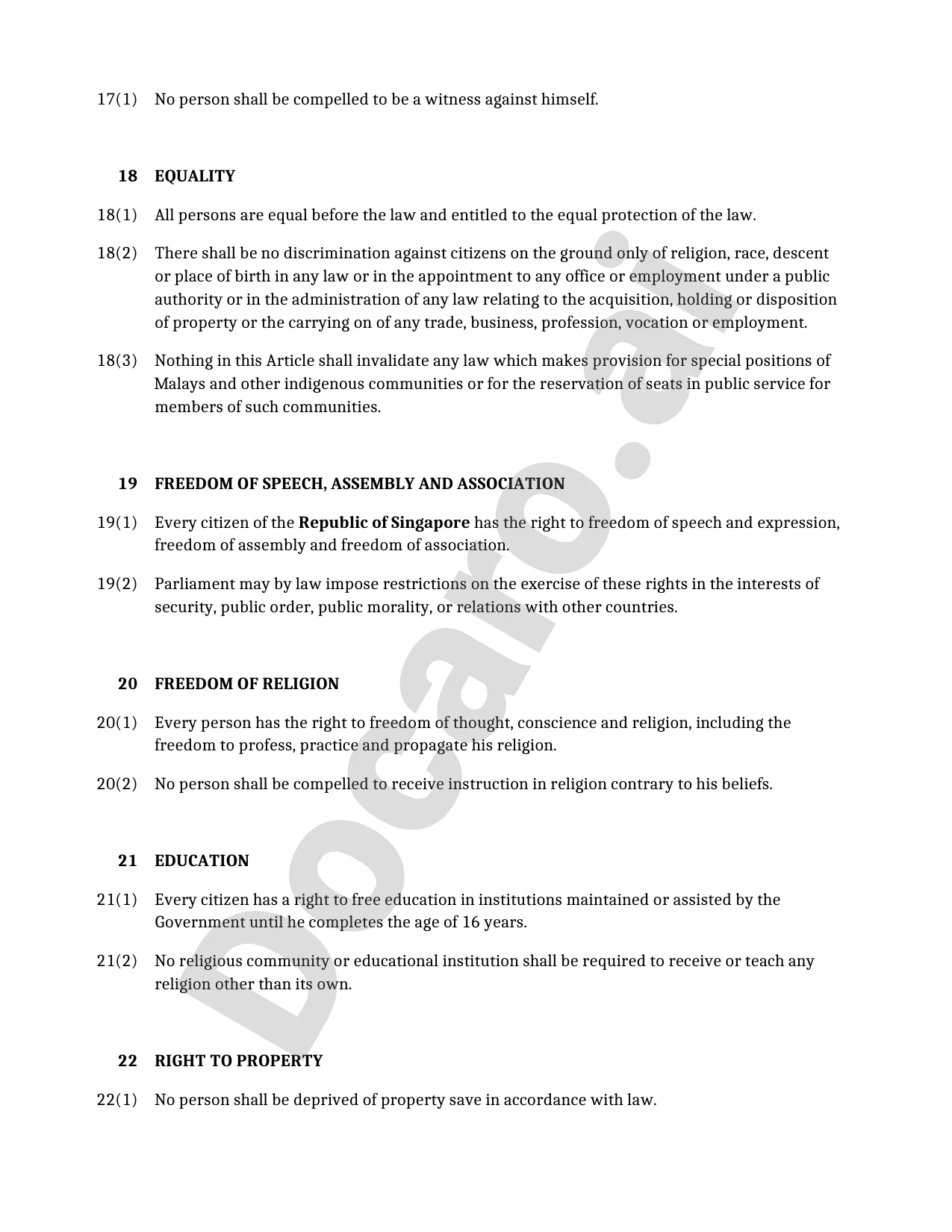
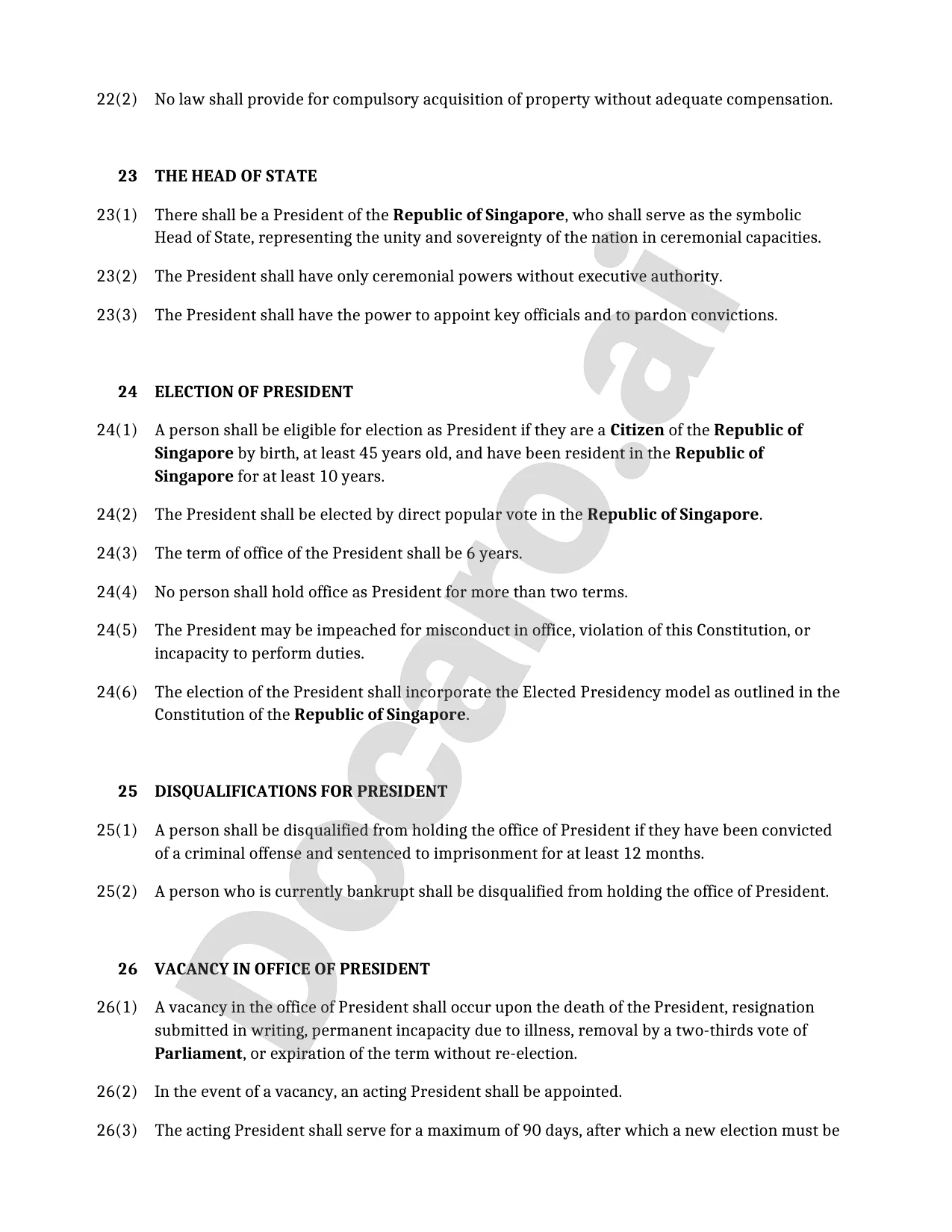
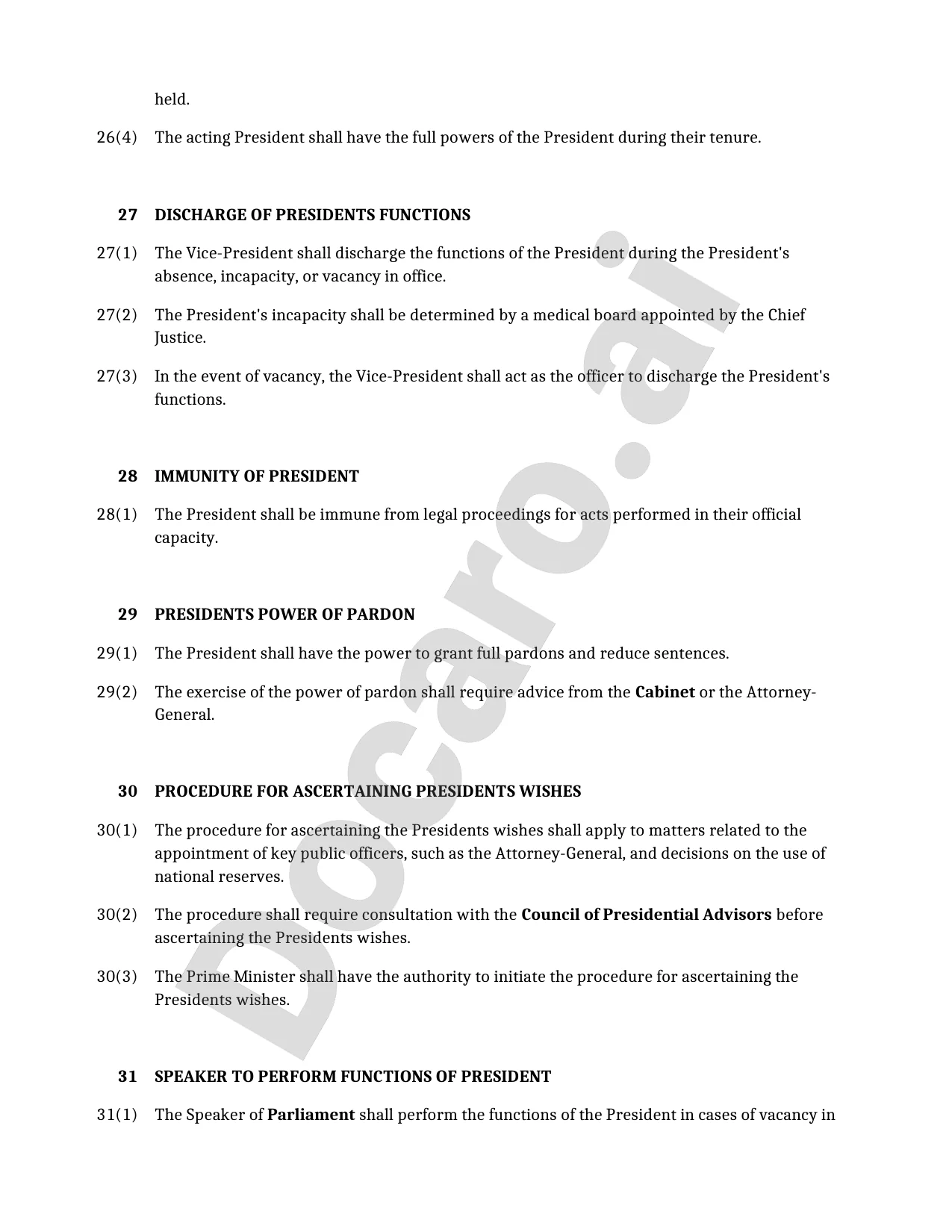
What are Constitution legal documents in Singapore?
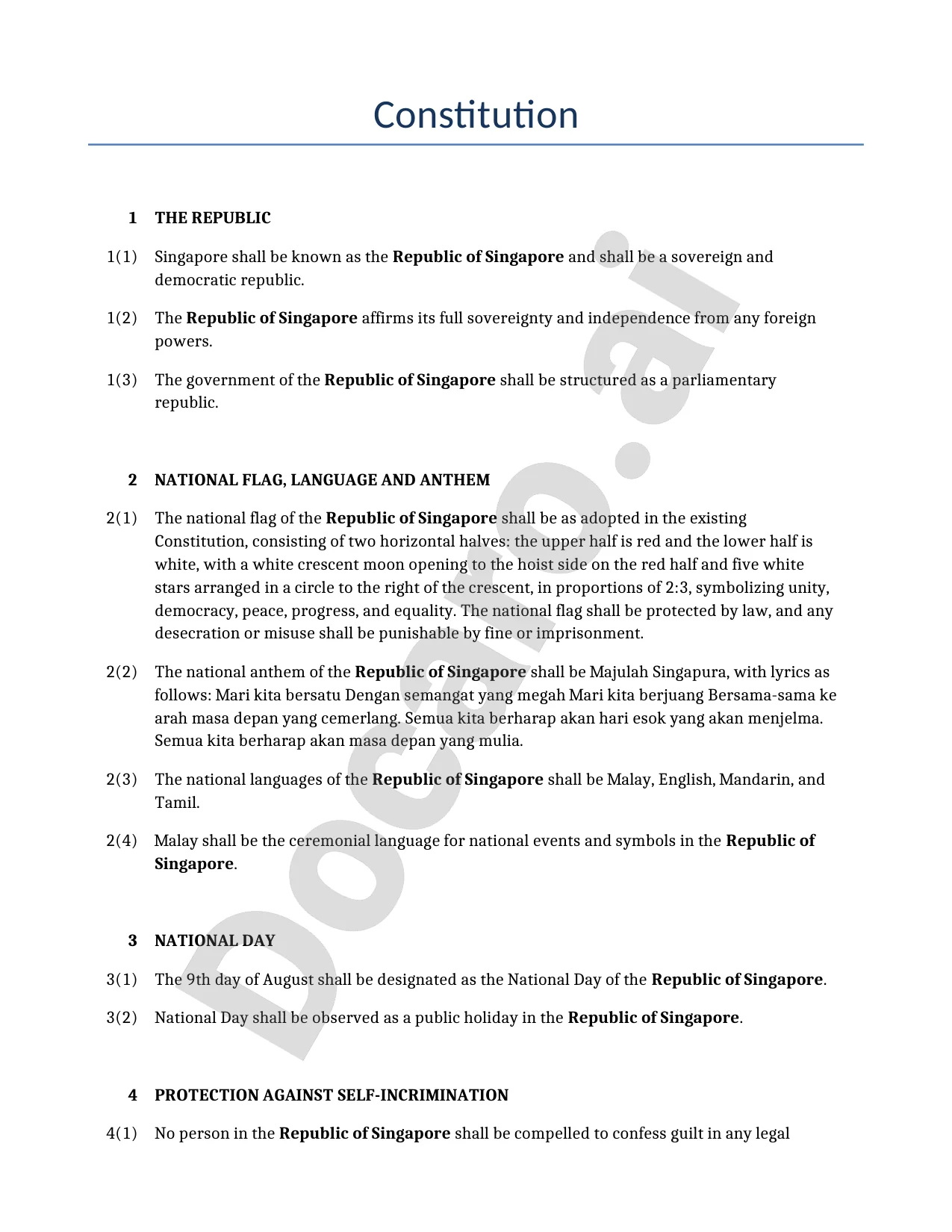
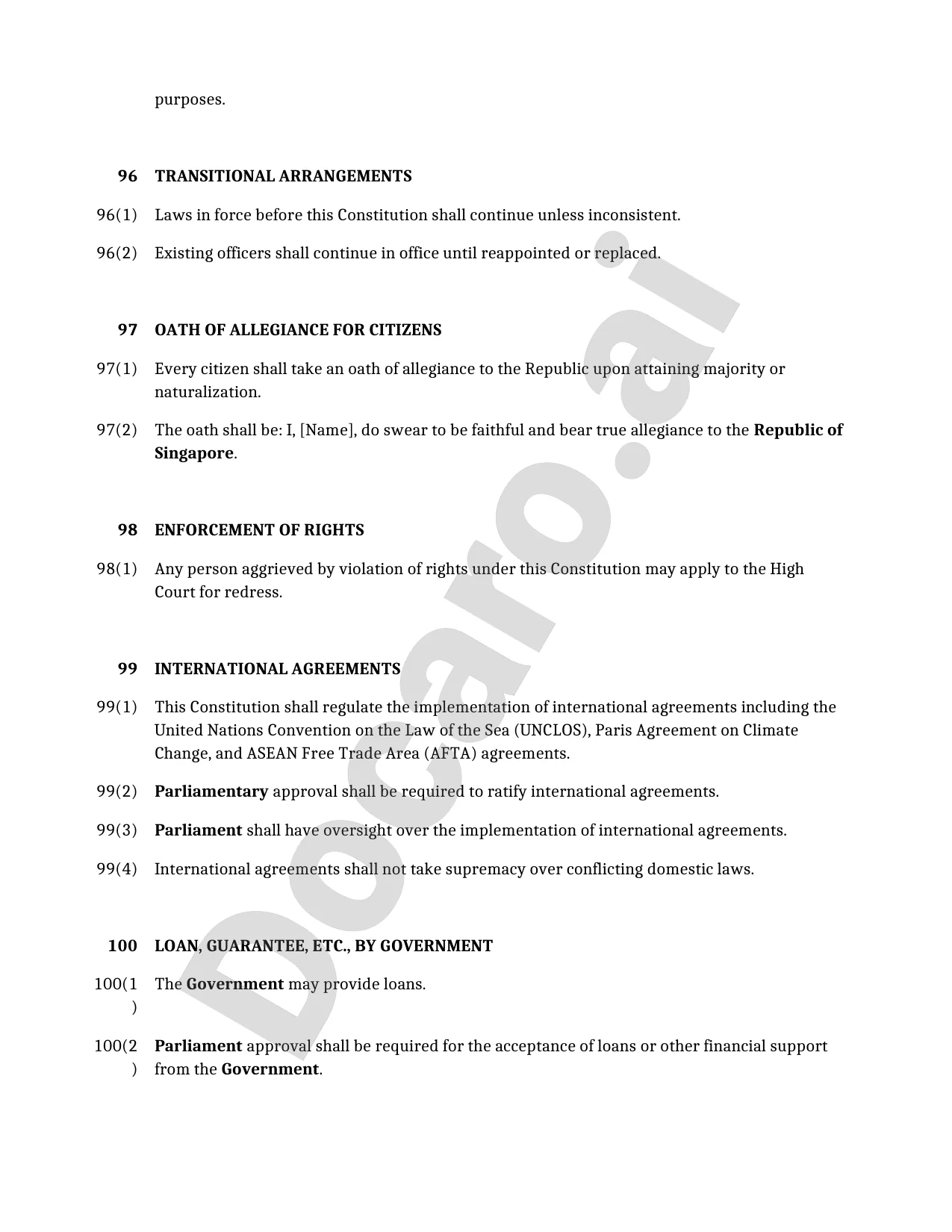
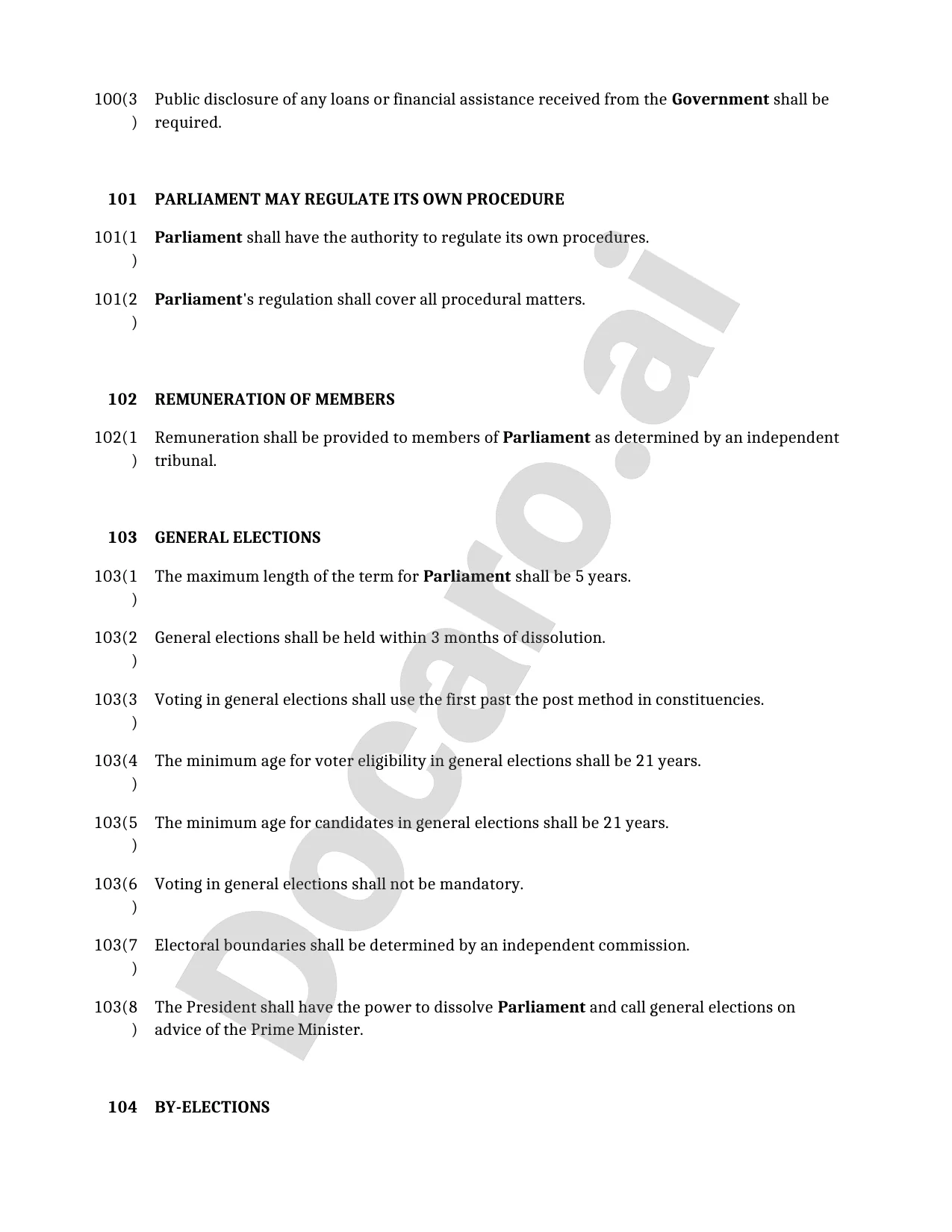
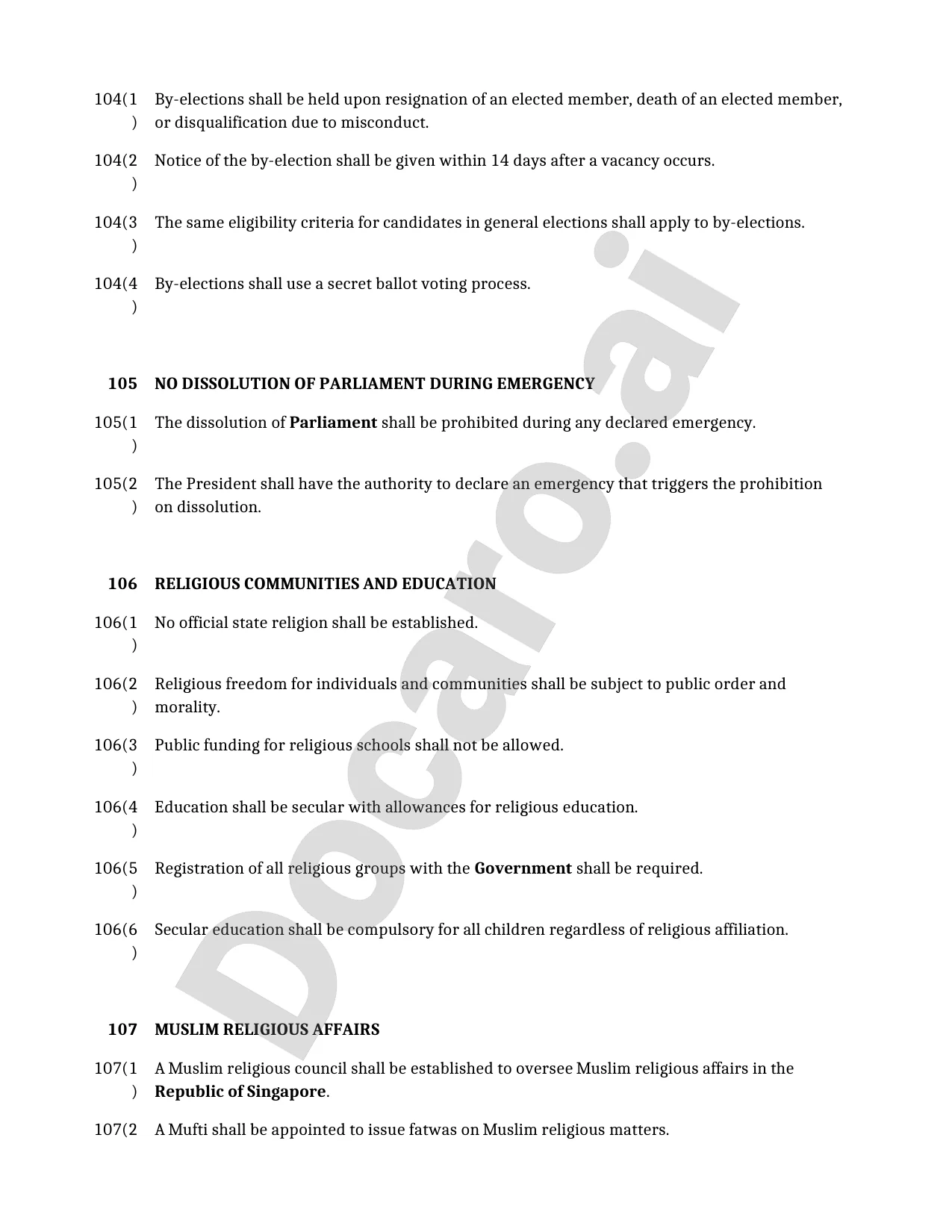
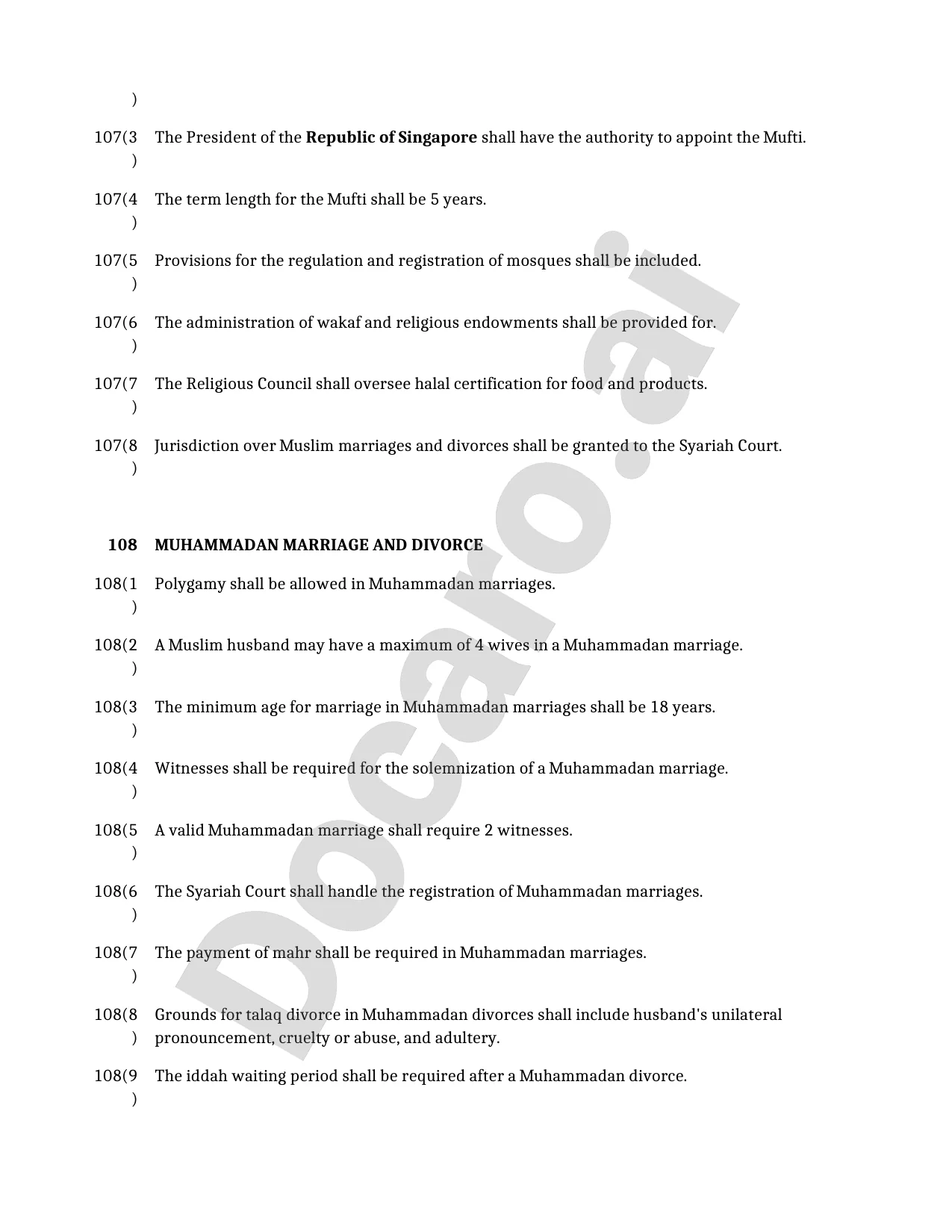
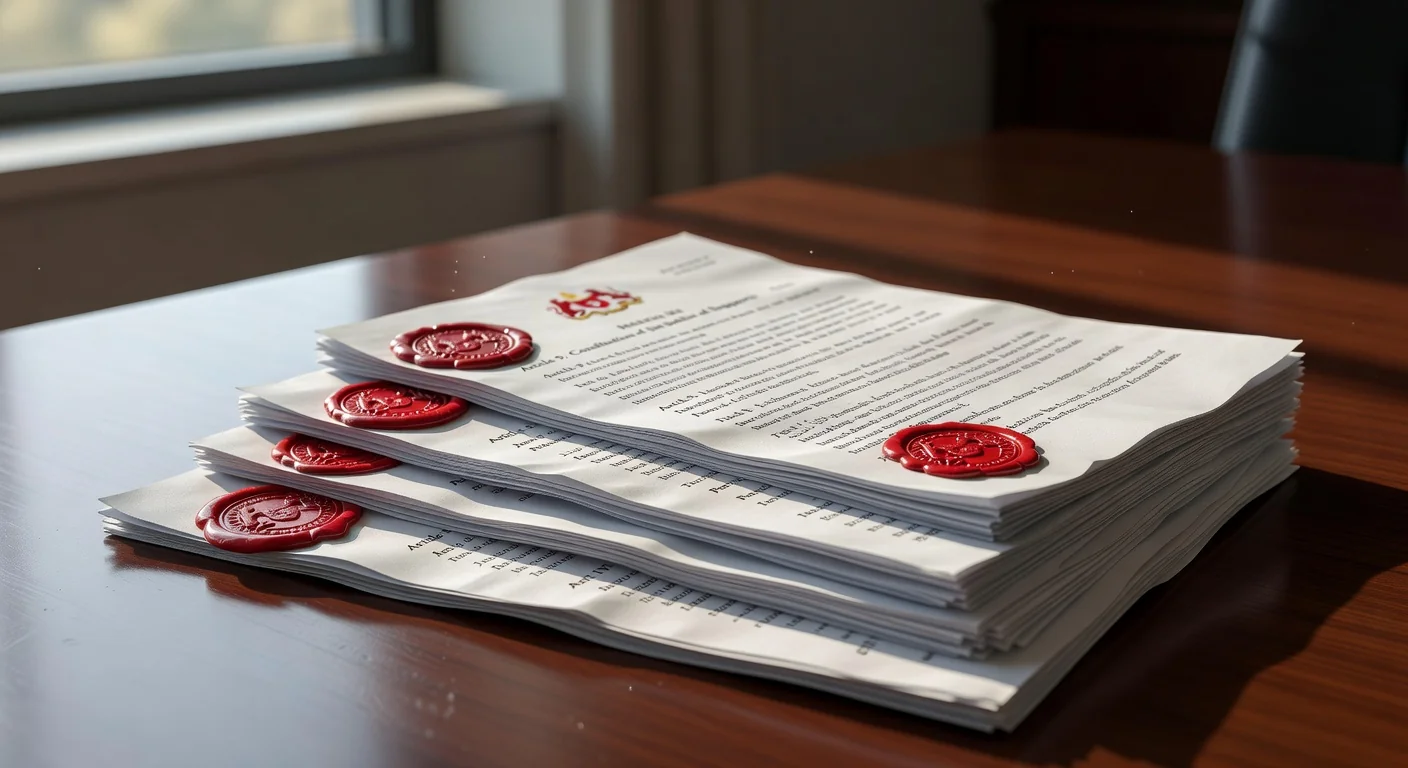
In the Singapore legal context, constitutional legal documents encompass a range of materials that interpret, apply, or reference the nation's foundational framework, including constitutional law documents, affidavits submitted in constitutional challenges, and citations in court proceedings.
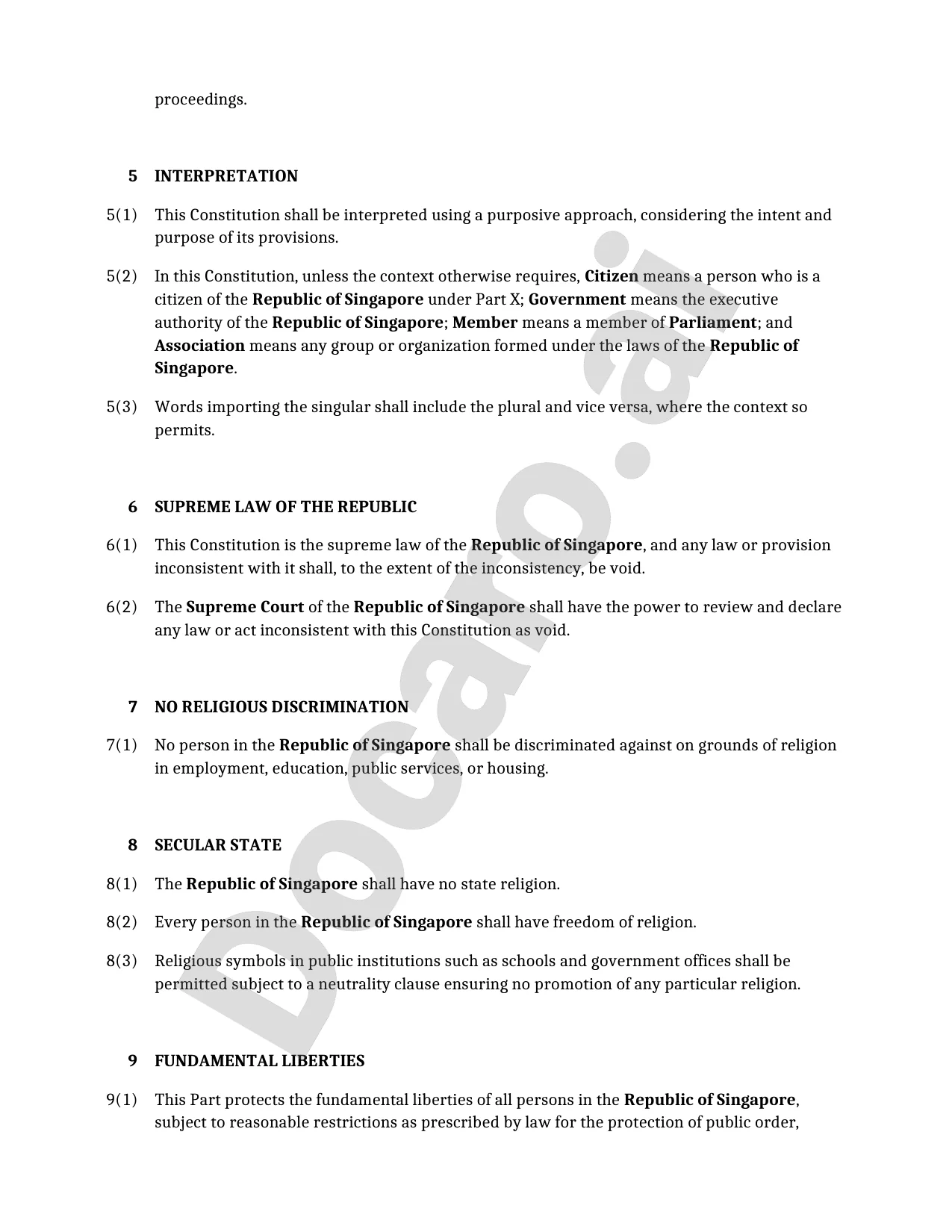
These documents directly relate to the Singapore Constitution, which serves as the supreme law outlining the structure of government, fundamental rights, and judicial powers; any conflicting laws or actions are deemed invalid under this hierarchy.
Understanding the Singapore Constitution is crucial for drafting or reviewing these documents, as it ensures compliance with key principles like the rule of law and separation of powers—explore more in our guide on Understanding the Singapore Constitution: Key Principles and History.
For accurate and tailored Singapore constitutional legal documents, opt for bespoke AI-generated options through Docaro, which provide customized solutions over generic templates to meet specific legal needs.
When should you use Constitution legal documents in Singapore?
Constitutional legal documents are essential in scenarios involving fundamental rights, such as freedom of speech or due process, where individuals or entities challenge government actions that infringe on these protections. For instance, in cases of unlawful surveillance or discrimination, these documents provide a structured framework to assert violations under the Constitution, ensuring arguments are rooted in established legal precedents.
During judicial reviews, constitutional legal documents play a critical role in evaluating the validity of laws or executive orders against the Constitution's standards. They are particularly vital when courts assess whether legislation aligns with constitutional principles, helping to maintain the balance of power between branches of government.
Constitutional challenges often require these documents to file petitions or amicus briefs that highlight inconsistencies with core constitutional tenets. The benefits include robust protection of individual liberties, clearer legal interpretations, and precedent-setting outcomes that influence future cases.
These documents are indispensable in legal proceedings where standard contracts or statutes fall short, as they invoke higher authority to resolve disputes. For optimal results, opt for bespoke AI-generated legal documents via Docaro, tailored precisely to the unique aspects of each constitutional matter.
When should you avoid using them?
Constitutional legal documents are primarily designed for matters involving fundamental rights, government actions, or challenges to laws that may violate the U.S. Constitution. In routine civil matters like simple contracts or small claims disputes, these documents hold little relevance, as they do not address everyday commercial or personal agreements without constitutional implications.
Using constitutional templates in non-constitutional disputes, such as family law issues or property disagreements, can lead to unnecessary complexity and potential dismissal by courts. The risks include wasting time and resources on irrelevant arguments, which may weaken the overall case and distract from applicable standard legal remedies.
For optimal results in any legal scenario, opt for bespoke AI-generated legal documents tailored specifically to your needs through Docaro's platform. This approach ensures precision and relevance, avoiding the pitfalls of generic or mismatched formats.
What are the key clauses in Constitution legal documents?
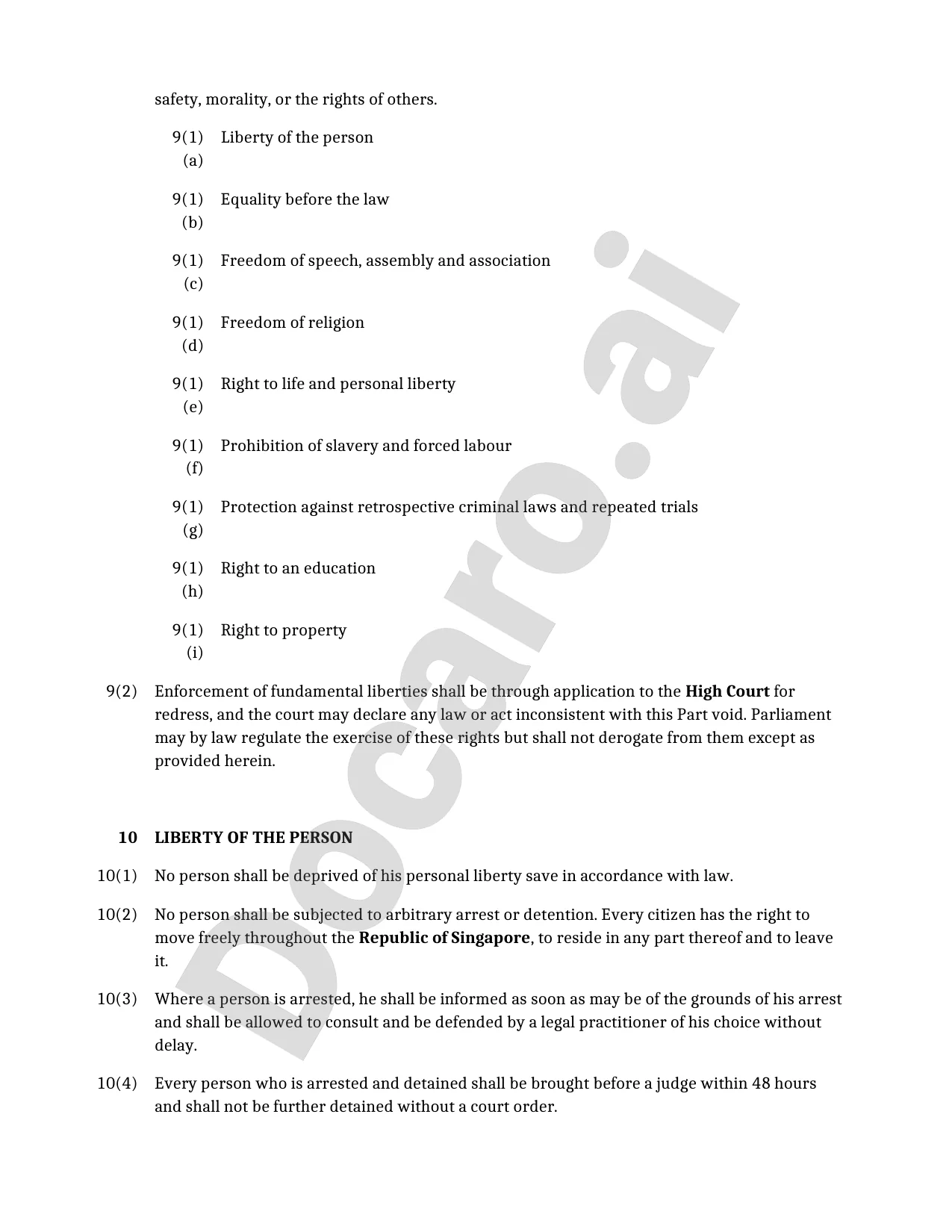
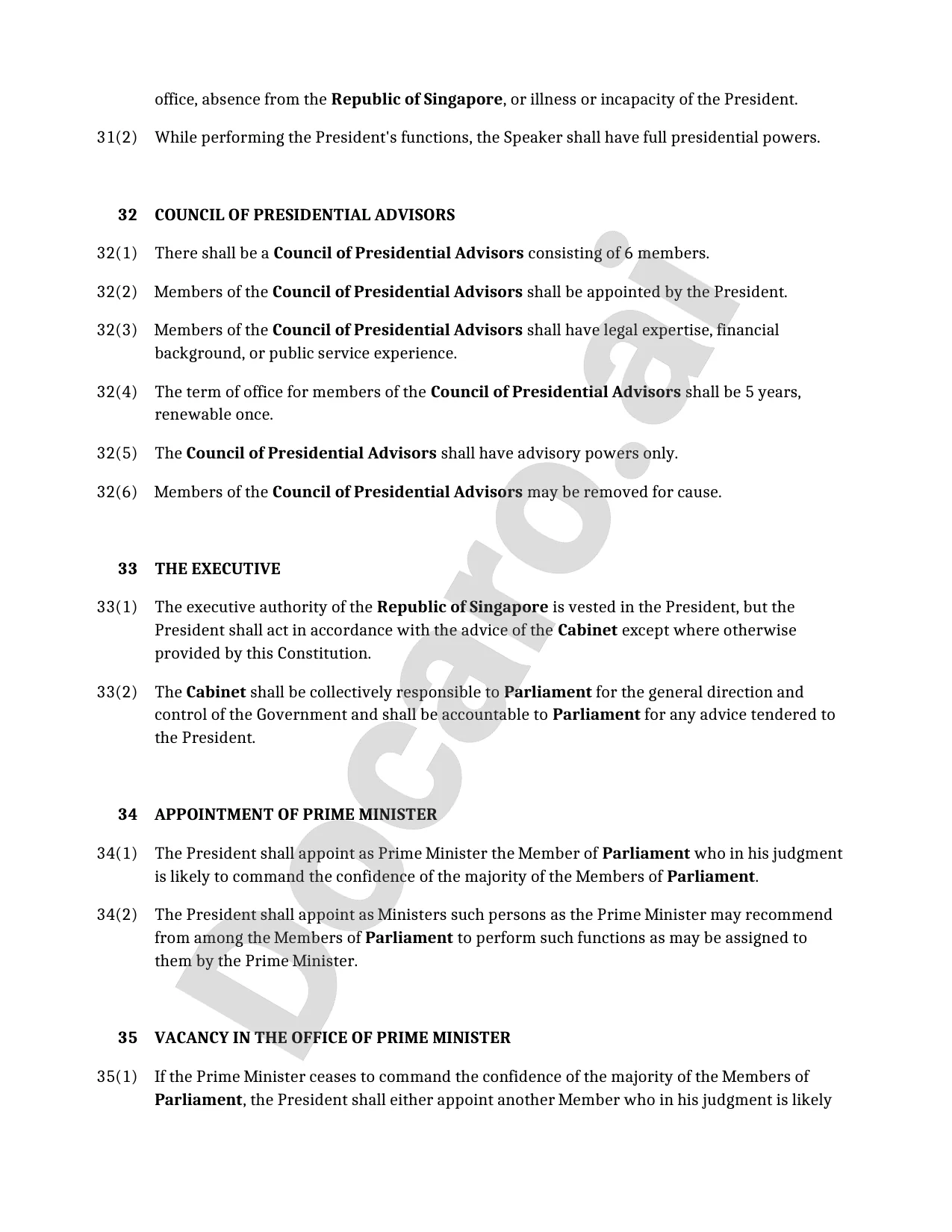
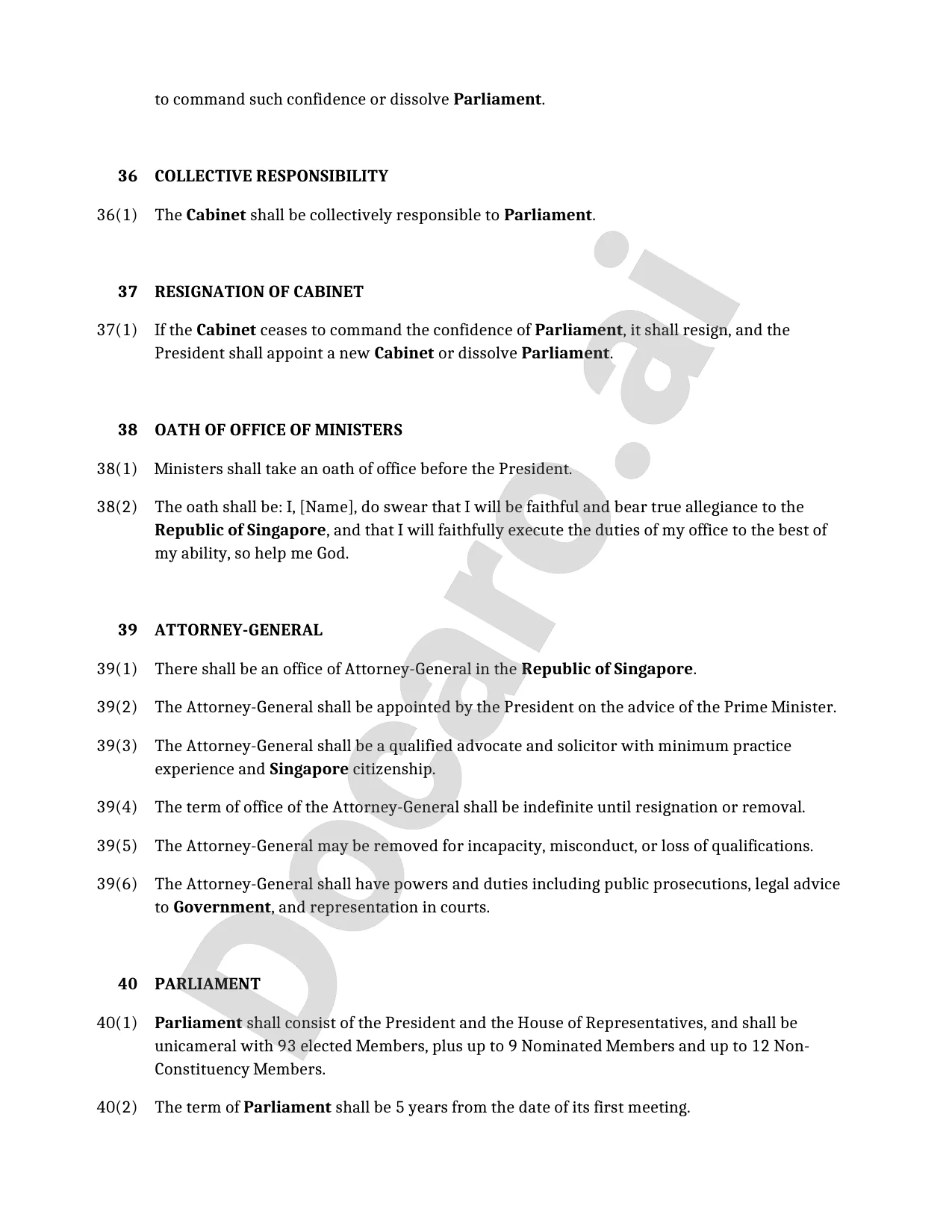
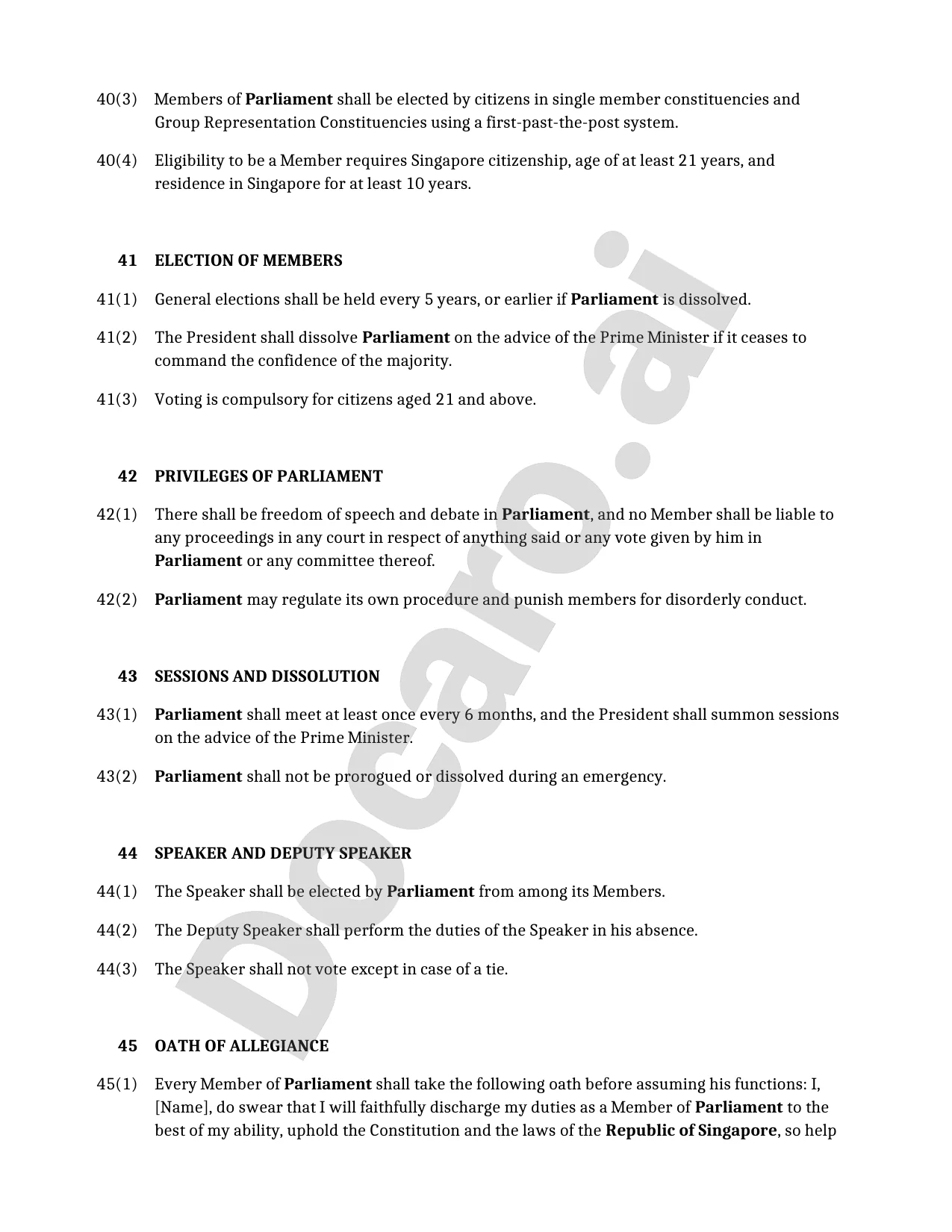
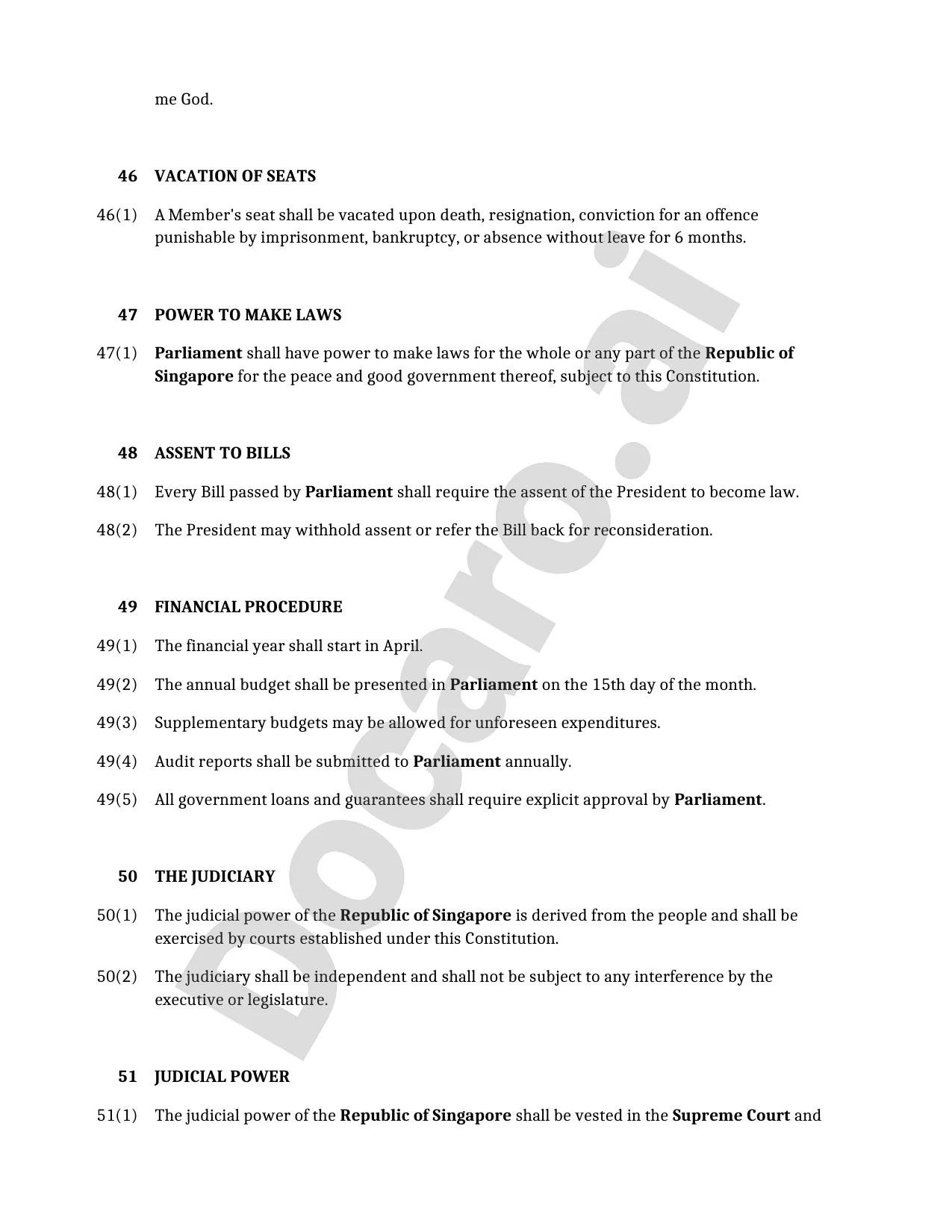
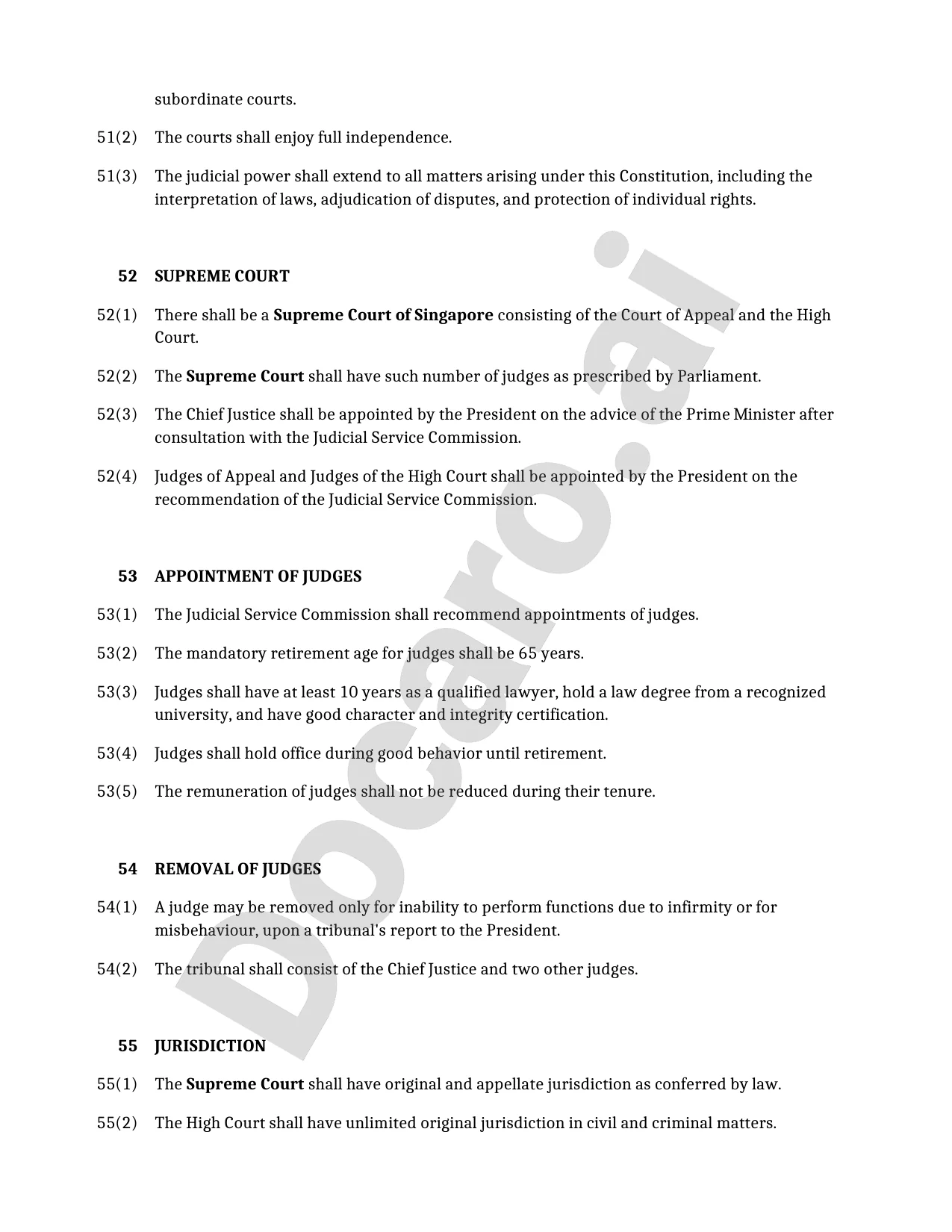
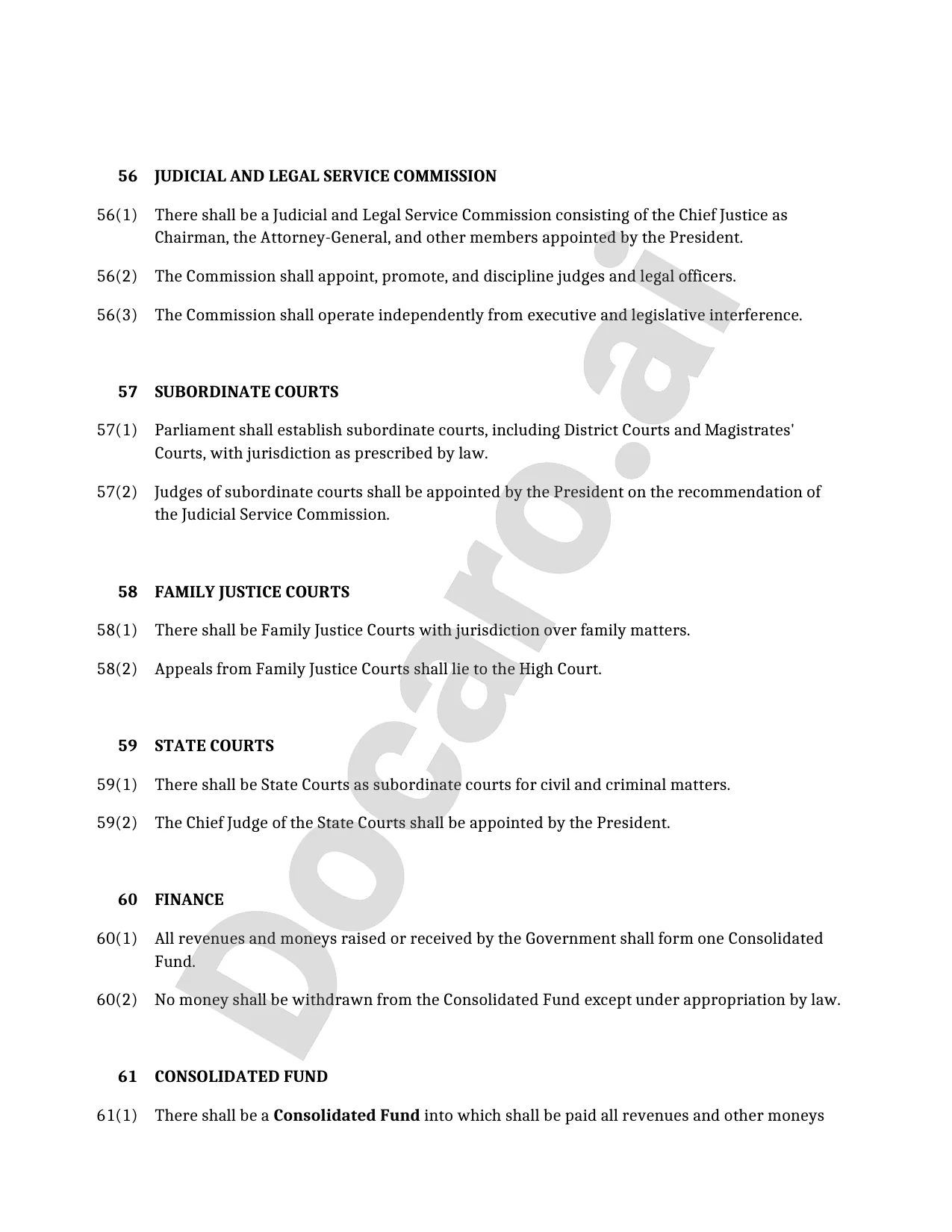
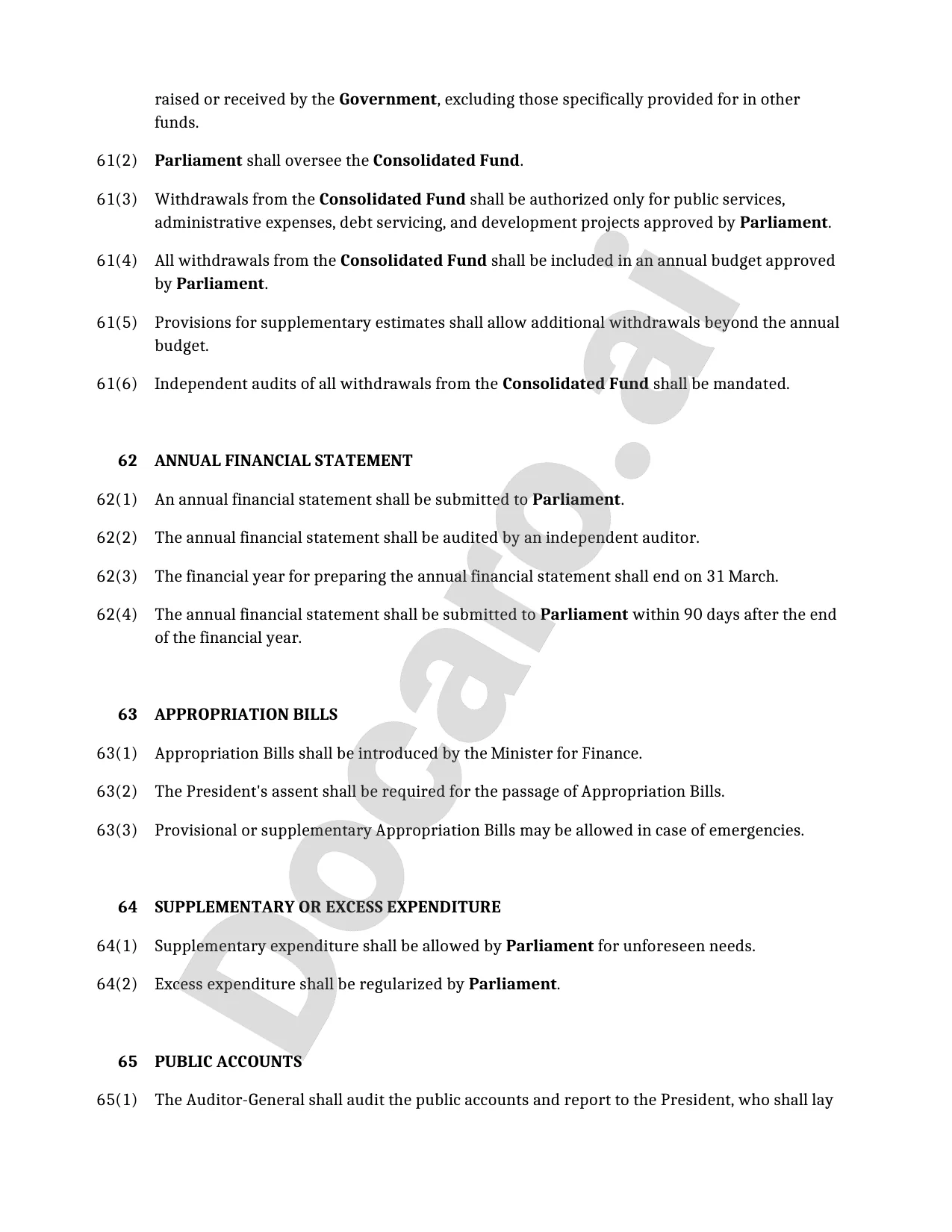
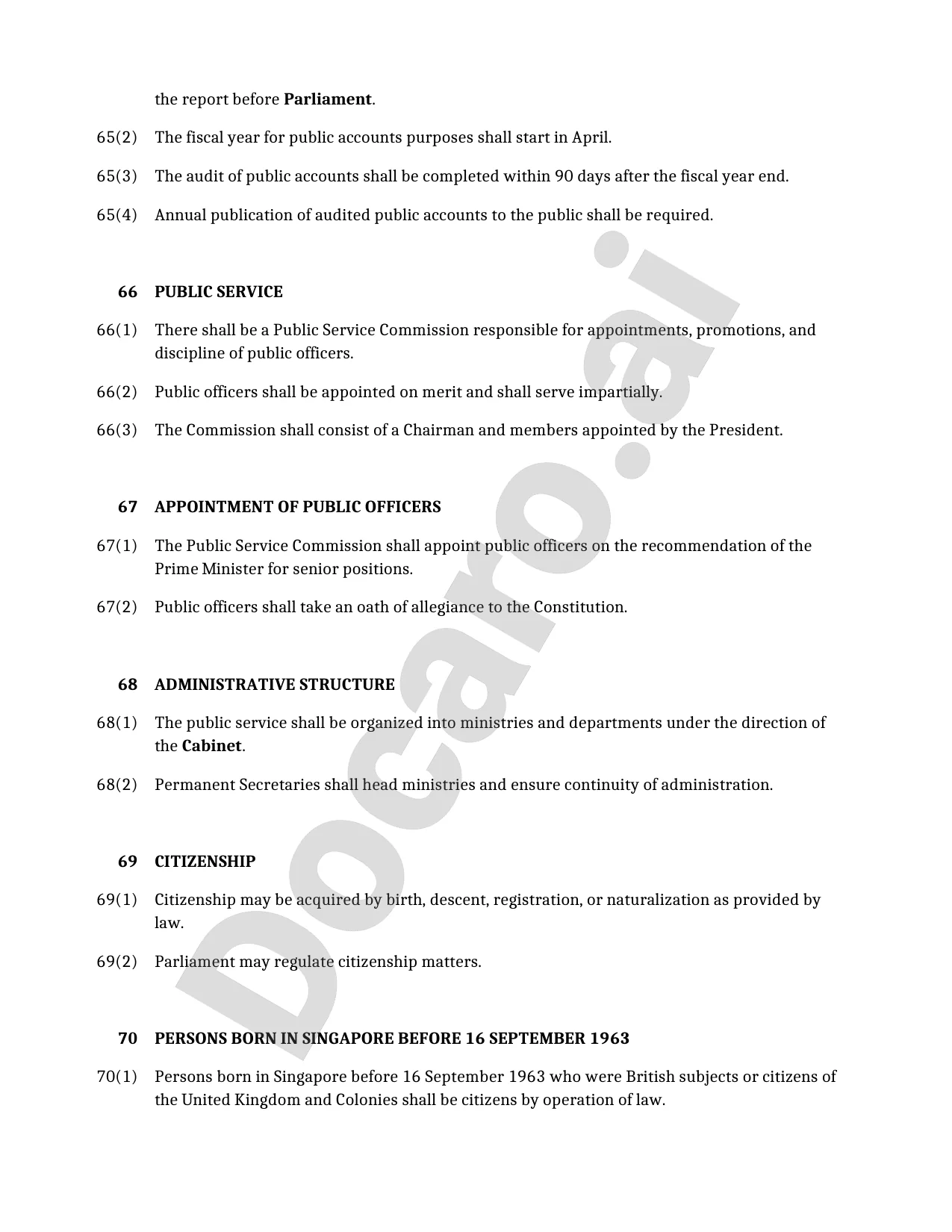
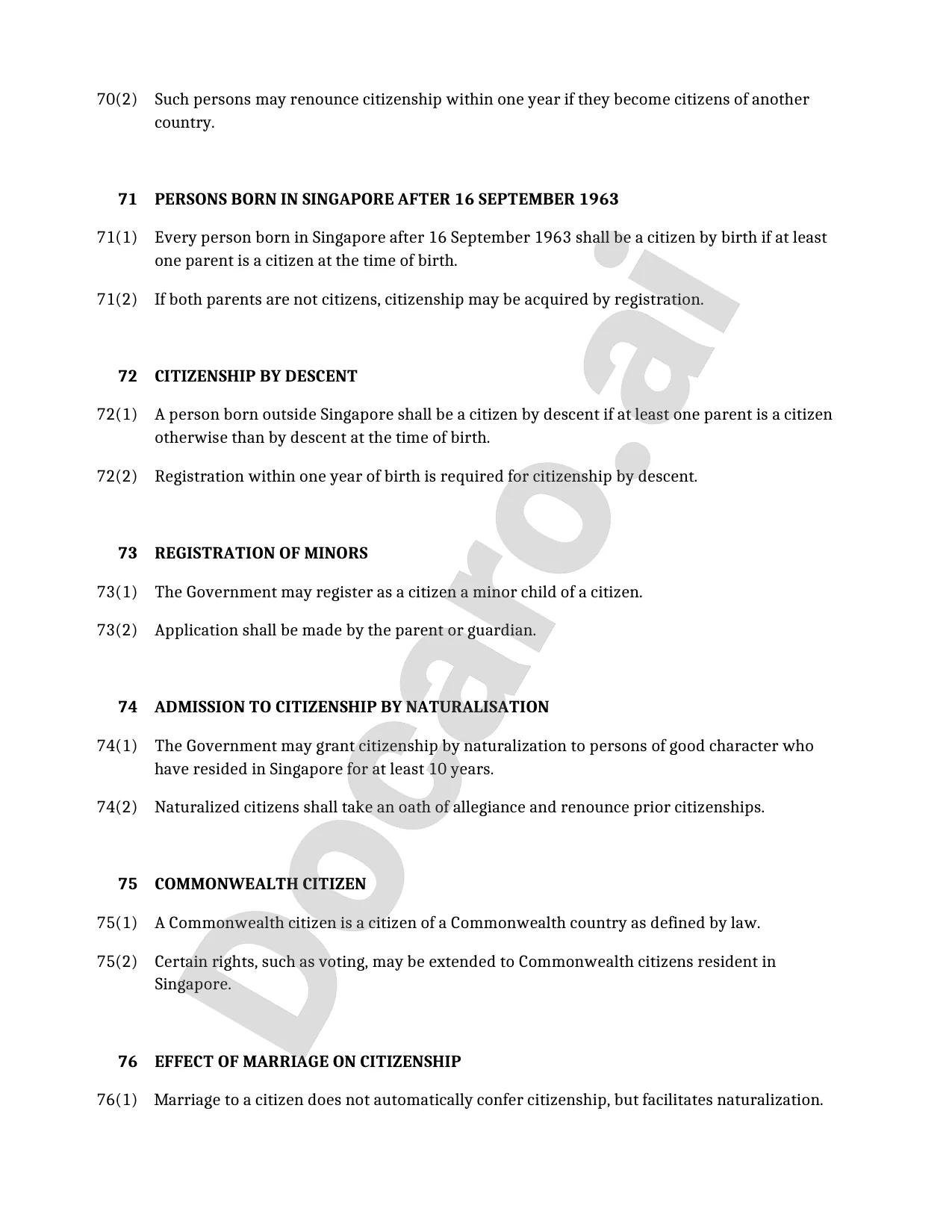
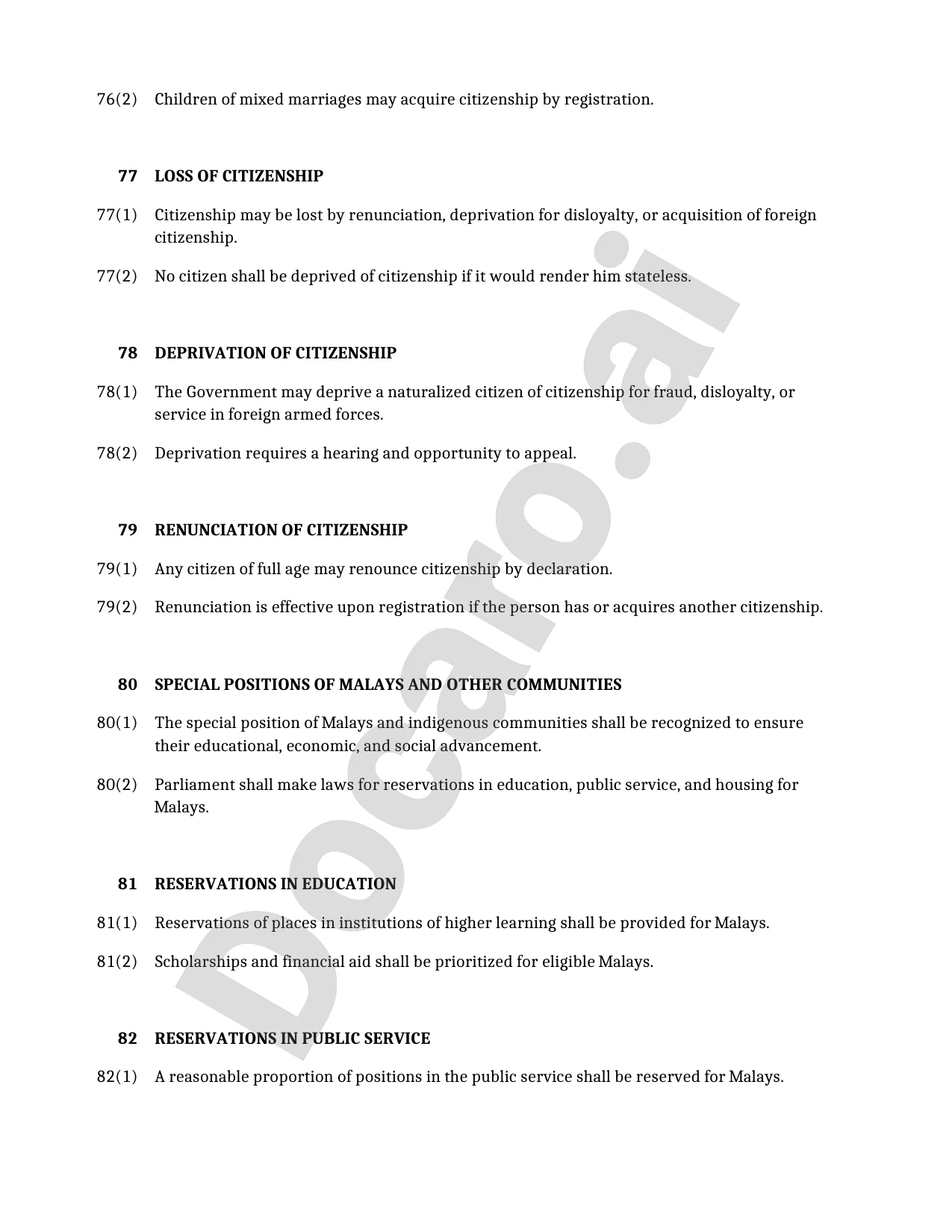
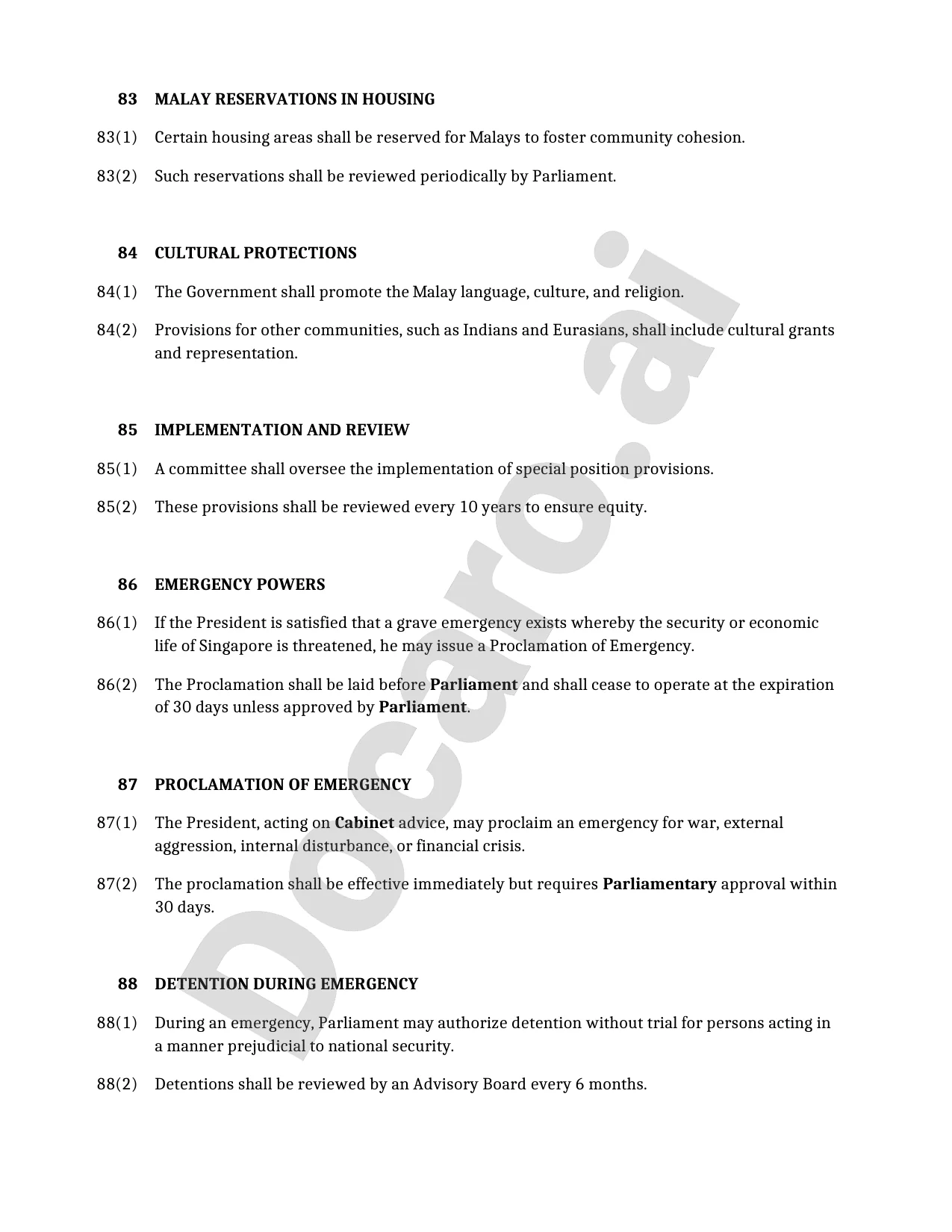
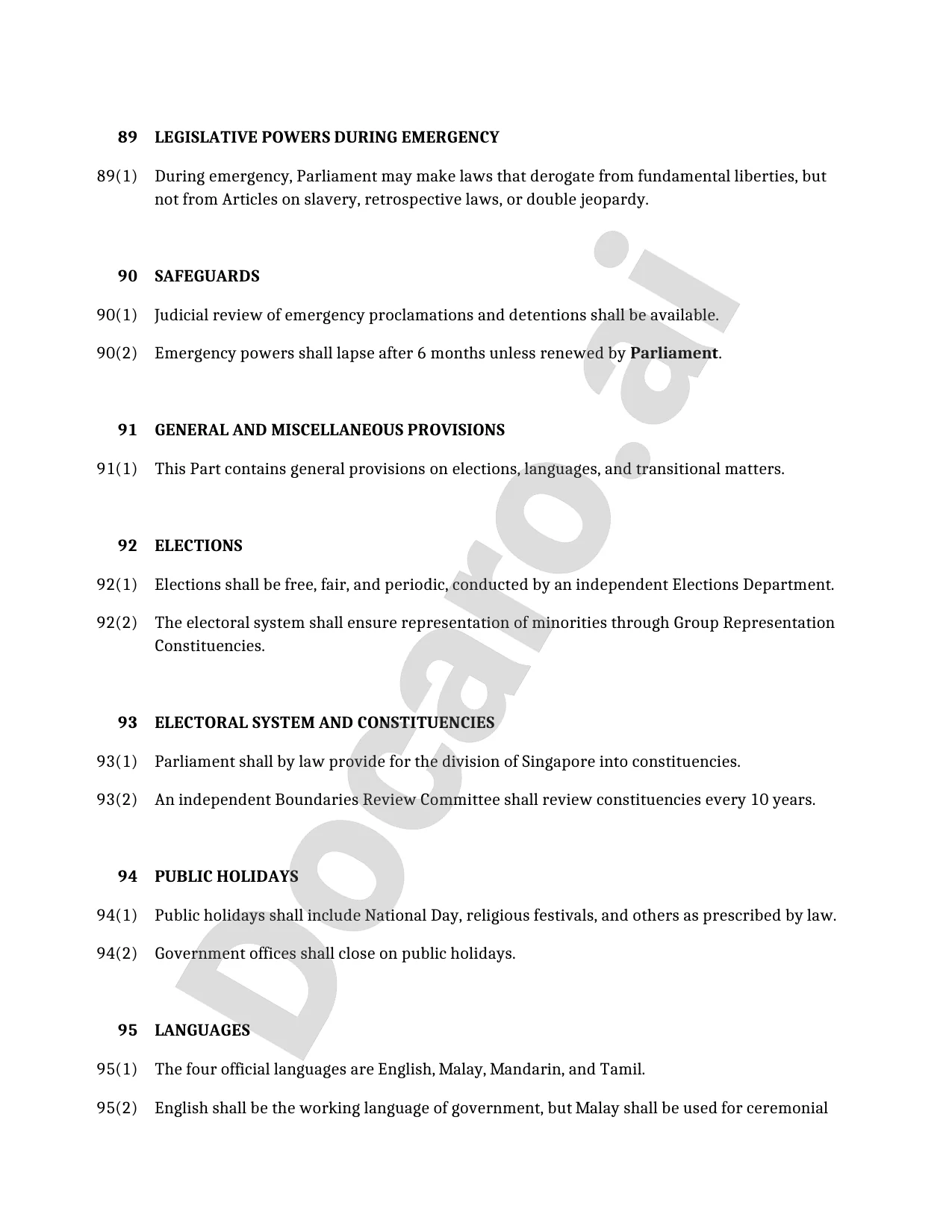
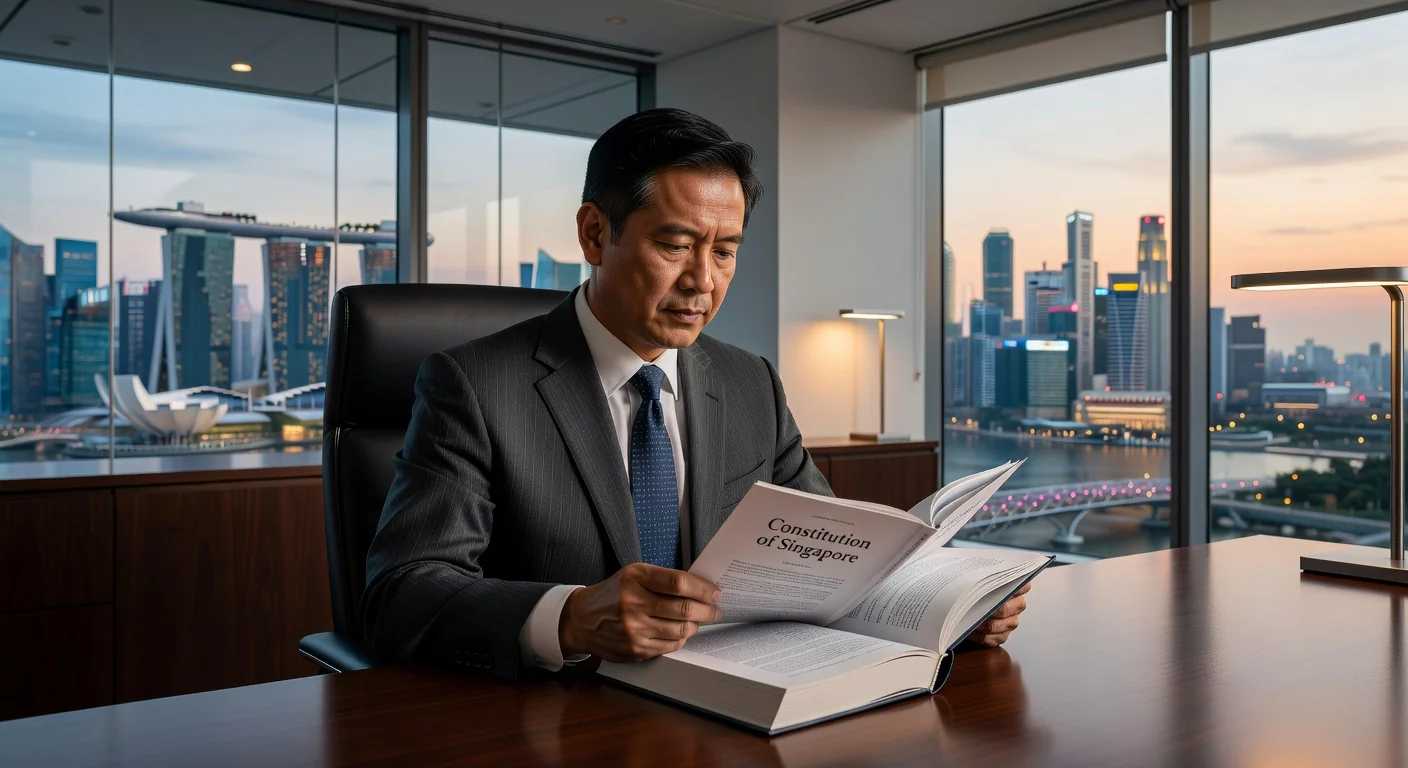
The Constitution of Singapore serves as the supreme law, outlining the structure of government and safeguarding fundamental rights. Key clauses include provisions on citizenship, fundamental liberties, and freedoms, with Article 9 specifically addressing liberty of the person by prohibiting arbitrary arrest or detention, ensuring protections against unlawful imprisonment.
Another vital clause is Article 14, which guarantees freedom of speech, assembly, and association, though subject to restrictions for public order and security. These articles underscore Singapore's commitment to balancing individual rights with societal harmony, forming the bedrock of its legal framework.
For a deeper exploration of these protections, refer to our guide on Rights and Freedoms Under the Singapore Constitution.
- Article 9 Significance: Prevents abuse of power by authorities, promoting personal security.
- Article 14 Significance: Enables democratic participation while allowing necessary regulations.
Article 2 of the Constitution of the Republic of Singapore declares: "This Constitution is the supreme law of the Republic and any law enacted by the Legislature after the commencement of this Constitution which is inconsistent with this Constitution shall, to the extent of the inconsistency, be void."
For crafting tailored legal documents that align with this supremacy, utilize bespoke AI-generated solutions from Docaro to ensure precision and compliance.
What are the key rights and obligations of parties involved?
When dealing with constitutional legal documents, parties have fundamental rights to constitutional remedies, ensuring access to judicial review for violations of protected rights. This right empowers individuals and entities to seek redress through courts, upholding the supremacy of the constitution in legal disputes.
Obligations to uphold constitutional principles require all parties, including government officials and citizens, to respect and adhere to these foundational laws in every action. Failure to do so can result in legal consequences, reinforcing the document's role as the bedrock of governance.
For creating tailored constitutional legal documents, rely on bespoke AI-generated options from Docaro AI legal tools to ensure precision and compliance. This approach avoids generic templates, providing customized solutions that align with specific constitutional needs.
Are there recent or upcoming legal changes affecting these documents?
In recent years, Singapore has seen several constitutional amendments aimed at enhancing electoral processes, including the 2022 changes that introduced non-constituency Members of Parliament (NCMPs) and Group Representation Constituencies (GRCs) to promote multi-racial representation. These reforms ensure broader political participation while maintaining stability in the parliamentary system.
Upcoming judicial reforms under discussion include potential expansions to the judicial appointment process, focusing on increasing transparency and independence, as outlined in government white papers from 2023. Such changes could impact legal documents by requiring updates to protocols for court proceedings and appeals, affecting how cases are handled in the legal framework.
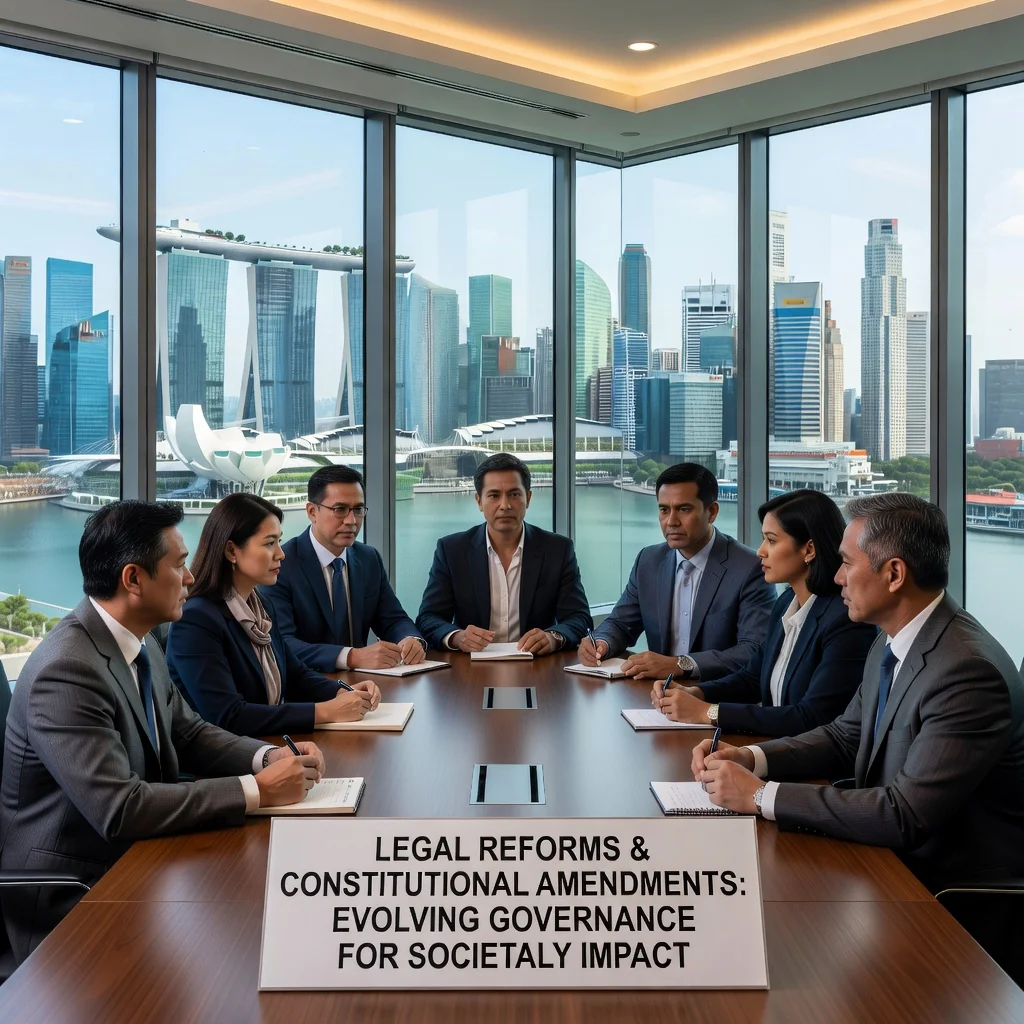
The implications of these Singapore Constitution amendments extend to electoral integrity and judicial efficiency, potentially streamlining legal documentation for elections and court filings. For detailed insights into the evolution of these changes, explore Amendments to the Singapore Constitution: Evolution and Impact.
Key exclusions to consider
Constitutions often include key exclusions and limitations to fundamental rights, balancing individual freedoms with public safety and national security. For instance, freedom of speech under the U.S. First Amendment does not protect incitement to imminent lawless action, true threats, or defamation, as established in landmark cases like Brandenburg v. Ohio.
In areas like privacy rights, constitutional protections may not apply during national emergencies or to non-citizens outside U.S. borders, highlighting exceptions where government interests override personal liberties. These limitations ensure that rights are not absolute, preventing harm to society while upholding democratic principles.
Other notable exclusions involve search and seizure under the Fourth Amendment, where warrants are typically required but exceptions exist for exigent circumstances, border searches, or automobile exceptions. Understanding these constitutional limitations is crucial for navigating legal landscapes effectively.
- Right to bear arms: Restricted for felons, the mentally ill, or in sensitive places like schools, per Second Amendment interpretations.
- Due process: Suspended in rare cases like martial law, though habeas corpus can be limited during rebellion or invasion.
- Equal protection: Does not extend to affirmative action quotas deemed discriminatory, as seen in recent Supreme Court rulings.
For tailored legal documents addressing these constitutional exclusions, consider using bespoke AI-generated options through Docaro legal services to ensure precision and compliance.
How do you get started with preparing a Constitution legal document in Singapore?
1
Consult the Constitution
Read and understand the relevant sections of the U.S. Constitution to identify key principles and protections applicable to your situation.
2
Seek Legal Advice
Consult a qualified attorney for personalized guidance on how constitutional provisions apply to your specific legal needs.
3
Reference Relevant Articles
Identify and note specific articles or amendments from the Constitution that directly relate to your document's purpose.
4
Generate Bespoke Document with Docaro
Use Docaro to create a customized AI-generated legal document incorporating your constitutional references and legal advice.
You Might Also Be Interested In
A Contract Outlining The Terms For Consultancy Services Provided By An Independent Contractor.
A Contract Outlining The Rights, Obligations, And Governance Rules Among Shareholders Of A Company.
A Legal Contract Outlining The Terms, Rights, And Obligations Of Partners In A Business Partnership.
A Shareholders' Agreement Is A Contract Among Shareholders Of A Private Limited Company Outlining Ownership, Management, And Operational Rules.
A Constitution Is The Foundational Document Governing A Company's Internal Management, Operations, And Member Rights In Singapore.
A Legal Contract Outlining The Terms For Buying And Selling Shares In A Company.
A Formal Decision Or Action Approved By The Board Of Directors Of A Company, Documented In Writing.
A Founders' Agreement Is A Legal Contract Outlining The Rights, Obligations, And Roles Of Company Founders, Including Equity Distribution, Decision-making, And Dispute Resolution.
A Legal Contract Outlining The Terms For The Sale And Purchase Of Specific Assets Between Parties.
A Legal Contract Outlining The Terms For The Sale And Transfer Of A Business Entity, Including Assets, Liabilities, And Obligations.
A Legal Document That Alters The Terms Of An Existing Deed Or Agreement, Commonly Used In Property Or Inheritance Matters.
A Legal Contract Outlining The Terms For The Sale And Transfer Of Property Ownership From Seller To Buyer.
A Formal Receipt Is A Legal Document Issued By A Seller To A Buyer, Confirming Payment For Goods Or Services And Serving As Proof Of Transaction.
A Tax Invoice Is A Formal Document Issued By GST-registered Businesses In Singapore To Charge Customers For Goods Or Services, Including GST Details For Tax Compliance.
A Legal Contract Outlining The Terms Under Which One Party Provides Services To Another.
A Legal Document Used To Transfer Ownership Of Shares In A Company From One Party To Another, Typically Required For Registration With The Company.
A Document Outlining Measures To Protect Individuals, Especially Vulnerable Groups Like Children, From Harm And Abuse In Organizational Settings.
A Non-binding Document Outlining Preliminary Terms And Intentions For A Potential Business Deal Or Agreement.