What is the Singapore Constitution and Why Does It Matter?
The Singapore Constitution serves as the foundational legal document that outlines the framework for the nation's government, rights, and institutions. Enacted in 1965 upon Singapore's independence, it embodies the principles of democracy, justice, and national sovereignty, making it the cornerstone of the country's legal system.
As the supreme law of the land, the Singapore Constitution holds ultimate authority over all other laws and government actions in Singapore. Any legislation or policy conflicting with its provisions can be deemed invalid, ensuring that governance remains aligned with its core tenets of protecting fundamental liberties and maintaining institutional balance.
Understanding the Singapore Constitution is essential for citizens to appreciate their rights and civic duties, for students to grasp the nation's historical and political evolution, and for legal professionals to navigate complex judicial interpretations effectively. It empowers individuals to engage meaningfully in society, from voting in elections to advocating for policy changes.
The structure of the Singapore Constitution is divided into key parts, including the protection of fundamental rights, the organization of Parliament and the Executive, and provisions for judicial independence, all of which underscore its significance in fostering a stable and progressive nation. For those seeking tailored legal insights, consider bespoke AI-generated documents via Docaro to explore constitutional applications uniquely suited to your needs.
How Did the Singapore Constitution Originate?
The historical origins of the Singapore Constitution trace back to the colonial era under British rule, beginning with the establishment of Singapore as a trading post in 1819 by Sir Stamford Raffles. As part of the Straits Settlements from 1826, it fell under direct British control, with governance evolving through ordinances like the 1823 Raffles Plan and the 1867 transfer to the Colonial Office, laying the foundation for a centralized administrative system that influenced later constitutional developments.
Key events leading to self-governance in 1959 included the post-World War II push for decolonization, marked by the 1946 formation of the Malayan Union and its replacement by the Federation of Malaya in 1948. The 1959 State of Singapore Constitution granted internal self-government, allowing an elected assembly and prime minister, while foreign affairs and defense remained under British oversight, setting the stage for merger discussions with Malaya.
Upon independence in 1965, following separation from Malaysia, Singapore formally adopted its Constitution on August 9, transforming the 1959 framework into a sovereign document with provisions for a parliamentary republic. This adaptation retained the UK Westminster model's core elements, such as a bicameral parliament, separation of powers, and rule of law, but incorporated Singapore-specific features like a strong executive presidency and safeguards for multiracial harmony to address local ethnic and economic challenges.
What Were the Key Milestones in Its Formation?
The formation of the Singapore Constitution began with key milestones that evolved Singapore's path to independence. The 1957 Rendel Constitution marked a pivotal step, introducing an elected majority in the Legislative Assembly and granting internal self-government to Singapore under British oversight. This document shaped the constitution by establishing a foundation for local governance, emphasizing democratic representation while retaining British control over defense and foreign affairs.
Building on this, the 1958 State of Singapore Constitution further advanced autonomy by creating the role of Yang di-Pertuan Negara as head of state and outlining a Westminster-style parliamentary system. It refined the governance structure, incorporating provisions for citizenship and fundamental liberties that influenced the final Singapore Constitution, promoting stability and legal frameworks essential for nation-building.
The 1963 merger with Malaysia integrated Singapore into a larger federation, subjecting it to the Malaysian Constitution with modifications for local administration. This event temporarily altered Singapore's constitutional identity, fostering economic and security ties but highlighting tensions over equality and autonomy that ultimately led to separation.
Singapore's 1965 separation from Malaysia culminated in the adoption of its own independent constitution on August 9, 1965, based on the 1963 framework but tailored to sovereign needs. This final document solidified Singapore's republican status, embedding principles of democracy, rule of law, and separation of powers, ensuring a resilient legal foundation for its rapid development as a global city-state.
What Are the Core Principles of the Singapore Constitution?
The Singapore Constitution establishes foundational principles that underpin its governance, including the rule of law, separation of powers, democracy, and protection of fundamental liberties. These core elements ensure a stable, just society, with the document serving as the supreme law since independence in 1965. Article 2 defines Singapore as a republic with a parliamentary system, embedding democratic ideals through free elections and representation.
The rule of law is enshrined in Article 4, declaring the Constitution as the supreme law, voiding any inconsistent legislation or acts. In practice, this principle upholds judicial independence, as seen in the separation of powers outlined in Articles 11 to 93, dividing authority among the executive, legislature, and judiciary. Singapore's governance applies this by maintaining an impartial judiciary that checks executive actions, fostering accountability without compromising efficiency.
Democracy is realized through Article 65, mandating parliamentary elections every five years, promoting representative government. Fundamental liberties, protected under Part IV (Articles 9-16), include rights to life, liberty, speech, and equality, balanced against public interest. In application, these liberties support a multi-ethnic society, with laws like the Internal Security Act ensuring security while courts review detentions, demonstrating a pragmatic blend of rights and order.
- Key Article References: Article 4 (supremacy), Article 9 (liberty), Article 65 (elections).
- For tailored legal insights, consider bespoke AI-generated documents via Docaro legal services.
"Without the rule of law, there is no freedom; only the law of the jungle." – Lee Kuan Yew
This quote underscores the foundational principle of the rule of law in Singapore's Constitution, emphasizing its role in safeguarding sovereignty and individual rights.
For any legal documentation needs aligned with constitutional principles, consider using Docaro to generate bespoke AI-assisted documents tailored to your specific requirements.
How Does the Rule of Law Manifest in Singapore's System?
The Constitution of Singapore serves as the foundational framework for implementing the rule of law, establishing key principles that ensure governance is bound by legal standards. Article 4 declares the Constitution as the supreme law, rendering any inconsistent laws void, while Article 12 guarantees equality before the law and equal protection without discrimination. This structure promotes a legal system where all individuals, including government officials, are subject to the same judicial scrutiny, fostering transparency and accountability in Singapore's legal framework.
Judicial independence is a cornerstone of Singapore's rule of law, enshrined in Article 95, which vests judicial power in an independent judiciary free from executive or legislative interference. Judges are appointed by the President on the advice of the Prime Minister but enjoy security of tenure, with salaries protected and removal only for misconduct via a tribunal process. Landmark cases like Chng Suan Tze v Minister for Home Affairs (1988) reinforced this by establishing that administrative actions must be lawful, rational, and procedurally fair, curbing arbitrary executive decisions and upholding constitutional supremacy.
Checks on executive power are implemented through constitutional mechanisms and judicial oversight, preventing overreach while maintaining efficient governance. The judiciary reviews executive actions for constitutionality, as seen in Yong Vui Kong v Public Prosecutor (2010), where the courts examined the mandatory death penalty's compatibility with rights under Article 9. Additionally, practices like parliamentary oversight and the role of the Attorney-General as an independent legal advisor further balance powers, ensuring the executive operates within legal bounds in Singapore's hybrid legal system.
What Role Does the Constitution Play in Protecting Rights and Freedoms?
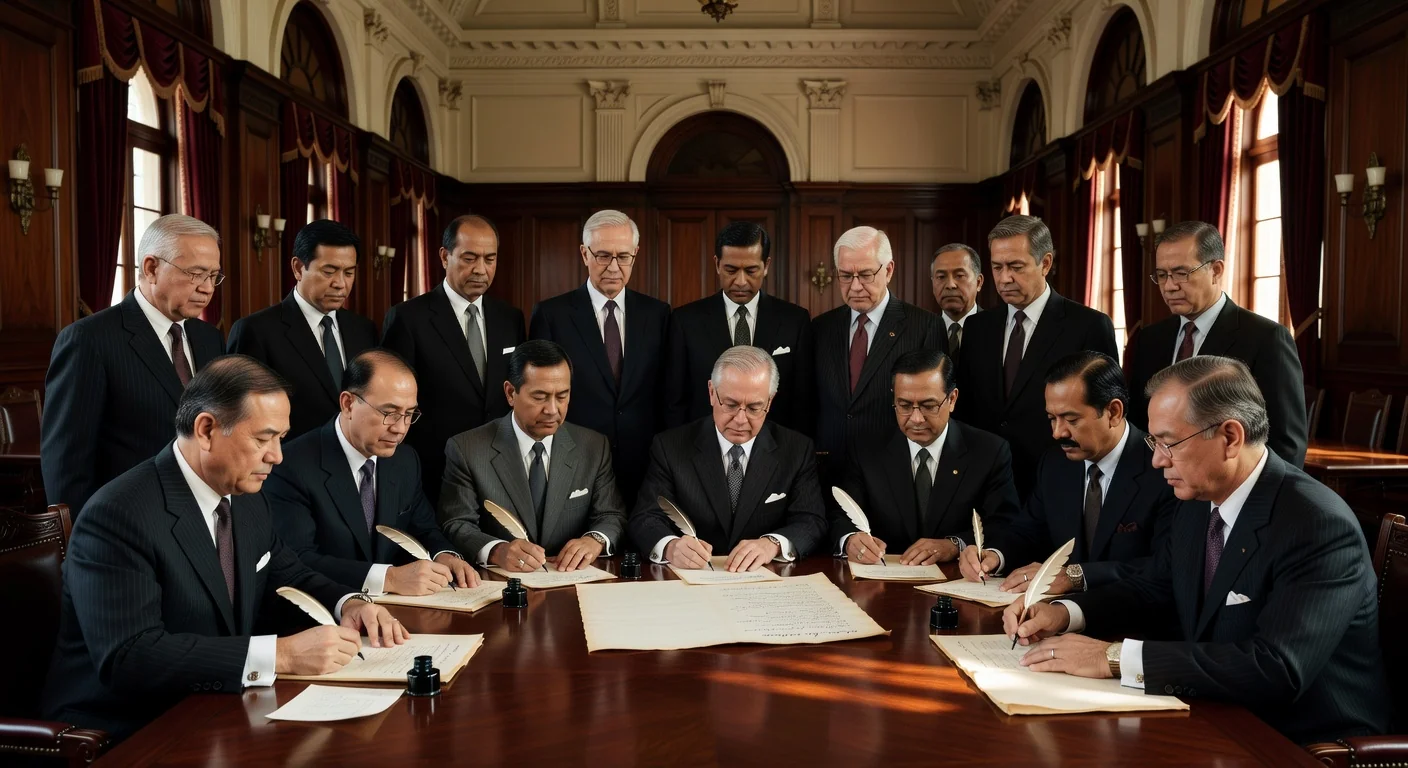
The Singapore Constitution under Part IV outlines key fundamental rights and freedoms, including the right to equality before the law, freedom of speech, and freedom of religion. These provisions, detailed in Articles 12, 14, and 15 respectively, ensure that every person in Singapore enjoys basic protections against discrimination and state overreach. For a deeper exploration, refer to the page on Rights and Freedoms Under the Singapore Constitution.
In Singapore's context, the balance between individual rights and societal interests is maintained through constitutional clauses that allow reasonable restrictions for public order, security, and morality. For instance, freedom of speech can be limited to prevent hate speech or threats to national harmony, reflecting the nation's emphasis on multiracial stability. This approach prioritizes collective well-being while safeguarding core liberties.
Similarly, freedom of religion is protected but subject to laws ensuring social cohesion, as seen in regulations on religious propagation. The judiciary plays a crucial role in interpreting these balances, often upholding societal interests in cases involving public safety. Understanding this framework highlights Singapore's unique model of constitutional governance.
How Has the Constitution Evolved Through Amendments?
Since Singapore's independence in 1965, the Singapore Constitution has undergone numerous amendments to adapt to the nation's growth, with key changes strengthening the executive branch for efficient governance. For instance, amendments in the 1960s and 1970s enhanced the President's powers and introduced the Elected Presidency in 1991 to safeguard national reserves, reflecting the need for fiscal prudence amid rapid economic development. These modifications ensured a robust executive framework to navigate challenges like nation-building and economic crises.
In the legislative realm, amendments have expanded Parliament's role while maintaining stability, such as the 1984 changes introducing Non-Constituency Members of Parliament (NCMPs) to ensure opposition representation. Further reforms in the 2010s adjusted the Group Representation Constituency (GRC) system to promote ethnic diversity and political renewal, addressing Singapore's evolving multicultural society and the demand for inclusive representation. These shifts highlight the Constitution's flexibility in balancing majority rule with minority rights.
Amendments to the electoral system have been pivotal in fostering fair and merit-based politics, including the 1988 introduction of GRCs to enhance minority participation and the 2020 tweaks to increase the number of Nominated Members of Parliament (NMPs). Such changes respond to Singapore's demographic shifts and global influences, ensuring the electoral process remains relevant for a competitive, forward-looking nation. For a deeper dive into these transformations, explore Amendments to the Singapore Constitution: Evolution and Impact.
How Can You Engage with the Singapore Constitution Today?
1
Access the Official Constitution
Visit the Singapore Statutes Online website and download the official Constitution PDF to begin your study.
2
Read Key Articles
Start with fundamental articles like Article 1 on the Republic and Article 9 on citizenship for a basic understanding.
3
Consult Legal Resources
Explore beginner-friendly guides from the Attorney-General's Chambers website to clarify constitutional concepts.
4
Study Related Case Studies
Search for landmark cases like Chng Suan Tze v Minister for Home Affairs on legal databases to see the Constitution in action.
To deepen your understanding of the Singapore Constitution, explore official resources like the Attorney-General's Chambers website or the National Library Board's archives. Attending public lectures at institutions such as the National University of Singapore can provide insights into its key principles and historical evolution.
The Singapore Constitution remains a living document, guiding the nation's governance and adapting to contemporary challenges. For more details, visit the main Constitution page or read the full Understanding the Singapore Constitution article to appreciate its enduring relevance.