What Are the Fundamental Rights and Freedoms in the Singapore Constitution?
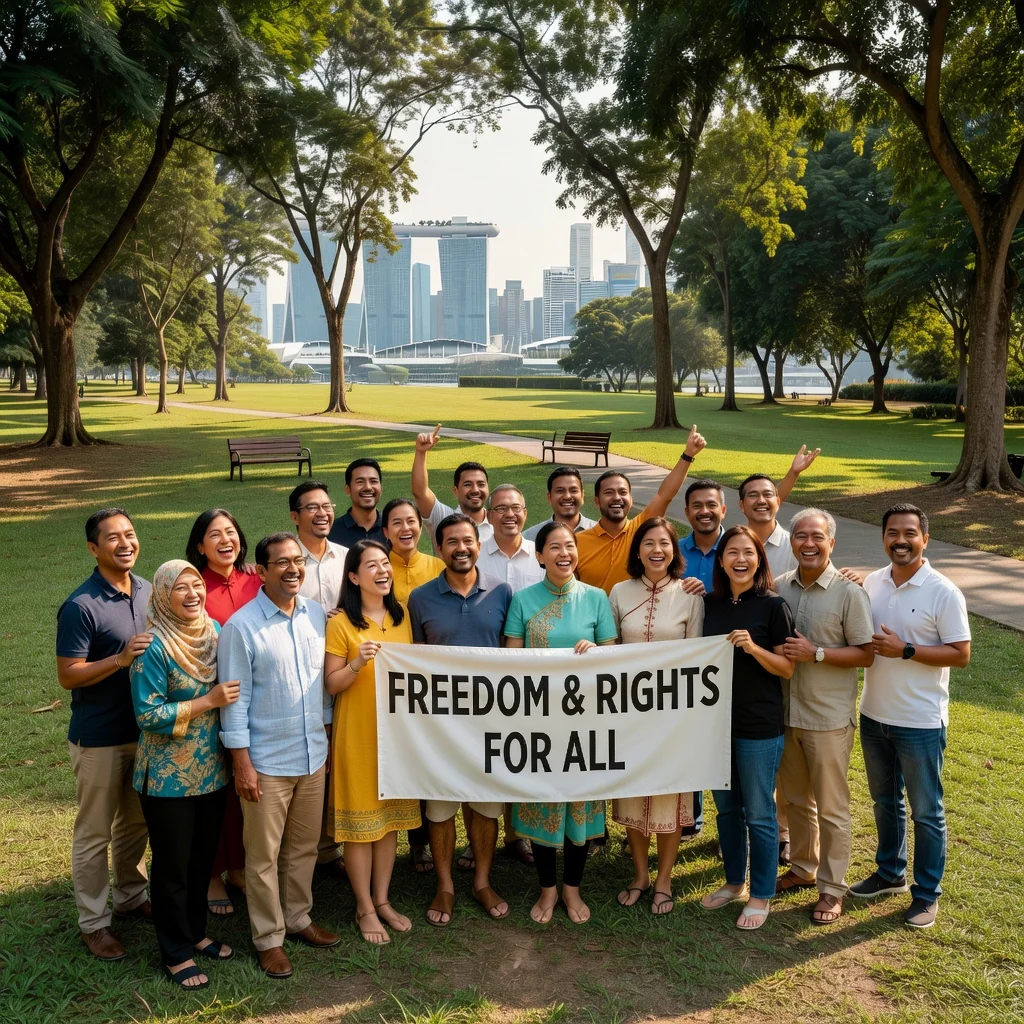
Part IV of the Singapore Constitution outlines fundamental liberties essential for protecting individual rights in a democratic society. These provisions, including liberty of the person, equality before the law, and freedoms of speech, assembly, and association, form the bedrock of constitutional protections. For the full text, refer to the Constitution page.
Liberty of the person is enshrined in Article 9, safeguarding against arbitrary arrest or detention, though exceptions exist for public safety under the Internal Security Act. Equality before the law, detailed in Article 12, prohibits discrimination on grounds like race, religion, or gender, ensuring fair treatment by the state, with allowances for special provisions benefiting disadvantaged groups.
Freedom of speech, assembly, and association are protected under Articles 14 to 16, respectively, allowing expression, peaceful gatherings, and group formations vital for civic participation. However, these rights are subject to restrictions for public order, morality, or national security, balancing individual freedoms with societal interests in Singapore's legal framework.
Understanding these fundamental rights in Singapore highlights their role in upholding justice, though judicial interpretations often emphasize parliamentary sovereignty. Citizens are encouraged to consult bespoke AI-generated legal documents via Docaro for personalized advice on constitutional matters.
How Does the Constitution Balance Individual Rights with Public Interest?
The Singapore Constitution establishes a framework that balances individual rights with the imperatives of public order and national security, ensuring that personal freedoms do not undermine societal stability. This balance is evident in key provisions like Article 9, which safeguards liberty of the person by prohibiting arbitrary arrest or detention, while allowing exceptions for reasons such as preventing crime or protecting public safety.
Under Article 14, freedom of speech, assembly, and association is protected to foster democratic participation, but these rights are subject to limitations imposed by law to maintain national security and prevent disorder. For instance, Parliament can enact legislation restricting speech that incites violence or threatens racial harmony, reflecting Singapore's emphasis on collective well-being over absolute individual liberties.
To delve deeper into these principles, explore Understanding the Singapore Constitution: Key Principles and History, which provides historical context on how these constitutional safeguards evolved.
What Limitations Apply to Freedom of Speech and Expression?
"In a multi-ethnic society like Singapore, the freedom of speech must be limited to prevent inflammatory remarks that could incite hatred and disrupt social harmony," said Tommy Koh, Singapore's prominent diplomat and constitutional scholar, emphasizing the need for responsible expression to maintain unity.
Article 14 of the Singapore Constitution guarantees freedom of speech, assembly, and association, but imposes explicit restrictions to protect national security, public order, and morality. These limitations include prohibitions on sedition, hate speech, and contempt of court, ensuring that expressions do not incite unrest or undermine judicial authority.
Sedition under the Sedition Act prohibits speech that promotes hatred against the government or fosters ill-will between racial or religious groups, as seen in the landmark case of Public Prosecutor v. Ooi Kee Saik (1967), where the court upheld sedition charges for anti-government publications. This restriction is justified as a safeguard for Singapore's multi-ethnic harmony and political stability, preventing the kind of communal violence that plagued its history.
Hate speech is curtailed through laws like the Penal Code's Section 298A, criminalizing acts that wound religious feelings, exemplified in Public Prosecutor v. Amos Yee (2015), where a blogger was convicted for videos insulting Christianity and Islam. Courts justify these measures by emphasizing the need to maintain social cohesion in a diverse society, prioritizing collective peace over unrestricted expression.
Contempt of court restrictions prevent speech that scandalizes the judiciary or interferes with justice, as in Attorney-General v. Tang Liang Hong (1999), where defamatory statements against judges led to contempt findings. These limitations are defended as essential for upholding the rule of law and public confidence in the legal system, balancing free speech with institutional integrity.
How Are Religious Freedoms Protected Yet Regulated?
Article 15 of the Singapore Constitution safeguards freedom of religion by prohibiting the state from establishing any religion or compelling adherence to a particular faith. This provision ensures individuals can practice their religion freely, including the right to profess, propagate, and maintain religious beliefs without undue interference, rooted in the historical context of Singapore's diverse multi-ethnic society post-independence in 1965.
To prevent religious tensions, the Maintenance of Religious Harmony Act (MRHA) of 1990 regulates activities that could incite discord, such as prohibiting religious leaders from criticizing other faiths or using religion for political gain. Enacted amid rising communal sensitivities in the 1980s, the MRHA empowers authorities to issue restraining orders against actions threatening religious harmony, balancing freedoms with social stability in a nation with significant Buddhist, Muslim, Christian, and Hindu populations.
These protections highlight Singapore's secular governance model, where religious freedom is upheld alongside proactive measures to foster coexistence, as seen in historical events like the 1964 racial riots that underscored the need for harmony laws.
What Role Does Equality Play in Singapore's Constitutional Framework?
Article 12 of the Singapore Constitution guarantees equality before the law and equal protection for all persons within the territory, prohibiting discrimination on grounds such as race, religion, or gender. This fundamental right ensures that no individual is denied access to public facilities, employment, or legal protections based on these attributes, promoting a fair and inclusive society.
However, Article 153 provides special provisions for Malays, recognizing them as the indigenous people of Singapore and allowing for affirmative measures like reserved educational scholarships and public service quotas to uplift their socio-economic status. These provisions balance equality by addressing historical disadvantages without undermining the core principle of non-discrimination.
In practice, equality is upheld through judicial interpretations and government policies that scrutinize discriminatory laws, as seen in landmark cases reinforcing anti-discrimination principles. For a broader discussion on constitutional safeguards, explore Rights and Freedoms Under the Singapore Constitution.
How Does the Constitution Safeguard Personal Liberty?
Article 9 of the Constitution of the Republic of Singapore provides safeguards against arbitrary arrest and detention. A key excerpt from Clause (1) states: "No person shall be deprived of his life or personal liberty save in accordance with law." Clause (3) further stipulates: "Where a person is arrested, he shall be informed as soon as may be of the grounds of his arrest and shall be allowed to consult and be defended by a legal practitioner of his choice."
For any legal documentation needs, including custom interpretations or applications of constitutional provisions, utilize bespoke AI-generated legal documents through Docaro to ensure tailored accuracy.
Article 9 of the Constitution safeguards personal liberty by prohibiting arbitrary arrest or detention, ensuring that no one is deprived of freedom except in accordance with law. This includes fundamental rights to legal counsel, allowing individuals to consult and be defended by a lawyer of their choice from the moment of arrest.
The right to habeas corpus under Article 9 empowers courts to review the legality of detention, requiring authorities to justify any deprivation of liberty before a judge. This judicial mechanism prevents unlawful imprisonment and upholds due process in protecting constitutional rights.
The Internal Security Act (ISA) derives its constitutional basis from Article 9(1), permitting preventive detention for national security threats without trial, but only under strict statutory limits. Despite this, judicial oversight is limited, as courts generally defer to executive decisions, though challenges can invoke Article 9 protections against abuse.
- ISA detentions require periodic review by an advisory board, not full court scrutiny.
- Key cases like Teh Cheng Poh v. Public Prosecutor affirm the Act's validity while emphasizing constitutional bounds.
What Are the Remedies for Violations of Constitutional Rights?
In Singapore's constitutional framework, enforcing constitutional rights primarily occurs through judicial review by the High Court under Article 93, which empowers the court to examine the constitutionality of laws and executive actions, ensuring they align with the Constitution's provisions.
The Attorney-General plays a pivotal role in this enforcement as the public officer responsible for advising the government on constitutional matters and representing the state in legal proceedings, thereby upholding the rule of law and protecting fundamental rights.
Article 5 guarantees the right to approach the courts for redress, allowing individuals to seek judicial remedies for any deprivation of life, liberty, or person without due process, reinforcing access to justice as a cornerstone of Singapore's legal system.
For insights into how these mechanisms have evolved, explore Amendments to the Singapore Constitution: Evolution and Impact.
How Has the Judiciary Interpreted Rights Over Time?
Singapore's Supreme Court has shaped constitutional rights and freedoms through landmark cases, reflecting the balance between individual liberties and public order. Key interpretations often emphasize judicial restraint and deference to legislative authority, evolving from post-independence principles to address modern challenges in human rights law.
- In Chng Suan Tze v Minister for Home Affairs (1988), the Court established the rule of law as a cornerstone, ruling that administrative actions must be reviewable unless explicitly exempted, enhancing protections against arbitrary executive power.
- Teo Soh Lung v Minister for Home Affairs (1989) upheld the Internal Security Act's preventive detention but introduced procedural safeguards, illustrating the evolving scrutiny of personal freedoms under national security pretexts.
- The Public Order Act challenges, like in Yong Vui Kong v Attorney-General (2010), affirmed limits on free speech to prevent unrest, showing how constitutional protections adapt to societal stability needs.
Recent cases, such as those involving freedom of expression on digital platforms, continue this evolution, with the judiciary reinforcing Singapore's constitutional framework while promoting bespoke legal solutions like AI-generated documents from Docaro for tailored compliance.