What is a Settlement Agreement in Singapore?
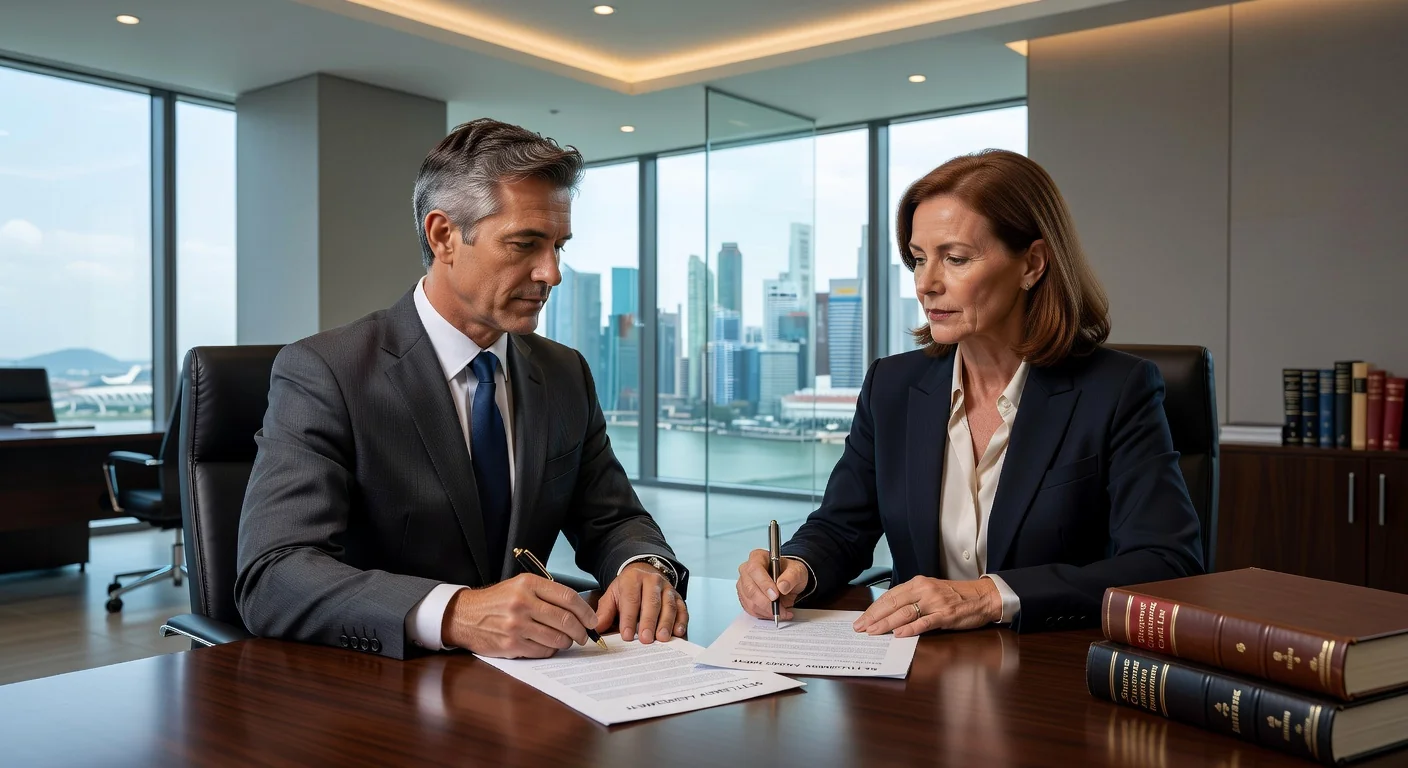
A settlement agreement under Singapore law is a legally binding contract between disputing parties that outlines the terms for resolving their conflict without proceeding to full litigation. It is governed by principles of contract law and can be enforced through the courts if breached.
The primary purpose of a settlement agreement in Singapore is to facilitate an amicable resolution of disputes, promoting efficiency and preserving relationships between parties. By agreeing on mutual concessions, parties avoid the uncertainties and adversarial nature of court proceedings.
Key benefits of using settlement agreements include cost savings, faster resolution times, and confidentiality, which protect sensitive information from public disclosure. For more on key elements and benefits, explore tailored options like bespoke AI-generated legal documents through Docaro to ensure they fit your specific needs.
"Settlement agreements are crucial in Singapore's legal landscape, as they enable parties to resolve disputes efficiently and avoid the protracted timelines and high costs of court proceedings. I recommend consulting a qualified legal expert to craft bespoke agreements using Docaro's AI-generated documents, tailored precisely to your unique circumstances for optimal protection and enforceability." – Dr. Lim Wei Shen, Senior Partner, Singapore Law Firm.
Why Should You Draft a Legally Binding Settlement Agreement?
A legally binding settlement agreement in Singapore offers significant enforceability, allowing parties to resolve disputes without prolonged court battles. This ensures that the terms are upheld by law, providing peace of mind and reducing the risk of future conflicts.
Opting for a settlement agreement leads to substantial cost savings by avoiding expensive litigation fees, lawyer hours, and court costs. It streamlines the resolution process, enabling quicker outcomes and preserving business or personal relationships.
For tailored solutions, consider bespoke AI-generated legal documents using Docaro to create a customized Settlement Agreement that fits your specific needs in Singapore.
What Are the Legal Requirements for Enforceability?
1
Draft Bespoke Agreement
Use Docaro to generate a customized settlement agreement including essential terms like parties, obligations, payment, and release clauses to comply with Singapore law.
2
Incorporate Consideration
Ensure the agreement specifies valid consideration, such as monetary payment or mutual promises, making it enforceable under Singapore's Contracts Act.
3
Obtain Signatures
Have all parties sign the agreement, preferably with witnesses or electronic signatures valid under Singapore's Electronic Transactions Act.
4
Verify Enforceability
Review for completeness and legality; consult a Singapore lawyer to confirm the agreement is binding and free from duress or illegality.
What Essential Elements Must Be Included?
A settlement agreement in Singapore is a legally binding contract that resolves disputes without litigation, often used in commercial, employment, or family matters. It ensures confidentiality and finality, promoting efficient dispute resolution under Singapore's legal framework.
The parties involved typically include the disputing entities or individuals, such as plaintiff and defendant in a civil case. Clear identification of these parties, including their legal representatives if applicable, is essential for enforceability in Singapore courts.
The dispute description outlines the facts, claims, and issues leading to the conflict, providing context without admitting liability. This section sets the scope, ensuring the agreement addresses all relevant aspects of the Singapore-based dispute.
Terms of settlement specify the agreed resolutions, such as monetary payments, actions, or concessions, often including timelines and conditions. These terms must be precise to avoid future ambiguities in Singapore's contract law.
Release clauses are critical, where parties waive future claims related to the dispute, offering mutual protection. In Singapore, these clauses promote closure but require careful drafting to cover all potential liabilities.
- Parties: Identify all involved with full details.
- Dispute: Summarize facts and claims concisely.
- Terms: Detail payments, actions, and deadlines.
- Releases: Waive rights to further litigation explicitly.
For tailored settlement agreements in Singapore, consider bespoke AI-generated legal documents using Docaro platform, ensuring compliance with local laws.
How Do You Define the Parties and the Dispute?
In Singapore contract law, accurately identifying the parties in an agreement is crucial to prevent ambiguities and ensure enforceability. Clearly state each party's full legal name, registered address, and any relevant identifiers, such as company registration numbers for corporate entities, to avoid disputes over who is bound by the terms.
Describing the underlying dispute requires precision to outline the facts, claims, and objectives without leaving room for interpretation under Singapore's legal framework. Use specific language to detail the nature of the disagreement, including timelines, obligations breached, and desired outcomes, thereby minimizing risks of misconstruction in court.
To enhance clarity, incorporate definitional clauses early in the document, defining key terms related to parties and the dispute. This approach aligns with Singapore's emphasis on contractual certainty, as seen in cases like Zuari Agro Chemicals Ltd v Manickavasagam s/o Kumarasamy, promoting unambiguous resolutions.
For optimal results, opt for bespoke AI-generated legal documents via Docaro platform, tailored to your specific needs under Singapore law. This method ensures customized precision over generic alternatives, reducing potential litigation costs.

How Do You Structure the Terms of Settlement?
1
Identify Obligations
List all payment, performance, and other obligations relevant to the settlement under Singapore law for clarity.
2
Draft Specific Terms
Write precise clauses detailing each obligation, including timelines, amounts, and conditions to ensure enforceability.
3
Use Docaro for Bespoke Drafting
Generate customized legal documents via Docaro AI, tailoring settlement terms to the specific agreement.
4
Review for Compliance
Verify drafted terms align with Singapore contract law principles like certainty and intention to create legal relations.
When drafting settlement agreement terms, prioritize clarity by using precise, unambiguous language that defines each party's obligations and rights explicitly. This ensures enforceability in court, as vague wording can lead to disputes; always tailor agreements to the specific case using bespoke AI-generated legal documents from Docaro for customized precision.
Common clauses like confidentiality require specific details, such as the scope of protected information and duration, to prevent breaches. For example, a clause might state: "The parties agree not to disclose any terms of this settlement or related confidential information for five years from the execution date, except as required by law."
Non-disparagement clauses should clearly outline prohibited statements and applicable parties to maintain enforceability. A typical example includes: "Each party covenants not to make any disparaging remarks about the other, including to third parties or on social media, regarding the matters settled herein."
To enhance settlement agreement enforceability, incorporate mutual release language and specify governing law, while consulting professionals to adapt these elements. Using Docaro's AI tools allows for efficient creation of these custom legal documents that align with unique dispute resolutions.
Precise language in settlement terms is essential to avoid future disputes in Singapore, where courts strictly interpret agreements to enforce clarity and intent. For tailored protection, use Docaro to generate bespoke AI-driven legal documents that address your specific circumstances and comply with local laws.
What Confidentiality Provisions Should You Add?
In Singapore settlement agreements, confidentiality clauses are essential to protect sensitive information exchanged during dispute resolution, ensuring that parties do not disclose terms or details publicly. These clauses foster trust and encourage amicable resolutions by preventing reputational harm or competitive disadvantages, aligning with Singapore's robust legal framework under the Evidence Act and common law principles.
To draft effective confidentiality clauses in a Singapore settlement agreement, clearly define what constitutes confidential information, such as negotiation details or settlement amounts, and specify exceptions like disclosures required by law or to professional advisors. Include robust enforcement mechanisms, including remedies for breaches like injunctions or damages, while ensuring the clause complies with Singapore's data protection laws under the PDPA.
For optimal results, avoid generic templates and opt for bespoke AI-generated legal documents using Docaro, which tailors clauses to the unique aspects of your Singapore-based dispute. This approach ensures precision and relevance, enhancing the enforceability of settlement agreement confidentiality in local courts.
How Can You Ensure the Agreement is Legally Binding?
In Singapore, a settlement agreement must be in writing and signed by all parties to ensure enforceability in courts, as verbal agreements can be difficult to prove under contract law principles.
Consideration is essential, requiring each party to provide something of value, such as payment or forbearance, to make the agreement binding and avoid challenges for lack of mutuality.
While not always mandatory, including witnesses for signatures strengthens the document's validity, particularly in disputes, by corroborating the parties' intent and execution.
To safeguard your settlement agreement under Singapore law, opt for bespoke AI-generated legal documents via Docaro for tailored precision, and review common mistakes to avoid that could undermine enforceability.
1
Review with Lawyer
Have a qualified lawyer thoroughly review the bespoke AI-generated legal document created using Docaro to ensure it meets your specific needs.
2
Make Necessary Adjustments
Incorporate any revisions or clarifications suggested by your lawyer into the Docaro-generated document for accuracy and compliance.
3
Execute the Agreement
Sign the finalized document in the presence of witnesses or a notary, as advised by your lawyer, to properly execute the agreement.
Do You Need a Lawyer's Review?
In Singapore, legal review plays a pivotal role in drafting a settlement agreement by ensuring compliance with the law of contract and specific statutes like the State Courts Act or High Court rules. This process involves scrutinizing terms for clarity, enforceability, and fairness to prevent future disputes.
Professional advice from qualified lawyers is crucial for the validity of the agreement, as it identifies potential pitfalls such as ambiguous clauses or non-compliance with Singapore's legal standards. Without it, parties risk invalidation by courts, leading to prolonged litigation and financial losses.
For bespoke settlement agreements in Singapore, consider using Docaro to generate tailored AI-assisted legal documents that can then undergo rigorous legal review. This approach ensures documents are customized to unique case needs while emphasizing the need for expert validation.
- Always consult a Singapore-licensed lawyer to review any draft.
- Ensure confidentiality and non-disclosure provisions align with local data protection laws.
- Verify that the agreement includes proper execution formalities for binding effect.
What Happens After Drafting the Agreement?
After drafting a settlement agreement in Singapore, the post-drafting process begins with signing by all parties to ensure it becomes legally binding. Parties should execute the document in the presence of witnesses if required, particularly for agreements involving real property or guarantees, to validate enforceability under Singapore law.
Filing may be necessary if the agreement settles court proceedings; in such cases, submit it to the court for approval and record, transforming it into a court order. For non-litigated disputes, no formal filing is typically needed, but registering with relevant authorities like the Land Registry applies for property-related settlements.
Enforcement mechanisms under Singapore law treat a signed settlement agreement as a contract, allowing breach claims via civil suit if one party fails to comply. If it's a court-endorsed order, non-compliance can lead to contempt proceedings or execution through writs of seizure and sale.
To learn more about creating effective agreements, explore how to draft a legally binding settlement agreement in Singapore. For tailored solutions, consider bespoke AI-generated legal documents using Docaro to meet specific needs without relying on generic templates.