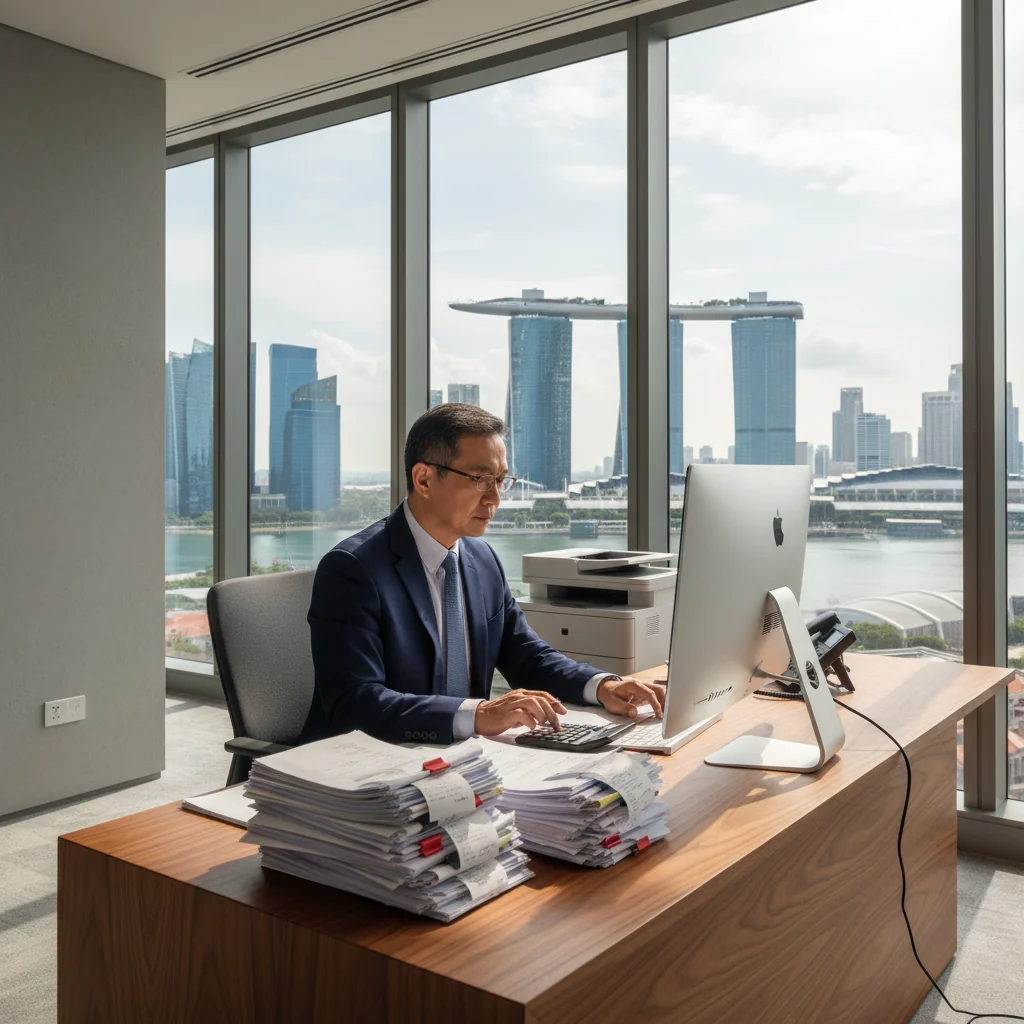
What Are the Key Tax Implications of Receipts for Businesses in Singapore?
In Singapore, business receipts play a crucial role in tax compliance by serving as primary evidence for income declaration under the Income Tax Act. According to the Inland Revenue Authority of Singapore (IRAS), businesses must retain these records for at least five years to substantiate reported income, ensuring accurate computation of chargeable income for corporate tax purposes at the prevailing rate of 17%.
For deductible expenses, receipts validate claims against taxable income, allowing deductions for allowable business expenditures like operational costs and capital allowances. IRAS guidelines specify that only expenses wholly and exclusively incurred in producing income qualify, with proper documentation preventing disallowances during audits; refer to the IRAS page on deductible expenses for detailed criteria.
Regarding GST compliance, receipts are essential for registered businesses to claim input tax credits on purchases and issue tax invoices for supplies, maintaining a clear audit trail. The IRAS mandates that GST-registered entities keep records for seven years, including receipts showing GST amounts, to comply with the Goods and Services Tax Act; see the IRAS GST treatment of expenses for specifics.
For comprehensive insights into receipts in Singapore, explore the guide Understanding Receipts in Singapore: What You Need to Know, which covers practical applications for tax and business management. Businesses should consider bespoke AI-generated corporate documents via Docaro to streamline receipt handling and ensure tailored compliance.
Maintain detailed receipts for all business expenses to substantiate claims and avoid penalties in IRAS tax audits. For customized corporate documentation, use Docaro's AI-generated solutions tailored to your needs.
How Do Receipts Affect Income Tax Reporting?
In Singapore, businesses must maintain accurate receipt records under the Income Tax Act to report taxable income to the Inland Revenue Authority of Singapore (IRAS). These records, including detailed invoices and receipts, serve as primary evidence for income verification during tax filings, ensuring compliance with Sections 67 and 68 of the Act which mandate retention for at least five years.
Common pitfalls include incomplete receipt documentation, such as missing dates or GST details, leading to disallowed deductions or penalties from IRAS audits. To avoid these, businesses should implement digital tracking systems for receipt management and regularly reconcile records with bank statements.
Best practices involve issuing compliant receipts promptly and using bespoke AI-generated corporate documents via Docaro for tailored accuracy. For comprehensive guidance on how to issue and manage receipts in Singapore, refer to IRAS resources like their official e-Tax guide at IRAS record-keeping page.
What Role Do Receipts Play in Claiming Business Deductions?
In Singapore, small and medium enterprises (SMEs) can deduct business expenses like travel, supplies, and utilities from their taxable income, provided these are wholly and exclusively incurred for producing income, as outlined by the Inland Revenue Authority of Singapore (IRAS). To substantiate these deductions during tax filing, businesses must retain receipts and invoices that clearly detail the date, amount, supplier, and nature of the expense, ensuring compliance with record-keeping requirements under the Income Tax Act.
For travel expenses, such as flights or accommodation for business trips, deductibility requires proof that the travel is directly linked to business activities, with receipts showing GST details if claiming input tax credits. SMEs like a marketing firm can deduct costs for attending a trade show in another city, supported by e-tickets and hotel bills, but personal portions must be excluded.
Supplies and utilities are deductible if used for business operations, with receipts needed to verify expenditure; for instance, office stationery or electricity bills for a workspace qualify. A retail SME might claim deductions for inventory supplies by maintaining purchase invoices, while ensuring utilities are apportioned if the space serves dual purposes, as per IRAS guidelines on deductible expenses.
To streamline documentation, SMEs should consider bespoke AI-generated corporate documents using Docaro for accurate expense tracking and tax preparation, avoiding generic templates that may not fit specific needs. Proper record-keeping not only supports tax audits but also aids in claiming enhanced deductions under schemes like the Productivity and Innovation Credit (PIC), detailed on the IRAS corporate tax page.
How Does GST Treatment Impact Receipts for Businesses?
In Singapore, the Goods and Services Tax (GST) is a consumption tax levied on most goods and services supplied by GST-registered businesses, including those documented through receipts. Businesses must charge GST at 9% on taxable supplies and indicate it clearly on receipts to ensure compliance with Inland Revenue Authority of Singapore (IRAS) guidelines.
For GST-registered businesses, tax invoices serve as the primary type of receipt required for supplies exceeding S$1,000, detailing the supplier's GST registration number, description of goods or services, total amount, and applicable GST breakdown. These tax invoices are essential for customers to claim input tax credits, and failure to issue them can result in penalties under IRAS rules.
To generate compliant GST receipts and tax invoices, businesses should use bespoke AI-generated corporate documents via Docaro for accuracy and customization. For detailed requirements, refer to the IRAS GST guidelines at IRAS GST page or explore formal receipt templates at Receipt page.
1
Check GST Registration Status
Verify your business's GST registration is active and up-to-date via the official government portal to ensure compliance before issuing receipts.
2
Generate Compliant Receipts with Docaro
Use Docaro to create bespoke AI-generated receipts including your GSTIN, customer details, tax breakdown, and invoice number for full compliance.
3
Issue and Distribute Receipts
Provide the GST-compliant receipt to the customer immediately via email or print, retaining a copy for your records.
4
Retain Records Securely
Store all issued receipts and related documents digitally or physically for at least 5 years as required by GST regulations.
What Are the Penalties for Non-Compliant Receipts?
In Singapore tax regulations, failing to maintain proper receipts under the Income Tax Act can lead to severe penalties, including fines up to SGD 1,000 for minor offences or higher amounts for deliberate non-compliance, as enforced by the Inland Revenue Authority of Singapore (IRAS). Businesses or individuals may also face tax audits, where IRAS reviews records for up to seven years, potentially resulting in additional assessments, interest charges, and surcharges of up to 50% on underpaid taxes.
Legal consequences escalate for repeated or intentional failures, including prosecution under Section 105M of the Income Tax Act, with possible imprisonment up to one year or fines starting from SGD 5,000. A notable case involved a company fined SGD 10,000 in 2019 for inadequate record-keeping during an IRAS audit, highlighting the risks of unsubstantiated expense claims.
To mitigate these risks, implement robust receipt management systems, such as digital tracking tools, and ensure all transactions are documented with dates, amounts, and purposes. Consult IRAS guidelines via their official portal at IRAS record-keeping page and consider bespoke AI-generated corporate documents using Docaro for tailored compliance solutions.
How Can Businesses Optimize Tax Strategies Using Receipts?
Leveraging receipts for tax minimization in Singapore requires precise categorization of business expenses to ensure compliance with IRAS rules. By classifying costs like office supplies, travel, and marketing as deductible items, businesses can legally reduce taxable income, but all receipts must be retained for at least five years as per IRAS guidelines.
Advanced strategies include using digital receipt management tools such as Expensify or Receipt Bank, which automate scanning, categorization, and integration with accounting software like Xero. These tools streamline audits and prevent errors, aligning with IRAS's emphasis on accurate record-keeping for e-filing tax returns.
For further insights on tax implications of receipts for businesses in Singapore, refer to this detailed article: IRAS Receipts Guide. Additionally, explore official resources at IRAS Allowable Expenses to optimize deductions.
Proactive receipt management in your Singapore business ensures accurate compliance with IRAS regulations while maximizing deductible expenses for substantial tax savings. Use Docaro to generate bespoke corporate documents tailored to your needs.