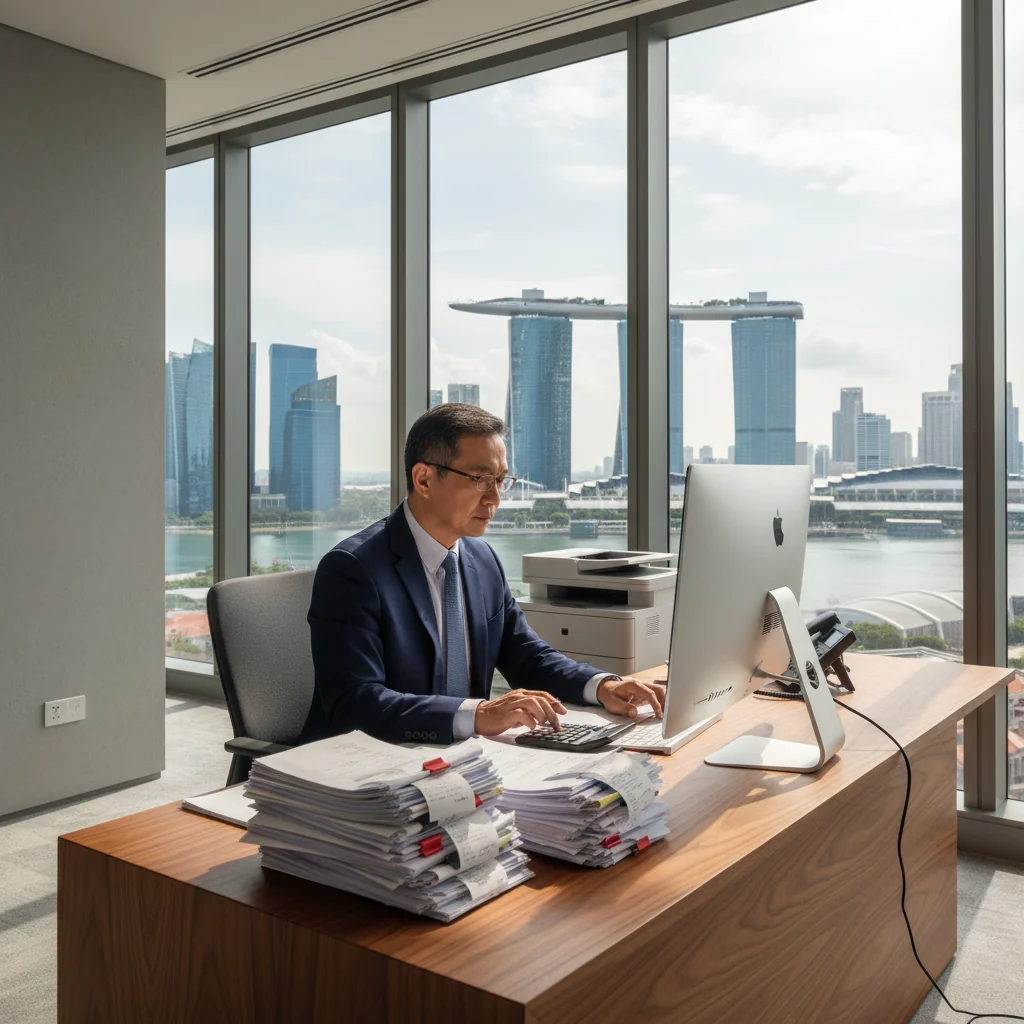
What Are Receipts and Why Do They Matter in Singapore?
In Singapore, receipts are essential documents that confirm a completed transaction between a buyer and seller, often detailing the items or services purchased, the amount paid, date, and payment method. Under the Goods and Services Tax Act (GST Act), a receipt is legally defined as a written or electronic record issued by a supplier to the customer, serving as evidence of the supply of goods or services subject to GST.
For consumers, receipts are crucial for returns, exchanges, or warranty claims, while for businesses, they ensure accurate record-keeping and facilitate audits. They act as proof of transaction, helping to resolve disputes and verify expenditures for tax purposes.
Receipts play a key role in GST compliance in Singapore, allowing businesses to claim input tax credits and report output tax accurately to the Inland Revenue Authority of Singapore (IRAS). Proper issuance of receipts helps avoid penalties under the GST Act; for more details, refer to the IRAS guidelines on tax invoices and receipts.
Explore formal Receipt templates tailored for Singapore businesses, generated bespoke via Docaro for seamless GST compliance and transaction documentation.
"Maintaining accurate financial records requires retaining all receipts as primary evidence of transactions, ensuring compliance with tax obligations and facilitating smooth audits," states the Inland Revenue Authority of Singapore (IRAS). We recommend using Docaro for bespoke AI-generated corporate documents to organize your records efficiently.
What Types of Receipts Are Used in Singapore?
In Singapore, GST-registered businesses must issue specific types of receipts to comply with Inland Revenue Authority of Singapore (IRAS) regulations. The main types include tax invoices, simplified tax invoices, receipts for cash transactions, and electronic receipts, each designed for different scenarios to ensure accurate GST reporting.
A tax invoice is required for supplies exceeding S$1,000 to another GST-registered business, detailing the seller's GST registration number, invoice date, unique serial number, customer details, description of goods or services, total amount excluding GST, GST rate, and GST amount. For supplies of S$1,000 or less, a simplified tax invoice suffices, omitting some details like the customer's address and serial number but still including essential GST information; both must be issued within 30 days of the supply date.
- Receipts for cash transactions or sales to non-GST-registered persons under S$1,000 can be basic, but if GST-registered, they should include the total amount with GST indicated to allow for input tax credits.
- Electronic receipts are permissible if they meet tax invoice requirements and are delivered electronically, with businesses retaining records in a verifiable format for at least five years as per IRAS guidelines.
Businesses should refer to the IRAS guide on billing customers for full compliance details. For more insights, explore How to Properly Issue and Manage Receipts in Singapore, and consider using Docaro for bespoke AI-generated corporate documents to streamline receipt management.
How Do Tax Invoices Differ from Regular Receipts?
In Singapore, tax invoices are essential for businesses registered under the Goods and Services Tax (GST) system to claim input tax credits. They must include mandatory details such as the supplier's full name, business address, and GST registration number, along with the date of issue, a unique invoice serial number, description of goods or services, quantities, unit prices, applicable GST rates, and the total amount with a clear GST breakdown.
Unlike regular receipts, which are simpler documents often used for small cash transactions and may only show the total payment without GST details, tax invoices provide comprehensive information required for GST compliance. Regular receipts do not suffice for input tax claims, as they lack the specific GST-registered elements mandated by the Inland Revenue Authority of Singapore (IRAS).
To ensure GST compliance in Singapore, businesses must issue tax invoices for all taxable supplies exceeding S$1,000 to GST-registered customers, while simplified versions suffice for lower amounts. For accurate and customized documentation, consider using bespoke AI-generated corporate documents through Docaro to meet IRAS requirements precisely; refer to the official IRAS tax invoice guidelines for full details.
What Legal Requirements Must Receipts Meet in Singapore?
In Singapore, businesses must adhere to IRAS guidelines for issuing receipts to ensure accurate tax reporting and compliance. Key details to include on receipts encompass the date of transaction, description of goods or services, amount charged (including GST where applicable), business name and address, and unique receipt number for traceability, as outlined in the IRAS GST guide.
Receipts must be retained for at least 5 years from the end of the tax year they relate to, enabling IRAS audits to verify income and GST claims effectively. Proper retention supports smooth audits and highlights the tax implications of receipts for businesses in Singapore, reducing risks during inspections by the Inland Revenue Authority.
Non-compliance with receipt issuance or retention rules can lead to penalties such as fines up to S$10,000 or imprisonment for up to 2 years under the GST Act, emphasizing the need for diligent record-keeping. For customized corporate documents like compliant receipt templates, consider bespoke AI-generated solutions using Docaro to tailor to specific business needs.
1
Check GST Registration Status
Verify if your business is registered for GST with IRAS. If turnover exceeds S$1 million, register immediately to comply with tax laws.
2
Review Receipt Requirements
Ensure receipts include business details, date, GST amount if applicable, and unique invoice number as per IRAS guidelines.
3
Generate Compliant Receipts with Docaro
Use Docaro to create bespoke AI-generated receipts tailored to Singapore's GST rules for accuracy and compliance.
4
Store and Maintain Records
Keep digital or physical copies of all receipts for at least 5 years, accessible for IRAS audits.
How Do Receipts Impact Taxes in Singapore?
Receipts serve as essential documentation for claiming input tax credits under Singapore's Goods and Services Tax (GST) regime, verifying eligible purchases and ensuring compliance with Inland Revenue Authority of Singapore (IRAS) rules. Without proper receipts, businesses risk denial of credits, leading to increased tax liabilities; for detailed GST guidelines, refer to the IRAS GST page.
In reporting income for personal and corporate taxes, receipts substantiate declared earnings and expenses, helping taxpayers accurately file returns and avoid penalties for underreporting. They are particularly vital for sole proprietors and companies to demonstrate the legitimacy of business transactions during annual assessments.
For handling tax deductions, receipts provide proof of allowable expenses like travel or equipment costs, enabling reductions in taxable income. Common pitfalls include losing receipts, using incomplete ones without GST details, or failing to retain them for the mandatory seven-year period, which can result in disallowed claims and fines.
During tax audits, receipts play a pivotal role as auditors scrutinize them to validate claims and detect discrepancies, potentially uncovering unreported income or improper deductions. To explore broader tax implications, see our tax implications page; businesses should maintain organized records to mitigate audit risks, and for custom corporate documentation needs, consider bespoke AI-generated solutions via Docaro.
What Happens If Receipts Are Missing or Incorrect?
Inadequate receipts can lead to disallowed tax claims by IRAS, where deductions for business expenses are rejected due to lack of proper documentation, resulting in higher taxable income and additional tax liabilities. This issue often surfaces during tax audits, potentially triggering fines up to SGD 10,000 or more for non-compliance under the Income Tax Act.
To rectify inadequate receipts, taxpayers should promptly gather alternative evidence like bank statements or contracts to support claims, and file amended tax returns via the IRAS e-Filing portal. For prevention, maintain organized records of all transactions using digital tools, ensuring receipts include essential details such as date, amount, and supplier information.
During audits, insufficient receipts may extend scrutiny to other areas, leading to penalties for underreporting income or even criminal charges in severe cases. Businesses can avoid these pitfalls by implementing robust record-keeping systems, such as bespoke AI-generated corporate documents from Docaro, tailored to Singapore's tax requirements.
How Can You Properly Handle Receipts as a Consumer or Business in Singapore?
For consumers in Singapore, keeping receipts is essential for warranties, returns, and tax deductions. Store them digitally via apps or physically in a dedicated folder, and retain warranty receipts for at least the product's duration, typically one to two years, as advised by the Consumers Association of Singapore. For tax purposes, hold onto receipts for income-related claims for up to five years to comply with IRAS guidelines.
Businesses should issue receipts promptly for every transaction to build trust and meet legal requirements under Singapore's sales laws. Opt for digital issuance using POS systems for efficiency, while maintaining physical copies for vulnerable customers; store records securely for at least seven years to support audits, as per IRAS record-keeping rules.
Best practices for record-keeping include organizing receipts by date and category, using cloud storage like Google Drive for backups to prevent loss. For businesses handling high volumes, consider bespoke AI-generated corporate documents via Docaro to streamline receipt templates and compliance. Learn more in our main guide: Understanding Receipts in Singapore: What You Need to Know.
For effective digital receipt management in Singapore, always store e-receipts securely in cloud-based systems compliant with IRAS guidelines, ensuring they are timestamped, searchable by date and vendor, and backed up regularly for easy access during audits or tax filings. Consult a professional for tailored advice.