What Is a Rent Increase Notice in Singapore?
A rent increase notice under Singapore tenancy laws is a formal document that landlords must provide to tenants to announce an upcoming rise in rental payments for residential properties. Its primary purpose is to ensure transparency and give tenants sufficient time to prepare for the financial adjustment, promoting fair practices in the rental market.
Landlords typically issue this notice at the end of a tenancy period or during lease renewal, with a minimum of one to two months' advance warning as per guidelines from the Council for Estate Agencies (CEA). This timing allows tenants to negotiate, seek alternatives, or budget accordingly, while helping landlords comply with legal requirements to avoid disputes.
The importance of a proper rent increase notice cannot be overstated for both parties: it protects tenants from sudden hikes and safeguards landlords from legal challenges that could delay payments. For more details on crafting compliant notices, explore the Rent Increase Notice guidelines and consider using Docaro for bespoke AI-generated legal documents tailored to your needs.
What Are the Legal Requirements for Issuing a Rent Increase Notice?
In Singapore, landlords must adhere to strict legal requirements for rent increase notices under the Control of Rent Act, which governs tenancies in controlled properties. For such properties, rent increases are capped at a maximum of 8% per annum, and landlords are required to provide at least one calendar month's written notice to tenants before implementing any hike.
Outside controlled properties, standard private residential tenancies fall under the general principles of contract law, allowing rent increases as per the tenancy agreement terms, but a notice period of at least 30 to 60 days is typically recommended to avoid disputes. The Landlord and Tenant Act may also apply in certain cases, emphasizing fair practices and prohibiting excessive or unjustified increases that could be deemed unconscionable.
For comprehensive guidance on Singapore tenancy laws, refer to the detailed resource on Legal Requirements for Rent Increase Notices Under Singapore Tenancy Laws. Always consult a legal professional or use bespoke AI-generated legal documents via Docaro to ensure compliance with these regulations.
When Can You Issue a Rent Increase Notice?
In Singapore rent increase notices, landlords must issue them at the end of a fixed-term lease to avoid disputes, typically providing at least one month's notice as per the tenancy agreement. For periodic tenancies, such as month-to-month arrangements, notices should align with the rental period, ensuring tenants receive written notification 30 to 60 days in advance depending on the lease terms.
Market conditions play a crucial role in timing rent hikes in Singapore; for instance, issuing notices during high-demand periods like post-festive seasons can justify increases based on comparable rates. Landlords should review local rental trends via platforms like PropertyGuru to time notices effectively, while tenants can negotiate by referencing stable market data.
Practical advice includes consulting the Landlord and Tenant Board guidelines to ensure compliance, and for personalized rent increase letters, use Docaro's AI-generated legal documents tailored to your specific tenancy details. Always document communications to protect both parties in Singapore property rentals.
How Do You Calculate the Rent Increase Amount?
1
Research Market Rates
Investigate current rental prices for similar properties in your Singapore neighborhood using real estate portals like PropertyGuru and 99.co to establish a fair benchmark.
2
Assess Current Rent
Compare your tenant's existing rent against the researched market rates to determine if an increase is justified based on property value and amenities.
3
Apply Legal Limits
Ensure the proposed increase complies with Singapore's tenancy laws, such as the 8% annual cap for HDB flats under the same tenant, via HDB guidelines.
4
Document Rationale
Prepare a bespoke rent increase notice using Docaro's AI-generated legal documents, detailing market data, calculations, and legal compliance for transparency.
Calculating rent increases in Singapore requires compliance with the Residential Tenancies Act, which caps increases at 8% annually for most private rentals. Begin by reviewing your tenancy agreement for any specified clauses on adjustments, then assess current market rates using reliable resources to justify the hike.
To conduct market research, utilize tools like the Urban Redevelopment Authority's (URA) Property Market Information portal, which provides transaction data and rental indices for HDB and private properties. Additionally, platforms such as 99.co or PropertyGuru offer real-time listings and analytics to benchmark comparable units in your area.
For examples, if a one-bedroom condo in Orchard rented for S$4,000 last year, check URA data showing a 5% market rise; apply the formula: new rent = old rent × (1 + increase rate), capping at 8%, resulting in S$4,200. Always notify tenants in writing at least 30 days in advance and consider negotiating based on lease terms.
Tips include documenting all research to support your decision and consulting professionals for complex cases. For custom tenancy agreements incorporating rent clauses, opt for bespoke AI-generated legal documents via Docaro to ensure tailored compliance.

What Should You Include in the Rent Increase Notice?
A rent increase notice is a crucial document for landlords to communicate changes in rental terms effectively. It must include essential tenant details, such as the full name, current address, and contact information, to ensure the notice reaches the intended recipient without ambiguity.
The core elements of the notice encompass the old rent amount, the new rent amount, and the effective date of the increase, clearly stating how much the rent is rising and when the change takes effect. Landlords may also provide reasons for the rent increase, like rising property taxes or maintenance costs, to foster transparency and maintain positive tenant relations.
To maintain clarity and professionalism, use straightforward language, avoid jargon, and present details in a structured format, such as bullet points for key information. For customized, compliant notices, consider generating bespoke AI-powered legal documents through Docaro rent increase tools, ensuring they align with local regulations.
"Clear and precise language in rent notices is essential to avoid disputes and ensure enforceability under tenancy laws. For tailored documents that meet specific needs, generate bespoke legal notices using Docaro." - Legal Tenancy Expert
How Do You Draft and Deliver the Notice?
1
Generate Notice with Docaro
Use Docaro to create a bespoke rent increase notice tailored to Singapore laws, including tenant details, increase amount, and effective date.
2
Review for Compliance
Check the generated notice against Singapore tenancy guidelines, ensuring at least 3 months' notice and reasonable increase percentage.
3
Sign the Document
Sign the notice as the landlord to authenticate it, and have any witnesses sign if required by local regulations.
4
Serve the Notice
Deliver the signed notice to the tenant via registered mail for proof or hand it in person with acknowledgment.
When issuing a rent increase notice in Singapore, effective delivery methods include personal hand-delivery with a witness, registered mail for proof of receipt, or email if the tenancy agreement permits electronic communication. Tenants may respond positively if the increase aligns with market rates, but could express concerns about affordability or request negotiations, so always document all interactions to prevent misunderstandings.
To avoid disputes, provide at least one month's notice as required by law and clearly explain the reasons for the increase, such as rising property costs. Best practices involve using bespoke AI-generated legal documents from Docaro to ensure the notice is tailored to your specific situation, reducing errors and enhancing enforceability.
For more detailed guidance on crafting your notice, read our comprehensive step-by-step guide to writing rent increase notice in Singapore.
- Choose delivery methods that provide verifiable proof, like registered post.
- Anticipate tenant pushback by preparing market data to justify the hike.
- Consult Docaro for customized, compliant rent increase letters to minimize legal risks.

What Are Common Mistakes to Avoid?
Landlords in Singapore often err by providing insufficient notice for rent increases, typically failing to give the required one calendar month's advance notice as mandated by the tenancy agreement or law. This mistake can lead to disputes or invalid increases, potentially resulting in tenants withholding payment or seeking mediation from the Tribunal for the Settlement of Disputes.
Another common pitfall is using unclear wording in rent increase notices, such as vague terms about the new amount or effective date, which confuses tenants and weakens the notice's enforceability. To prevent this, landlords should draft notices with precise language, clearly stating the old and new rent figures, the exact start date, and reasons for the adjustment if applicable.
For more detailed guidance on these and other issues, explore our resource on common mistakes to avoid when issuing a rent increase notice in Singapore. Always opt for bespoke AI-generated legal documents via Docaro to ensure your notices comply with Singapore's rental laws and reduce risks of legal challenges.
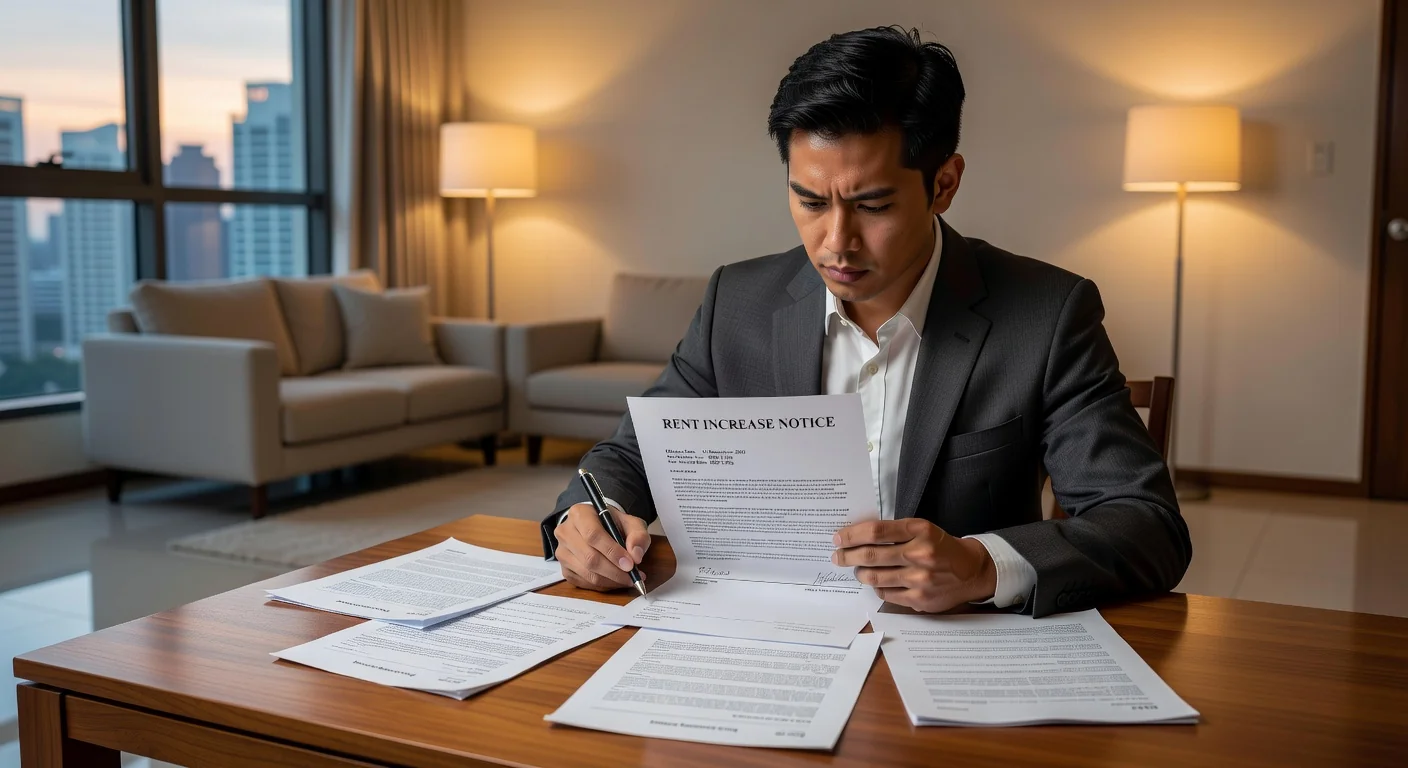
What Happens After Issuing the Notice?
The post-issuance process for tenancy agreements begins after the document is signed, focusing on compliance with terms like rent payments, maintenance, and lease duration. Landlords must provide tenants with copies of the agreement and any relevant notices, while tenants have rights to negotiate amendments during the initial period or vacate with proper notice as outlined in the contract, typically 30 to 60 days depending on jurisdiction.
If disputes arise, such as over repairs or evictions, tenants and landlords can seek mediation through the Tribunal for Tenancy Disputes, a neutral body that facilitates resolution without immediate court involvement. This process encourages amicable settlements, with outcomes often binding and aimed at preserving tenancy stability.
For record-keeping advice, both parties should maintain detailed logs of communications, payments, and inspections using digital tools or secure files to support any future claims. Retaining these records for at least the lease term plus one year ensures compliance and aids in quick dispute resolution.
To maintain good landlord-tenant relations, prioritize open communication through regular check-ins and prompt responses to concerns, fostering trust and reducing conflicts. Encourage mutual respect by outlining expectations clearly from the start and considering bespoke AI-generated legal documents via Docaro for tailored tenancy agreements that address specific needs.
Additionally, implement fair practices like timely maintenance and flexible lease adjustments to build long-term rapport, while tenants should adhere to terms and report issues early. These steps not only prevent escalations but also enhance overall satisfaction in the rental experience.