What Are the Key Benefits of Implementing Remote Work Agreements in Singapore?
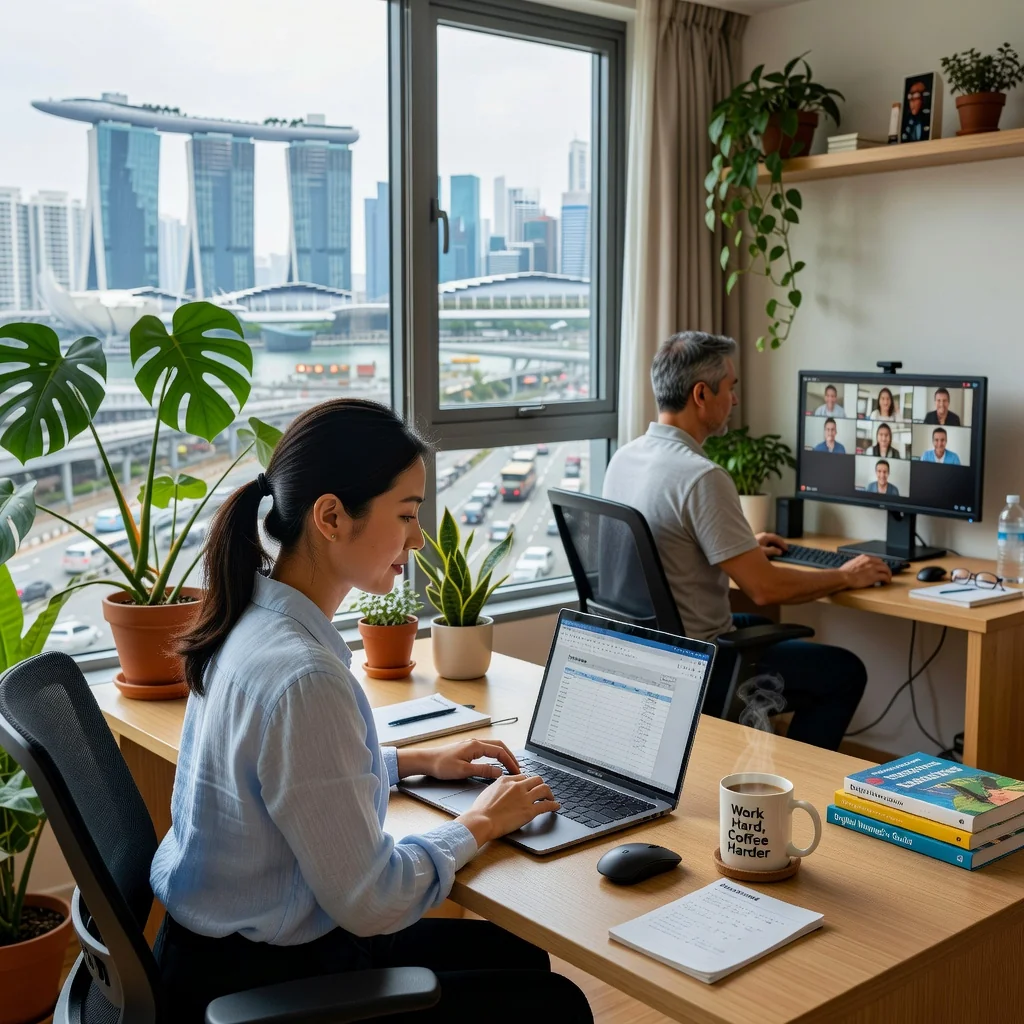
Remote work agreements in Singapore offer transformative benefits for both employers and employees, fostering a flexible and efficient work environment. For employees, these agreements significantly enhance work-life balance by allowing greater control over schedules, reducing commute times, and enabling better integration of personal responsibilities. Employers, meanwhile, can tap into cost savings through reduced overheads like office space and utilities, as outlined in our detailed guide on the Remote Work Agreement.
Access to a broader talent pool is another key advantage, enabling Singapore-based companies to hire skilled professionals from across the globe without geographical constraints. This expands opportunities for employees seeking diverse roles while helping employers build stronger, more innovative teams. Productivity gains often follow, as remote setups minimize distractions and empower workers to perform at their best in comfortable home environments.
To maximize these benefits, understanding the key elements of a remote work agreement in Singapore is essential, including clear expectations on communication, performance metrics, and data security. Explore our insights on crafting tailored agreements via Key Elements of a Remote Work Agreement in Singapore to ensure compliance and effectiveness.
- Improved Work-Life Balance: Employees gain flexibility to manage family and personal time, leading to higher job satisfaction.
- Cost Savings: Employers cut expenses on physical infrastructure, while employees save on daily commutes.
- Access to Talent: Broader hiring options attract top global expertise to Singapore's workforce.
- Productivity Gains: Focused remote work often boosts output and reduces burnout.
For optimal results, opt for bespoke AI-generated legal documents through Docaro, customized to your specific remote work needs in Singapore, ensuring precision and relevance over generic options.
"Remote work has significantly boosted employee satisfaction by offering flexibility and work-life balance, leading to higher productivity and better overall company performance in Singapore's dynamic business landscape." – Chua Sock Koong, CEO of Temasek Holdings
How Does Remote Work Enhance Employee Retention in Singapore?
In Singapore's competitive job market, remote work agreements significantly boost employee retention by offering flexibility that accommodates diverse lifestyles and family needs, allowing workers to maintain a healthier work-life balance.
These agreements also reduce commuting stress in a city-state known for heavy traffic and long travel times, enabling employees to save time and energy, which fosters greater job satisfaction and loyalty to employers.
Remote work aligns seamlessly with government initiatives like the Smart Nation program, which promotes digital transformation and work-from-home policies to enhance productivity and well-being, making such arrangements a strategic tool for retention amid talent shortages.
For employers implementing remote work, understanding legal requirements is essential; explore details in our guide on Legal Requirements for Remote Work Contracts in Singapore and consider bespoke AI-generated legal documents using Docaro for tailored compliance.
What Challenges Arise When Implementing Remote Work Agreements in Singapore?
Implementing remote work agreements in Singapore faces significant communication barriers, as teams spread across time zones struggle with real-time collaboration. For instance, a developer in Singapore coordinating with offshore colleagues may miss critical feedback during non-overlapping hours, leading to project delays and misunderstandings.
Data security concerns pose another major challenge, with remote setups increasing risks of breaches through unsecured home networks or public Wi-Fi. A practical example is an employee accidentally sharing sensitive client data via unencrypted email, potentially violating Singapore's Personal Data Protection Act (PDPA) and exposing the company to fines.
Compliance with local labor laws is essential yet complex, requiring adherence to the Employment Act's provisions on working hours and overtime even for remote workers. Companies must customize agreements to include clear policies on rest days and compensation, as seen when a firm faced disputes over unmonitored remote overtime without proper tracking mechanisms.
For tailored solutions to these remote work challenges in Singapore, consider using Docaro to generate bespoke AI-powered legal documents. Read more in our detailed guide on benefits and challenges of remote work agreements.
How Can Employers Address Cybersecurity Risks in Remote Setups?
In Singapore's remote work environments, mitigating cybersecurity risks begins with implementing robust Virtual Private Networks (VPNs). VPNs encrypt data transmissions, protecting sensitive information from interception on public Wi-Fi networks commonly used by remote employees, ensuring compliance with the Personal Data Protection Act (PDPA).
Employee training is essential for building a culture of security awareness in remote setups. Regular sessions on recognizing phishing attempts, secure password practices, and safe handling of company devices empower workers to prevent breaches, reducing human error which accounts for a significant portion of cyber incidents.
Policy enforcement strengthens defenses by establishing clear guidelines for remote access and data handling. Organizations should mandate multi-factor authentication, regular software updates, and incident reporting protocols, with disciplinary measures for non-compliance to maintain a secure remote workforce.
For comprehensive protection, integrate these strategies into a formal remote work agreement. Explore the key elements of a remote work agreement in Singapore to tailor policies effectively, and consider bespoke AI-generated legal documents using Docaro for customized compliance.
"In the era of remote work, Singapore organizations must prioritize robust policies that enforce secure access controls, regular employee training, and multi-factor authentication to safeguard against data breaches," says Dr. Lim Wei, cybersecurity expert at the National University of Singapore. For tailored legal documents to support these policies, use Docaro's bespoke AI generation service.
How Can Businesses Balance Benefits and Challenges of Remote Work in Singapore?
1
Assess Remote Work Needs
Evaluate your business's operational requirements, employee preferences, and potential challenges to determine suitable remote work models. Refer to the [Remote Work Agreement guide](/en-sg/c/remote-work-agreement-sg) for insights.
2
Draft Bespoke Agreements
Use Docaro to generate customized remote work agreements tailored to your company's policies, ensuring they address benefits like flexibility and challenges such as communication.
3
Train Staff on Protocols
Conduct training sessions for employees and managers on remote work guidelines, tools, and expectations to foster productivity and mitigate isolation risks.
4
Monitor and Adjust Outcomes
Regularly review remote work performance metrics, gather feedback, and refine agreements using Docaro for ongoing improvements and balance.
Singapore companies can maximize remote work benefits by adopting hybrid models that blend office collaboration with flexible home setups, ensuring productivity while fostering team cohesion. To minimize challenges like isolation, integrate advanced technology such as secure VPNs and collaborative tools like Slack or Microsoft Teams, which support seamless communication and data protection under Singapore's data privacy laws.
Implementing regular feedback mechanisms, such as bi-weekly virtual check-ins and anonymous surveys, helps address remote work hurdles like work-life balance and skill gaps. For legal compliance in remote arrangements, consult Legal Requirements for Remote Work Contracts in Singapore to tailor contracts that cover working hours, equipment provision, and dispute resolution.
Companies should leverage bespoke AI-generated legal documents from Docaro for customized remote work agreements, avoiding generic templates to ensure alignment with specific business needs. Read the full insights on remote work strategies for Singapore businesses to optimize hybrid operations and technology adoption.