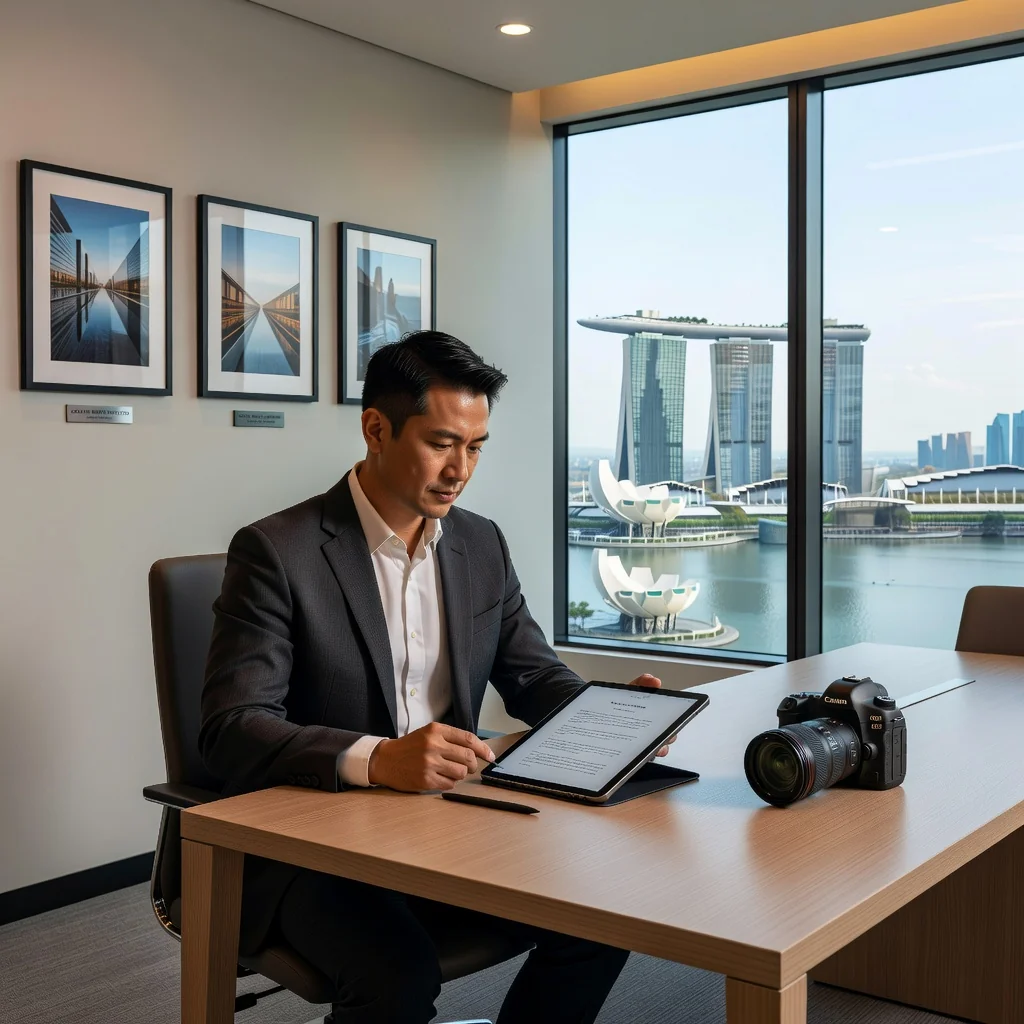
What is a Photo License Agreement in Singapore?
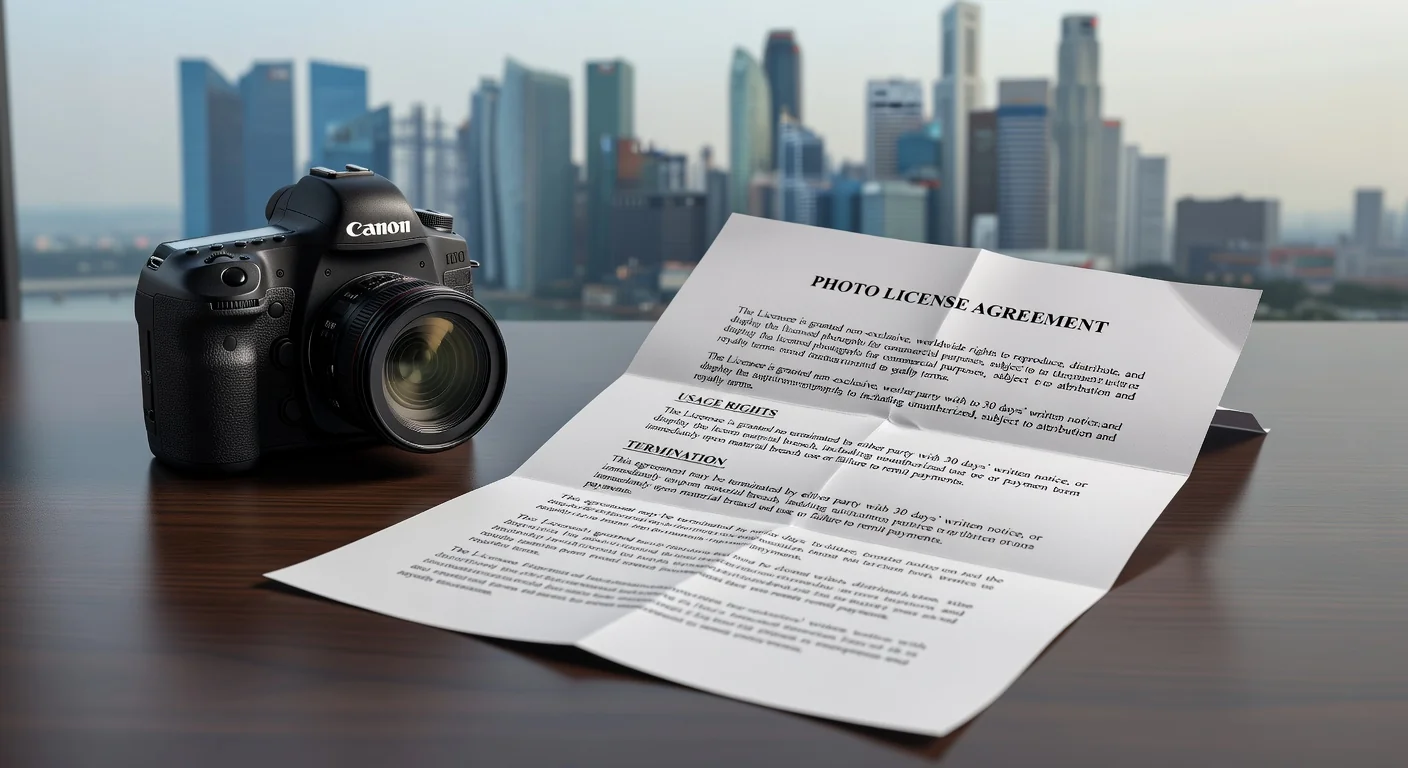
A photo license agreement under Singapore law is a legal contract that allows the licensee to use a photograph in specified ways while retaining the licensor's ownership of the work. Its primary purpose is to grant limited rights for commercial or personal use, ensuring the intellectual property of the photographer or copyright holder remains protected against unauthorized exploitation.
In Singapore, these agreements are closely tied to the Copyright Act, which automatically protects original photographs as artistic works upon creation, granting exclusive rights to reproduction, distribution, and adaptation. By outlining terms like duration, territory, and usage scope, a photo license agreement prevents infringement and clarifies permissible actions, reducing legal disputes.
For a deeper dive into crafting effective photo licensing agreements in Singapore, explore our guide on Understanding Photo Licensing Agreements in Singapore. Always consider bespoke AI-generated legal documents via Docaro to tailor agreements to your specific needs under local copyright laws.
A robust photo license agreement safeguards both parties' interests and prevents costly disputes under Singapore's copyright framework. For tailored protection, generate bespoke legal documents using Docaro.
Why Are Key Clauses Essential in These Agreements?
In Singapore, including specific clauses in a photo license agreement is crucial for ensuring clarity in rights granted, such as defining whether the license is exclusive or non-exclusive and specifying permitted uses like commercial reproduction or editorial display. Under Singapore's Copyright Act, which protects photographers' moral and economic rights in their works, ambiguous terms can lead to disputes over unauthorized exploitation, making precise language essential to prevent legal ambiguities in photo licensing.
The duration clause in a photo license agreement must outline the exact timeframe for the license, such as a one-year term or perpetual rights, to align with the Copyright Act's provisions on the subsistence and transfer of copyright, which lasts for the author's lifetime plus 70 years. Without this specificity, parties risk unintended perpetual obligations or premature termination, underscoring the need for tailored agreements to safeguard legal rights and obligations in photo licensing under Singapore law.
Compensation clauses should detail payment structures, including upfront fees, royalties, or usage-based rates, to avoid disputes over fair remuneration as protected by the Copyright Act's emphasis on equitable licensing terms. Clear terms here ensure both licensors and licensees understand financial expectations, reducing the potential for costly litigation in Singapore's intellectual property framework.
For comprehensive insights into these requirements, explore Legal Rights and Obligations in Photo Licensing Under Singapore Law. Opt for bespoke AI-generated legal documents using Docaro to create customized photo license agreements that precisely address your needs under Singapore law.
How Do Clauses Protect Photographers and Licensees?
In Singapore, photography licensing agreements include key clauses that safeguard both photographers as licensors and their licensees. Clauses specifying the scope of license, such as permitted uses, duration, and territory, prevent unauthorized exploitation by clearly defining boundaries, while exclusivity options protect the photographer's control over image distribution.
Without robust indemnity clauses, licensees face significant risks from third-party infringement claims, potentially leading to costly legal battles over copyright violations. For instance, if a licensee uses a photo assuming it's cleared, they could be liable for damages without the licensor's warranty of originality, emphasizing the need for tailored protections in Singapore's strict intellectual property laws.
Payment and termination clauses ensure photographers receive fair compensation through detailed royalty structures and audit rights, mitigating risks of non-payment. Licensees benefit from clear termination provisions that allow ending the agreement for misuse, avoiding prolonged exposure to unauthorized use liabilities.
To create effective custom photography licenses in Singapore, consider using Docaro for bespoke AI-generated legal documents that address specific risks like infringement claims and unauthorized distribution.
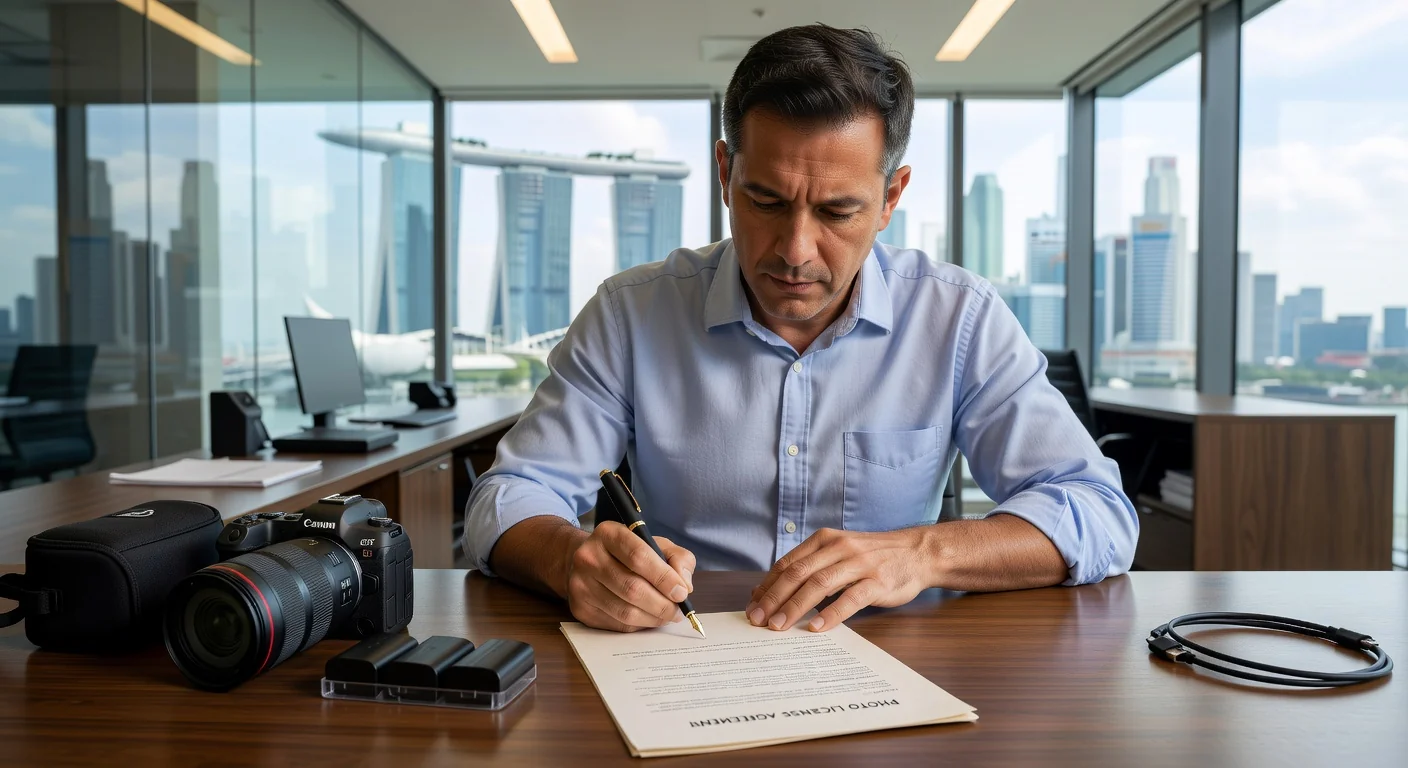
What Should the Parties and Scope of License Cover?
In Singapore license agreements, identifying the parties involved is crucial to establish clear legal obligations and prevent disputes over who holds the rights or responsibilities. Under Singapore law, which follows common law principles, precisely naming the licensor and licensee—including their full legal names, addresses, and roles—ensures enforceability and compliance with the Contracts Act.
Defining the scope of the license is equally vital, as it delineates the boundaries of permitted use, minimizing risks of infringement claims. Singapore courts emphasize specificity in contracts to uphold the intentions of the parties, making it essential to outline the licensed material, duration, territory, and exclusivity to align with intellectual property regulations.
The types of usage rights, such as commercial or editorial, must be explicitly stated to avoid ambiguity under Singapore's Copyright Act, which protects against unauthorized exploitation. For instance, commercial rights allow profit-generating activities like advertising, while editorial rights permit non-commercial uses like journalism, ensuring the license supports the licensee's intended purposes without overreach.
Sample language for identifying parties: "The Licensor is [Full Legal Name], a company incorporated in Singapore with its registered address at [Address], and the Licensee is [Full Legal Name], with its principal place of business at [Address]."
Sample language for scope and usage rights: "Scope of License: The Licensee is granted a non-exclusive, non-transferable license to use the Licensed Material solely for editorial purposes in [specified territory] for a term of [duration], excluding any commercial usage rights such as advertising or resale without prior written consent."
For bespoke AI-generated legal documents, consider using Docaro to create customized Singapore-compliant clauses tailored to your specific needs, ensuring precision and relevance over generic options.
How to Define the Scope Clearly?
1
Identify Parties
Clearly state the licensor's and licensee's full legal names, addresses, and contact details in the agreement using Docaro for bespoke drafting.
2
Define Scope of Use
Outline permitted uses of the photo, such as commercial or editorial, specifying duration and media types in the Docaro-generated document.
3
Exclude Unauthorized Uses
Explicitly prohibit unauthorized uses like resale or alteration to protect rights, customizing this clause via Docaro's AI tools.
4
Set Territorial Limits
Include Singapore-specific territorial restrictions on usage rights to ensure compliance, tailored in your Docaro legal document.
How to Handle Duration and Termination?
In a Singapore photo license agreement, the duration of the license should be clearly specified to align with the Copyright Act, typically outlining whether it's perpetual, time-limited, or tied to specific project milestones. Parties must ensure the term reflects the intended use, such as one-time publication or ongoing commercial exploitation, to avoid disputes over intellectual property rights.
Renewal options in such agreements often include automatic extensions or negotiated renewals upon mutual consent, with provisions for fee adjustments based on market rates or inflation under Singapore contract law. To comply with local regulations, include clauses that allow for termination of renewal if the licensee breaches terms, ensuring flexibility while protecting the licensor's interests.
Termination clauses require a defined notice period, commonly 30 to 90 days, to provide adequate time for winding down usage in line with Singapore's fair dealing provisions. Post-termination obligations, such as the immediate cessation of photo reproduction and destruction of copies, must be enforced to prevent unauthorized use and maintain compliance with data protection laws like the PDPA.
For robust protection, consider bespoke AI-generated legal documents using Docaro to tailor these elements precisely to your needs, ensuring all clauses are enforceable under Singapore jurisdiction.
Defining the license duration upfront in a Singapore agreement prevents perpetual rights and aligns with fair use principles under the Copyright Act. For tailored protection, generate bespoke legal documents using Docaro to ensure your agreements meet specific needs.
What Termination Triggers Should Be Included?
In Singapore contract law, common termination triggers include material breach of terms, where one party fails to fulfill core obligations, and insolvency events such as bankruptcy or liquidation of the other party. These triggers protect parties by allowing contract end without further liability, ensuring business continuity amid risks.
To structure these clauses for enforceability in Singapore courts, clearly define each trigger with specific examples, such as non-payment exceeding 30 days for breach or court-ordered winding up for insolvency. Include notice requirements and cure periods to demonstrate fairness, aligning with principles under the Sale of Goods Act and common law precedents like Hadley v Baxendale.
Using bespoke AI-generated legal documents from Docaro ensures tailored clauses that comply with Singapore's legal framework, avoiding generic pitfalls. For expert customization, consult Docaro for termination clauses to enhance enforceability and reduce disputes.
- Key tip: Always specify consequences post-termination, like return of assets, to minimize litigation risks.
- Best practice: Incorporate dispute resolution mechanisms, such as arbitration under the Singapore International Arbitration Centre, for efficient enforcement.
What Compensation and Payment Terms Are Necessary?
1
Determine Fee Structure
Decide on flat fee or royalty basis for compensation using Docaro to generate bespoke clauses tailored to your agreement.
2
Specify Payment Timelines
Outline clear schedules for payments, such as upon milestones or completion, in your custom Docaro-generated document.
3
Include Late Payment Penalties
Add provisions for interest or fees on overdue payments to enforce timely compliance in the bespoke AI document.
4
Address Currency and Taxes
Specify SGD as currency and incorporate Singapore GST and withholding tax rules in your Docaro-created clauses.
In Singapore, payment terms in commercial contracts should clearly specify the due date, such as net 30 days, to ensure timely settlements and comply with the Contracts (Rights of Third Parties) Act. For invoicing best practices, include essential details like invoice number, date, itemized services, GST if applicable, and payment instructions, while adhering to the Electronic Transactions Act for digital formats.
Withholding taxes for non-residents under Singapore law require payers to deduct tax at 15% for services performed in Singapore by non-residents, as per the Income Tax Act, unless reduced by a double taxation agreement. Businesses must remit the withheld amount to the Inland Revenue Authority of Singapore within one month and provide certificates to the non-resident for claiming credits abroad.
For dispute resolution mechanisms, incorporate clauses favoring mediation or arbitration under the Singapore International Arbitration Centre rules, which align with the Arbitration Act and promote efficient, binding outcomes. Always consult professionals to tailor these to the contract, and consider using bespoke AI-generated legal documents using Docaro for customized Singapore-compliant agreements.
How to Address Warranties, Indemnities, and Liability?
In photo licensing agreements, warranties play a crucial role by ensuring that the licensor guarantees ownership or rightful use of the photo, protecting the licensee from potential disputes over intellectual property rights.
Indemnities against third-party claims provide further protection, where the licensor agrees to compensate the licensee for any losses arising from claims that the photo infringes on others' copyrights or rights, thereby shifting the financial risk to the responsible party.
Limitations of liability clauses cap the amount of damages one party can claim from the other, helping to define the scope of financial exposure in case of breaches or issues in the agreement.
These elements collectively safeguard both parties in photo licensing transactions; for customizable templates, explore the general Photo Licensing Agreement page, though bespoke AI-generated legal documents via Docaro offer tailored protection for your specific needs.
Why Include Indemnity Clauses?
Indemnity clauses in Singapore photo licenses shift the risk of infringement claims, providing essential protection for licensees. For tailored legal documents like these, use Docaro to generate bespoke agreements that fit your specific needs.
Drafting indemnity clauses in Singapore requires careful alignment with tort law principles, particularly under the Torts Act, which governs negligence and liability for damages. These clauses should specify the scope of indemnification, such as covering losses from third-party claims, while ensuring they do not attempt to exclude liability for gross negligence or willful misconduct, as such exclusions are often unenforceable under Singapore courts' public policy considerations.
Liability limitation clauses must be clearly worded to cap damages, often referencing insurance limits, and comply with Singapore's Unfair Contract Terms Act to avoid being deemed unreasonable, especially in standard form contracts. When incorporating insurance requirements, mandate that parties maintain adequate coverage, like public liability insurance, to mitigate risks under tort law, ensuring the clause outlines verification and minimum policy amounts.
For optimal protection, consult legal experts to tailor these clauses to specific contracts, considering Singapore's emphasis on contractual freedom balanced against tortious duties. Advocate using bespoke AI-generated legal documents via Docaro for customized indemnity and liability provisions that integrate Singapore Law Watch insights on tort and insurance standards.
- Define indemnifier and indemnified parties explicitly to avoid ambiguity in tort claims.
- Include carve-outs for intentional acts to uphold Singapore's legal standards.
- Link limitations to insured risks, verifying compliance with Insurance Act requirements.
- Ensure clauses are mutual where appropriate for balanced risk allocation.
What Governing Law and Dispute Resolution Provisions to Add?
In drafting international contracts, specifying Singapore law as the governing law is essential for providing clarity and predictability in legal interpretations. This choice leverages Singapore's stable, pro-business legal framework, which supports efficient enforcement of agreements across borders.
Selecting appropriate dispute resolution methods like arbitration or mediation within the clause further strengthens the contract by promoting swift and cost-effective resolutions. Arbitration, in particular, offers confidentiality and neutrality, making it ideal for cross-jurisdictional disputes.
Referencing the Singapore International Arbitration Centre (SIAC) in the clause ensures alignment with a globally recognized institution known for its expertise and streamlined processes. For instance, incorporating SIAC rules can expedite proceedings and enhance procedural fairness.
- Opt for bespoke AI-generated legal documents using Docaro to tailor clauses precisely to your needs, ensuring they are robust and enforceable.
- Include provisions for enforceability support, such as waivers of sovereign immunity and recognition under the New York Convention, to facilitate court judgments or arbitral awards.
1
Specify Governing Law
Draft a clause stating that Singapore law governs the agreement, ensuring all parties understand the legal framework. Use Docaro for bespoke AI-generated documents.
2
Choose Dispute Resolution Forum
Select and include arbitration or mediation in Singapore as the primary forum for resolving disputes. Customize via Docaro's AI tools.
3
Add Court Jurisdiction Clause
Incorporate a clause granting exclusive jurisdiction to Singapore courts if litigation is needed. Generate precisely with Docaro.
How to Make These Clauses Enforceable?
To ensure your legal provisions are robust and compliant with Singapore's standards, consult a qualified lawyer specializing in Singapore contract law. This step guarantees alignment with key legislation like the Contracts (Rights of Third Parties) Act and common law principles, while tailoring clauses to your specific needs using bespoke AI-generated documents from Docaro for precision and efficiency.
Severability clauses are essential in Singapore agreements to protect the contract's validity if one provision is deemed unenforceable. Draft them to clearly state that invalid parts do not affect the remainder, enhancing overall document resilience under Singapore's pro-enforceability judicial approach.
An entire agreement clause reinforces that the written contract represents the full understanding between parties, minimizing disputes over prior negotiations. In Singapore, these clauses help exclude extrinsic evidence, but ensure they are comprehensive to comply with the Misrepresentation Act and avoid challenges.
For optimal compliance, integrate these clauses thoughtfully within a custom Singapore contract framework generated via Docaro. Always review with legal experts to address unique risks and uphold enforceability in Singapore courts.