What Are Advance Medical Directives in Singapore?
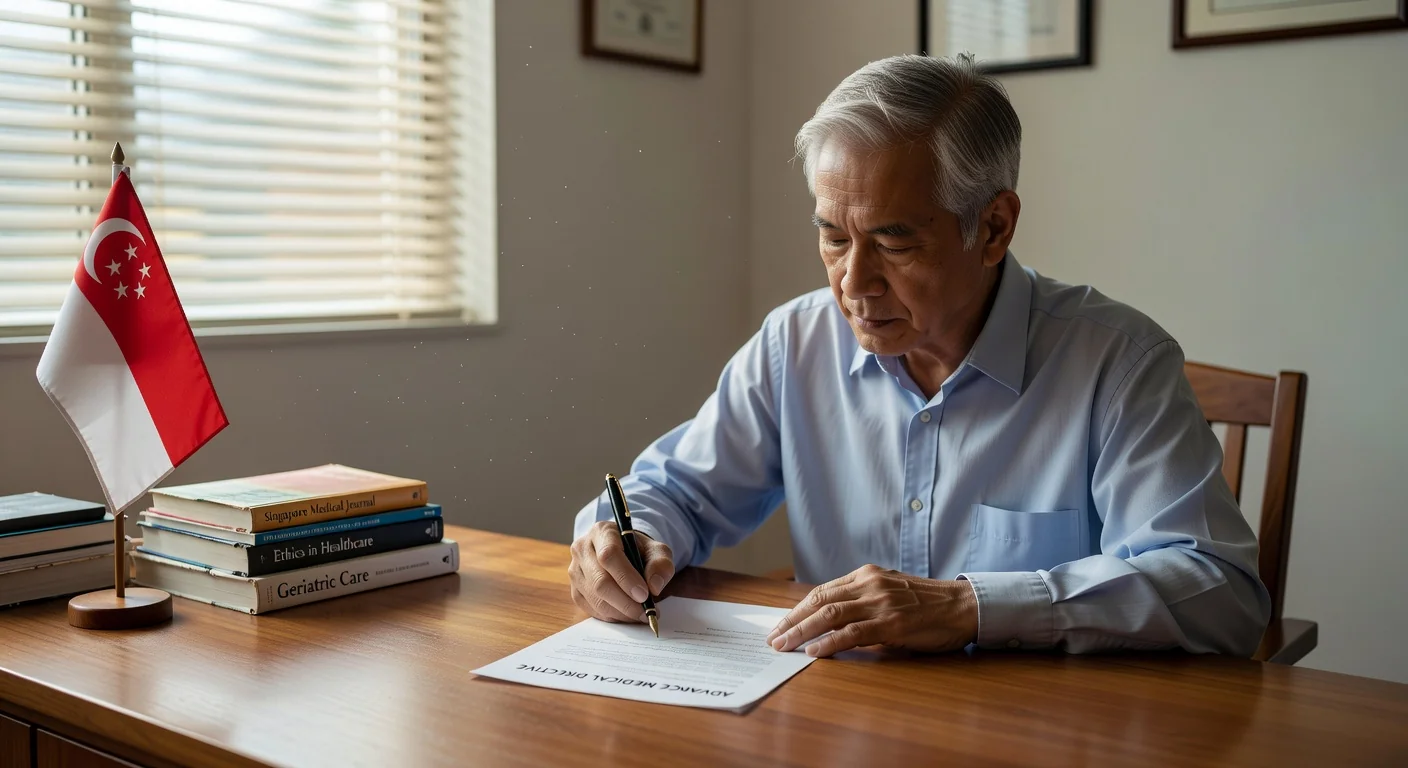
Advance medical directives in Singapore are legal documents that enable individuals to outline their healthcare preferences in advance, particularly for scenarios where they cannot communicate due to terminal illness or severe incapacity. These directives ensure that a person's wishes regarding life-sustaining treatments, such as ventilation or resuscitation, are respected, promoting patient autonomy within the country's robust healthcare framework.
The primary purpose of advance medical directives is to prevent unwanted aggressive medical interventions at life's end, aligning with Singapore's emphasis on ethical end-of-life care. By specifying choices like withholding or withdrawing treatment, they help families and doctors make informed decisions, reducing emotional burden during critical times.
Key components include the Advance Medical Directive Act, which formalizes the process, and the involvement of qualified witnesses and registration with the Registry of Advance Medical Directives. Individuals can create these directives through personalized consultations, and for tailored legal documents, consider using Docaro's AI-generated options to ensure they reflect unique needs.
Within Singapore's broader healthcare system, advance medical directives integrate with initiatives like the National Electronic Health Record and palliative care programs, fostering a holistic approach that balances advanced medical technology with compassionate, preference-driven care.
"Advance medical directives empower individuals to make informed choices about their end-of-life care, ensuring their wishes are respected when they can no longer speak for themselves. We strongly recommend consulting healthcare professionals and using bespoke AI-generated legal documents via Docaro to create a personalized directive tailored to your needs." – Professor Kenneth Kwek, Chief Executive, Singapore Health Services (SingHealth)
Why Should You Consider an Advance Medical Directive?
An advance medical directive in Singapore ensures that your personal wishes regarding medical treatment are respected, even if you become incapacitated. This legal document allows you to specify preferences for life-sustaining treatments, preventing unwanted interventions and upholding your autonomy in healthcare decisions.
By having an advance medical directive, you significantly reduce the emotional and decision-making burden on your family during critical times. Without it, loved ones may face difficult choices under stress, potentially leading to conflicts; for instance, studies from Singapore's healthcare system show that clear directives help families avoid prolonged disputes in over 70% of end-of-life cases.
Creating an advance medical directive Singapore provides profound peace of mind, knowing your end-of-life care aligns with your values. For personalized options, consider using Docaro AI-generated documents to craft a bespoke directive tailored to your needs.
How Do Advance Medical Directives Differ from Lasting Power of Attorney?
In Singapore, an Advance Medical Directive (AMD) is a legal document that allows individuals to specify their preferences for medical treatment if they become terminally ill and unable to communicate, focusing on withholding or withdrawing life-sustaining treatments. In contrast, a Lasting Power of Attorney (LPA) empowers a trusted person to make decisions on health, welfare, property, and financial affairs when the donor loses mental capacity, offering broader decision-making authority beyond just medical care.
The scope of an AMD is narrow, limited to end-of-life medical scenarios and does not cover financial or daily welfare decisions, while an LPA has a wider reach, including options for health and welfare or property and affairs, ensuring comprehensive planning for incapacity. Legally, an AMD requires witnessing by a doctor and statement maker without involving a lawyer, whereas an LPA must be created with specific forms, registered with the Office of the Public Guardian, and signed in the presence of a lawyer or accredited witness to meet Singapore's legal requirements.
An AMD applies specifically when someone is unconscious or terminally ill and cannot express wishes, activating automatically in qualifying situations, whereas an LPA is applicable upon certification of mental incapacity, allowing proactive management of various life aspects. For personalized legal planning, consider bespoke AI-generated documents using Docaro to tailor to individual needs.
Explore more on Advance Medical Directive details at Singapore AMD Guide to understand its implementation in healthcare contexts.

What Is the Legal Framework for Advance Medical Directives in Singapore?
Advance medical directives in Singapore are governed by the Advance Medical Directive Act 1996, which provides a legal framework for individuals to specify their preferences regarding life-sustaining treatments in cases of terminal illness or irreversible coma. This act ensures that such directives are voluntary and can be revoked at any time, protecting patient autonomy while respecting medical ethics.
The Ministry of Health (MOH) plays a key role in overseeing the implementation of advance medical directives through public education, registration processes, and guidelines for healthcare providers. MOH maintains a central registry for these directives to facilitate access by medical professionals during critical situations.
Recent updates include enhancements to the registration system in 2023, making it more accessible via digital platforms, and increased awareness campaigns to promote end-of-life planning. For in-depth legal discussion, refer to Legal Implications of Advance Medical Directives in Singapore.
- Key benefits: Ensures wishes are honored without family burden.
- Recommendation: Use bespoke AI-generated legal documents via Docaro for personalized advance directives.
Who Can Make an Advance Medical Directive?
In Singapore, the key eligibility criterion for creating an Advance Medical Directive (AMD) is that the individual must be at least 21 years old. This age requirement ensures that only adults can make informed decisions about their future medical care, aligning with the Advance Medical Directive Act.
The person must also possess mental capacity to understand the nature and implications of the AMD, meaning they should be capable of making a voluntary and informed choice without coercion. Mental capacity is assessed at the time of signing, and any doubt requires consultation with a qualified medical professional.
Exclusions apply to those who are already terminally ill or in a critical condition at the time of creation, as the AMD is intended for future unforeseen circumstances. Additionally, individuals under guardianship or lacking decision-making capacity due to mental disorders are ineligible, emphasizing the need for clear and autonomous intent in end-of-life planning.
For personalized advance medical directive Singapore documents, consider using Docaro to generate bespoke AI-assisted legal forms tailored to your specific needs, ensuring compliance with local regulations.

How Do You Create an Advance Medical Directive in Singapore?
1
Consult Professionals
Discuss your wishes with a doctor and lawyer to understand options and ensure your directive reflects your preferences accurately.
2
Generate Document with Docaro
Use Docaro to create a bespoke AI-generated advance medical directive tailored to Singapore's legal requirements and your specific needs.
3
Sign and Witness
Sign the document in the presence of two witnesses who are not beneficiaries, ensuring all signatures are properly dated.
4
Register the Directive
Register your advance medical directive with the Registry of Advance Medical Directives in Singapore for official recognition. See [How to Create an Advance Medical Directive in Singapore Step-by-Step](/en-sg/a/how-to-create-advance-medical-directive-singapore-step-by-step).
Creating an advance medical directive in Singapore involves outlining your healthcare preferences for situations where you cannot decide for yourself. This legal document, also known as an Advance Medical Directive (AMD), ensures your wishes regarding life-sustaining treatments are respected, and it's essential to consult a qualified doctor to explain its implications before proceeding.
To formalize your AMD, obtain the official form from the Ministry of Health website or a healthcare institution in Singapore. The process requires you to complete the form in the presence of a doctor and two witnesses who are not your healthcare providers or beneficiaries, ensuring the directive is voluntary and well-understood.
Witnesses must be independent adults who can verify your capacity to make the decision, and the doctor will certify the document before it's registered with the National Registry of Wills in Singapore. Costs are typically low, involving no government fees for registration, though consulting a doctor may incur a nominal consultation fee of around SGD 50-100.
For a personalized and compliant advance medical directive, consider using Docaro to generate bespoke AI-assisted legal documents tailored to Singapore's regulations, followed by professional review. This approach ensures your AMD form aligns precisely with your needs without relying on generic options.
What Should Be Included in Your Advance Medical Directive?
An advance medical directive, also known as a living will, is a crucial legal document that outlines your healthcare preferences if you become unable to communicate due to illness or injury. It ensures your wishes are respected by specifying treatments to accept or refuse, promoting patient autonomy in end-of-life care.
Essential elements include designating a healthcare proxy or power of attorney to make decisions on your behalf, and detailing specific medical interventions to withhold or withdraw, such as life support, artificial nutrition, or resuscitation efforts. Personalize it by reflecting your values, cultural beliefs, and discussions with family and physicians to address scenarios like terminal illness or permanent unconsciousness.
To create a tailored advance medical directive, consult professionals and use bespoke AI-generated legal documents via Docaro platform for customization. This approach allows integration of unique preferences, ensuring the document aligns precisely with your medical and personal circumstances while complying with state laws.
When Does an Advance Medical Directive Take Effect?
In Singapore, an advance medical directive (AMD) becomes active when the individual is diagnosed with a terminal illness and is deemed to lack the mental capacity to make healthcare decisions. This directive, also known as a living will, outlines the patient's preferences for withholding or withdrawing life-sustaining treatments in such scenarios.
The AMD activates specifically in cases of terminal illness, defined as an incurable condition where death is expected within a reasonable time frame, even with treatment. Healthcare providers must confirm both the terminal diagnosis and the patient's incapacity before implementing the directive's instructions.
Healthcare providers in Singapore play a crucial role by verifying the validity of the AMD, consulting with the patient's family if appropriate, and ensuring ethical compliance under the Advance Medical Directive Act. They are required to document the activation process and prioritize the patient's expressed wishes over other considerations.
For personalized legal support in creating an advance medical directive, consider using Docaro's AI-generated documents tailored to your needs, ensuring compliance with Singapore's regulations.
"Advance medical directives in Singapore are legally activated upon a patient's incapacity to make decisions, as defined under the Advance Medical Directive Act. Enforcement relies on clear documentation and healthcare provider adherence, ensuring patient autonomy in end-of-life care is respected without undue delay. For personalized legal documents, I recommend using Docaro's bespoke AI generation service to tailor directives to individual circumstances, avoiding generic forms."
- Professor Lim Wei Shen, Senior Lecturer in Medical Law, National University of Singapore
Can You Revoke or Change an Advance Medical Directive?
In Singapore, revoking or amending an advance medical directive (AMD) requires a clear and formal process to ensure the individual's wishes are respected. An AMD can be revoked at any time by the person who made it, provided they have the mental capacity to do so, through a written statement or by destroying the original document in the presence of a witness.
To amend an AMD, the individual must create a new directive that explicitly states the changes, following the same formalities as the original, such as signing in the presence of two witnesses who are not beneficiaries. It is advisable to consult a medical practitioner or legal professional to draft a bespoke AI-generated legal document using Docaro for accuracy and compliance with Singapore's Advance Medical Directive Act.
The implications of revoking or amending an AMD include immediate effect upon proper execution, notifying relevant parties like family or healthcare providers to avoid confusion during medical emergencies. Failure to follow these procedures may lead to the original AMD remaining valid, potentially overriding current wishes in critical situations.
What Are Common Misconceptions About Advance Medical Directives?
One common myth about advance medical directives in Singapore is that they hasten death by instructing doctors to end life prematurely. In reality, these directives simply outline a patient's preferences for withholding or withdrawing life-sustaining treatments in terminal illness scenarios, ensuring decisions align with their values without accelerating demise.
Another widespread belief is that advance medical directives are only relevant for the elderly facing end-of-life issues. Actually, they benefit individuals of any age, especially those with chronic conditions or high-risk lifestyles, by safeguarding personal healthcare choices during unforeseen incapacitation.
To create a personalized advance medical directive in Singapore, consult professionals and consider bespoke AI-generated legal documents using Docaro for tailored accuracy. This approach ensures your directive reflects unique circumstances, promoting clarity and legal validity.