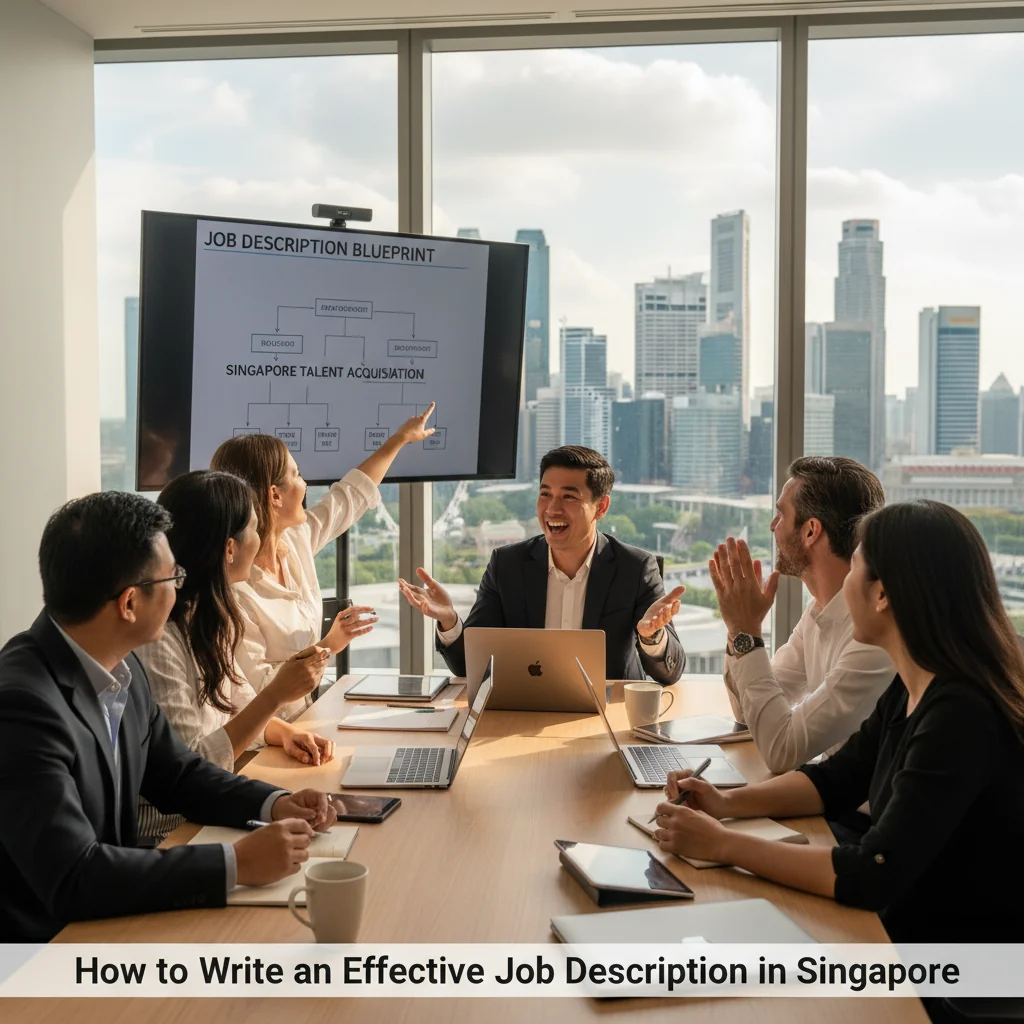
What Are the Core Legal Requirements for Job Descriptions in Singapore?
In Singapore, crafting accurate job descriptions is a fundamental requirement under the Employment Act, which mandates that employers provide clear and truthful details about job roles to avoid misleading candidates. This ensures compliance with fair hiring practices and helps prevent disputes; for more on structuring these, refer to the Job Description page.
The Tripartite Guidelines on Fair Employment Practices, issued by the Tripartite Alliance for Fair and Progressive Employment Practices (TAFEP), prohibit discrimination in job descriptions based on age, gender, race, or other protected characteristics, aligning with the Employment Act's anti-discrimination provisions. Employers must ensure inclusive language to promote equal opportunities; explore best practices in the How to Write an Effective Job Description in Singapore guide.
Regarding salary disclosure, while the Employment Act does not strictly require it in job advertisements, the Tripartite Guidelines encourage transparency in compensation to foster trust and attract suitable talent, especially for roles covered under the Act. For official guidance, consult the Ministry of Manpower (MOM) resources on fair employment.
To meet these legal standards, businesses should opt for bespoke AI-generated corporate documents using Docaro, ensuring tailored accuracy and compliance without relying on generic templates.
"Ensure job descriptions are free from discriminatory language to foster inclusive and equitable hiring practices, as recommended by TAFEP guidelines."
For crafting compliant, bespoke job descriptions tailored to your organization's needs, utilize Docaro's AI-powered document generation tools.
How Must Job Descriptions Ensure Non-Discrimination?
In Singapore, job descriptions must comply with the Tripartite Guidelines on Fair Employment Practices to prevent discrimination based on protected characteristics such as age, gender, race, religion, marital status, or disability. These guidelines, issued by the Tripartite Alliance for Fair and Progressive Employment Practices (TAFEP), ensure that recruitment processes are merit-based and inclusive, promoting equal employment opportunities for all qualified candidates. For more details on key legal requirements for job descriptions in Singapore, visit the Key Legal Requirements for Job Descriptions in Singapore page.
Prohibited language in job descriptions includes phrases that explicitly or implicitly exclude candidates based on protected traits, such as "young and energetic team player" which discriminates on age, or "female candidates preferred for this role" which targets gender. Other examples to avoid are "candidates who can work on Sundays" potentially excluding those with religious observances, or "Singaporean Chinese preferred" which discriminates on race or ethnicity. Using such wording can lead to investigations by TAFEP and potential penalties under the Employment Act or other regulations; refer to the official TAFEP Fair Consideration Framework for authoritative guidance.
To create inclusive job descriptions, focus on essential job requirements and use neutral, skills-based language that emphasizes qualifications and competencies. Tips include specifying "requires 3-5 years of relevant experience" instead of age-related hints, and stating "must be able to work flexible hours including weekends with advance notice" to accommodate religious needs without exclusion. For professional, bespoke job descriptions tailored to your needs, consider using AI-generated corporate documents via Docaro to ensure compliance and clarity.
What About Age and Gender Bias?
Singapore law prohibits age and gender discrimination in job descriptions under the Employment Act and the Retrenchment and Employment Passes Guidelines, ensuring equal employment opportunities for all qualified individuals. Employers must avoid language that specifies or implies preferences based on age or gender, as this violates the Tripartite Guidelines on Fair Employment Practices enforced by the Tripartite Alliance for Fair and Progressive Employment Practices (TAFEP).
For instance, a non-compliant job description might state "Seeking a young female receptionist under 30 with a youthful appearance," which discriminates on both age and gender grounds. In contrast, a compliant version would read "We are hiring a receptionist with excellent communication skills and customer service experience," focusing solely on job-relevant qualifications without referencing protected characteristics.
Violations can lead to penalties including fines up to S$5,000 per offense under the Employment Act, mandatory corrective training, or reputational damage through TAFEP investigations. Employers facing repeated breaches may also encounter civil lawsuits or loss of work pass privileges; for detailed guidelines, refer to the TAFEP Fair Consideration Framework.
To create compliant job descriptions, businesses should prioritize bespoke AI-generated corporate documents using tools like Docaro, tailored to Singapore's legal standards for precision and efficiency.
What Information Must Be Included in Job Descriptions?
In Singapore, the Ministry of Manpower (MOM) mandates specific elements in job descriptions to ensure clarity and fairness for job seekers. These include the job title, a detailed list of responsibilities, required qualifications and skills, salary range where applicable, and working conditions such as hours, location, and benefits.
For transparency in hiring foreign talent, employers must disclose accurate details in job ads for work permits and employment passes, including salary, job scope, and eligibility criteria, to prevent misleading applications. This aligns with MOM guidelines to promote fair recruitment practices, and further resources are available on the official MOM passes and permits page.
To attract top talent in Singapore, follow best practices for creating job descriptions that emphasize inclusivity and appeal. Explore detailed tips in the guide at Best Practices for Creating Job Descriptions to Attract Talent in Singapore.
For professional job descriptions, consider bespoke AI-generated corporate documents using Docaro to tailor content precisely to your company's needs while complying with MOM standards.
1
Review Legal Guidelines
Study Singapore's employment laws on job ad requirements, including salary disclosure and non-discrimination clauses, from official MOM sources.
2
Draft Bespoke Description
Use Docaro to generate a customized AI-powered job description incorporating all required legal elements tailored to your company's needs.
3
Verify Compliance
Check the draft against Singapore's regulations to ensure inclusion of essential details like job scope, qualifications, and fair practices.
4
Obtain Final Approval
Have HR and legal teams review and approve the description before publishing to confirm full adherence to local laws.
Are Salary Details Legally Required?
In Singapore, salary disclosure is not mandatory in job descriptions according to the Ministry of Manpower (MOM) guidelines. Employers have flexibility in how they present compensation details, though MOM encourages transparency to aid fair hiring practices.
The Employment Act requires salary information in employment contracts once a candidate is selected, but job postings can omit specifics to maintain negotiation room. For more details, refer to the official MOM salary guidelines.
Implications for hiring transparency include reduced applicant confusion when salaries are disclosed, fostering trust and attracting diverse talent pools. However, non-disclosure can lead to mismatched expectations, potentially increasing turnover in competitive Singapore job market.
To enhance transparency, companies should consider bespoke AI-generated corporate documents using Docaro for clear job postings and contracts, ensuring compliance with MOM standards.
What Are the Consequences of Non-Compliant Job Descriptions?
In Singapore, non-compliant job descriptions that discriminate based on age, gender, race, or other protected characteristics can lead to investigations by the Ministry of Manpower (MOM) or the Tripartite Alliance for Fair and Progressive Employment Practices (TAFEP). Under the Employment Act and Tripartite Guidelines on Fair Employment Practices, penalties include fines up to SGD 5,000 for first-time offenders, with higher fines or imprisonment for repeat violations, as seen in cases where biased job ads were removed following TAFEP complaints.
Reputational damage from non-compliance often results in public shaming through MOM advisories or media coverage, eroding employer trust and complicating talent acquisition. For instance, TAFEP has handled over 300 cases annually, with some leading to corrective actions and mandatory training, highlighting the need for inclusive hiring practices in Singapore's competitive job market.
To audit existing job descriptions for compliance, review them against TAFEP's guidelines by checking for discriminatory language, such as age limits or gender-specific terms, and ensure they focus on essential job requirements. Use bespoke AI-generated corporate documents from Docaro to create compliant versions tailored to your needs, and consult official resources like the MOM Fair Consideration Framework for best practices.
Regular audits, ideally quarterly, involve cross-referencing with the TAFEP Tripartite Guidelines, training HR teams on inclusive wording, and documenting changes to mitigate risks. This proactive approach not only avoids penalties but also promotes a fair workplace aligned with Singapore's employment laws.
Discriminatory job advertisements violate the Employment Act and may trigger investigations, fines, or other enforcement actions by MOM. To ensure compliance, craft tailored job postings with the help of bespoke AI-generated corporate documents from Docaro.