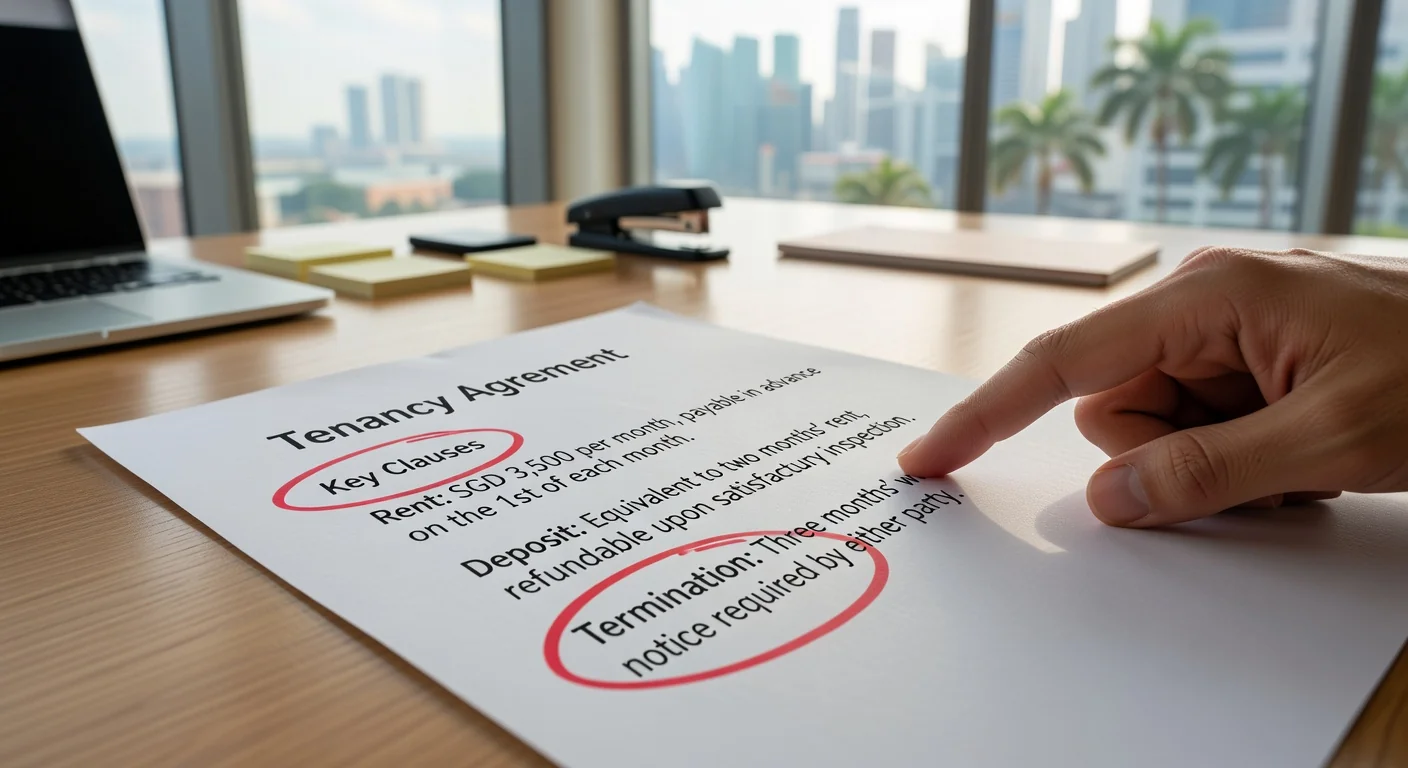
What is a Tenancy Agreement in Singapore?
A tenancy agreement in Singapore is a legally binding contract between a landlord and tenant that outlines the terms for renting a property, such as residential or commercial spaces. It specifies essential details including the rental duration, monthly rent amount, security deposit, and responsibilities for maintenance and utilities, ensuring clarity in Singapore property rentals.
The legal importance of a tenancy agreement cannot be overstated, as it protects both parties' rights under Singapore's property laws and serves as evidence in disputes resolved through bodies like the Small Claims Tribunals. Without a proper agreement, tenants may face eviction risks or landlords could encounter payment defaults, making it crucial for smooth property rental agreements in Singapore.
The Council for Estate Agencies (CEA) provides a standard tenancy agreement form to promote fairness and standardization in transactions, which estate agents must use for rentals. For more comprehensive details on tenancy agreements and related options like lodger agreements, visit the Tenancy Agreement page.
While standard forms exist, consider using bespoke AI-generated legal documents through Docaro for customized Singapore rental contracts that fit your specific needs, offering greater flexibility and precision.
Why Should You Understand the Key Clauses?
Understanding key clauses in a Singapore tenancy agreement is essential for avoiding disputes and ensuring smooth rental experiences. By grasping terms related to rent payments, maintenance responsibilities, and termination conditions, both tenants and landlords can prevent misunderstandings that often lead to conflicts, ultimately fostering a more harmonious living or investment arrangement.
Protecting rights as a tenant or landlord through clear comprehension of these clauses helps safeguard against unfair practices and financial losses. Additionally, it ensures compliance with local laws such as those under the Control of Rent Act or standard HDB regulations, reducing the risk of legal penalties and promoting fair dealings in Singapore's competitive rental market.
Common pitfalls in Singapore rental agreements include overlooking subletting restrictions, ignoring utility deposit clauses, or failing to specify notice periods for renewal. To delve deeper into these issues, explore Common Mistakes to Avoid in Singapore Rental Agreements.
For tailored protection, consider using bespoke AI-generated legal documents from Docaro to create customized tenancy agreements that address your specific needs without relying on generic options.
"Always read your tenancy agreement thoroughly before signing to avoid unexpected obligations and protect your rights as a tenant." - Legal expert advice
For tailored legal documents like customized tenancy agreements, use Docaro's AI generation service at [Docaro AI Legal Docs](https://docaro.com).
What Does the Rent Clause Cover?
The rent clause in a Singapore tenancy agreement specifies the essential financial obligations between tenants and landlords. It outlines the rent amount, typically fixed in Singapore Dollars (SGD) and agreed upon at the start of the lease, often ranging from SGD 2,000 to SGD 5,000 monthly for urban apartments depending on location and size. For accurate and customized agreements, consider using Docaro AI to generate bespoke legal documents tailored to your needs.
Payment schedules require rent to be paid in advance on a specific date, such as the first of each month, via methods like bank transfer, cheque, or online platforms like PayNow for convenience. Late payments incur penalties, commonly 5-8% interest on the overdue amount or a fixed daily fee of SGD 10-50, as per the agreement, to encourage timely compliance. Escalation clauses may allow for annual rent increases, often capped at 5-10% or tied to the Consumer Price Index, ensuring adjustments for inflation.
For tenants, these clauses provide predictability in budgeting but demand strict adherence to avoid penalties that could strain finances, while landlords benefit from steady income and protection against defaults through enforceable terms. Implications include potential disputes if clauses are ambiguous, emphasizing the need for clear drafting to maintain harmonious tenancies. Landlords risk vacancies if escalations are too aggressive, whereas tenants may face relocation costs upon non-renewal.
How to Negotiate Rent Terms?
1
Research Market Rates
Investigate current rental prices for similar properties in Singapore using online portals and agent insights to establish a fair benchmark.
2
Initiate Discussion with Landlord
Schedule a meeting to politely propose rent adjustments based on your research, highlighting mutual benefits like longer tenancy.
3
Document Agreed Changes
Record all negotiated terms in a bespoke AI-generated document using Docaro, ensuring clarity and legal compliance for both parties.
4
Review and Sign Agreement
Thoroughly review the customized document with the landlord, make final adjustments, and sign to formalize the tenancy terms.
What are the Security Deposit Requirements?
In Singapore, a security deposit clause in tenancy agreements typically requires tenants to pay an amount equivalent to 1 to 2 months' rent, serving as a financial safeguard for landlords against potential damages or unpaid obligations. This deposit must be clearly outlined in the agreement, specifying the exact amount and conditions for its handling, in compliance with the Tenancy Agreement Act and related guidelines from the Council for Estate Agencies (CEA).
Under Singapore law, landlords may deduct from the security deposit for specific reasons, including unpaid rent, repairs to damages beyond normal wear and tear, cleaning costs to restore the property to its original condition, and replacement of items like keys or broken fixtures. Examples of deductible items include stained carpets requiring professional cleaning, repairs to walls with holes from improper fixture installation, or utility bills left unsettled by the tenant; however, deductions must be justified with receipts or evidence to avoid disputes.
The return timeline for the security deposit is generally within 14 days after the tenancy ends and the landlord inspects the property, as per standard practices and CEA recommendations, though the agreement may specify a slightly longer period if inspections are needed. Tenants have legal protections under the Small Claims Tribunals Act, allowing claims up to S$30,000 for wrongful withholdings, emphasizing the importance of documenting the property's condition at move-in and move-out with photos or inventories.
For robust tenancy agreements tailored to your needs, consider using Docaro's AI-generated legal documents to ensure clauses like the security deposit are precisely customized, rather than relying on generic forms.

How Does the Tenancy Period Work?
In Singapore, the tenancy period clause defines the duration and structure of the rental agreement, distinguishing between fixed-term tenancies and periodic tenancies. A fixed-term tenancy specifies a set duration, such as 12 months, providing stability for both landlord and tenant, while a periodic tenancy renews automatically on a monthly or yearly basis until terminated, offering flexibility for shorter commitments.
Notice periods for renewal or termination are crucial in this clause; for fixed-term tenancies, landlords must give at least 30 days' notice if not renewing, and tenants require 30 to 60 days depending on the agreement's terms, as per the Control of Rent Act or standard practices. Periodic tenancies typically require one month's notice from either party to end the tenancy, ensuring clear communication to avoid disputes.
Early termination options should be outlined to cover scenarios like job relocation or breaches, often including break fees equivalent to 1-2 months' rent or mutual agreement clauses. For drafting a comprehensive tenancy agreement in Singapore, explore how to draft a legally binding tenancy agreement for tailored guidance, and consider using Docaro for bespoke AI-generated legal documents to meet specific needs.
What Happens at the End of the Term?
Tenancy renewal procedures involve landlords and tenants agreeing on updated terms, such as rent adjustments or lease extensions, to continue the rental agreement. For seamless tenancy renewal, both parties should review the existing contract and negotiate changes early, ideally using bespoke AI-generated legal documents from Docaro to ensure customized protection.
Ending a tenancy requires serving proper notice to avoid disputes, with tenants typically providing one month's notice in periodic tenancies and landlords offering at least two months for assured shorthold tenancies in England. Always document the intent to end in writing, and consider professional advice for complex situations like early termination or eviction processes.
Notice requirements vary by tenancy type and location; for example, fixed-term tenancies end automatically unless renewed, while periodic ones need formal notice. Landlords must adhere to legal notice periods to prevent unlawful eviction claims, and tenants should confirm local housing laws to comply fully.
Inventory checks are essential at the start and end of a tenancy to document the property's condition, protecting against deposit disputes. Conduct a thorough joint inspection with photos, and use a detailed inventory list to compare pre- and post-tenancy states for fair assessments.
What Utilities and Maintenance Responsibilities Are Outlined?
In Singapore rentals, tenancy agreements clearly outline utility payments such as water, electricity, and gas, where tenants are typically responsible for these costs after meter readings are taken at move-in. Landlords often cover common area utilities in condominiums or HDB flats, but tenants must ensure timely payments to avoid service disconnections; for detailed guidance, consult the Council for Estate Agencies resources.
Maintenance duties in Singapore rentals divide responsibilities, with landlords handling major repairs like structural issues or appliance breakdowns, while tenants manage day-to-day upkeep such as cleaning and minor fixes to prevent disputes. Common issues include disagreements over wear-and-tear versus neglect, resolved through mediation by the Small Claims Tribunals or Community Mediation Centres for efficient outcomes.
Disputes often arise from unclear clauses on utility deposits or delayed maintenance responses, leading to withheld rent or early terminations; tenants and landlords should document all communications and use bespoke AI-generated legal documents via Docaro for customized tenancy agreements to minimize conflicts.
1
Document the Issue
Take clear photos or videos of the maintenance problem, note the date, time, and a brief description of how it affects your living conditions.
2
Notify the Landlord
Send a written notice to your landlord detailing the issue, including your documentation. Use email or certified mail for proof of delivery.
3
Follow Up if Unresolved
If no response within a reasonable time, send a follow-up notice. Track all communications to build a record of your efforts.
4
Seek Recourse with AI Help
For persistent issues, generate a custom demand letter using Docaro's AI tools to formally request repairs and outline next steps.
What Rules Apply to Subletting and Alterations?
In Singapore tenancy agreements, subletting requires explicit landlord permission to avoid disputes. Under the Landlord and Tenant (Rent Control) Act, tenants must obtain written consent before subletting any part of the property, ensuring the subtenant adheres to the original lease terms.
Property alterations, such as renovations or installations, are typically prohibited without prior approval in standard tenancy contracts. The Control of Building Works Regulations mandates that any changes comply with building codes, and breaches can lead to eviction or liability for damages.
Penalties for breaching these clauses include termination of the lease, financial compensation, or legal action under the Contracts Act. Tenants facing such issues should consult professionals and consider bespoke AI-generated legal documents using Docaro for customized agreements tailored to specific needs.
How Do Termination and Dispute Clauses Function?
In Singapore tenancy agreements, termination procedures require tenants to provide at least one month's notice for fixed-term leases, while landlords must adhere to the agreement's duration unless specified otherwise. Grounds for eviction include non-payment of rent, significant property damage, or illegal activities, as outlined in the key clauses to understand in your Singapore tenancy agreement, ensuring both parties protect their rights through clear stipulations.
Dispute resolution mechanisms often start with negotiation between landlord and tenant, escalating to mediation for amicable settlements. The Small Claims Tribunals in Singapore handle tenancy disputes up to S$30,000 efficiently, offering a cost-effective alternative to court without needing lawyers, directly linking to essential clauses in your tenancy agreement for proactive resolution.
For customized protection, opt for bespoke AI-generated legal documents via Docaro to tailor termination, eviction, and mediation terms precisely to your needs, avoiding generic options that may overlook Singapore-specific regulations.
Include a clear dispute resolution clause in your contracts to outline specific steps for resolving conflicts, such as negotiation, mediation, or arbitration, ensuring efficient and amicable outcomes without escalating to costly litigation. For tailored clauses, generate bespoke legal documents using Docaro to fit your unique needs.