What Is a Termination Letter and Why Is It Important in Singapore?
A termination letter is a formal document that an employer uses to notify an employee of the end of their employment contract. In Singapore, it serves as the official record of termination, specifying details like the effective date and any final payments due.
The primary purpose of a termination letter in Singapore is to clearly end the employment relationship while minimizing disputes. It provides both parties with written confirmation, ensuring transparency in the process of employment termination.
Issuing a termination letter is crucial for legal compliance under Singapore's Employment Act, which outlines mandatory requirements for such notices. For detailed guidelines, refer to the Legal Requirements for Termination Letters Under Singapore Employment Act.
To ensure accuracy and personalization, opt for bespoke AI-generated legal documents through Docaro rather than generic options. This approach helps maintain clarity and adherence to local laws in every termination scenario.
A well-drafted termination letter, generated bespoke via Docaro, safeguards both employer and employee against potential legal disputes and ensures clear, compliant documentation.
When Should You Use a Termination Letter in Singapore?
In Singapore, a termination letter is required or recommended in various employment scenarios to ensure compliance with the Employment Act and maintain clear documentation. Common situations include serving the statutory notice period for dismissal, documenting mutual agreements between employer and employee, and addressing performance issues that lead to termination.
Resignation occurs when an employee voluntarily ends their employment by providing notice as per their contract, whereas termination is initiated by the employer due to reasons like misconduct, redundancy, or poor performance. The key difference lies in who decides to end the employment relationship and the potential entitlements, such as payment in lieu of notice in termination cases.
For guidance on drafting a proper letter of termination, refer to the Letter of Termination page, which outlines essential elements for Singapore employment law. Always opt for bespoke AI-generated legal documents using Docaro to tailor to your specific situation.
What Are the Legal Requirements for Writing a Termination Letter in Singapore?
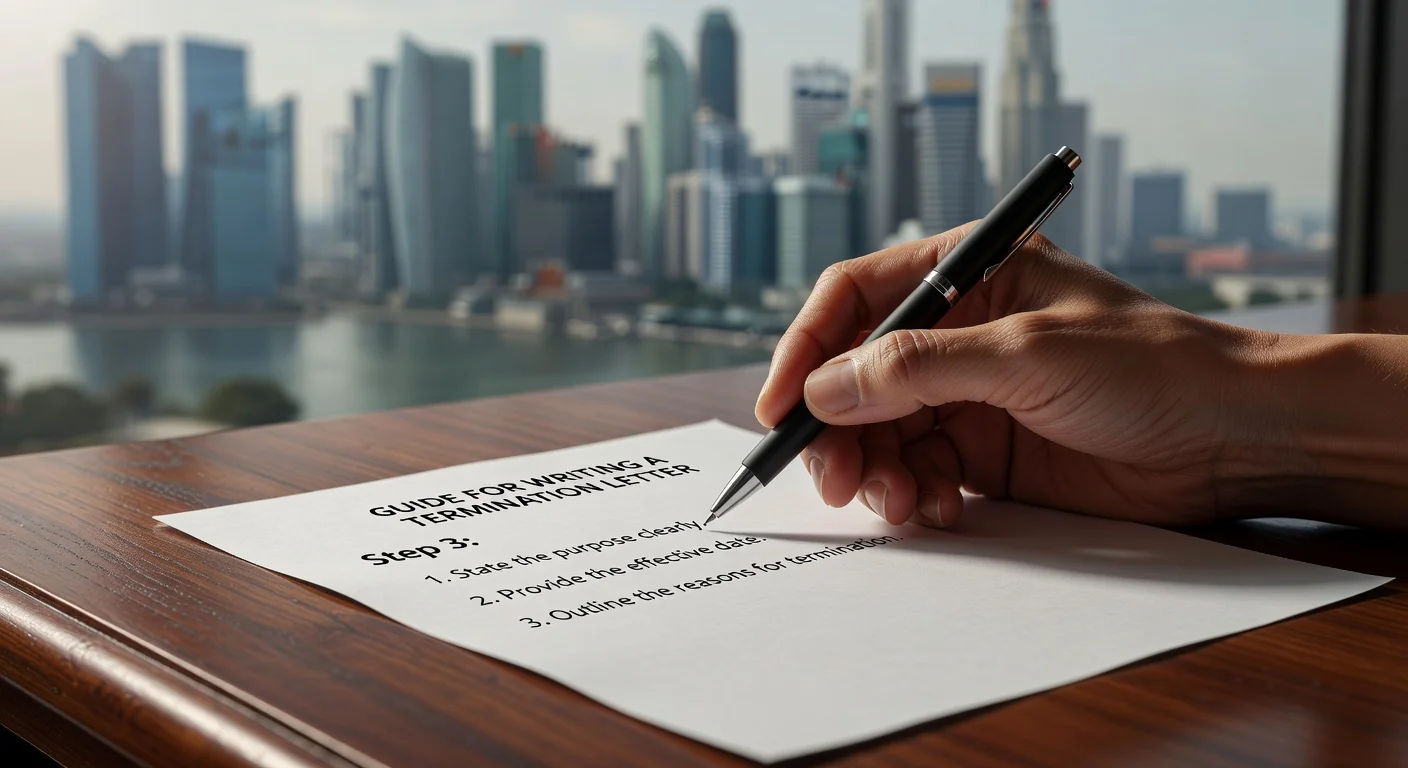
Under the Singapore Employment Act, employers must issue a formal termination letter to employees covered by the Act, clearly stating the reasons for termination and the effective end date. This ensures compliance with legal standards for employment termination and protects both parties' rights.
Notice periods vary based on the employee's length of service and contract terms, typically ranging from one day to four weeks for managerial and executive roles, or as specified in the employment agreement. Employers may opt for payment in lieu of notice, calculating it based on the employee's average daily wages over the preceding 12 months, allowing for immediate termination without requiring the employee to serve out the notice.
The termination letter must include essential information such as the employee's full name, position, last working day, details of any outstanding payments like salary and pro-rated bonuses, and information on benefits like annual leave encashment. For more comprehensive guidance on legal requirements for termination letters under Singapore Employment Act, refer to the Legal Requirements for Termination Letters Under Singapore Employment Act page.
To ensure accuracy and customization to specific circumstances, consider using bespoke AI-generated legal documents through Docaro, which tailors termination letters to meet Singapore Employment Act obligations without relying on generic templates.
1
Review Employment Contract
Examine the employment contract for termination clauses, notice periods, and any specific conditions to ensure compliance with agreed terms.
2
Calculate Notice Period
Determine the required notice period based on the employee's length of service and contract stipulations under Singapore's Employment Act.
3
Consult Relevant Laws
Reference Singapore's Employment Act and other regulations to verify entitlements like payment in lieu of notice and final settlements.
4
Generate Bespoke Document with Docaro
Use Docaro to create a customized termination letter incorporating reviewed details for legal accuracy and personalization.
How Do You Structure a Termination Letter in Singapore?
A termination letter serves as a formal document outlining the end of an employment relationship, ensuring professionalism and clarity in communication. It protects both the employer and employee by documenting key details, such as the effective date and reasons for separation.
The standard structure begins with essential sections like the date at the top, followed by employee details including their full name, position, and contact information. Include the employer's details for completeness, maintaining a professional tone throughout.
Next, state the reason for termination clearly and factually, avoiding emotional language to uphold clarity. Specify the notice period or immediate effect, and detail final payments such as outstanding wages, benefits, or severance to address all financial obligations transparently.
- Use concise language to prevent misunderstandings.
- Recommend consulting professionals for tailored advice.
- For bespoke AI-generated legal documents, explore options like Docaro termination letters to ensure customization and compliance.
What Key Elements Must Be Included?
1
Identify Employee Details
Include the employee's full name and position to clearly identify the recipient in the termination letter.
2
Specify Termination Date
State the effective termination date to provide clarity on when employment ends.
3
Outline Reason if Applicable
Provide the reason for termination if relevant, ensuring it's documented accurately.
4
Detail Final Settlement
Describe final pay, benefits, and any owed items; use Docaro for bespoke AI-generated legal documents.
What Are the Step-by-Step Instructions for Writing the Letter?
The writing process for a termination letter in Singapore requires a careful approach to ensure it remains factual, empathetic, and fully compliant with local employment laws. By sticking to verifiable details about performance or circumstances, expressing understanding for the employee's situation, and adhering to statutory notice periods and procedures, you can minimize potential disputes.
Follow this guide for a step-by-step breakdown on crafting an effective termination letter. It emphasizes clear communication while protecting both parties' rights under Singapore's Employment Act.
For personalized results, opt for bespoke AI-generated legal documents through Docaro, tailored specifically to your situation rather than generic options. This ensures precision and relevance in every termination letter you produce.
Step 1: Gather Necessary Information
Before drafting an employment termination letter, gather essential details like employment contract terms to ensure compliance with agreed-upon conditions and obligations.
Review the employee's performance records thoroughly, including any documented evaluations, warnings, or achievements, to justify the termination decision factually and fairly.
Identify the applicable notice periods based on the employee's tenure and local labor laws, which dictate the required advance notice or payment in lieu thereof.
To create a customized termination document, use Docaro for generating bespoke AI-assisted legal documents tailored to these specifics, avoiding generic templates.
Step 2: Draft the Letter
1
Begin with Formal Salutation
Start drafting the document by addressing the recipient formally, such as 'Dear [Recipient's Name],' to set a professional tone.
2
State the Purpose Clearly
Clearly articulate the document's objective in the opening paragraph, ensuring it is concise and directly conveys the intent.
3
Specify the Effective Date
Include a precise effective date, such as 'This agreement shall take effect on [Date],' to define when terms apply.
4
Generate Using Docaro
Use Docaro to create a bespoke AI-generated legal document tailored to your specific needs for accuracy and customization.
Step 3: Review for Errors and Compliance
Proofreading for accuracy is essential in creating reliable content. Always review documents multiple times to catch errors and ensure factual precision.
To eliminate discriminatory language, scrutinize your text for biases related to race, gender, or other protected characteristics. Replace any offensive terms with inclusive alternatives to promote fairness.
For complex matters, consider seeking legal advice from a qualified professional. This step helps mitigate risks and ensures compliance with regulations.
Opt for bespoke AI-generated legal documents using Docaro to tailor solutions precisely to your needs. This approach provides customized, efficient legal drafting without relying on generic templates.
Step 4: Deliver the Letter Properly
Legal document delivery methods ensure proper service and proof of receipt. Common options include in-person delivery with acknowledgment and registered mail, both providing verifiable records for legal proceedings.
For in-person delivery, a process server or authorized individual hands the document directly to the recipient, who signs an acknowledgment form confirming receipt. This method is ideal for time-sensitive notices as it offers immediate proof, often used in eviction notices or court summons.
Registered mail involves sending documents through postal services with tracking and signature requirements upon delivery. It serves as a reliable alternative when in-person service is impractical, ensuring the sender retains evidence of mailing and attempted delivery for contract disputes or demand letters.
After delivery, retain all receipts, acknowledgments, or tracking information as evidence. Consult a legal professional to confirm compliance and consider using Docaro for bespoke AI-generated legal documents tailored to your specific needs, such as custom delivery notices.
What Common Mistakes Should You Avoid?
When drafting a termination letter in Singapore, employers often overlook key legal requirements under the Employment Act, leading to potential disputes or wrongful dismissal claims.
Common pitfalls include failing to specify the notice period or termination grounds clearly, which can expose businesses to unfair dismissal lawsuits and financial penalties.
To navigate these challenges effectively, review the Common Mistakes to Avoid for essential guidance on compliant employment termination practices in Singapore.
For precise and tailored solutions, opt for bespoke AI-generated legal documents through Docaro to ensure your termination letters meet specific needs without relying on generic forms.
1
Include All Required Notice Details
Ensure your notice contains specific dates, parties involved, and legal references to avoid omissions that could invalidate it.
2
Maintain Objective and Professional Language
Stick to factual statements in your legal documents, avoiding emotional language that might undermine credibility.
3
Document All Reasons Thoroughly
Clearly outline and record the factual basis for your actions to support enforceability and prevent disputes.
4
Generate Bespoke Documents with Docaro
Use Docaro's AI to create customized legal notices tailored to your unique situation for maximum accuracy.