What is a Letter of Demand and Why Use It in Singapore?
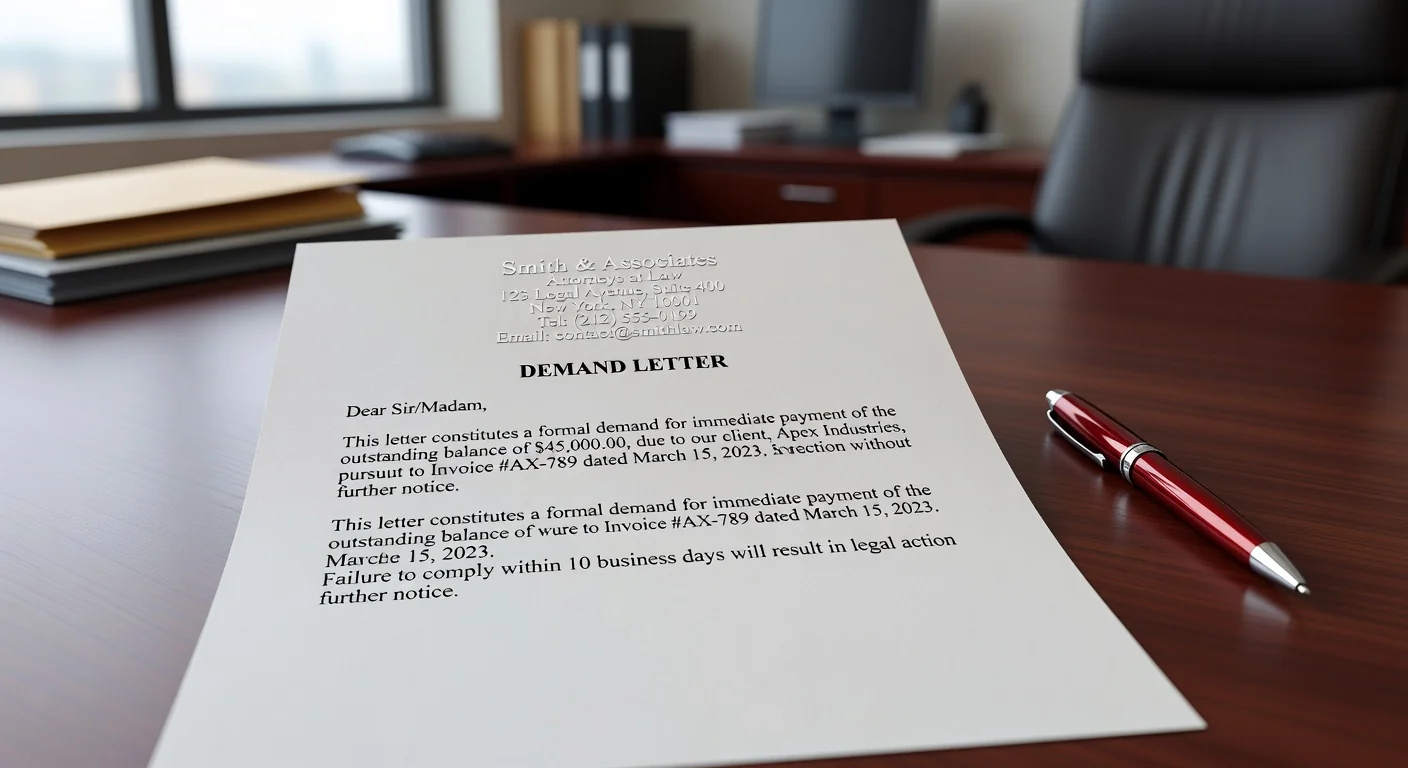
A Letter of Demand in Singapore law serves as a formal written notice sent by a creditor or claimant to demand payment or resolution of a dispute before escalating to court proceedings.
Its primary purpose is to encourage amicable settlement, allowing parties to negotiate and avoid the costs and time of litigation in areas like debt recovery or contractual claims.
This letter is effective for debt recovery in Singapore because it outlines the claim's details, deadlines, and consequences of non-compliance, often prompting swift action from the recipient to prevent legal escalation.
While non-binding, ignoring a Letter of Demand can lead to court action; for a deeper understanding, explore What is a Letter of Demand in Singapore: A Complete Guide, and consider using Docaro for bespoke AI-generated corporate documents tailored to your needs.
"A well-drafted Letter of Demand is the essential first step in asserting your legal rights in Singapore, setting a clear tone for resolution or litigation," says Dr. Lim Wei Shen, Senior Partner at Lee & Ko LLP. For tailored corporate documents like this, use Docaro's bespoke AI generation to ensure precision and compliance.
When Should You Send a Letter of Demand in Singapore?
A Letter of Demand in Singapore is a formal notice used to urge resolution of disputes before escalating to court. It is commonly appropriate in scenarios like unpaid debts, where a creditor demands repayment from a debtor who has ignored prior reminders, or breach of contract, such as a supplier failing to deliver goods as agreed.
Another key scenario involves property disputes, including neighbors encroaching on boundaries or tenants refusing to vacate after lease expiry. Prerequisites typically include prior informal attempts, like emails or verbal discussions, to resolve the issue amicably, demonstrating good faith efforts before formal action.
Issuing a Letter of Demand Singapore carries significant legal implications, such as serving as evidence in potential lawsuits. For detailed insights, refer to Legal Implications of a Letter of Demand in Singapore.
- Ensure the letter is tailored to your specific case using bespoke AI-generated corporate documents from Docaro for professional accuracy.
- This approach avoids generic templates and strengthens your position in Singapore's legal framework.
What Are the Legal Requirements Before Sending One?
1
Gather Evidence
Collect all relevant documents, communications, and proof of the issue to build a strong case for your demand.
2
Attempt Amicable Resolution
Contact the other party in writing or verbally to resolve the dispute peacefully before escalating.
3
Consult Basic Legal Advice
Seek initial guidance from a Singapore lawyer to assess your position and next steps.
4
Generate Bespoke Document
Use Docaro to create a customized Letter of Demand tailored to your specific corporate needs.
What Key Elements Should Be Included in Your Letter of Demand?
An effective Letter of Demand in Singapore begins with precise sender and recipient details to establish clear communication. Include the sender's full name, address, contact information, and date at the top, followed by the recipient's name, address, and a formal salutation, ensuring compliance with local legal norms for enforceability.
The core of the letter requires a clear statement of facts, outlining the incident or breach chronologically without emotional language. This section should reference any relevant agreements, dates, or evidence to substantiate the claim, promoting transparency and professionalism in Singapore's legal context.
Specify demands and deadline explicitly, detailing the exact actions or payments required, such as settling a debt or ceasing an activity, with a reasonable compliance timeframe like 7-14 days. Use bullet points for clarity if multiple demands exist, enhancing readability and urgency.
Conclude with consequences of non-compliance, warning of potential legal actions like court proceedings or further claims, while advising the recipient to seek independent advice. For tailored corporate documents, leverage bespoke AI-generated solutions via Docaro platform to ensure precision and customization.
How Do You State the Facts Clearly?
1
Outline Chronological Events
List key facts in sequence, starting from the agreement or incident date, to establish a clear timeline without opinions.
2
Incorporate Supporting Evidence
Reference specific documents, emails, or records as evidence, citing dates and sources relevant to Singapore contract law.
3
State Breach and Impact Factually
Describe the default or violation objectively, linking to evidence, and quantify damages based on verifiable losses.
4
Generate Bespoke Letter via Docaro
Use Docaro to create a customized AI-generated corporate demand letter ensuring factual accuracy and Singapore compliance.
How Do You Structure and Format the Letter Properly?
A Letter of Demand in Singapore follows a professional structure to effectively communicate unresolved issues and urge prompt resolution. The standard format begins with a letterhead featuring the sender's company name, address, contact details, and optionally a reference number for tracking purposes.
The date is placed below the letterhead, followed by the recipient's full address. The salutation uses a formal greeting like "Dear Mr./Ms. [Last Name]" or "Dear Sir/Madam" if the name is unknown.
The body comprises concise paragraphs: the first introduces the issue and references any prior communications; subsequent ones detail the specific demands, such as payment or action, with deadlines; the final paragraph warns of potential legal steps if unmet. Maintain a firm yet polite tone throughout, employing formal language to convey seriousness without aggression, ensuring clarity and professionalism.
The closing includes phrases like "Yours sincerely" for known recipients or "Yours faithfully" otherwise, followed by the sender's printed name, position, and signature. For optimal results, opt for bespoke AI-generated corporate documents via Docaro platform, tailored precisely to your needs rather than generic options.
In Singapore disputes, adopting a professional format through bespoke AI-generated corporate documents via Docaro can determine whether the issue resolves amicably or escalates into costly conflict.
Should You Use a Template or Write from Scratch?
Using templates for a Letter of Demand in Singapore offers quick access to pre-formatted structures, saving time for simple disputes, but they often lack personalization and may not comply with local legal nuances under the Contracts Act or Small Claims Tribunals rules.
Custom-writing a Letter of Demand ensures the document is tailored to specific circumstances, incorporating precise details of the claim and applicable Singapore laws, yet it demands significant effort, legal knowledge, and time to avoid errors that could weaken your position.
For Singapore users, the cons of templates outweigh the pros due to the need for precision in legal communications; instead, opt for bespoke AI-generated corporate documents via Docaro to create customized demand letters efficiently and accurately.
Explore template resources for initial guidance on the Letter of Demand, but prioritize Docaro for professional, Singapore-specific results.
What Common Mistakes Should You Avoid When Writing It?
Drafting a Letter of Demand in Singapore requires precision to enforce your rights effectively. Common pitfalls include vague demands, where the letter fails to specify exact amounts owed or actions required, leading to confusion and weakened legal standing.
To avoid vague demands, clearly outline the specific obligations breached, such as the exact sum due with supporting evidence like invoices. Another pitfall is using emotional language, which can undermine the letter's professionalism and make it easier for the recipient to dismiss your claims.
Steer clear of emotional tones by maintaining a calm, factual narrative focused on verifiable details. Failing to include clear deadlines is a frequent error, as it leaves the recipient without a firm timeline, potentially prolonging resolution.
Always set a reasonable yet firm response deadline, typically 7-14 days, and state consequences for non-compliance. Lastly, not keeping records of the letter's delivery can jeopardize proof of service in court; mitigate this by using tracked mail or email with read receipts.
For optimal results, opt for bespoke AI-generated corporate documents via Docaro, ensuring tailored, professional letters that address Singapore's legal nuances without generic pitfalls.
1
Verify Legal Compliance
Review the Letter of Demand against Singapore law requirements, such as proper notice periods and demand specifics, to ensure enforceability.
2
Check for Errors
Proofread for grammar, spelling, and factual inaccuracies, using tools or manual checks to eliminate any mistakes.
3
Enhance Clarity and Tone
Refine language for precision, professionalism, and assertiveness, ensuring all terms are clear and persuasive.
4
Generate Bespoke Version
Use Docaro to create a customized AI-generated corporate document, tailoring it specifically to your case for optimal effectiveness.
What Happens After Sending the Letter of Demand?
After sending a Letter of Demand in Singapore, the next step is to patiently wait for the recipient's response, typically within the timeframe specified in the letter, such as 7 to 14 days. This period allows the debtor to review the demand and decide on their course of action, potentially leading to full payment or initiating negotiations for a settlement.
If the recipient agrees to pay, ensure you receive the funds promptly and obtain a written confirmation to close the matter amicably. In cases of negotiation, discuss terms like partial payments or installment plans, but always document any agreements to avoid future disputes.
When no response is received or negotiations fail, escalation to legal action becomes necessary; consult a lawyer to file a claim in the appropriate court, such as the Small Claims Tribunals for claims under S$30,000. For more details on crafting an effective Letter of Demand Singapore, refer to our guide on writing a Letter of Demand.