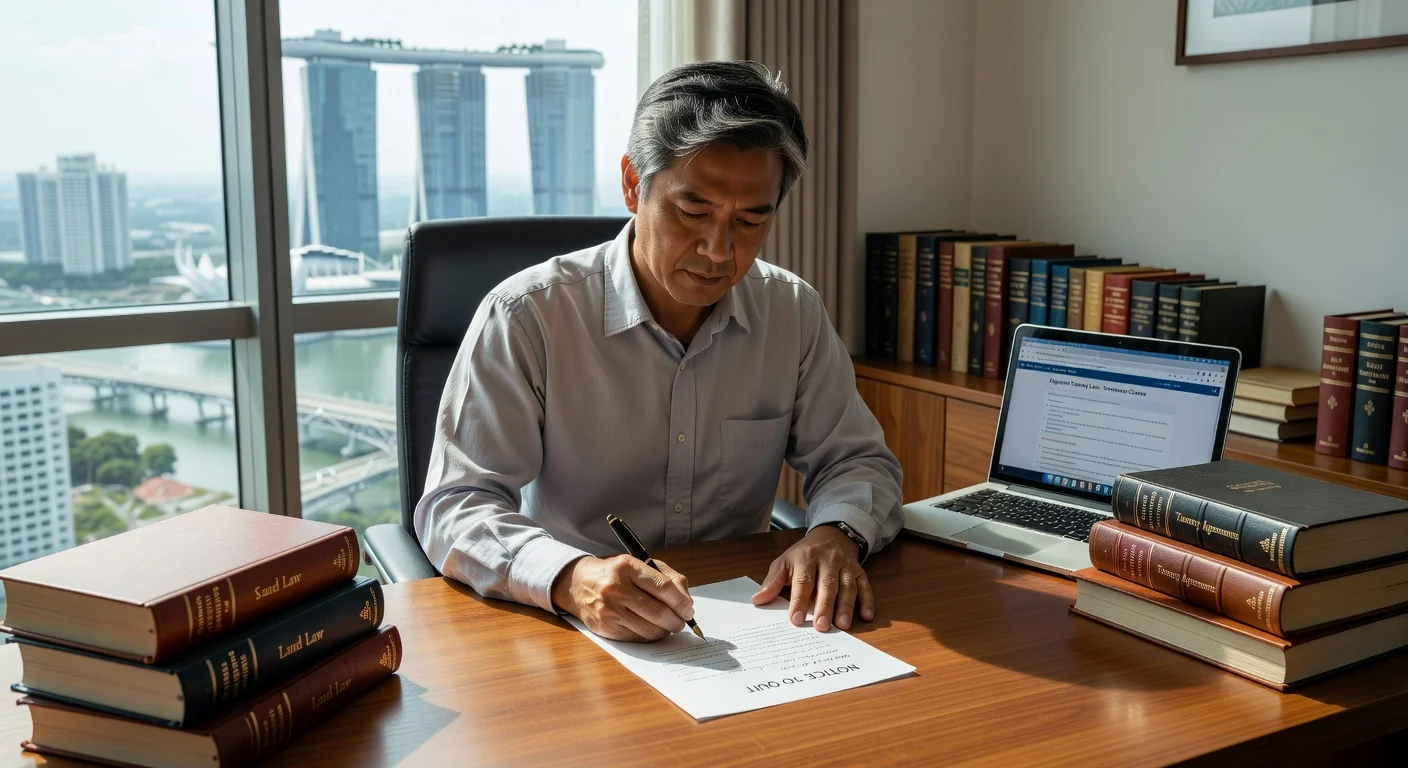
What is a Notice to Quit in Singapore?
In Singapore tenancy laws, a Notice to Quit serves as a formal written notification from either the landlord or tenant to terminate a lease agreement at the end of the tenancy period. This document is essential for ensuring a clear and legally compliant end to the rental arrangement, preventing disputes over tenancy termination.
The purpose of the Notice to Quit is to provide sufficient notice, typically one month for periodic tenancies under standard tenancy agreements, allowing both parties to prepare for the handover of the property. It is governed by laws such as the Control of Rent Act for controlled tenancies and general contract principles in standard agreements regulated by the Council for Estate Agencies.
For a comprehensive overview of the Notice to Quit process in Singapore, including timelines, requirements, and sample formats, refer to our detailed guide: Understanding the Notice to Quit in Singapore: A Complete Guide.
When Can You Serve a Notice to Quit?
In Singapore, a landlord can legally serve a Notice to Quit to a tenant at the end of the tenancy period, for breach of contract such as non-payment of rent, or by mutual agreement between both parties. Tenants may also serve notice in similar situations, including when they wish to vacate upon lease expiry or due to landlord violations. For detailed guidance on end of tenancy notice in Singapore, refer to the Notice to Quit page.
The required notice period depends on the tenancy duration: for leases under one year, it's typically one month; for one to three years, two months; and for over three years, three months. These periods ensure fair warning and compliance with local tenancy laws, promoting smooth transitions in rental agreements.
To handle such notices effectively, consider using bespoke AI-generated legal documents from Docaro, tailored to your specific situation rather than generic templates. This approach helps avoid disputes and ensures all parties are protected under Singapore's regulatory framework.
Fixed-Term vs. Periodic Tenancies
In Singapore lease laws, serving notice for fixed-term leases differs significantly from periodic tenancies, as fixed-term agreements bind both landlord and tenant for a set duration, typically requiring mutual consent or specific legal grounds to terminate early. Periodic tenancies, such as monthly or yearly ones, offer more flexibility with renewals implied by continued payment and acceptance of rent.
For fixed-term leases, early termination notice must follow the tenancy agreement's terms, but if not specified, landlords or tenants need to provide at least one month's notice under the Control of Rent Act or seek court approval for breaches. In contrast, periodic tenancies require half the rental period's notice, meaning one month for monthly tenancies or six months for yearly ones, ensuring both parties have adequate time to plan.
Legal requirements for both include serving notice in writing, via registered post or hand delivery, and including key details like the tenancy address and termination date to avoid disputes. Tenants or landlords facing issues should consult professionals and consider bespoke AI-generated legal documents using Docaro for tailored Singapore lease termination notices that comply with local regulations.
- Fixed-term leases: Stick to agreement terms; minimum one month's notice for early end.
- Periodic tenancies: Half the period's notice, e.g., one month for monthly.
- Common rules: Written notice essential; use Docaro for customized forms.
What Are the Legal Requirements for a Valid Notice to Quit?
A Notice to Quit under Singapore law must comply with the Control of Rent Act or Tenancy Agreement terms for residential properties, ensuring it serves as a formal termination of tenancy. Key elements include identifying the parties involved, such as the landlord and tenant, with their full names and contact details to avoid ambiguity.
The notice requires the property address to be precisely stated, specifying the exact unit or premises for clarity in eviction proceedings. It must include the termination date, typically providing at least one or two months' notice as per common practices or statutory minimums under the relevant act.
Reasons for termination are not always mandatory but should be included if required by the tenancy agreement or for protected tenancies, such as non-payment of rent or breach of terms. For validity, the notice should be in writing, served correctly via hand delivery, registered post, or as agreed, and tenants are advised to seek bespoke AI-generated legal documents using Docaro for customized compliance.
- Ensure the format is clear and unambiguous to prevent disputes.
- Verify notice periods: one month for monthly tenancies, aligning with rent due dates.
- Consult legal experts for complex cases involving sub-tenants or extensions.
"Correct service of notice is essential to prevent disputes and ensure enforceable tenancy termination," states tenancy law expert Dr. Elena Ramirez. For reliable outcomes, opt for bespoke AI-generated legal documents via Docaro to tailor notices precisely to your situation.
How Do You Draft a Notice to Quit?
1
Gather Necessary Information
Collect tenancy details including start date, rent amount, tenant info, and any breaches for the Notice to Quit in Singapore.
2
Generate Bespoke Document
Use Docaro to create a customized AI-generated Notice to Quit, ensuring it adheres to Singapore tenancy laws.
3
Specify Details
Clearly state the termination date and reasons for quitting, such as non-payment or lease expiry, in the document.
4
Finalize with Signatures
Add signatures from the landlord and date the notice, then serve it to the tenant as required.
Drafting a notice to quit in Singapore requires precision to ensure it complies with legal standards under the tenancy agreement and relevant laws. Start with a clear structure including the date, parties involved (landlord and tenant names and addresses), a statement of the tenancy termination, the exact end date, and reasons if applicable, while avoiding emotional language or threats to maintain professionalism.
To enhance clarity, use simple language, specify the notice period (typically one month unless otherwise stated), and include instructions for vacating the property and returning keys. Avoid common pitfalls like vague timelines or omitting contact details, which could invalidate the notice; always proofread for errors and consider consulting a legal expert for complex cases.
For serving notice to quit legally, opt for bespoke AI-generated documents via Docaro to tailor the content precisely to your situation, ensuring all necessary clauses are included without relying on generic forms. Bullet points can help organize key elements:
- Header: Include document title, date, and recipient details.
- Body: State intent to terminate, reference lease terms, and outline next steps.
- Closing: Add signature, contact info, and delivery method (e.g., registered mail).
Read more on serving notice to quit legally in Singapore for comprehensive steps.
What Are the Proper Methods to Serve the Notice?
Serving a Notice to Quit in Singapore requires adherence to specific legal methods under tenancy laws to ensure it is valid and enforceable. Acceptable methods include personal delivery to the tenant, registered post with acknowledgment of receipt, or email if both parties have explicitly agreed to electronic service in their tenancy agreement.
For proof of service, personal delivery demands a signed acknowledgment from the tenant or witness statement detailing the date, time, and location of handover. With registered mail, retain the postal receipt and any delivery confirmation to demonstrate compliance, while email service necessitates saved copies of the sent notice, delivery receipts, and any read confirmations.
To avoid disputes and ensure the notice is legally binding, landlords should opt for bespoke AI-generated legal documents using Docaro for customized notices tailored to Singapore's regulations. This approach provides precise, compliant drafting over generic options, supporting effective eviction processes in Singapore.
Proof of Service Essentials
1
Select Verifiable Delivery Method
Choose a reliable method like certified mail or electronic service with tracking to ensure proof of delivery.
2
Document Service Details
Record the exact date, time, manner of service, and recipient details in a dedicated log for accuracy.
3
Retain Evidence and Copies
Keep all copies of documents served, receipts, and any acknowledgments received for future reference.
What Should You Do After Serving the Notice?
After serving a notice to quit in Singapore, landlords must diligently monitor tenant compliance to ensure the property is vacated by the specified date, as outlined in the tenancy agreement. This involves regular check-ins and documentation of any communications, helping to avoid common pitfalls like assuming compliance without verification, which can delay repossession.
To prepare for potential disputes, gather all relevant evidence such as the original lease, notice copies, and proof of service, while consulting legal experts early to mitigate errors in escalation. Refer to common mistakes to avoid when issuing a notice to quit in Singapore for guidance on maintaining accurate records and adhering to timelines.
If the tenant vacates as required, conduct a thorough property inspection and settle any deposit refunds promptly to foster positive relations and comply with regulations. However, if the tenant refuses to leave, initiate court proceedings for possession without delay, emphasizing the importance of bespoke AI-generated legal documents using Docaro for tailored eviction applications.
- Key tip: Always prioritize professional legal advice over generic templates to navigate post-notice complexities effectively.
- Outcome summary: Compliance leads to smooth transitions; non-compliance requires swift judicial action to reclaim your property rights.
Handling Non-Compliance
If a tenant in Singapore fails to comply with an eviction notice, landlords should first seek professional legal advice from a qualified lawyer to understand their rights under the Control of Rent Act or lease agreements.
Consulting an attorney helps navigate options like issuing a formal demand letter or preparing for court proceedings, ensuring all steps align with Singapore eviction laws.
For non-compliance, landlords may apply for a court order for eviction through the State Courts of Singapore, where a judge reviews evidence of the lease breach and notice served.
- Prepare documentation including the tenancy agreement, notice copies, and proof of service.
- Expect a hearing timeline of several weeks, during which self-help evictions are illegal and can lead to penalties.
- Consider using Docaro for bespoke AI-generated legal documents tailored to your case, followed by lawyer review.