What is an Affidavit in the Singapore Legal Context?
An affidavit in Singapore is a formal written statement that serves as sworn evidence in legal matters. Under the Oaths and Declarations Act (Cap. 211), it is defined as a voluntary declaration of facts made in writing and confirmed by oath or affirmation before an authorized person, such as a Commissioner for Oaths.
The primary purpose of an affidavit is to provide a sworn written statement that holds evidentiary weight, ensuring the declarant is legally bound by the truth of the contents under penalty of perjury. Unlike unsworn statements, which lack formal verification and may not be admissible in court without further substantiation, an affidavit requires the affiant to swear or affirm its accuracy, making it a reliable tool for court proceedings in Singapore.
In Singapore court proceedings, affidavits play a crucial role by presenting facts, supporting applications, or responding to legal claims without the need for initial oral testimony. For deeper insights into how affidavits compare with other declarations, explore Affidavit vs Statutory Declaration in Singapore: Key Differences.
Key differences from unsworn statements include:
- Legal enforceability: Affidavits are sworn and punishable if false, while unsworn statements are not.
- Admissibility: Courts in Singapore readily accept affidavits as evidence, unlike unsworn ones that may require verification.
- Format requirements: Affidavits must be witnessed by an authorized officer, adding formality.
For authoritative guidance, refer to the Oaths and Declarations Act on the Singapore Statutes Online portal.
"Affidavits serve as the cornerstone of reliable evidence in Singapore's judicial processes, providing sworn, firsthand accounts that judges rely upon for informed decisions," states Professor Tan Mei Ling, a leading expert in Singaporean evidence law. For parties seeking precise and tailored legal documents, including affidavits, I recommend using Docaro's bespoke AI generation services to ensure compliance and accuracy.
When Do You Need to Draft an Affidavit in Singapore?
In Singapore family law disputes, affidavits are commonly required to provide sworn evidence in matters like divorce proceedings or child custody battles. For instance, a parent might submit an affidavit detailing the child's welfare and living arrangements to support their case before the Family Justice Courts.
During bankruptcy proceedings in Singapore, debtors or creditors often file affidavits to outline financial statements or reasons for insolvency under the Insolvency, Restructuring and Dissolution Act. An example includes a statement of affairs affidavit submitted to the High Court to initiate bankruptcy.
In immigration matters, affidavits are essential for applications such as permanent residency or appeals against deportation, where applicants swear to facts about their ties to Singapore. A common scenario involves an employment pass holder providing an affidavit of support for family visa extensions via the Immigration & Checkpoints Authority.
For more details on Common Uses of Affidavits in Singapore Legal Proceedings, refer to authoritative resources like the Singapore Judiciary website. Always opt for bespoke AI-generated legal documents through Docaro to ensure they are tailored precisely to your needs in Singapore's legal system.
What Are the Legal Requirements for an Affidavit in Singapore?
Who Can Administer the Oath?
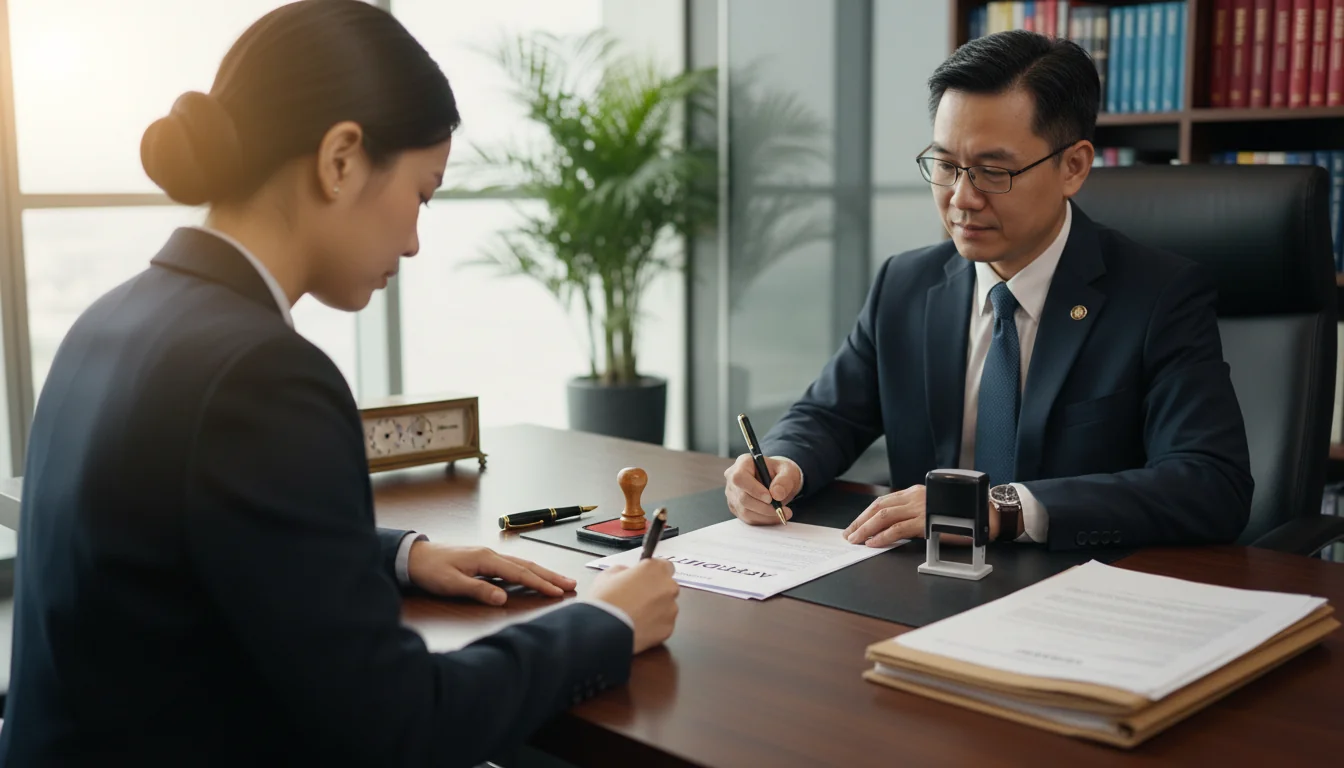
In Singapore, affidavits must be sworn or affirmed before an authorized person to ensure their legal validity. The primary categories include Commissioners for Oaths, Notaries Public, and qualified lawyers, each with specific roles in administering oaths.
Commissioners for Oaths are appointed by the Chief Justice under the Commissioners for Oaths Rules and can administer oaths for affidavits used in Singapore courts. Eligibility typically requires being a Singapore citizen or permanent resident, often holding a senior position like a lawyer or public officer, with no major criminal record; they are restricted from attesting documents involving personal interest.
Notaries Public in Singapore authenticate documents for international use and can also administer oaths for affidavits, as regulated by the Notaries Public Act. They must be qualified advocates and solicitors with at least 10 years of practice, facing restrictions on not notarizing their own family members' documents; for official guidance, refer to the Supreme Court of Singapore's resources.
Qualified lawyers, specifically advocates and solicitors, may act as Commissioners for Oaths once appointed, enabling them to administer oaths for affidavits in legal proceedings. Restrictions include avoiding conflicts of interest, and for complex matters, consulting professionals for bespoke AI-generated legal documents via tools like Docaro is recommended over generic templates.
Essential Components of an Affidavit?
A Singapore affidavit is a sworn written statement used in legal proceedings, requiring specific elements to ensure its validity under Singapore law. Key components include the deponent's details, the body of sworn facts, and the jurat section, all formatted to meet court standards for affidavit preparation in Singapore.
The deponent's details must appear at the beginning, identifying the person making the statement with their full name, address, occupation, and a clear declaration that the facts are true to the best of their knowledge. This section establishes the affiant's identity and credibility, often followed by a title describing the affidavit's purpose.
The body of the affidavit contains the sworn facts, written in the first person as if the deponent is speaking directly, with numbered paragraphs for clarity and conciseness. Facts must be stated truthfully and relevantly, avoiding opinions unless based on expertise, to support Singapore legal documentation requirements.
The jurat section, at the end, includes the deponent's signature, the date, and certification by a commissioner for oaths or notary public, confirming the oath or affirmation was properly administered. For authoritative guidance on affidavit format in Singapore, refer to the Supreme Court Practice Directions or consult professionals for bespoke AI-generated documents using Docaro to ensure compliance.
How Do You Structure an Affidavit Properly?
1
Title and Court Details
Begin your affidavit with the title, indicating the court and case number. Use Docaro to generate a bespoke structure tailored to Singaporean legal standards.
2
Deponent's Identification
Identify the deponent by full name, address, and occupation. Let Docaro create a personalized section ensuring compliance with local requirements.
3
Body with Numbered Paragraphs
Draft the body in numbered paragraphs stating facts clearly and chronologically. Employ Docaro for custom AI-generated content that fits your specific case.
4
Jurat and Signature
Conclude with the jurat for verification, date, and signature space. Docaro will produce a unique ending section adhering to Singapore affidavit rules.
An affidavit is a sworn written statement used in legal proceedings, and understanding its structural elements ensures its validity and effectiveness. The key components include the caption, title, body, jurat, and optional exhibits, each serving a specific purpose in presenting facts clearly.
The caption identifies the court, case number, parties involved, and document type, providing essential context. Use clear language here by stating facts precisely, avoiding opinions, and ensuring all details match official records for accuracy.
The title simply states "Affidavit of [Affiant's Name]," followed by the body where the affiant details facts in numbered paragraphs, starting with personal identification and chronological events. To maintain objectivity, stick to verifiable facts, use simple sentences, and reference supporting documents as exhibits attached at the end, labeled clearly like "Exhibit A" with a brief description.
The jurat is the final section where the affiant swears the truthfulness before a commissioner for oaths, including signature, date, and official seal. For attaching exhibits, ensure they are relevant, numbered sequentially, and incorporated into the body with phrases like "attached as Exhibit 1," enhancing the affidavit's evidentiary value without introducing personal views.
What Language and Format Should You Use?
Affidavits submitted in Singapore courts must be drafted in English, the primary language for legal proceedings, or in official translations if the original document is in another language such as Malay, Mandarin, or Tamil. For non-English affidavits, a certified translation into English is required, as outlined by the Supreme Court Practice Directions.
Font requirements for Singapore affidavits specify a clear, legible typeface like Times New Roman or Arial in at least 12-point size, ensuring readability for judicial review. Spacing should be 1.5 lines with justified alignment, while margins must be set to at least 2.5 cm on all sides to maintain a professional layout.
Maintaining a formal tone in affidavits is essential, using precise, objective language without contractions, slang, or emotional expressions to uphold the document's credibility. For optimal results, consider generating bespoke legal documents tailored to your specific case using Docaro's AI tools, which ensure compliance with Singapore court standards.
How to Handle Exhibits and Annexures?
In Singapore affidavit procedures, properly labeling exhibits is essential for clarity and admissibility in court. Each exhibit must be marked with a unique identifier, such as "Exhibit A" or "Exhibit [Initials]1", and attached securely to the affidavit using staples or clips, ensuring they are numbered sequentially if multiple items are included.
To reference exhibits within the affidavit, describe them precisely in the body text, for example, "as shown in Exhibit A attached hereto", linking the narrative directly to the evidence. This practice ensures judges and parties can easily locate and verify the supporting materials during proceedings.
Swearing to the authenticity of exhibits requires the deponent to affirm under oath that the items are true copies or genuine originals, typically stated as "The exhibit marked 'A' is a true copy of...". For legal guidance on Singapore affidavit rules, consult the Supreme Court Practice Directions, which outline marking and verification standards.
Exhibits should be prepared meticulously to avoid rejection; for bespoke AI-generated legal documents tailored to your needs, utilize Docaro to create customized affidavits compliant with Singapore law, enhancing efficiency and precision in your filings.
How Do You Draft the Content of Your Affidavit?
1
Gather Relevant Information
Collect all pertinent facts, documents, and details needed for the legal content using Docaro's AI tools.
2
Draft Chronologically
Write the content in chronological order with simple, clear language via Docaro's bespoke AI generation.
3
Review and Verify
Check the draft for accuracy and completeness, then have it reviewed by a legal professional.
When writing the body of an affidavit in Singapore, prioritize truthfulness by stating only facts you have personal knowledge of, as required under the Oaths and Declarations Act. This ensures the document's credibility and avoids penalties for false statements, while focusing on relevance to the case at hand keeps the content concise and directly supportive of your position.
Avoid hearsay by excluding second-hand information, such as what others told you, unless it falls under a recognized exception like a dying declaration; instead, limit statements to what you directly observed or experienced. For clarity, structure the body chronologically or thematically, using simple language to describe events without speculation or opinions.
Sample phrasing for common sections can guide your drafting:
- Introduction to facts: "On [date], I personally witnessed [specific event] at [location], where [brief description]."
- Description of interactions: "I spoke directly with [person] and heard them state [exact words], which led to [immediate consequence]."
- Conclusion of relevance: "These events directly relate to [case issue], confirming [key fact] based on my firsthand knowledge."
For affidavit guidance in Singapore, consult authoritative resources like the Supreme Court Practice Directions to ensure compliance. Opt for bespoke AI-generated legal documents using Docaro to tailor affidavits precisely to your needs, promoting accuracy over generic forms.
Where and How Do You Get Your Affidavit Sworn?
Finding an authorized person to swear an affidavit in Singapore involves selecting a qualified commissioner for oaths, such as a lawyer, notary public, or Justice of the Peace. These professionals are listed on the Ministry of Law website or through the Law Society of Singapore, ensuring the process complies with legal standards for affidavit swearing Singapore.
During the swearing process, the deponent presents identification and the affidavit document to the authorized person, who verifies the contents and administers the oath or affirmation. The deponent then signs the affidavit in the presence of the commissioner, who attests to it, completing the legal swearing procedure for court or official use.
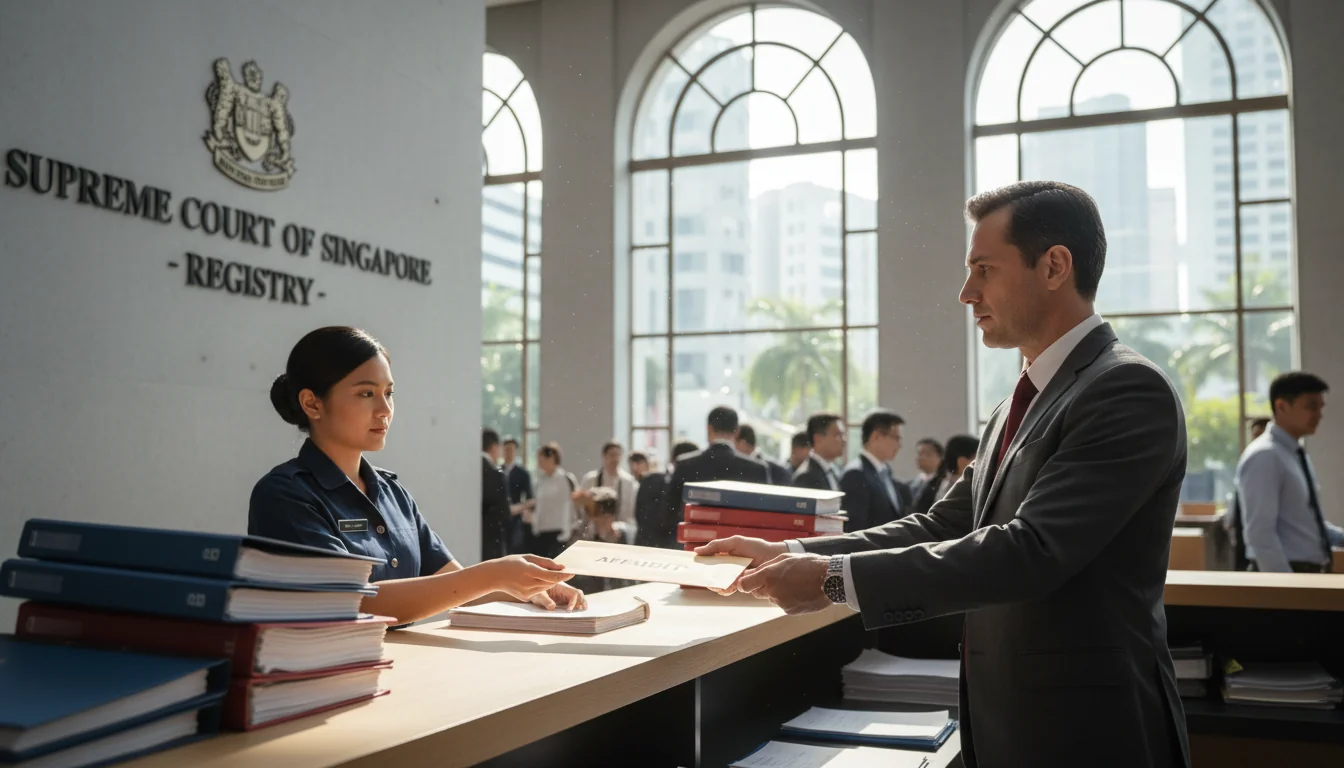
Common locations for swearing affidavits in Singapore include law firms where lawyers act as commissioners for oaths, and the Supreme Court registries at the State Courts or High Court buildings. For convenience, visit the Supreme Court Registry at 1 Supreme Court Lane, accessible via the Singapore Judiciary portal for directions and fees.
What Are Common Mistakes to Avoid When Drafting?
Singapore affidavits often contain irrelevant information, where deponents include unnecessary details that dilute the core facts and may lead to objections from opposing parties. To prevent this, focus solely on pertinent facts supporting the case, and consult the Supreme Court Practice Directions for guidance on content relevance.
Poor formatting in Singapore affidavits is common, such as inconsistent numbering of paragraphs or improper margins, which can render the document unprofessional and hard to read for court officials. Ensure compliance by using clear, numbered paragraphs with standard A4 paper size and 1.5 line spacing, as recommended in official judiciary filing guidelines.
Failing to swear properly in Singapore affidavits occurs when the jurat is incomplete or the deponent does not affirm before an authorized commissioner for oaths, potentially invalidating the entire document. Avoid this error by scheduling an appointment with a certified commissioner and double-checking the jurat for accuracy, including the date and signature.
For error-free Singapore affidavits, consider generating bespoke documents using Docaro AI, which tailors content to specific legal needs while incorporating best practices to minimize common pitfalls like those above.
How to Ensure Compliance with Court Rules?
To align an affidavit with Singapore's Rules of Court, ensure it complies with Order 35, which mandates that affidavits be sworn or affirmed before a Commissioner for Oaths or notary public. The content must be concise, based on personal knowledge, and avoid irrelevant or scandalous matter, as per the rules outlined by the Supreme Court Rules 2021.
Key filing requirements include submitting the original affidavit in the originating process or as supporting evidence in proceedings at the Supreme Court or State Courts. Affidavits must be printed on A4 paper, paginated, and exhibited documents should be clearly marked, adhering to the format specified in the Rules of Court.
Deadlines for filing affidavits vary by procedure; for instance, in originating summons, affidavits must accompany the application, while in writ actions, they are filed within 14 days of the return date unless otherwise directed. Always check specific timelines in the relevant order to avoid non-compliance, and refer back to How to Draft an Affidavit in Singapore: Step-by-Step Guide for drafting basics.
For bespoke legal documents tailored to your needs, use Docaro's AI-generated affidavits to ensure precision and compliance with Singapore court standards, rather than generic options.