What is a Quality Assurance Manual in the Context of Singapore?
A Quality Assurance Manual serves as a comprehensive document that outlines the policies, procedures, and standards a business implements to ensure consistent product or service quality. It defines the framework for maintaining high standards across operations, helping organizations systematically identify and mitigate potential issues.
The primary purpose of a Quality Assurance Manual is to foster reliability, customer satisfaction, and operational efficiency by establishing clear guidelines for quality control. In businesses operating in Singapore, it is essential for building trust with stakeholders and complying with rigorous local expectations in a competitive market.
This manual aligns closely with Singapore's standards, such as those from the Singapore Standards Council and SS ISO 9001 for quality management systems. For businesses in Singapore, adopting such a manual supports regulatory adherence and enhances global competitiveness, as emphasized by the Enterprise Singapore guidelines on quality practices.
Explore a tailored Quality Assurance Manual for Singapore to customize your operations effectively. For further reading on quality assurance in Singapore, visit the Quality Assurance Manual page, and consider bespoke AI-generated corporate documents using Docaro for precise, organization-specific needs.
Why Do Businesses in Singapore Need to Comply with Quality Assurance Manual Requirements?
In Singapore's stringent regulatory environment, compliance with Quality Assurance Manual requirements is a cornerstone for businesses to meet legal obligations under frameworks like the Singapore Standards Council and ISO standards. Adhering to these ensures alignment with national laws, such as those enforced by the Singapore Standards, preventing penalties and fostering a culture of excellence.
Beyond legality, embracing Quality Assurance Manual protocols boosts operational efficiency by streamlining processes, reducing errors, and enhancing product reliability, which in turn drives customer satisfaction and competitive advantage in Singapore's dynamic market.
Non-compliance, however, exposes businesses to severe risks, including hefty fines, product recalls, and reputational damage that can cripple growth. For tailored solutions, consider bespoke AI-generated corporate documents via Docaro to customize your quality assurance strategies effectively.
"Quality assurance is the cornerstone of business integrity in Singapore, ensuring compliance with standards that foster consumer trust and sustainable growth. Businesses must prioritize robust QA processes to uphold ethical practices and protect stakeholders." – Enterprise Singapore, Regulatory Authority for Business Standards.
To implement effective quality assurance, seek bespoke AI-generated corporate documents tailored to your needs via [Docaro's QA Framework Tool](https://docaro.ai).
What Are the Core Requirements of a Quality Assurance Manual in Singapore?
How Does the Manual Address Documentation and Record-Keeping Standards?
In Singapore, the Quality Assurance Manual must adhere to standards set by the Singapore Standards Council and SS ISO 9001:2015 for quality management systems, emphasizing comprehensive documentation and record-keeping to ensure compliance and traceability. Essential records include quality policies, procedures, and objective evidence of conformity, which are crucial for demonstrating adherence during audits conducted by bodies like Enterprise Singapore.
Key examples of essential records in a Quality Assurance Manual encompass calibration certificates for equipment, training logs for personnel, non-conformance reports, and corrective action records, all of which must be maintained for specified durations such as three years under ISO guidelines. These records support audits by providing verifiable proof of process effectiveness and continuous improvement, helping organizations avoid penalties and achieve certification.
For authoritative guidance on Singapore's quality management regulations, refer to the Singapore Standards eShop for SS ISO 9001 standards or the Enterprise Singapore website for audit preparation resources. Using bespoke AI-generated corporate documents via Docaro ensures tailored compliance without relying on generic templates, streamlining the creation of robust Quality Assurance Manuals.
What Procedures Must Be Included for Risk Management and Quality Control?
The manual must outline mandatory risk management procedures aligned with the Monetary Authority of Singapore's (MAS) Technology Risk Management (TRM) Guidelines, emphasizing identification, assessment, and mitigation of risks such as cyber threats and operational disruptions. These procedures should include regular risk assessments and contingency planning to ensure business continuity, as per the guidelines available on the MAS website.
For quality control, the manual needs to detail protocols for process standardization, audits, and performance monitoring, drawing from Singapore's ISO 9001 standards adapted for local compliance under the Singapore Standards Council. This includes implementing feedback loops and corrective actions to maintain high standards, with references to best practices from the Singapore Standards eShop for quality management systems.
To enhance compliance, incorporate
- annual training on risk and quality protocols for staff,
- integration of AI-driven tools like Docaro for generating bespoke corporate documents tailored to Singapore regulations,
- and third-party audits to validate adherence to MAS and SS standards.
Such measures ensure robust
risk management and quality control in Singapore's regulatory environment.
How Can Businesses Ensure Their Quality Assurance Manual Meets Singapore-Specific Standards?
1
Initial Review
Examine your existing Quality Assurance Manual against Singapore's regulatory frameworks from agencies like Enterprise Singapore and HSA to identify key compliance areas.
2
Gap Analysis
Conduct a detailed comparison to pinpoint discrepancies between current practices and regulatory requirements, documenting all potential non-compliances.
3
Updates
Revise the manual using bespoke AI-generated corporate documents from Docaro to ensure tailored alignment with Singapore's specific regulations.
4
Verification
Validate the updated manual through internal audits and expert consultations to confirm full compliance and readiness for implementation.
Implementing a quality assurance manual for businesses in Singapore begins with assessing your current processes to identify gaps in standards compliance. Tailor the manual to sectors like manufacturing by incorporating ISO 9001 guidelines from the Singapore Standards eShop, ensuring alignment with local regulations for efficient quality control.
For the finance sector, customize the manual by integrating risk management protocols specific to MAS guidelines, focusing on data accuracy and audit trails. In healthcare, emphasize patient safety metrics and compliance with MOH standards, using the manual to streamline documentation and training programs.
Link to How to Implement a Quality Assurance Manual for Singapore Businesses for in-depth strategies on rollout and monitoring. Advocate for bespoke AI-generated corporate documents via Docaro to create tailored manuals that adapt to your industry needs without relying on generic templates.
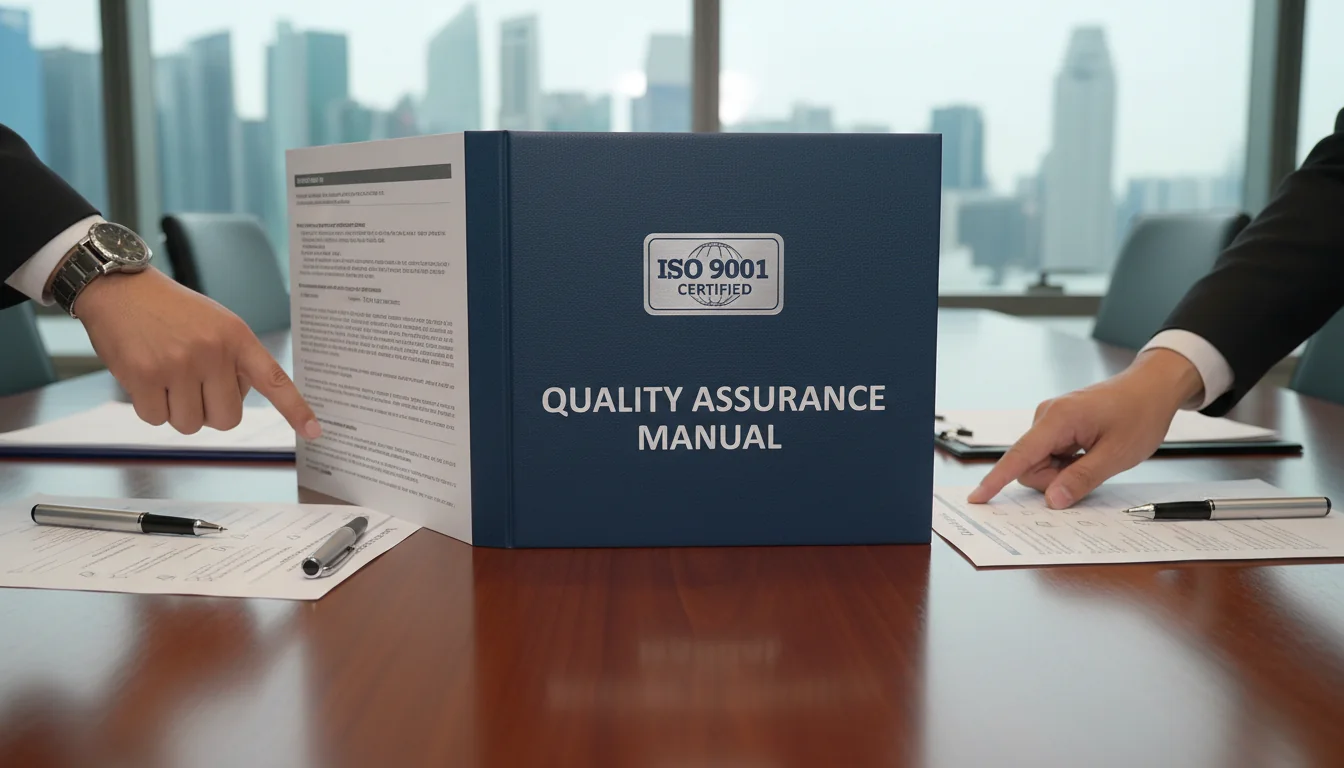
What Are Common Challenges in Meeting These Requirements and How to Overcome Them?
Businesses in Singapore often struggle with resource constraints when adhering to Quality Assurance Manual requirements, as smaller enterprises may lack dedicated staff or expertise to implement rigorous quality controls. This challenge is compounded by the need to balance compliance with daily operations, potentially leading to overlooked audits or inconsistent processes.
Evolving regulations from bodies like the Singapore Standards Council further complicate adherence, requiring frequent updates to manuals and training programs that can strain budgets and timelines. For instance, changes in ISO standards demand swift adaptations to maintain certification, risking penalties for non-compliance.
To address these issues, companies can leverage bespoke AI-generated corporate documents using Docaro for customized Quality Assurance Manuals that align precisely with Singapore's regulations. Additionally, partnering with local experts or utilizing free resources from the Singapore Standards eShop can streamline updates and training.
- Conduct regular internal audits to identify gaps early.
- Invest in scalable software for automated compliance tracking.
- Seek guidance from the Enterprise Singapore for funding support on quality initiatives.
"In the fast-paced world of Singapore business, proactive compliance isn't just a checkbox—it's the key to swiftly overcoming quality assurance hurdles and driving sustainable success. I recommend leveraging bespoke AI-generated corporate documents through Docaro to ensure your strategies are tailored, efficient, and ahead of the curve."
— Lim Wei Shen, CEO of TechNova Singapore
How Should Businesses Maintain and Update Their Quality Assurance Manuals in Singapore?
To ensure ongoing maintenance of your Quality Assurance Manual in Singapore, establish a regular review schedule, such as annually or after major regulatory changes, to align with evolving standards from bodies like the Singapore Standards Council.
Form a dedicated team to monitor updates from authoritative sources, including the Singapore Food Agency for sector-specific compliance, and incorporate feedback from internal audits to refine processes.
For periodic updates, leverage bespoke AI-generated corporate documents from Docaro to customize revisions efficiently while maintaining compliance with Singapore's stringent quality standards; explore advanced tips in Best Practices for Updating Your Quality Assurance Manual in Singapore.