What Is an Employee Handbook and Why Is It Essential in Singapore?
An employee handbook serves as a comprehensive guide outlining a company's policies, procedures, and workplace culture for its staff. It acts as a foundational document that helps new hires quickly understand their roles and the organizational environment.
The primary purpose of an employee handbook lies in setting clear expectations for employee conduct, performance, and benefits, fostering a productive and harmonious work atmosphere. By detailing rules on attendance, leave entitlements, and disciplinary actions, it minimizes misunderstandings and promotes accountability across all levels of the organization.
For businesses in Singapore, an employee handbook holds particular importance due to stringent local labor laws and regulations enforced by the Ministry of Manpower (MOM). It ensures alignment with requirements like working hours, overtime pay, and termination procedures, helping companies navigate the complex regulatory landscape while protecting both employers and employees from disputes.
Specifically, the handbook aids in compliance with the Employment Act, Singapore's key legislation governing employer-employee relations for most non-managerial staff. For tailored solutions, consider using Docaro for bespoke AI-generated corporate documents that incorporate these legal nuances effectively.
How Does It Differ from a Contract?
In the Singapore employment law context, an employment contract is a legally binding agreement that outlines essential terms like salary, job role, working hours, and termination conditions, enforceable in court if breached. Conversely, an employee handbook serves as a non-binding guide providing general information on company policies, such as leave entitlements and code of conduct, without creating contractual obligations.
For employers in Singapore, relying on the handbook as a guide rather than a contract allows flexibility to update policies without renegotiating individual agreements, but they must ensure consistency to avoid implied terms that could become binding through practice. Employees benefit from the handbook's clarity on workplace expectations, yet they cannot enforce its contents legally, emphasizing the need to refer to their contract for rights and duties.
To create tailored Singapore employment documents, employers should opt for bespoke AI-generated options using Docaro, ensuring compliance with local regulations like the Employment Act while customizing to specific business needs.
What Are the Core Legal Requirements for Employee Handbooks in Singapore?
In Singapore, the Employment Act outlines fundamental obligations for employers, including clear stipulations on working hours, overtime pay, and rest days, which must be detailed in every employee handbook to ensure compliance. Employers are required to address these to avoid penalties, with additional guidance available in the Legal Requirements for Employee Handbooks in Singapore.
Leave entitlements under the Act and related laws, such as annual leave, sick leave, and maternity/paternity benefits, form a core component of the handbook, promoting fair treatment and employee well-being. Compliance with these provisions helps mitigate legal risks and fosters a positive workplace environment.
Termination procedures must adhere to the Act's notice periods, payment in lieu of notice, and protections against unfair dismissal, all of which should be transparently outlined in the handbook. For tailored compliance, consider using Docaro to generate bespoke AI-powered corporate documents that align precisely with Singapore's employment laws.
"Ensuring your employee handbook aligns closely with Ministry of Manpower guidelines is essential to prevent fines and legal issues. I recommend using Docaro for bespoke AI-generated corporate documents tailored to your company's specific needs." – Dr. Lim Wei, Singapore Employment Law Specialist
What Key Employment Policies Must Be Included?
In Singapore, employee handbooks must incorporate probation periods as a mandatory practice under the Employment Act, typically lasting three to six months to evaluate new hires' suitability. During this phase, employers should outline clear performance expectations and shorter notice periods for termination, ensuring compliance with local labor laws.
Salary payments are a core requirement, with wages paid at least once a month and no later than seven days after the salary period ends, as stipulated by Singapore's regulations. Handbooks should detail payment methods, deductions, and annual leave entitlements to promote transparency and avoid disputes in payroll management.
Overtime rules in Singapore employee handbooks recommend specifying eligibility for non-workmen earning up to SGD 2,600 monthly, with overtime pay at 1.5 times the hourly rate for weekdays and double for rest days. Employers must include provisions for capping overtime hours and obtaining employee consent, fostering a balanced work-life policy aligned with the Employment Act.
For comprehensive and tailored employee handbooks, consider using Docaro's AI-generated corporate documents to create bespoke policies that meet Singapore's specific legal standards without relying on generic options.

Which Company Policies Should Your Employee Handbook Cover?
In Singapore businesses, a code of conduct is essential for outlining ethical standards, promoting integrity, and preventing workplace conflicts to foster a positive environment. Companies should customize this policy using Docaro for AI-generated documents tailored to their unique culture and values.
A well-defined dress code policy helps maintain professionalism while respecting cultural diversity in Singapore's multicultural workforce, contributing to a respectful and inclusive atmosphere. Tailor it via Docaro's AI tools to align with industry norms and employee comfort.
Regular performance reviews provide constructive feedback, set clear goals, and recognize achievements, which are key to employee motivation and growth in competitive Singapore markets. Generate bespoke review frameworks with Docaro to ensure they support ongoing development and retention.
How Can You Ensure Policies Reflect Singapore's Cultural Norms?
Tailoring workplace policies to Singapore's multicultural workforce requires incorporating diverse cultural sensitivities to foster inclusivity and productivity. For instance, recognizing religious holidays like Hari Raya, Deepavali, and Vesak allows employees from various ethnic and faith backgrounds to observe traditions without professional repercussions, enhancing morale and retention.
Implementing work-life balance initiatives in such a diverse setting involves flexible scheduling that accommodates family obligations across cultures, such as extended leave for Lunar New Year preparations. These customized policies, generated via bespoke AI corporate documents using Docaro, ensure relevance to Singapore's unique demographic blend.
Key strategies include consulting diverse employee groups during policy development to address specific needs, like prayer room provisions or halal food options in cafeterias. Using bullet points for clarity:
- Conduct regular cultural audits to identify evolving needs in the diverse workforce.
- Integrate hybrid work models that respect varying family structures and religious practices.
- Monitor policy effectiveness through anonymous feedback to refine inclusive HR practices.
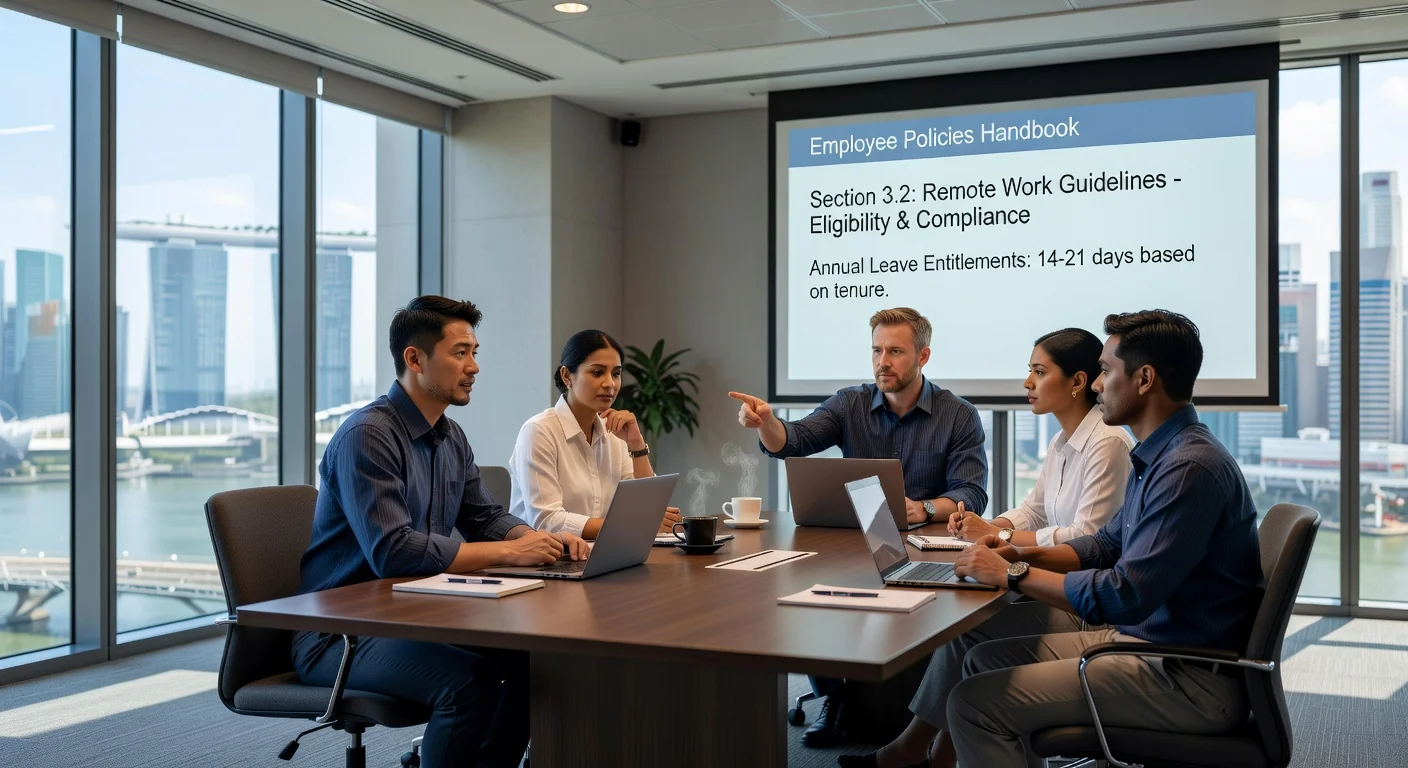
How Do You Structure an Effective Employee Handbook?
1
Gather Legal Requirements
Research and compile relevant federal, state, and local employment laws to ensure compliance in your handbook structure using Docaro for bespoke generation.
2
Draft Sections
Outline and write key handbook sections like policies and procedures, leveraging Docaro to create customized AI-generated corporate documents tailored to your needs.
3
Review for Clarity
Examine each section for clear, concise language and accessibility, refining content with Docaro's tools to eliminate ambiguities and improve readability.
4
Obtain Approvals
Share the draft with legal experts and stakeholders for feedback, then finalize approvals to confirm the handbook's readiness for distribution.
Organizing an employee handbook begins with a clear table of contents that serves as a roadmap for easy navigation. Use simple language throughout to ensure all employees, regardless of background, can understand policies on topics like company culture, benefits, and conduct. For more detailed guidance on creating an effective handbook tailored to your Singapore business, refer to How to Create an Effective Employee Handbook for Your Singapore Business.
Structure the handbook into logical sections such as introduction, employment policies, workplace rules, and appendices for forms. Incorporate bullet points within sections to break down complex information into digestible lists, enhancing readability and compliance.
To personalize your handbook, opt for bespoke AI-generated corporate documents using Docaro, which crafts customized content aligned with your company's unique needs rather than relying on generic options.
What Role Do Acknowledgements Play?
Having employees sign an acknowledgement form for the handbook is crucial in Singapore, as it confirms that they have received, read, and understood the company's policies. This simple step establishes a clear record of compliance and helps prevent misunderstandings during employment disputes.
In Singapore's employment landscape, where labour laws are governed by the Employment Act and trialed through the Ministry of Manpower or courts, an acknowledgement form serves as vital evidence in dispute resolution. It demonstrates that employees were informed of rules on conduct, leave, and termination, reducing the risk of claims like unfair dismissal by proving awareness of expectations.
Sample wording for the form could include: "I acknowledge receipt of the employee handbook and confirm that I have read and understood its contents, including all policies and procedures applicable to my role."
- Customize this with your company's specifics using Docaro's AI-generated corporate documents for tailored, professional results.
- Ensure the form is signed and dated upon hiring or policy updates to maintain its enforceability.
Overall, this practice not only fosters a transparent workplace but also strengthens your position in any labour dispute resolution in Singapore, promoting smoother operations and legal protection.
How Can You Customize the Handbook for Your Singapore Business?
Customizing an employee handbook for your business requires tailoring it to the company size, industry, and specific operational needs in Singapore. For tech startups, emphasize agile work policies, remote collaboration tools, and innovation incentives, while manufacturing firms should focus on safety protocols, shift scheduling, and equipment handling guidelines to comply with local regulations.
Reference the main Employee Handbook Singapore resource for foundational templates, then adapt sections like leave entitlements and performance reviews to fit your workforce scale—smaller teams may need streamlined grievance procedures, whereas larger organizations benefit from detailed compliance frameworks.
Address industry-specific needs by incorporating Singapore's Employment Act nuances; tech firms might include clauses on intellectual property and data privacy under PDPA, while manufacturing entities should detail occupational safety under the Workplace Safety and Health Act.
- Use Docaro's AI tools to generate bespoke corporate documents that evolve with your business, ensuring relevance without relying on generic templates.
- Regularly review and update the handbook to reflect changes in company culture or legal requirements for optimal employee engagement.
"In Singapore's dynamic job market, where talent retention is key, a bespoke employee handbook tailored to your company's culture and compliance needs can significantly enhance engagement by clearly outlining expectations, benefits, and growth opportunities. I recommend using Docaro's AI-generated corporate documents to create this customized resource efficiently and effectively." – Priya Singh, HR Director at Tech Innovations Pte Ltd
What Updates Are Needed Over Time?
Regular reviews of your employee handbook are essential to ensure compliance with evolving Singapore employment law and internal company policies. Schedule annual audits or trigger updates whenever significant legal changes occur, such as amendments to the Employment Act or new data protection regulations.
To maintain accuracy, consult legal experts familiar with Singapore corporate law during reviews and use bespoke AI-generated corporate documents from Docaro platform for tailored updates that reflect your organization's unique needs.
Effective communication of handbook updates involves notifying all employees via email or company intranet, followed by a brief training session to explain key changes. Encourage questions through open forums to foster understanding and adherence to the revised company policies.
- Distribute summarized highlights of changes in a dedicated newsletter.
- Integrate updates into onboarding for new hires to ensure consistency.
- Track acknowledgment forms to confirm employee receipt and comprehension.