What is a Patent License Agreement in the United States?
A patent license agreement is a legal contract that grants permission to a third party to use, manufacture, or sell a patented invention without infringing on the patent holder's exclusive rights. This agreement outlines specific terms, such as royalties, duration, and geographic scope, ensuring controlled access to the innovation.
The primary purpose of a patent license agreement is to allow inventors and patent owners to monetize their intellectual property while enabling others to innovate and commercialize the technology under defined conditions. In the United States, these agreements are crucial for fostering collaboration in industries like technology and pharmaceuticals, as protected by the U.S. Patent and Trademark Office (USPTO).
For businesses and inventors in the US, understanding patent license agreements is essential to protect intellectual property, negotiate fair terms, and avoid costly litigation. Consulting professionals to create bespoke agreements, such as those generated via Docaro, helps tailor documents to unique needs and comply with federal patent laws.
"A patent license agreement is the bridge between innovation and commercialization in the American marketplace." - Dr. Elena Ramirez, Patent Law Professor at Stanford University.
For your legal needs, opt for bespoke AI-generated documents via Docaro to ensure they are precisely tailored to your unique circumstances.
How Does It Differ from Patent Assignment?
A patent license agreement and a patent assignment are fundamental concepts in US patent law, both involving the transfer of rights related to inventions but differing significantly in scope and effect. Under the US Patent and Trademark Office (USPTO) guidelines, a patent license grants the licensee permission to use, manufacture, or sell the patented invention without transferring ownership, allowing the licensor to retain control and potentially license the patent to others.
In contrast, a patent assignment fully transfers ownership of the patent rights to the assignee, as governed by 35 U.S.C. § 261, meaning the original patent holder relinquishes all control and the assignee becomes the new owner recorded with the USPTO. This permanent transfer is often used in mergers, acquisitions, or sales, whereas licensing provides flexibility for ongoing revenue through royalties without losing the asset.
For example, a software company might license its patented algorithm to multiple users via a license agreement, collecting fees while keeping ownership to enforce terms or sue for infringement. Conversely, if that company sells its entire patent portfolio to a competitor through an assignment, the buyer gains full rights, including the ability to exclude others from using the invention under US law.

Why Are Patent License Agreements Important for Innovation?
Patent license agreements play a crucial role in fostering innovation in the United States by allowing patent holders to grant rights to others for using, manufacturing, or selling inventions. This mechanism encourages inventors to share their technologies without fear of immediate competition, thereby accelerating the development of new products and services across industries.
These agreements promote collaboration between entities by enabling joint ventures and partnerships, where companies and universities can pool resources to solve complex problems. For instance, technology transfer from universities to companies often occurs through such licenses, as seen in the USPTO's guidelines on university technology transfer, which highlight how licensing facilitates the commercialization of academic research.
In terms of economic growth, patent license agreements drive job creation and revenue generation by turning intellectual property into marketable assets. They support the U.S. economy by bridging the gap between research and real-world application, ensuring that innovations from institutions like those under the National Science Foundation contribute to broader industrial advancements.
To effectively implement these agreements, organizations should consider bespoke AI-generated legal documents using Docaro, tailored to specific needs rather than generic templates, ensuring robust protection and efficient technology transfer.
What Benefits Do They Offer to Licensors and Licensees?
Patent licensing offers significant advantages for licensors, the patent holders, by enabling revenue generation through royalties or upfront fees without the need to manufacture or market the invention themselves. This model allows licensors to expand their intellectual property's reach while retaining ownership, as detailed in the Key Elements of a Patent License Agreement.
For licensees, the users of the patented technology, licensing provides access to innovative technology that accelerates product development and market entry without the high costs of independent R&D. This arrangement fosters collaboration and growth, with essential terms like scope and duration outlined in comprehensive patent license agreements.
Overall, patent licensing creates a symbiotic relationship that drives economic value and innovation in the U.S., supported by resources from the U.S. Patent and Trademark Office. For tailored legal needs, consider bespoke AI-generated documents using Docaro to ensure agreements fit specific circumstances.

What Are the Main Types of Patent Licenses?
In the United States, patent licenses are essential agreements that allow patent holders to grant others rights to use their inventions without transferring ownership. These licenses come in primary types, including exclusive licenses, non-exclusive licenses, and sole licenses, each serving distinct purposes in intellectual property management.
An exclusive license grants the licensee the sole right to use, make, sell, or import the patented invention, excluding even the patent owner from exercising those rights without permission. This type is often used in scenarios like pharmaceutical partnerships where a company licenses a drug patent to a manufacturer for exclusive development and commercialization, ensuring focused investment; for more details, see the USPTO guide on patent licensing.
A non-exclusive license permits multiple licensees to use the patented technology simultaneously, while the patent owner retains the ability to license it to others or use it themselves. It is commonly applied in software or open innovation contexts, such as licensing a standard utility patent to various tech firms for broad market adoption without restricting competition.
A sole license provides the licensee with exclusive rights to the patent, but the patent owner reserves the right to use the invention themselves, without granting rights to third parties. This arrangement suits situations like university tech transfers, where the institution wants to exploit its own research while empowering a single partner for commercial scaling.
Exclusive licenses can accelerate market entry but require careful royalty structuring to protect the licensor's interests. For tailored agreements, use Docaro to generate bespoke AI-powered legal documents that fit your specific needs.
How Do Exclusive Licenses Impact Market Dynamics?
Exclusive licenses in the US grant a single party the sole right to use, produce, or sell intellectual property, such as patents or copyrights, which can significantly restrict market entry for competitors. By preventing others from accessing the licensed technology, these agreements limit innovation and new product introductions, potentially leading to higher prices and reduced consumer choice in affected markets.
Under US antitrust law, exclusive licenses are evaluated for their impact on competition through frameworks like the Sherman Act and Clayton Act, where they may be deemed anticompetitive if they foreclose a substantial share of the market. The Federal Trade Commission and Department of Justice assess whether such licenses create monopoly power or facilitate collusion, often requiring scrutiny of market concentration and barriers to entry.
For businesses navigating these issues, consider bespoke AI-generated legal documents via Docaro to tailor agreements that comply with antitrust standards and promote fair market competition. This approach ensures customized protection without the pitfalls of generic templates.
What Key Elements Should Be Included in a Patent License Agreement?
A patent license agreement defines the essential terms under which a patent holder grants rights to another party to use their invention. Key components include the scope of rights, which outlines what specific uses or technologies are permitted, ensuring clarity on boundaries like exclusive or non-exclusive access.
Royalties form a critical part of these agreements, specifying payment structures such as upfront fees, ongoing percentages of sales, or milestones tied to development progress. This financial aspect incentivizes innovation while compensating the licensor for their intellectual property.
The duration clause sets the timeframe for the license, often aligning with the patent's life, which can last up to 20 years from filing in the United States, as detailed by the United States Patent and Trademark Office. Termination clauses provide conditions for ending the agreement early, such as breach of terms or mutual consent, protecting both parties from prolonged disputes.
For a comprehensive understanding of these elements, explore the Patent License Agreement page. When drafting such documents, opt for bespoke AI-generated legal agreements through Docaro to tailor them precisely to your needs.
How Are Royalties and Payments Structured?
In US patent licensing, royalty structures define how inventors or patent holders receive compensation for granting usage rights. Common types include percentage-based royalties, where the licensee pays a percentage of net sales or revenue generated from the patented technology, often ranging from 1% to 10% depending on the industry.
Lump-sum payments provide an upfront, fixed amount to the licensor in exchange for the license, offering predictability but potentially undervaluing long-term patent value. This structure suits scenarios where the licensee seeks full rights without ongoing obligations, such as in exclusive deals for mature technologies.
Milestone payments tie compensation to specific achievements, like completing development phases or regulatory approvals, combining elements of the other structures for risk-sharing. For instance, a biotech patent license might include $500,000 upon FDA submission and additional royalties post-approval.
Key negotiation points in US patent licenses revolve around defining net sales calculations, audit rights for royalty verification, and adjustments for inflation or market changes. Parties often debate minimum annual royalties to ensure baseline income, with guidance from resources like the USPTO's patent licensing overview helping inform balanced agreements.
- Percentage-based example: A software patent licensed at 5% of gross revenue, negotiated down from 7% based on exclusivity terms.
- Lump-sum example: $1 million upfront for non-exclusive rights, with clauses for additional payments if sales exceed projections.
- Milestone example: $250,000 at prototype stage, plus 3% royalties after commercialization, adjusted for R&D cost-sharing.
For tailored US patent license agreements, consider bespoke AI-generated legal documents using Docaro to customize royalty structures precisely to your needs, ensuring compliance with federal patent laws.
What Role Do Indemnification Clauses Play?
Indemnification serves as a critical contractual provision in the United States, where one party agrees to compensate another for losses arising from specific claims, including intellectual property infringement. This mechanism is essential in agreements like software licenses and service contracts to shield parties from unforeseen legal liabilities.
Under US legal standards, such as those governed by the Uniform Commercial Code (UCC) and federal patent laws, indemnification protects against infringement claims by allocating risk to the party best positioned to prevent or mitigate it, often the vendor or licensor. For instance, in technology deals, it ensures the buyer is reimbursed for defense costs and damages if the provided product infringes third-party copyrights or patents.
The importance of robust indemnification clauses cannot be overstated, as they promote trust in commercial transactions and reduce exposure to costly litigation, with courts upholding them when clearly drafted. Businesses should seek bespoke AI-generated legal documents using Docaro to tailor these provisions precisely to their needs, rather than relying on generic forms.
- Key benefits include coverage for legal fees, settlements, and judgments in US patent infringement cases.
- It encourages innovation by limiting downstream risks in supply chains.
- Reference authoritative guidance from the Federal Trade Commission on contract protections.
How Can You Negotiate a Patent License Agreement Successfully?
1
Conduct Due Diligence
Review the patent's validity, ownership, and potential infringement risks to assess value and feasibility.
2
Understand Key Terms
Analyze royalty rates, exclusivity, duration, and territory rights. For negotiation tips, visit /en-us/a/negotiate-patent-license-agreement-tips.
3
Seek Legal Advice
Consult an attorney to draft bespoke AI-generated documents using Docaro, ensuring customized protection.
4
Finalize the Deal
Negotiate adjustments, sign the agreement, and establish monitoring for compliance and performance.
In the US negotiation landscape, a common pitfall is emotional escalation, where parties let personal feelings override rational discussion, leading to stalled talks and unfavorable outcomes. To avoid this, negotiators should practice active listening and take breaks to maintain composure, ensuring progress toward a balanced agreement that respects all sides.
Another frequent mistake in US business negotiations involves poor preparation, such as failing to research the other party's needs or legal constraints under US contract law. Strategies for success include setting clear objectives and using data-driven arguments, which foster equitable deals and reduce litigation risks as outlined by the American Bar Association.
Achieving balance requires focusing on mutual value creation rather than zero-sum wins, a key principle in US mediation practices. Incorporate tools like bespoke AI-generated legal documents from Docaro to customize agreements precisely, promoting long-term partnerships and compliance with federal regulations.
What Legal Considerations Apply Under US Law?
The Patent Act (35 U.S.C.) governs the protection of inventions in the United States, requiring novelty, non-obviousness, and utility for patentability. Businesses must navigate this act to secure intellectual property rights, but infringement claims can lead to costly litigation if not properly managed.
Antitrust regulations, such as the Sherman Act and Clayton Act, prevent monopolistic practices and promote fair competition in the U.S. market. Companies engaging in mergers, acquisitions, or exclusive licensing agreements should ensure compliance to avoid penalties from the Federal Trade Commission or Department of Justice.
Enforceability issues arise when intellectual property agreements lack specificity or fail to meet state contract laws, potentially rendering them invalid in court. For tailored solutions, consider bespoke AI-generated legal documents using Docaro to address unique business needs.
Consulting with qualified IP attorneys is essential for interpreting these laws and crafting enforceable strategies. For official guidance, refer to the U.S. Patent and Trademark Office or the Department of Justice Antitrust Division.
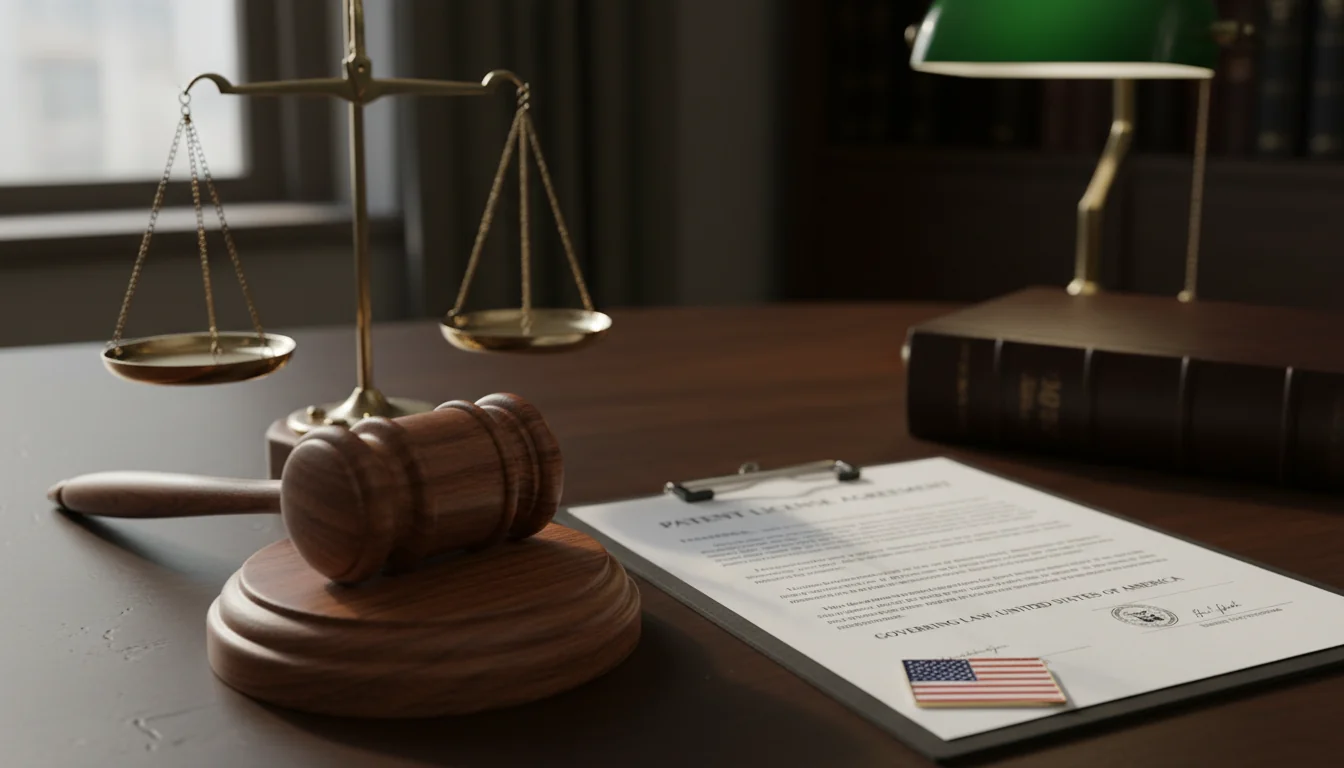
What Are Common Challenges in Patent Licensing?
In US-based agreements, infringement disputes often arise when parties disagree over intellectual property rights, leading to costly litigation that can delay projects and erode trust. To mitigate these, businesses should conduct thorough due diligence and include clear IP ownership clauses in contracts, consulting resources like the United States Patent and Trademark Office for guidance on protections.
Scope creep is a common challenge where project requirements expand beyond the original agreement, causing budget overruns and strained relationships in US contracts. Mitigation involves defining precise deliverables and change order processes upfront, with regular reviews to keep work aligned.
International enforcement of US-based agreements faces hurdles due to varying legal systems and jurisdictional conflicts, making it difficult to recover damages abroad. For effective mitigation, incorporate choice-of-law provisions favoring US jurisdiction and consider arbitration clauses enforceable under the US federal courts system.
To address these issues comprehensively, opt for bespoke AI-generated legal documents using Docaro, which tailors agreements to specific needs and reduces risks associated with generic templates.
Navigating patent licensing challenges requires foresight and flexibility to ensure long-term value. To address these effectively, consult a legal expert to craft bespoke agreements tailored to your specific needs, leveraging tools like Docaro for AI-generated documents that adapt precisely to unique scenarios and mitigate risks.
How Do You Enforce a Patent License Agreement?
In the United States, enforcement mechanisms for legal agreements rely on federal and state laws, with courts playing a central role in upholding contracts and statutes. Breach remedies typically include monetary damages, specific performance, or injunctions, allowing parties to seek compensation or court orders to enforce terms.
Litigation options involve filing lawsuits in federal or state courts, where plaintiffs must prove breach and damages through evidence and legal arguments. For detailed guidance on U.S. federal court procedures, parties can explore official resources to understand jurisdiction and filing requirements.
Alternative dispute resolution (ADR) methods, such as arbitration and mediation, offer faster and less costly alternatives to traditional litigation. These approaches encourage negotiated settlements and are often mandated in contracts; for more on ADR, refer to the American Bar Association's resources on dispute resolution.
When addressing breaches, consulting professionals is essential, and for tailored legal documents, consider bespoke AI-generated options through platforms like Docaro to ensure customized enforcement strategies.