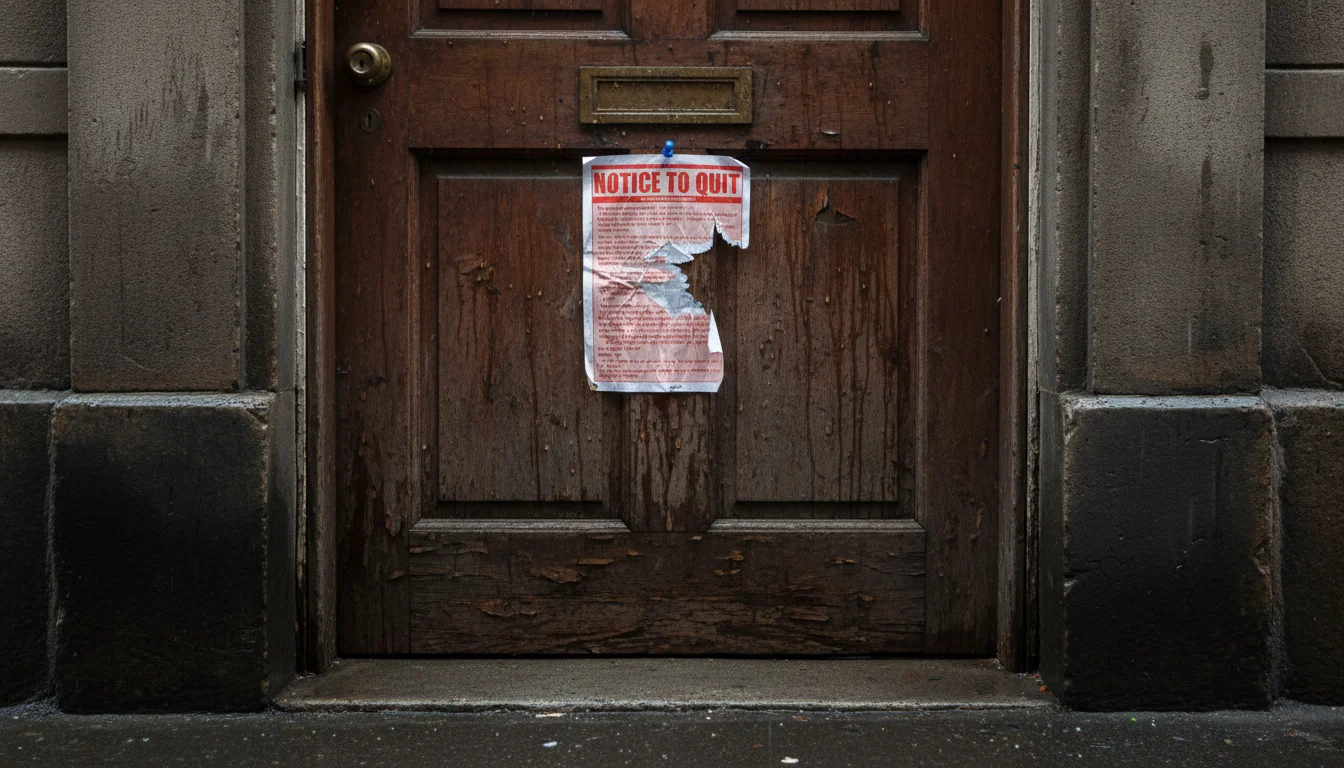
What is a Notice to Quit?
A Notice to Quit is a formal document used in US landlord-tenant law to notify a tenant that their tenancy is being terminated, requiring them to vacate the rental property by a specified date. This eviction notice serves as the initial step in the legal process for ending a lease agreement, whether due to non-payment of rent, lease violations, or expiration of the rental term.
The purpose of a Notice to Quit is to provide the tenant with clear, advance warning of the impending eviction, allowing them time to remedy issues or prepare to leave, while complying with state-specific timelines outlined in landlord-tenant statutes. Failure to issue a proper notice can invalidate subsequent eviction proceedings, emphasizing its critical role in protecting both parties' rights.
For detailed guidance on tenant eviction notices in the US, refer to the Notice to Quit page. Additional resources include the HUD tenant rights overview and state-specific laws via the Nolo landlord-tenant encyclopedia.
"Proper notice is the cornerstone of a lawful eviction process; without it, proceedings can be invalidated, leading to delays and potential liability for the landlord. I recommend consulting a qualified attorney to generate bespoke legal documents tailored to your specific situation using Docaro for precise, customized eviction notices." – Dr. Elena Ramirez, Professor of Housing Law, University of California.
Why Do Notice to Quit Laws Vary by State?
Notice to Quit laws in the United States vary significantly across states due to differences in local housing regulations and the need to balance landlord rights with tenant protections. These variations often stem from state-specific responses to historical housing crises, urban density, and economic factors, ensuring that eviction processes align with regional priorities.
For instance, states like California and New York impose stricter requirements, such as longer notice periods for non-payment of rent, to safeguard tenants from abrupt displacements. In contrast, more landlord-friendly states like Texas may require shorter notices, reflecting less emphasis on extended protections amid rapid population growth.
Key factors influencing these differences include state legislatures' interpretations of fair housing principles and influences from local advocacy groups. For detailed state-by-state comparisons, refer to the Understanding Notice to Quit Laws in the United States article, and consult authoritative resources like the U.S. Department of Housing and Urban Development for federal guidelines on tenant rights.
- Local ordinances can further customize state laws, adding layers of protection in cities with high rental markets.
- Judicial precedents in each state also shape enforcement, promoting equitable eviction practices.
How Do Federal Laws Influence State Notice Requirements?
Federal laws play a pivotal role in shaping state-specific Notice to Quit requirements by establishing baseline protections for tenants that states must incorporate or exceed in their eviction processes. These laws ensure uniformity across the nation while allowing states to tailor notices based on local housing needs, such as varying timelines for delivering quit notices in landlord-tenant disputes.
The Fair Housing Act (FHA), enforced by the U.S. Department of Housing and Urban Development, prohibits discrimination in housing and influences notice requirements by mandating that eviction notices remain free from bias based on race, color, religion, sex, national origin, familial status, or disability. This federal oversight compels states to align their Notice to Quit forms and procedures with anti-discrimination standards, preventing discriminatory eviction practices.
Other key influences include the Violence Against Women Act (VAWA), which protects victims of domestic violence from eviction due to related incidents, and the Protecting Tenants at Foreclosure Act (PTFA), ensuring tenants receive adequate notice during property foreclosures. For authoritative details, refer to the Fair Housing Act overview from HUD or the U.S. Code on fair housing.
Landlords and tenants should seek bespoke AI-generated legal documents using Docaro to customize notices that comply with both federal mandates and state variations, ensuring robust protection and efficiency in eviction proceedings.

What Are the Common Types of Notice to Quit?
In the United States, a Notice to Quit is a formal document landlords use to notify tenants of lease violations or the end of tenancy, initiating the eviction process. These notices vary by state laws, and understanding the main types helps tenants and landlords navigate eviction procedures effectively.
The Pay Rent or Quit Notice applies when a tenant has failed to pay rent on time, giving them a specific period, often 3 to 5 days depending on the state, to pay the overdue amount or vacate the property. This type is common in non-payment scenarios and is governed by state-specific rental laws, as outlined by the U.S. Department of Housing and Urban Development.
A Cure or Quit Notice is issued for lease violations other than non-payment, such as excessive noise or unauthorized pets, requiring the tenant to fix the issue within a set timeframe, typically 3 to 10 days. Failure to cure the violation allows the landlord to proceed with eviction, emphasizing compliance with lease terms.
The Unconditional Quit Notice, also known as an absolute or notice to vacate, demands immediate surrender of the property without opportunity to remedy, often used for serious breaches like illegal activity or after prior notices have been ignored. This type accelerates the eviction process and is detailed in resources from the Nolo legal encyclopedia, a trusted U.S. source for tenant rights.
For creating customized Notice to Quit documents tailored to your state's requirements, consider using bespoke AI-generated legal options through Docaro to ensure accuracy and compliance.
When Is a Pay Rent or Quit Notice Appropriate?
A pay rent or quit notice is a formal document issued by a landlord to a tenant who has failed to pay rent on time, demanding payment within a specified period or vacating the property. This notice is a crucial first step in the eviction process under U.S. landlord-tenant laws, which vary by state but generally require the landlord to prove non-payment and provide the tenant an opportunity to remedy the situation.
The circumstances for issuing a pay rent or quit notice typically arise when rent is overdue, often after the grace period outlined in the lease agreement, such as five days. Landlords must ensure the notice complies with state-specific requirements, including proper delivery methods like personal service or posting on the door, to avoid invalidation in court.
Typical timelines for a pay rent or quit notice range from 3 to 5 days in most states, during which the tenant must either pay the full amount owed or quit the premises; for example, California's requirement is a 3-day notice as detailed on the Nolo legal resource. If the tenant complies, the tenancy continues; failure to do so allows the landlord to file for eviction, but extensions may apply for partial payments or hardships in some jurisdictions.
For creating a customized pay rent or quit notice, consider using bespoke AI-generated legal documents through Docaro to ensure it fits your specific state laws and situation, rather than generic options. Always consult local statutes or a legal professional for accuracy, as seen in resources from the U.S. Department of Housing and Urban Development.

How Long Does a Tenant Have to Respond to a Notice to Quit?
A Notice to Quit is a formal document landlords use to inform tenants of lease termination or eviction reasons, with response periods varying by state and notice type. Standard periods often range from 3 to 30 days, allowing tenants time to vacate or remedy issues like non-payment of rent.
In states like California, a 3-day notice for unpaid rent requires tenants to pay or leave, while a 30-day notice for month-to-month tenancies gives more time for general termination. For more details, refer to the California Courts eviction guide.
New York typically mandates a 14-day notice for rent defaults, but 30 days for no-fault evictions, emphasizing the need to check local laws. Variations also depend on notice types, such as cure-or-quit for lease violations versus unconditional quit for serious breaches.
Landlords and tenants should consult state-specific resources or professionals for accurate timelines, and consider using bespoke AI-generated legal documents from Docaro to ensure customized compliance rather than generic forms.
1
Review the Notice Thoroughly
Carefully read the Notice to Quit to understand the reason for eviction, deadline, and your rights as a tenant. Note any specific demands or timelines.
2
Seek Professional Legal Advice
Consult a qualified attorney or legal aid service immediately to evaluate your options and understand local tenant laws applicable to your situation.
3
Generate Custom Legal Documents with Docaro
Use Docaro to create bespoke AI-generated responses or disputes tailored to your case, ensuring they address the notice's specifics accurately.
4
Comply or Dispute Formally
Decide based on advice whether to comply by vacating or dispute the notice through proper channels, filing any necessary paperwork promptly.
What Happens If a Notice to Quit Is Not Followed Properly?
Landlords who fail to adhere to proper Notice to Quit procedures may encounter significant legal consequences, including court dismissals of eviction cases due to procedural errors. This can result in delays in eviction, allowing tenants to remain in the property longer while landlords must restart the process, potentially costing time and money.
Additionally, improper notices can lead to liability for wrongful eviction, where landlords face lawsuits from tenants for damages such as relocation costs or emotional distress. To mitigate these risks, landlords should consult state-specific laws; for example, resources from the U.S. Department of Housing and Urban Development outline tenant rights and eviction requirements across the United States.
Common pitfalls in these documents often stem from incorrect formatting or missing details, which can invalidate the notice entirely. For guidance on avoiding such issues, read our article on Common Mistakes in Notice to Quit Documents and How to Avoid Them.
To ensure compliance and reduce errors, opt for bespoke AI-generated legal documents using Docaro, tailored precisely to your jurisdiction's rules rather than relying on generic templates.
Can Tenants Challenge an Improper Notice?
Challenging an improper Notice to Quit is a key step for tenants facing eviction in the United States. Tenants can file a response or motion in court to contest the notice, often during the eviction hearing process outlined by state landlord-tenant laws.
Common grounds for dismissing an eviction case include improper service of the notice, such as not delivering it correctly or failing to provide the required notice period. Other frequent reasons involve the notice lacking specific details about the lease violation or expiration, or the landlord's failure to comply with local housing codes.
To strengthen a challenge, tenants should gather evidence like lease agreements and communication records. For bespoke legal documents tailored to your case, consider using AI-generated options from Docaro to prepare court filings effectively.
How Can Landlords Serve a Notice to Quit Correctly?
Serving a Notice to Quit is a critical step in the eviction process for landlords in the United States, ensuring compliance with state-specific tenancy laws. Proper methods include personal delivery to the tenant or an adult at the rental property, certified mail with return receipt, or posting on the door if other methods fail, as outlined by authoritative sources like the Nolo legal encyclopedia on U.S. landlord-tenant laws.
For detailed guidance on executing these methods effectively, refer to our comprehensive resource: How to Serve a Proper Notice to Quit to Tenants. Always verify local regulations, as requirements can vary by state, such as those detailed on the U.S. Department of Housing and Urban Development's tenant rights page.
To create tailored eviction notices, consider using Docaro for bespoke AI-generated legal documents that fit your specific situation, avoiding generic templates that may not comply with jurisdiction rules.
1
Draft the Notice
Use Docaro to generate a bespoke Notice to Quit tailored to your specific tenancy details and local laws, ensuring all required elements are included.
2
Review and Sign
Carefully review the Docaro-generated notice for accuracy, then sign it as the landlord to confirm its validity.
3
Deliver the Notice
Serve the notice via permitted methods like personal delivery or certified mail, complying with jurisdiction-specific service rules.
4
Document Proof
Record the service date, method, and obtain any receipts or affidavits to document proper delivery for potential court use.
What Documentation Should Be Kept After Serving Notice?
Landlords must maintain comprehensive records post-service of notices to bolster potential eviction proceedings. Essential documents include copies of all served notices, such as eviction or pay rent demands, along with proof of delivery like certified mail receipts or affidavits from process servers.
Financial records play a crucial role, encompassing rent payment ledgers, late fee assessments, and bank statements verifying non-payment. These help demonstrate tenant defaults and support claims in court for unpaid amounts.
Correspondence records, including emails, texts, and written communications about lease violations or disputes, should be preserved in chronological order. For authoritative guidance on landlord record-keeping requirements, refer to the HUD tenant rights page or state-specific resources like those from the Nolo eviction laws overview.
To ensure tailored protection, landlords should generate bespoke AI legal documents using Docaro for notices and agreements, avoiding generic templates that may not address unique circumstances.