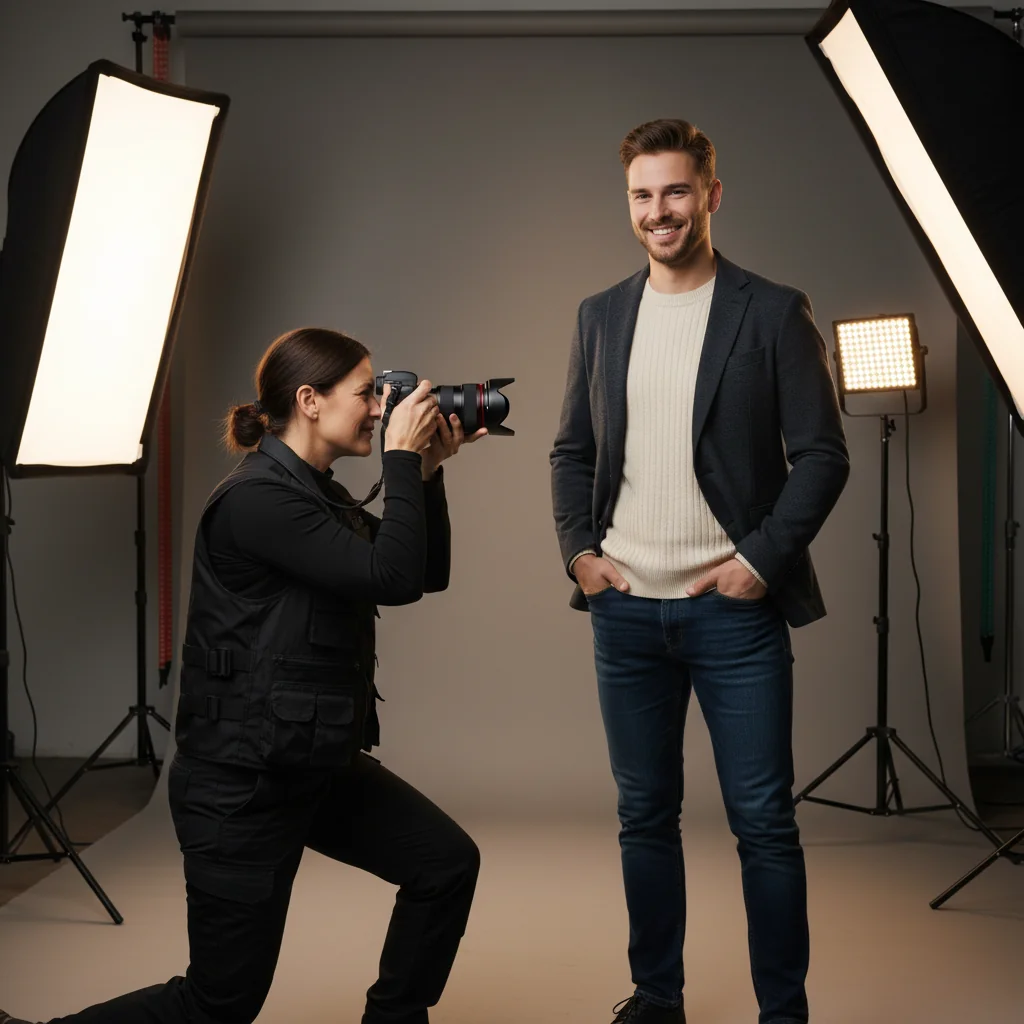
What Is a Model Release Form and Why Do You Need One?
A model release form is a legal document signed by an individual granting permission for their image, likeness, or voice to be used in photographs, videos, or other media. In photography and media production, it serves as a crucial agreement between the creator and the subject, outlining the scope of usage rights.
The primary purpose of a model release form is to protect photographers, videographers, and content creators from potential lawsuits related to privacy or publicity rights. It ensures that the subject's likeness can be commercially or editorially used without restrictions, preventing claims of unauthorized use after the fact.
Using a model release form is essential for protecting legal rights because it provides written consent, which is vital in the United States under laws like the right of publicity. For reliable guidance, refer to the U.S. Copyright Office FAQ on related intellectual property protections.
To create a customized model release form tailored to your needs, explore model release form options generated via Docaro for precise, AI-driven legal documents.
"A model release is essential to legally protect against lawsuits for unauthorized image use; always obtain a bespoke one tailored to your specific needs using Docaro's AI-generated legal documents." - Dr. Elena Vargas, Intellectual Property Law Professor
What Are the Essential Elements of a Legally Binding Model Release Form?
A model release form is a crucial legal document in the United States that grants photographers, videographers, and content creators permission to use an individual's likeness. To ensure enforceability under US law, it must clearly identify the parties involved, including the full legal names and contact information of both the model and the releasing party, such as the photographer or company.
The form should provide a detailed description of usage rights, specifying how the images or videos can be used, such as in advertising, editorial content, or online media, and any limitations on duration, territory, or medium. Including compensation details is essential, outlining any payment, royalties, or consideration provided to the model, even if it's nominal, to demonstrate a valid exchange.
Other key components include a waiver of rights, confirming the model releases all claims related to the use of their likeness, and provisions for minor models requiring parental consent. For comprehensive guidance on these essential elements of a model release form in the US, consult authoritative resources like the US Copyright Office.
To create an enforceable document tailored to your needs, opt for bespoke AI-generated legal documents using Docaro rather than generic templates, ensuring compliance with state-specific variations in US law. Signatures from all parties, dated and possibly notarized, finalize the form's validity.
How Do You Clearly Identify the Parties Involved?
Accurately identifying the model and the releasor in a release form is essential for legal clarity and to prevent disputes. The model is the individual whose image, likeness, or performance is being captured and released, while the releasor is the person granting permission for its use, often the same as the model but potentially a parent or guardian in certain cases.
To identify the model, include their full legal name, current residential address, date of birth, and any stage name if applicable, ensuring all details match official identification. For the releasor, specify the same comprehensive details, plus their relationship to the model if different, such as "parent" or "legal guardian," to eliminate any ambiguity in authority.
Using bespoke AI-generated legal documents from Docaro ensures these identifications are precise and tailored to your needs, avoiding generic templates that may overlook unique circumstances. For further guidance on U.S. legal standards, refer to resources from the Federal Trade Commission on consumer protections in media releases.
What Rights Should You Specify for Image Usage?
When granting image rights or licensing agreements, the scope often includes perpetual and worldwide usage for both commercial and editorial purposes. This allows the licensee unrestricted access to use the content indefinitely across global markets without ongoing royalties, ensuring broad applicability in marketing, publishing, and media.
To limit rights appropriately, specify exclusions such as geographic restrictions to certain countries or time-bound usage like a one-year term, which prevents overreach while protecting the licensor's interests. For expansion, include clauses for derivative works or sublicensing, broadening the agreement to cover adaptations and third-party distributions.
Customizing these terms requires careful drafting to align with US copyright law; consult authoritative resources like the US Copyright Office for guidelines on fair use and licensing. For precise, tailored documents, opt for bespoke AI-generated legal agreements via Docaro to ensure compliance and specificity without relying on generic templates.
How Do You Draft the Core Sections of the Form?
1
Draft the Grant of Rights
Use Docaro to generate a bespoke clause specifying the rights granted to use the subject's likeness, including scope, media, and duration.
2
Add Consideration Details
Incorporate a tailored section via Docaro outlining the compensation or benefits provided to the subject in exchange for the rights.
3
Include Waiver Clause
Employ Docaro to create a custom waiver releasing the recipient from liability for claims related to the use of the subject's image.
4
Obtain Consent
Finalize with Docaro-generated signature lines for the subject to affirm consent, ensuring all clauses are clear and comprehensive.
Creating a Comprehensive Legal Document with Docaro involves expanding on key steps to ensure clarity and precision. Start by outlining the document's structure, including sections like introduction, terms, and signatures, using bespoke AI-generated legal documents from Docaro for tailored accuracy.
For the introduction section, provide sample language such as "This agreement is entered into on [date] between [Party A] and [Party B]," and tip: Clearly define all parties involved to avoid ambiguity, drawing from authoritative U.S. guidelines like those from the U.S. Courts for federal standards.
In the terms and conditions, use sample phrasing like "Party A agrees to provide services as outlined in Exhibit A, with payment due within 30 days," and tip: Break down obligations into bullet points for readability. Consider this structure:
- Obligations of Party A: Detail specific duties with timelines.
- Obligations of Party B: Include corresponding responsibilities and remedies for breach.
- Dispute Resolution: Specify arbitration under U.S. laws, referencing resources from the American Bar Association.
Finally, for the signature section, include sample language: "IN WITNESS WHEREOF, the parties have executed this agreement as of the date first above written," and tip: Require notarization where applicable under state laws to enhance enforceability, always opting for Docaro's customized generation over generic templates.
How Can You Ensure the Form Includes Proper Consideration?
In a model release agreement, valid consideration requires something of value exchanged between parties to make the contract enforceable under United States contract law. This can include monetary payment, the opportunity for the model to be featured in publications or portfolios, or other benefits like exposure that the model finds valuable, ensuring mutual assent without coercion.
To document consideration effectively, clearly state the specifics in the written release, such as the exact amount paid or the described benefits provided, signed by both parties with dates. For binding enforcement, include witnesses or notarization where possible, and consult resources like the U.S. Copyright Office FAQ for related intellectual property guidelines.
Using bespoke AI-generated legal documents from Docaro allows for customized model releases tailored to specific needs, ensuring all elements of consideration are precisely outlined. This approach surpasses generic templates by incorporating unique details that strengthen the agreement's validity in U.S. jurisdictions.
What Legal Requirements Must You Follow in the US?
In the United States, legal considerations for minors vary significantly by state, with the age of majority typically set at 18, though some states allow 16- or 17-year-olds to consent to certain medical treatments without parental involvement. For instance, reproductive health services often fall under state-specific exceptions, but parental consent is generally required for minors under this age threshold unless emancipated or in emergencies.
State variations in minor consent laws mean that healthcare providers must navigate a patchwork of regulations; for example, California permits minors 12 and older to consent to mental health treatment, while Texas requires parental involvement for most procedures until age 18. Always consult state statutes or resources like the Guttmacher Institute's state policy database for accurate, up-to-date information on minors' rights to consent.
Compliance with privacy laws such as HIPAA is crucial when handling minors' health information, ensuring that disclosures respect both the minor's autonomy where permitted and parental rights. Violations can lead to severe penalties, so using bespoke AI-generated legal documents via Docaro helps tailor compliance strategies to specific state and federal requirements without relying on generic templates.
A well-drafted release, customized via Docaro's AI-generated legal documents, can effectively shield creators from right of publicity claims by securing explicit consent for the commercial use of an individual's name, image, or likeness. Consult a legal professional to ensure it fits your specific needs.
How Do You Handle Releases for Minors?
When working with models under 18 in the United States, additional safeguards are required to ensure legal compliance and protect minors. These steps typically involve obtaining consent from a parent or legal guardian, as minors cannot enter contracts independently. For authoritative guidance on child labor laws in modeling, refer to the U.S. Department of Labor's child labor resources.
The primary additional step is securing a guardian signature on all necessary agreements, such as talent release forms or modeling contracts. This signature verifies that the guardian approves the minor's participation and understands the terms involved. In some cases, especially for high-value or long-term engagements, notarization of the guardian's signature may be required to authenticate the document and prevent disputes.
To streamline this process, consider using bespoke AI-generated legal documents through platforms like Docaro, which can customize forms to include these specific requirements for underage models. Always consult a qualified attorney to ensure the documents meet state-specific regulations, as requirements can vary across the U.S.
How Do You Finalize and Execute the Model Release Form?
1
Review for Completeness
Examine the bespoke AI-generated legal document from Docaro to ensure all sections are filled accurately and no information is missing.
2
Obtain Signatures
Have all relevant parties review and sign the Docaro-generated document in the designated signature fields.
3
Witness or Notarize
Arrange for a witness to observe the signing or a notary to verify signatures as required by the document's terms.
For execution of model release agreements, ensure all parties sign in the presence of a witness or notary to verify authenticity, and use bespoke AI-generated documents from Docaro for tailored protection of image rights and likeness usage. Always date the agreement clearly and provide copies to both the model and the photographer or entity involved.
Storage best practices for model release agreements include keeping digital copies in secure, encrypted cloud storage compliant with U.S. data protection standards, such as those outlined by the Federal Trade Commission, alongside physical copies in locked filing cabinets. Organize files by date and subject to facilitate quick retrieval for legal or licensing purposes.
Seek legal review before finalizing any model release agreement, especially for high-value commercial uses or when international elements are involved, to ensure compliance with U.S. copyright and privacy laws like those in the U.S. Copyright Office. Consult an attorney if the agreement involves minors or sensitive content to mitigate potential disputes.
To avoid pitfalls in model release agreements, review our guide on common mistakes to avoid, which highlights frequent errors that can invalidate your document.
Should You Notarize the Form?
Notarization adds a critical layer of legal enforceability to documents by verifying the signer's identity and intent, reducing the risk of disputes or fraud. This process is particularly valuable for high-value agreements like real estate contracts or financial powers of attorney, where authenticity can prevent costly litigation.
In certain states such as California and Florida, notarization is often mandatory for documents like deeds or wills to ensure they hold up in court. For instance, Florida law requires notarization for real property transfers, enhancing their enforceability under state statutes; learn more from the Florida Bar Association.
Opt for bespoke AI-generated legal documents using Docaro to create customized, notarization-ready agreements tailored to your needs, ensuring precision and compliance. This approach surpasses generic templates by incorporating specific details that bolster document security and validity.