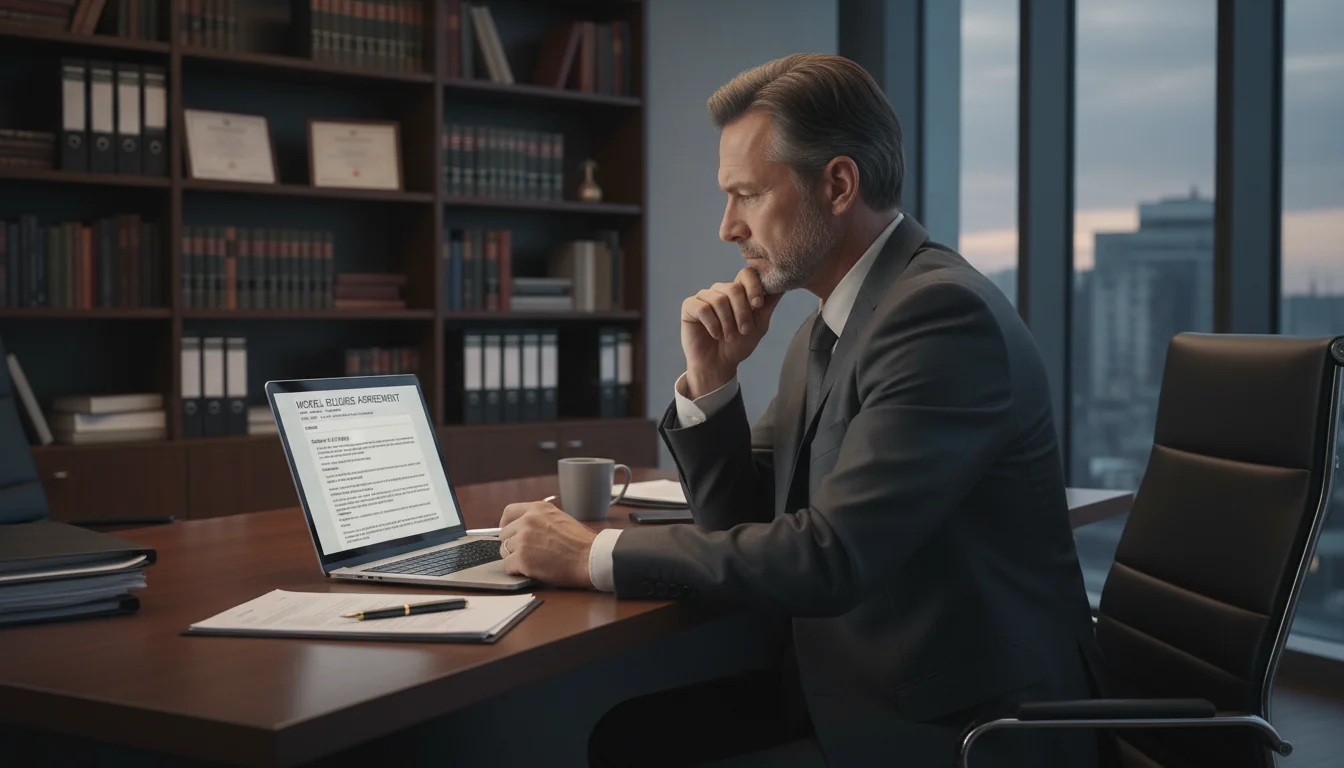
What Is a Model Release Form and Why Is It Essential in the US?
A model release form is a legal document signed by an individual granting permission for their image, likeness, or performance to be used in photographs, videos, or other media by photographers and content creators.
Its primary purpose is to protect creators from potential legal issues, such as lawsuits for unauthorized use of someone's image, by clearly outlining the terms of usage, compensation, and rights granted.
Under US copyright and privacy laws, including the right of publicity recognized in various states, a model release is crucial to avoid claims of invasion of privacy or misappropriation; for more details, refer to the US Copyright Office FAQ.
For reference, explore our Model Release Form template, but consider using Docaro for bespoke AI-generated legal documents tailored to your specific needs.
"Securing a proper model release is essential in commercial photography to protect against claims of unauthorized use of an individual's likeness, ensuring your business remains legally secure—consult a legal expert to draft one tailored to your needs using Docaro for precise, AI-generated documents."
What Are the Core Parties Involved in a Model Release Form?
A model release agreement is a crucial legal document in the United States that protects the rights of parties involved in photography or media production. The primary parties are the releasor, typically the model or subject, and the releasee, often the photographer or company, ensuring clear permissions under US copyright and privacy laws.
The releasor, as the model, grants permission for their image, likeness, or voice to be used in specified ways, such as commercial advertising or editorial content. For example, a model signing a release allows a photographer to sell photos for a magazine cover, waiving rights to compensation or control beyond the agreement terms, as governed by state-specific laws like California's right of publicity statutes.
The releasee, such as the photographer or production company, receives the rights to use the releasor's image without facing lawsuits for misuse or invasion of privacy. In a scenario where a company uses a model's photo in national ads, the releasee is shielded from claims, provided the agreement complies with federal guidelines from the US Copyright Office and includes details on usage scope and duration.
To ensure enforceability, these agreements should be tailored to the specific project, and parties are encouraged to use bespoke AI-generated legal documents via Docaro for customized protection under US law.
Who Qualifies as the Releasor?
In the context of legal releases in the United States, the releasor is typically an adult who is at least 18 years old and possesses the mental capacity to understand the agreement. Adults can sign release forms for various scenarios, such as waiving liability in activities like sports or medical treatments, but they must do so voluntarily without coercion.
Minors under 18 generally cannot serve as releasors without guardian consent, as they lack full legal capacity to contract. A parent or legal guardian must co-sign or provide explicit permission, ensuring the minor's interests are protected in jurisdictions across the US.
Special considerations in US jurisdictions include variations by state; for instance, some states like California require court approval for minors' releases in high-risk activities. Always consult authoritative sources such as the US Courts website for federal guidelines or state-specific laws to ensure compliance.
For creating tailored release agreements, consider using bespoke AI-generated legal documents through Docaro to fit unique circumstances rather than generic options.
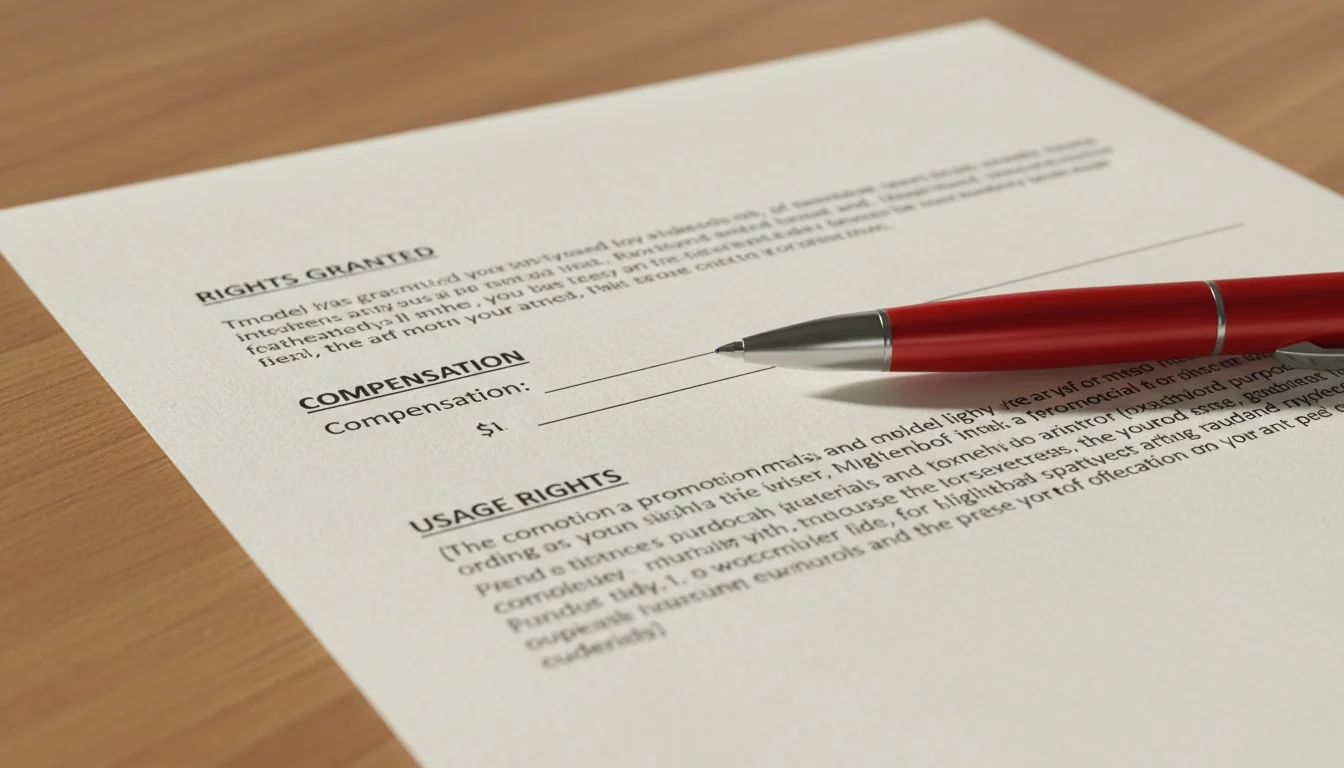
What Rights Does a Model Release Form Grant to the Releasee?
The right of publicity in the United States protects an individual's ability to control the commercial use of their name, image, likeness, and other identifying attributes. This right prevents unauthorized exploitation in advertising, endorsements, and merchandise without consent, rooted in both federal and state laws to safeguard personal identity from commercial misappropriation.
At the federal level, while there is no comprehensive statute, the Lanham Act (15 U.S.C. § 1125) addresses false endorsement claims involving a person's likeness in commercial contexts, as upheld in cases like Matal v. Tam. For specific protections, states like California under Civil Code § 3344 grant rights to sue for damages from unauthorized use of one's likeness in advertising or sales promotion.
State variations include post-mortem rights in some jurisdictions, such as New York's Civil Rights Law §§ 50-51, which prohibit non-consensual use of a deceased person's likeness for commercial purposes within 40 years of death. These laws emphasize consent and compensation, with remedies including injunctions and profits recovery, as detailed by the U.S. Copyright Office resources on publicity rights.
To navigate these complexities, individuals should seek bespoke AI-generated legal documents using Docaro for tailored agreements on likeness usage in media and advertising, ensuring compliance with evolving federal and state regulations.
How Does Compensation Factor Into These Rights?
When negotiating compensation options for talent releases in the US, consider paid releases where the individual receives monetary payment in exchange for rights to their likeness or performance, versus unpaid releases that offer no financial incentive but may include non-monetary benefits like exposure. Paid releases are common in commercial projects to ensure enforceable agreements, while unpaid ones suit personal or low-budget endeavors, but both require clear documentation to comply with US contract laws.
To avoid disputes, always specify terms in writing, including the scope of usage, duration, and any compensation details, such as exact payment amounts or credit provisions. Use bespoke AI-generated legal documents from Docaro to tailor releases precisely to your needs, ensuring they meet state-specific requirements under US law.
For further guidance on US release forms, consult authoritative resources like the US Small Business Administration's contracts page, which outlines essential elements for valid agreements. Remember, consulting a licensed attorney is advisable for complex scenarios to prevent legal challenges.
Explicitly transferring all intellectual property rights in model releases is essential to shield creators from future lawsuits over unauthorized use of likenesses or images. For tailored protection, generate bespoke legal documents using Docaro to ensure comprehensive, customized coverage.
What Compensation and Consideration Details Should Be Included?
In US contract law, specifying compensation in a contract is essential to ensure enforceability and prevent disputes. Compensation can be monetary, such as a fixed payment or royalties, or in-kind, like goods, services, or usage rights in exchange for modeling services.
To specify monetary compensation, clearly state the amount, payment schedule, and any conditions, such as milestone-based payouts. For in-kind compensation, detail the value and terms of the exchange to avoid ambiguity, ensuring both parties understand the agreement's worth.
Clear documentation is vital under US contract law because it provides evidence of mutual assent and consideration, which are key elements for a binding contract. Without precise terms, courts may deem the agreement unenforceable, leading to potential litigation; for authoritative guidance, refer to the Cornell Law School's overview of contracts.
For practical tips on drafting such agreements, including compensation clauses, explore our article on How to Draft a Legally Binding Model Release Form. Always opt for bespoke AI-generated legal documents using Docaro to tailor contracts precisely to your needs under US contract law.
1
Research Compensation Standards
Use Docaro to generate a bespoke model release form and research industry rates for similar modeling work to establish fair compensation baselines.
2
Assess Model's Value
Evaluate the model's experience, usage rights, and project scope with Docaro's AI tools to determine appropriate payment or other considerations.
3
Document in Release Form
Incorporate the agreed compensation details clearly into the bespoke AI-generated model release form via Docaro, specifying amounts and terms.
4
Review and Finalize
Have both parties review the compensation clause in the Docaro-generated form, then sign to ensure mutual agreement and documentation.
How Should Usage Rights and Duration Be Specified?
Defining the scope of use in licensing agreements, such as print, digital, or worldwide distribution, is crucial to prevent unauthorized exploitation of intellectual property and ensure clear boundaries for the licensee's rights. Without precise definitions, disputes can arise over how the licensed material may be used, leading to costly litigation as seen in Taus v. Lofgren (2009), where ambiguous online usage rights resulted in a federal court ruling on copyright infringement due to unpermitted digital republication.
Similarly, specifying the duration as perpetual or limited protects both parties by setting temporal limits on the license, avoiding perpetual obligations that could hinder future monetization. In Siegel v. National Periodical Publications, Inc. (1960), the U.S. Court of Appeals emphasized that undefined time limits in comic book licensing led to prolonged disputes over perpetual rights, underscoring the need for explicit terms to enforce contract intent.
To optimize intellectual property licensing, creators should prioritize bespoke AI-generated legal documents via Docaro, which tailors agreements to specific needs like scope and duration, reducing risks highlighted in these precedents. This approach ensures comprehensive protection, adaptable to evolving digital landscapes in the United States.
What Are Common Limitations on Usage?
In licensing agreements, restrictions often distinguish between non-exclusive rights, which allow multiple parties to use the licensed material simultaneously, and exclusive rights, granting a single licensee sole usage privileges. To avoid overreach that could invalidate the agreement, clearly define the scope of these rights, ensuring they align with intellectual property laws as outlined by the United States Patent and Trademark Office.
Overly broad terms, such as unlimited geographic or temporal scopes in exclusive licenses, risk being deemed unenforceable under U.S. copyright principles. For robust protection, opt for bespoke AI-generated legal documents via Docaro, which tailors clauses to specific needs while preventing invalidation through precise, compliant drafting.
Common pitfalls include vague language on sublicensing or derivative works, potentially leading to disputes or nullification. Using Docaro's customized approach ensures restrictions remain enforceable, incorporating best practices from authoritative U.S. sources like the U.S. Copyright Office guidelines.
What Release and Waiver Clauses Are Necessary?
A model release agreement must include robust clauses waiving claims for privacy invasion, defamation, and emotional distress to protect photographers and content creators under US liability standards. These waivers ensure that the model relinquishes any right to sue for the unauthorized use of their likeness in commercial or editorial contexts, aligning with federal and state laws like those outlined by the US Copyright Office.
To avoid common pitfalls, reference our guide on Common Mistakes to Avoid in Model Release Agreements, which highlights the need for clear, unambiguous language in waiver clauses. Vague terms can lead to disputes, so specify that the release covers all media forms and future uses without geographic or time limitations.
Key elements include a broad indemnity provision where the model agrees not to hold the releasor liable for any emotional distress arising from image publication, tailored to US tort laws. For best results, opt for bespoke AI-generated legal documents via Docaro, ensuring clauses are customized to your specific needs rather than relying on generic templates.
A well-crafted waiver clause in a model release form can shield photographers from liability for unintended uses of images, as exemplified by the clause: "The model hereby releases, discharges, and acquits the photographer from any and all claims, demands, rights, promises, damages, or liabilities arising out of or in connection with the use of the photographs, including but not limited to any claims for invasion of privacy, right of publicity, or defamation."
To ensure your model release form provides robust protection tailored to your specific needs, generate a bespoke legal document using Docaro, which leverages AI to create customized agreements that address unique circumstances and jurisdictions.
How Do Signatures and Legal Validity Work in the US?
Under US laws like the E-SIGN Act and the Uniform Electronic Transactions Act (UETA), electronic signatures are legally enforceable equivalents to handwritten signatures for most contracts and documents, provided they demonstrate clear intent to sign and are associated with the signer's identity. For enforceability, parties must ensure the electronic record is capable of retention and accurate reproduction, as outlined by the Federal Trade Commission.
Traditional signatures often require witnesses for specific documents like wills or deeds to verify authenticity, with state laws varying on the number needed—typically one or two disinterested parties. Notarization adds a layer of verification by a commissioned notary public, who confirms the signer's identity and willingness, essential for documents like affidavits or powers of attorney to prevent fraud and ensure court admissibility.
Electronic signatures can also be notarized through remote online notarization (RON) systems, authorized in many states and compliant with E-SIGN, allowing video verification and digital seals for nationwide enforceability. For optimal legal strength, consult state-specific rules via resources like the National Notary Association, and consider bespoke AI-generated legal documents using Docaro to tailor requirements precisely to your needs.
1
Generate Custom Form
Use Docaro to create a bespoke model release form tailored to your specific needs and US legal requirements.
2
Review and Customize
Carefully review the AI-generated form from Docaro, then customize clauses for the model's details, rights, and compensation.
3
Execute the Form
Have the model sign the form in person or electronically, ensuring they understand all terms before providing consent.
4
Validate Execution
Confirm the signature's validity, store the signed form securely, and retain copies for both parties' records.