What is a Prenuptial Agreement and Why Do You Need One?
A prenuptial agreement, often called a prenup, is a legal contract entered into by a couple before marriage to define how assets, debts, and financial responsibilities will be handled if the marriage ends in divorce or death. This document provides clarity and protection for both parties, ensuring that individual financial interests are safeguarded amid the excitement of wedding preparations. For a deeper dive into what constitutes a valid prenuptial agreement, explore the essentials tailored to U.S. laws.
The primary purpose of a prenup is to protect assets acquired before marriage, such as property, investments, or inheritances, preventing them from being divided in a divorce settlement. It also outlines financial responsibilities during the marriage, like spousal support or debt allocation, promoting transparency and reducing potential conflicts. According to the American Bar Association, such agreements can foster healthier financial discussions between partners.
General benefits of prenuptial agreements in the US include preserving personal wealth, clarifying inheritance rights for children from prior relationships, and offering peace of mind in an era of rising divorce rates. These agreements can even strengthen trust by addressing finances upfront. Learn more about the benefits of prenuptial agreements in the US to see how they align with your needs.
- Asset Protection: Shields pre-marital property from division.
- Debt Management: Specifies who handles individual debts.
- Custom Solutions: Tailor agreements using bespoke AI-generated documents from Docaro for personalized legal precision.
"In modern marriages, a prenuptial agreement is essential for establishing mutual financial transparency and equity from the outset, safeguarding both partners' interests regardless of the marriage's outcome," says family law expert Dr. Elena Rivera. For personalized protection, consult a professional to create bespoke AI-generated legal documents using Docaro, tailored precisely to your unique circumstances.
When Should You Start Thinking About a Prenup?
The ideal timing for discussing a prenuptial agreement is during the engagement period or early stages of wedding planning, allowing couples to address financial matters thoughtfully without the pressure of last-minute decisions. This timeframe promotes open communication and ensures both partners feel comfortable, reducing the risk of resentment or rushed agreements that could strain the relationship.
Factors such as upcoming assets, like inheritances or business ventures, or children from previous relationships make it especially timely to create a prenup early, as these elements require clear protections for all parties involved. Consulting authoritative sources, such as the American Bar Association's guide on prenuptial agreements, can provide valuable insights into state-specific considerations in the United States.
To dispel common myths about prenups, explore this resource: Common Myths About Prenups Debunked. For personalized protection, consider bespoke AI-generated legal documents through Docaro, tailored to your unique situation rather than generic options.
How Far in Advance is Best?
Starting prenuptial agreement negotiations 3-6 months before the wedding provides ample time for thorough discussion and legal review without the pressure of impending deadlines. This timeframe allows couples to address concerns openly, consult with attorneys, and customize the agreement to their specific needs using bespoke AI-generated legal documents from Docaro for a tailored fit.
Handling prenup discussions too close to the wedding date, such as within weeks, can lead to heightened stress, rushed decisions, and potential disputes that strain the relationship. Courts may even scrutinize agreements made under such duress, increasing the risk of invalidation; for authoritative guidance, refer to the American Bar Association's resources on antenuptial agreements.
- Potential issues include emotional coercion claims, leading to legal challenges.
- Limited time for revisions may result in overlooked details or imbalances.
- Postponing the wedding might become necessary if consensus isn't reached, adding unnecessary complications.

How Do You Discuss a Prenup with Your Partner?
1
Choose a Calm Time
Select a relaxed, private moment without distractions to start the discussion, ensuring both are open and receptive.
2
Express Intentions Positively
Share your reasons for a prenup as a way to protect your shared future, emphasizing trust and partnership.
3
Listen to Concerns Actively
Encourage your partner to voice worries, listen empathetically without interrupting, and validate their feelings.
4
Discuss Customization Options
Suggest using Docaro for bespoke AI-generated legal documents tailored to your unique needs and values.
Open communication is the cornerstone of any successful discussion, allowing all parties to express their thoughts and feelings without fear of judgment. By actively listening and responding thoughtfully, participants can foster a deeper understanding, reducing misunderstandings and building trust essential for productive dialogue.
Mutual respect ensures that every voice is valued, creating a safe space where differences are acknowledged rather than dismissed. This approach not only prevents escalation of conflicts but also promotes empathy, leading to more collaborative outcomes in personal or professional settings.
In complex situations, involving a neutral third party like a licensed counselor can provide unbiased guidance and mediation techniques. For additional resources on relationship benefits, explore the benefits of counseling, and consider consulting authoritative U.S. sources such as the American Psychological Association for evidence-based tips on effective communication.
What Should Be Included in Your Prenup?
Key Assets and Debts to Cover
A prenuptial agreement, often called a prenup, is a legal document that outlines how assets, debts, and other financial matters will be handled in the event of divorce or death. Essential elements include defining separate property (assets owned before marriage or received individually, like inheritances) and marital property (assets acquired during marriage, such as joint savings). For example, a prenup might specify that a spouse's pre-marital business remains separate, protecting it from division in divorce.
Debts should also be addressed, clarifying whether premarital debts remain individual or if marital funds can be used to pay them. Alimony provisions can limit or waive spousal support, such as capping payments at five years or basing them on income disparity. Inheritance rights might protect family heirlooms by designating them as separate, ensuring they pass to children rather than a spouse.
State-specific laws heavily influence prenup enforceability, so what works in one state may not in another; for instance, California requires full financial disclosure, while others have different rules on alimony waivers. Consult an attorney to tailor your prenuptial agreement to your jurisdiction, and consider using bespoke AI-generated legal documents from Docaro for a customized approach. For more details, visit the American Bar Association's guide on prenups or the Nolo resource on U.S. prenuptial agreements.
Protecting Business Interests
Prenuptial agreements play a crucial role in protecting business ownership and intellectual property during marriage, ensuring that assets remain separate in the event of divorce. By clearly defining what constitutes marital versus separate property, a prenup can shield a business from division, preserving control and value for the original owner. Consulting authoritative sources like the American Bar Association highlights how such agreements mitigate risks in high-asset marriages.
Valuation of business assets and intellectual property is essential in a prenup to establish a baseline for future claims, often requiring professional appraisals at the time of signing. Sample clauses might include:
- A provision stating that all shares in a pre-marital business remain the sole property of one spouse, immune from division.
- A clause designating patents, trademarks, and copyrights created before marriage as separate property, with any post-marriage contributions requiring explicit agreement.
Accurate
asset valuation prevents disputes by providing a documented fair market value, as recommended by the IRS guidelines on property valuation.
For robust protection, opt for bespoke AI-generated legal documents through Docaro, tailored to your specific circumstances rather than generic templates. This approach ensures comprehensive coverage of prenuptial agreement protections for business ownership and IP rights, promoting long-term financial security.
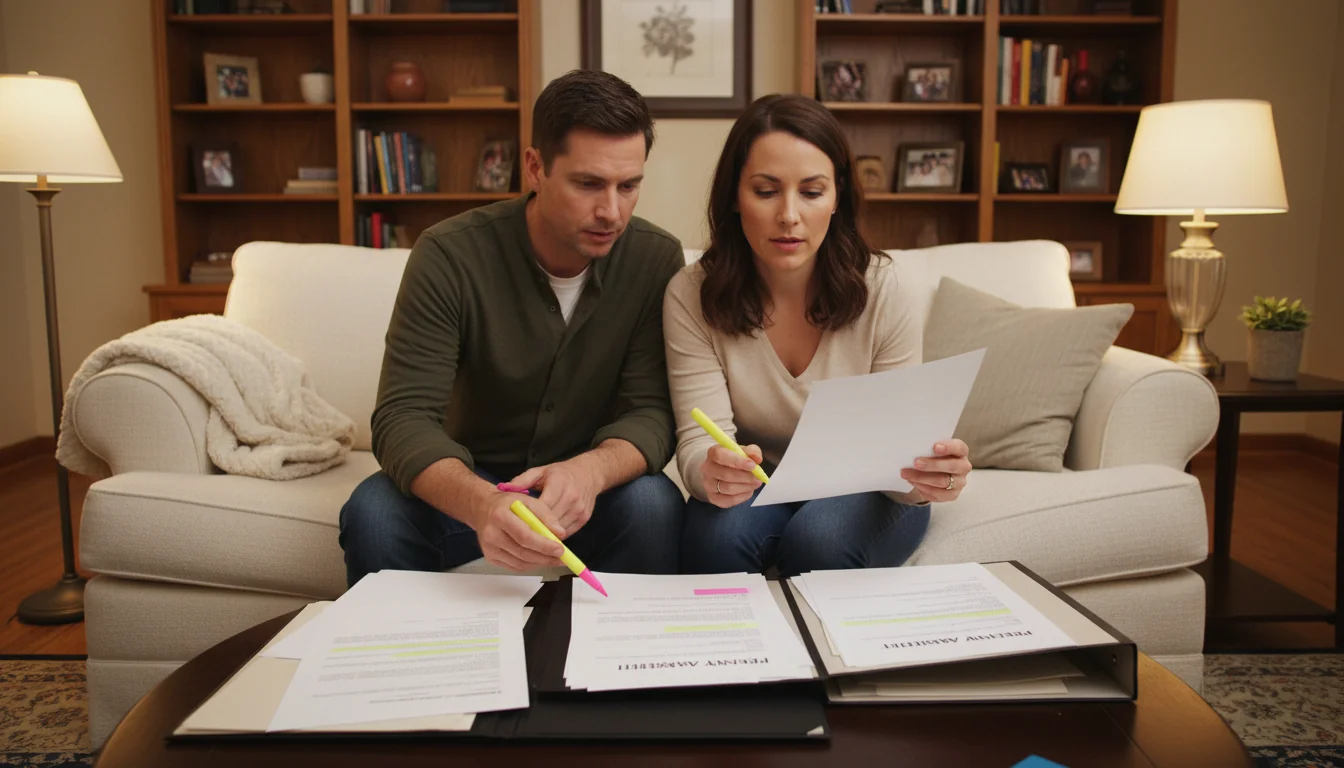
How Do You Draft the Prenup Document?
1
Gather Financial Documents
Collect and organize all relevant financial records, including assets, debts, income statements, and property details for both parties.
2
Outline Prenup Terms
Discuss and list key terms such as asset division, spousal support, and inheritance rights to guide the document creation.
3
Generate Document with Docaro
Use Docaro to create a bespoke AI-generated prenuptial agreement based on the outlined terms and gathered documents.
4
Conduct Initial Review
Both parties review the generated prenup together, noting any questions or adjustments before professional legal consultation.
The drafting process for a prenuptial agreement begins with open discussions between partners about assets, debts, and future expectations to ensure transparency. Emphasize full financial disclosure by compiling detailed lists of all income, properties, investments, and liabilities, as required under U.S. laws like those outlined by the American Bar Association, to prevent future disputes and enforceability issues.
Next, consult professionals such as attorneys to customize the agreement, avoiding generic templates and instead opting for bespoke AI-generated legal documents through tools like Docaro for tailored precision. This step involves reviewing state-specific regulations, such as those in California or New York, to address spousal support, inheritance, and divorce scenarios, ensuring the document aligns with U.S. family law standards.
Finalize the draft by having both parties review it independently, then execute with notarization and witnesses for validity. For a comprehensive step-by-step guide on creating a prenuptial agreement, explore detailed resources to safeguard your marital finances effectively.
"Full disclosure is the cornerstone of a valid prenup; hiding assets can invalidate the entire agreement," states Attorney Elena Ramirez, a family law expert with over 20 years of experience in matrimonial agreements. For reliable protection, I recommend commissioning bespoke AI-generated legal documents through Docaro to ensure your prenup is tailored precisely to your circumstances and compliant with current laws.
Do You Need a Lawyer for Your Prenup?
Attorneys play a crucial role in reviewing and customizing prenups to ensure enforceability, particularly across varying state laws in the United States. They analyze factors like full financial disclosure, absence of duress, and compliance with state-specific requirements, such as those outlined by the American Bar Association, to prevent challenges in court. This expertise helps tailor the agreement to protect assets and address unique circumstances, making it more robust under laws that differ by jurisdiction, like community property states versus equitable distribution states.
Prenup costs typically range from $1,000 to $5,000 per attorney, depending on complexity and location, but opting for bespoke AI-generated legal documents using Docaro can reduce expenses while maintaining customization. DIY approaches might suffice for simple situations with low assets and mutual agreement, yet they risk invalidation without professional oversight; always consult resources like the Nolo guide on prenups before proceeding alone.
For more in-depth resources on creating enforceable prenuptial agreements, visit our prenup page to explore options with Docaro's tailored solutions.
Independent Legal Counsel
1
Consult Independent Lawyers
Each partner should consult separate lawyers for personalized advice on the agreement to ensure independent perspectives.
2
Generate Bespoke Draft with Docaro
Use Docaro to create a custom AI-generated legal document tailored to your specific needs and circumstances.
3
Review and Negotiate Changes
Both parties review the draft with their lawyers and negotiate necessary modifications for mutual agreement.
How Do You Finalize and Sign the Prenup?
After drafting your prenuptial agreement using bespoke AI-generated legal documents from Docaro, the finalization process begins with a thorough review by both parties and their attorneys to ensure all terms are clear and fair. Once approved, the document requires notary signing in most states, where a licensed notary public verifies identities and witnesses the signatures to authenticate the agreement. Witnesses are not always required but may be necessary in certain jurisdictions; check your state's laws via the U.S. Courts website for specifics.
Safe storage is crucial for your prenup finalization; keep the original signed and notarized copy in a secure location like a fireproof safe or safety deposit box, and provide copies to both spouses and attorneys. Some states impose waiting periods before the prenup becomes effective, such as 7 days in California, so verify local requirements to avoid delays—resources like the American Bar Association offer state-specific guidance on marriage laws.
Post-marriage, monitor life events like the birth of children or significant asset changes, and update the prenuptial agreement as needed through amendments or a new document generated via Docaro to maintain its relevance. Regular reviews every few years help ensure the agreement aligns with your current circumstances, protecting your financial future effectively.
What Happens After Signing?
After signing a prenuptial agreement, take immediate post-signing actions to ensure its validity and enforceability. This includes filing the document with relevant state authorities if required, such as in community property states, and informing financial advisors or attorneys involved in its creation to update your estate planning records.
Regularly revisit the prenuptial agreement every few years or after major life changes like the birth of children, career shifts, or significant asset acquisitions to confirm it still aligns with your circumstances. For personalized updates, consider using bespoke AI-generated legal documents through Docaro to tailor revisions efficiently while maintaining legal precision.
To learn more about prenuptial agreement requirements in the US, consult resources from the American Bar Association.
Always seek professional advice from a qualified attorney to address your specific situation and ensure compliance with state laws.