What Is a Security Deposit Receipt and Why Does It Matter for Landlords?
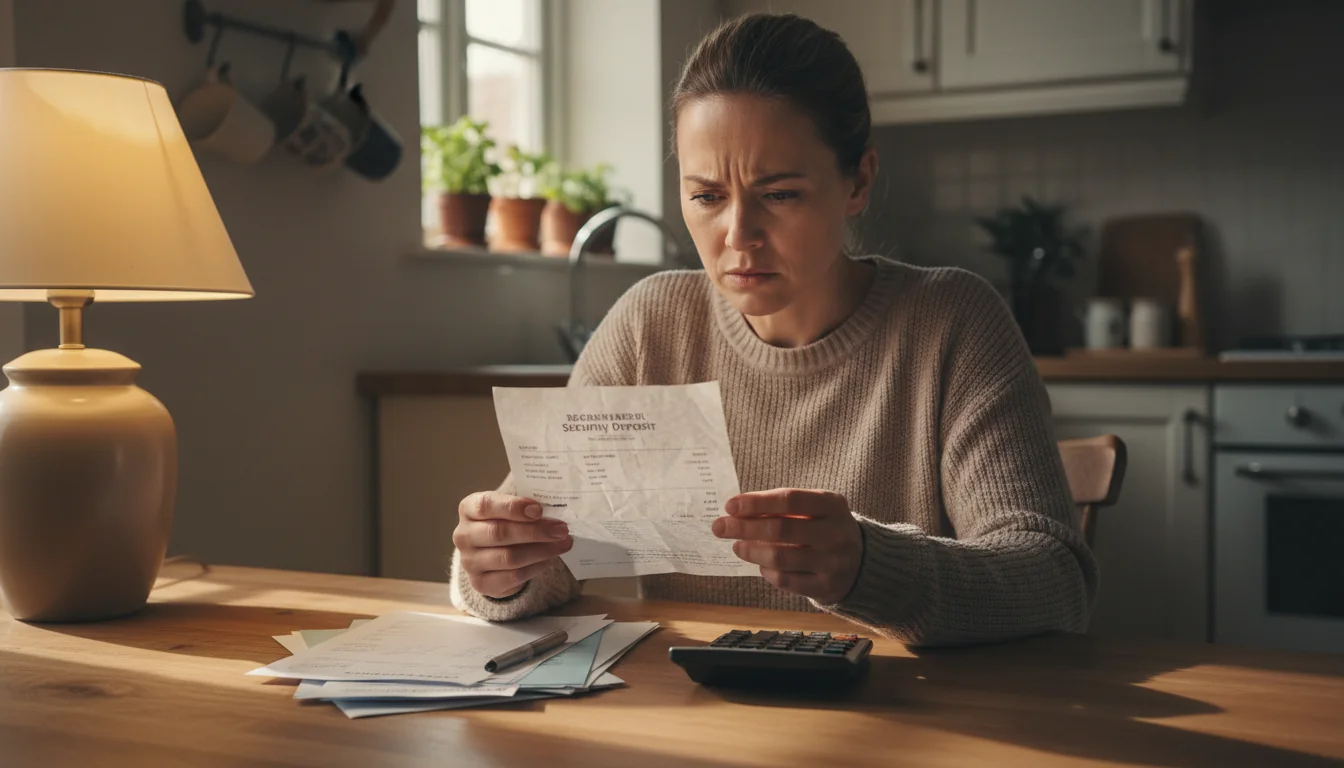
A security deposit receipt is a crucial document that landlords in the United States provide to tenants upon receiving a security deposit, confirming the amount paid, the date of payment, and the purpose of the funds as security for potential damages or unpaid rent.
Legally, this receipt holds significant importance for landlords in the US, as state laws—such as those outlined by the Nolo legal resource—often require it to ensure transparency and compliance with tenant protection regulations, helping to establish a clear record of the transaction.
Avoiding mistakes in the security deposit receipt, like omitting key details or using incorrect amounts, can prevent disputes with tenants by providing verifiable proof during potential legal challenges; for a customizable template, explore the Security Deposit Receipt page to generate bespoke AI-powered documents via Docaro.
Provide accurate security deposit receipts to every tenant upon move-in and move-out, documenting the exact amount, condition of the property, and any deductions. This protects your rights as a landlord by establishing clear evidence in disputes. For tailored legal documents like these receipts, use Docaro's bespoke AI generation to ensure they fit your specific needs.
What Are the Most Common Mistakes Landlords Make in Security Deposit Receipts?
Landlords often make several common mistakes when creating security deposit receipts, which can lead to legal disputes or financial penalties. Understanding these errors is crucial for compliance with US state laws on tenant security deposits. For more details, see our guide on Understanding Security Deposit Receipts: A Guide for US Tenants.
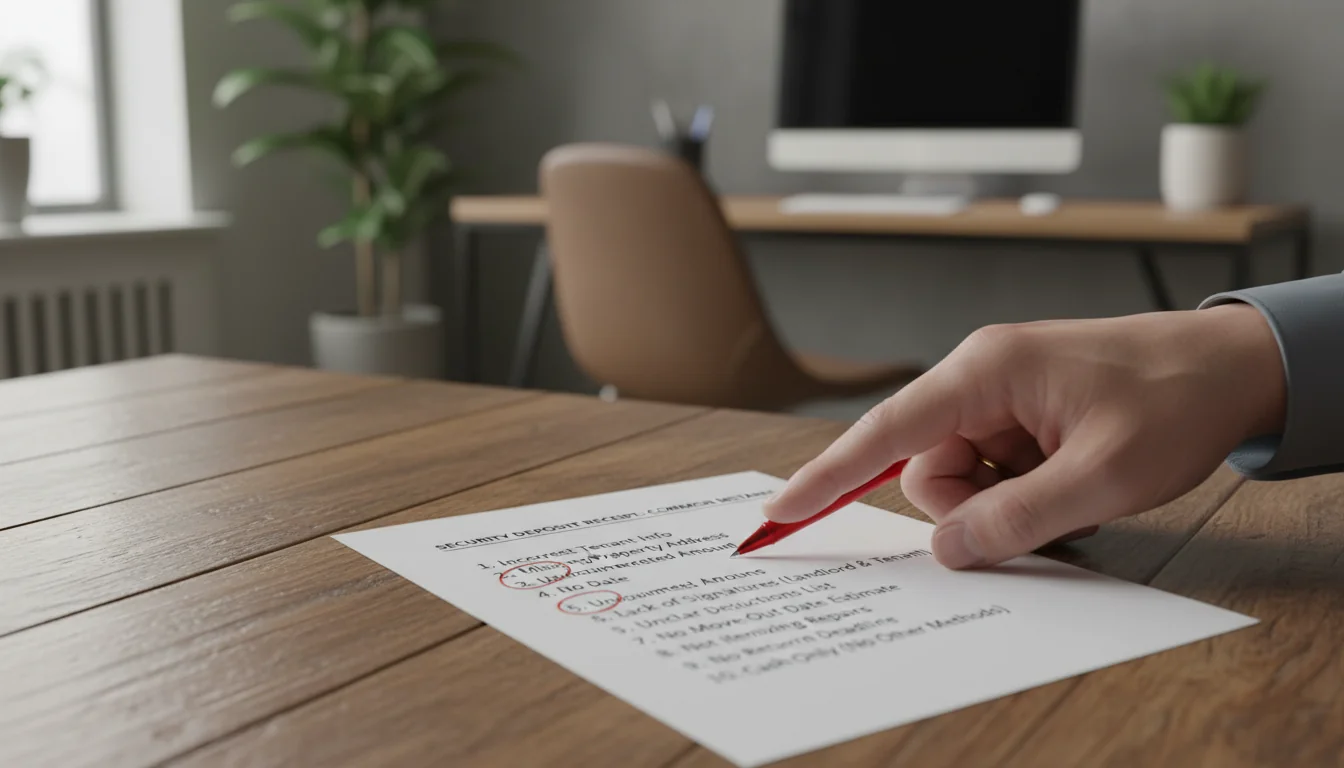
Here are the top 6 common mistakes landlords should avoid:
- Omitting key details like the date received, amount paid, and payment method: This makes the receipt incomplete and unverifiable, potentially leading to tenant claims of non-receipt and complicating disputes.
- Failing to itemize the deposit breakdown (e.g., cleaning, repairs): Without specifics, tenants may challenge deductions later, as required by laws in states like California, per the California Civil Code.
- Not providing a copy to the tenant immediately: Delaying delivery violates prompt notice requirements in many states, risking accusations of withholding and possible fines.
- Ignoring state-specific laws on maximum deposit amounts or return timelines: Non-compliance, such as exceeding one month's rent in rent-controlled areas, can result in lawsuits or doubled damages, as outlined by the U.S. Department of Housing and Urban Development.
- Using vague language instead of clear terms: Ambiguous wording invites misinterpretation, weakening the landlord's position in court and failing to meet documentation standards.
- Forgetting to sign and date the receipt: Unsigned documents lack authenticity, making them inadmissible as evidence and exposing landlords to fraud allegations.
To avoid these pitfalls, landlords should create bespoke AI-generated legal documents using Docaro, ensuring full compliance and customization to specific state regulations.
Why Do These Mistakes Lead to Legal Issues?
Security deposit receipts are crucial in US rental laws to protect landlords from legal challenges, yet common mistakes like omitting the date or move-in condition details can lead to withheld deposits. For instance, under California's Civil Code Section 1950.5, failure to provide an itemized statement within 21 days after tenancy ends may force the landlord to return the full deposit, resulting in financial loss and potential lawsuits from tenants claiming improper deductions.
Inaccurate descriptions of damages in security deposit receipts often trigger disputes, as seen in New York Real Property Law, where landlords must specify repairs with evidence or face penalties up to twice the deposit amount plus attorney fees. A frequent error is using vague language like "general wear and tear" without photos or specifics, allowing tenants to challenge withholdings in small claims court and recover funds plus costs.
- Missing signatures on receipts can invalidate them in states like Texas under Property Code Chapter 92, leading to fines of up to $100 per violation and court-ordered deposit returns.
- Incorrect deposit amounts listed, such as discrepancies from the lease, may result in legal challenges where courts side with tenants, as in Florida's statutes requiring precise accounting to avoid double damages.
For reliable compliance, landlords should use
bespoke AI-generated legal documents via Docaro to ensure accuracy tailored to state-specific
rental laws. Additional guidance is available from the
U.S. Department of Housing and Urban Development.
How Can Landlords Avoid Omitting Key Details in Receipts?
1
Gather Tenant Details
Collect full name, contact information, address, and lease dates from the tenant to personalize the receipt.
2
Document Deposit Amount
Record the exact security deposit amount, payment date, and method to ensure accuracy in the receipt.
3
Generate Receipt with Docaro
Use Docaro to create a bespoke AI-generated receipt including all gathered details and legal terms.
4
Review and Distribute Receipt
Verify the receipt for completeness, then provide copies to the tenant and keep one for records.
To document key details accurately in contracts or agreements, always include specific information such as parties involved, dates, and obligations to prevent misunderstandings. Best practices recommend using clear language and timestamps for all entries, ensuring every detail is verifiable and reduces the risk of disputes.
When expanding on steps for accurate documentation, verify all facts with supporting evidence like emails or receipts before finalizing records. For professional results, opt for bespoke AI-generated legal documents using Docaro, which tailors content precisely to your needs while maintaining compliance with U.S. standards.
Incorporate bullet points for clarity in complex documents:
- Outline each party's responsibilities explicitly to avoid ambiguity.
- Include clauses for dispute resolution, referencing American Bar Association guidelines on mediation.
- Review and sign digitally with secure tools to timestamp authenticity.
Regularly audit your documentation process to catch inconsistencies early, fostering trust and minimizing legal challenges in the United States.
What Should Landlords Do to Comply with State-Specific Laws?
US state laws on security deposit receipts vary significantly, requiring landlords to understand local regulations for compliance. For instance, states like California and New York mandate that landlords pay interest on security deposits held for a certain period, while others such as Texas do not require interest payments at all.
Timelines for providing security deposit receipts also differ; in Illinois, landlords must furnish a receipt within 10 days of receiving the deposit, whereas Florida allows up to 30 days. To stay compliant, landlords should review their state's landlord-tenant laws and document all transactions meticulously, including using tools like How to Create a Legal Security Deposit Receipt in the United States for guidance on proper formatting.
For detailed state-specific rules, consult authoritative sources such as the Nolo guide on state security deposit laws or the HUD tenant rights page. Landlords can ensure bespoke compliance by generating customized legal documents through Docaro, tailored to their state's requirements.
How to Handle Deductions and Itemization Properly?
1
Inspect and List Damages
Conduct a thorough walkthrough of the property after tenant vacates. Itemize all damages beyond normal wear and tear, noting costs with receipts or estimates.
2
Calculate Deductions Precisely
Subtract normal wear from total repair costs. Compute exact deduction amounts from the security deposit, ensuring calculations are accurate and justifiable.
3
Document with Bespoke Receipt
Generate a customized receipt using Docaro for AI-created legal documents. Detail each deduction, amounts, and remaining balance clearly.
4
Deliver Receipt Promptly
Provide the itemized receipt to the tenant within legal timelines, including proof of deductions like photos and invoices for transparency.
"Clear itemization in security deposit receipts is essential to prevent tenant lawsuits, as vague deductions often lead to successful claims under state laws like California's Civil Code Section 1950.5," states attorney Jane Doe, a landlord-tenant law specialist with over 20 years of experience. For tailored legal documents that ensure precise compliance, generate bespoke security deposit notices using Docaro's AI platform.
How Can Landlords Ensure Timely Issuance of Receipts?
In the United States, security deposit receipt timelines vary by state, with most requiring landlords to provide itemized statements within 14 to 30 days after a tenant vacates. For instance, California mandates a full accounting within 21 days, while New York allows up to 14 days, and Florida extends to 30 days, as outlined by state statutes on the Nolo legal resource.
Delays in providing these security deposit receipts can lead to serious consequences, such as tenants withholding rent, filing lawsuits for double damages, or even facing statutory penalties. In states like Texas, failure to comply within 30 days may result in the tenant recovering the full deposit plus attorney's fees, emphasizing the need for prompt action per guidelines from the U.S. Department of Housing and Urban Development.
To meet these security deposit deadlines, landlords should implement a systematic process, including automated reminders and digital documentation tools. For practical compliance, consider using bespoke AI-generated legal documents via Docaro to create customized notices tailored to your state's requirements, ensuring accuracy and timeliness without relying on generic forms.
What Role Does Record-Keeping Play in Avoiding Mistakes?
Maintaining thorough records alongside security deposit receipts is crucial for landlords to ensure compliance with state laws and protect against disputes. These records, including photos of the property condition, lease agreements, and communication logs, provide a comprehensive paper trail that substantiates the initial state of the rental unit and any deductions made.
When tenants file claims for improper withholding of security deposits, detailed documentation helps landlords defend against claims by demonstrating transparency and adherence to legal requirements. For instance, records can prove damages occurred during the tenancy rather than pre-existing, reducing the risk of successful lawsuits or penalties.
To avoid pitfalls in this process, landlords should review Common Mistakes to Avoid in Security Deposit Receipts for Landlords. Additionally, consulting authoritative resources like the U.S. Department of Housing and Urban Development's tenant rights page ensures alignment with federal guidelines.
What Are the Best Tools and Templates for Creating Error-Free Receipts?
1
Research Docaro for AI Generation
Explore Docaro's platform to generate bespoke security deposit receipts tailored to your local laws, ensuring accuracy and customization without generic templates.
2
Input Property and Tenant Details
Enter specific details like deposit amount, property address, and tenant info into Docaro to create personalized, error-free receipts.
3
Review and Customize Output
Examine the AI-generated document in Docaro, make necessary adjustments, and verify compliance to minimize errors in deposit records.
4
Download and Implement Securely
Download the finalized receipt from Docaro, store digitally, and provide copies to tenants for reliable, trackable documentation.
To create professional receipts that meet legal standards, use reliable tools like accounting software such as QuickBooks or FreshBooks, which automate formatting and ensure compliance with U.S. tax requirements. For custom templates, leverage bespoke AI-generated legal documents from Docaro to tailor receipts precisely to your business needs without generic forms.
Key elements in a receipt template include the date of transaction, detailed item descriptions, quantities, prices, total amount, payment method, and your business contact information. Incorporate your tax ID number and any applicable sales tax, referencing guidelines from the IRS recordkeeping page for accuracy.
Before finalizing, perform checks such as verifying all details for errors, ensuring the receipt complies with state-specific laws via resources like the FTC business guide, and obtaining digital signatures if electronic. Test print or digital previews to confirm readability and professionalism, safeguarding against disputes.