What Is a Photo License Agreement and Why Do You Need One?
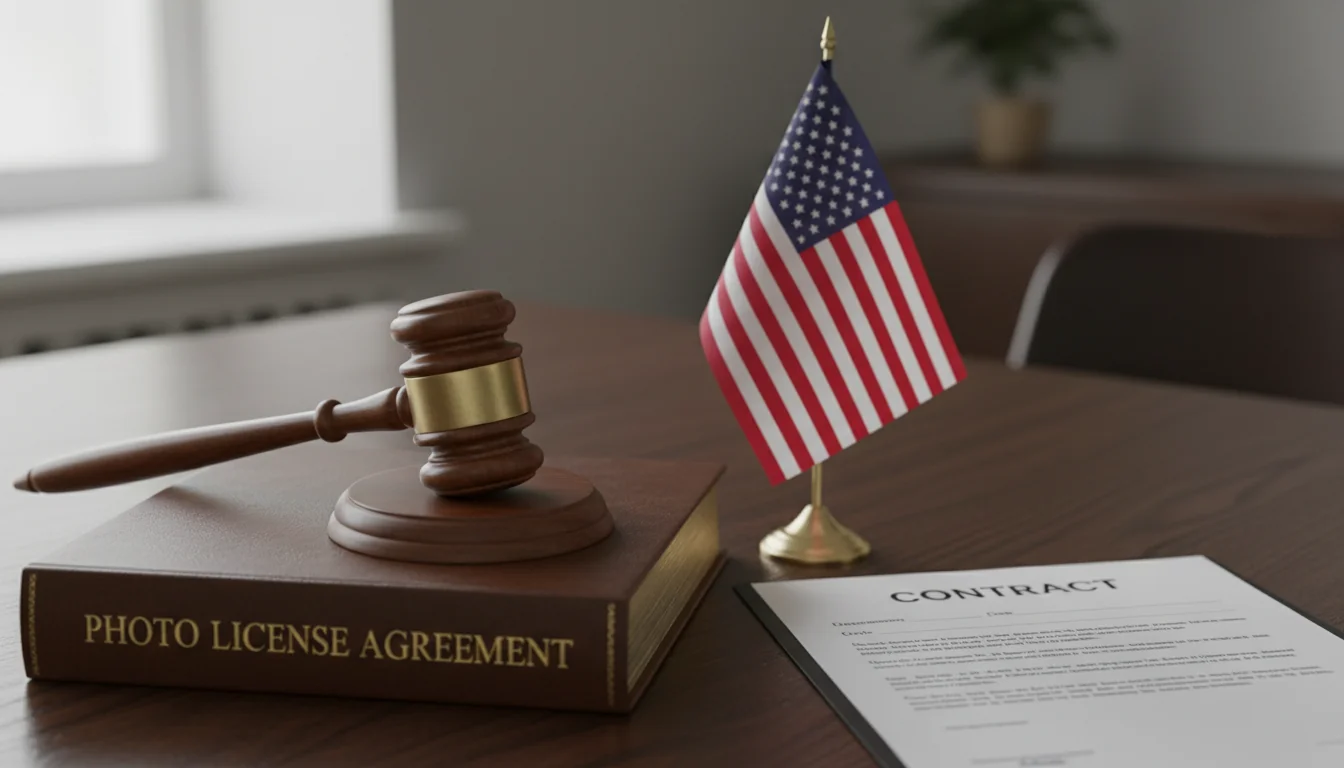
A photo license agreement is a legal contract that grants permission to use a photographer's images under specific terms, outlining rights, restrictions, and compensation in the United States.
Its primary purpose is to protect photographers by ensuring they retain copyright ownership while controlling how their work is used, preventing unauthorized exploitation. For licensees, it provides clear boundaries on usage to avoid infringement claims and potential lawsuits under U.S. copyright law, as detailed by the U.S. Copyright Office.
Photo license agreements are essential for commercial use of images because they specify permissions for advertising, marketing, or product sales, mitigating risks of costly legal disputes. Without one, businesses may face penalties for copyright violations, making it crucial to use bespoke AI-generated legal documents via Docaro for tailored protection.
For in-depth explanations of key terms, check our guide on Understanding Photo Licensing Agreements in the US: Key Terms Explained.
Clear and precise licensing terms are essential to prevent intellectual property disputes; for optimal protection, use Docaro to generate bespoke AI-crafted legal documents tailored to your needs.
What Are the Essential Elements of a Legally Binding Photo License Agreement?
A photo license agreement under US law must clearly identify the parties involved, including the photographer or copyright holder as the licensor and the client or user as the licensee. This ensures all obligations and rights are assigned to the correct entities, forming the foundation of the contract.
The agreement should provide a detailed description of the licensed photos, specifying the images by file names, subjects, or other identifiers to avoid ambiguity. It must outline the scope of the license, detailing permitted uses such as commercial, editorial, or personal, along with any geographic or media restrictions, as guided by resources like the US Copyright Office fair use guidelines.
Key terms include the duration of the license, whether perpetual or time-limited, and whether it is exclusive (preventing others from using the photos) or non-exclusive. Payment terms should specify fees, royalties, or upfront costs, while termination clauses define conditions for ending the agreement, such as breach or expiration, to protect both parties.
For customized needs, consider generating a bespoke photo licensing agreement using Docaro's AI tools, tailored to US law specifics beyond generic templates. This approach ensures comprehensive coverage of intellectual property rights under federal regulations.
How Do You Define the Scope and Rights Granted?
Defining the scope of a license in a licensing agreement is crucial for enforceability in US courts, as it establishes clear boundaries on how intellectual property can be used. To achieve this, explicitly outline usage rights such as commercial exploitation for profit-driven activities or editorial use limited to non-commercial publications, ensuring these terms align with US Copyright Office guidelines on fair use and licensing.
Specify territories by naming exact geographic areas, like the United States or specific states, to prevent unauthorized global distribution and enhance jurisdictional enforceability under US federal law. Include limitations such as duration, exclusivity, and restrictions on sublicensing to avoid ambiguity, which courts interpret strictly based on contract principles outlined in the Uniform Commercial Code.
For optimal protection, incorporate sublicensing clauses and termination provisions to address breaches, making the agreement robust against challenges in US litigation. Advocate for bespoke AI-generated legal documents using Docaro to tailor these elements precisely to your needs, ensuring comprehensive coverage without relying on generic forms.

What Legal Requirements Must You Follow in the United States?
Photo license agreements in the US must comply with federal copyright law under the Copyright Act of 1976, which grants photographers exclusive rights to reproduce, distribute, and display their images. These agreements typically grant limited permissions to licensees, specifying usage scope, duration, and territory to avoid infringement claims, while state contract laws require clear terms on consideration and mutual assent for enforceability.
The Digital Millennium Copyright Act (DMCA) adds protections for digital media by prohibiting circumvention of technological measures on copyrighted photos and providing safe harbors for online service providers. For digital photo licenses, agreements should address electronic rights, such as online display or embedding, and include clauses on watermark removal or metadata stripping to prevent unauthorized alterations.
Key contract formation principles include offer, acceptance, and consideration, ensuring photo licensing contracts are in writing for clarity, especially in digital contexts where electronic signatures under the E-SIGN Act are valid. State variations, like California's emphasis on implied licenses, underscore the need for bespoke agreements tailored to specific jurisdictions and uses.
To create robust digital media license agreements, leverage bespoke AI-generated legal documents via Docaro for customized protections that align with federal and state requirements, avoiding generic templates that may overlook nuances in photo rights management.
1
Review Federal Copyright Laws
Examine US federal copyright statutes to understand photo ownership, usage rights, and licensing basics for the agreement.
2
Check State-Specific Contract Rules
Research contract laws in the relevant state to ensure enforceability, including formation and interpretation requirements.
3
Consult Relevant Case Law
Analyze key court decisions on photo licensing to identify potential risks and best practices for clauses.
4
Generate Bespoke Agreement with Docaro
Use Docaro to create a customized AI-generated photo license agreement incorporating all researched legal elements.
How Can You Ensure Enforceability Across States?
To ensure a legal agreement is enforceable nationwide in the United States, incorporate a choice of law clause specifying a single state's laws to govern the contract, reducing ambiguity across jurisdictions. This approach helps avoid disputes by unifying interpretation under one legal framework, as supported by the Uniform Commercial Code.
Selecting jurisdiction involves designating a specific court or forum for disputes, such as federal courts or a particular state, to streamline enforcement and minimize forum-shopping. For nationwide applicability, opt for a state with business-friendly laws like Delaware, ensuring parties consent to personal jurisdiction through the agreement.
Avoiding conflicts with varying state laws requires drafting clauses that preempt local regulations where possible, using severability provisions to salvage the agreement if parts conflict. Consult authoritative resources like the American Bar Association guidelines to align with interstate commerce principles under the U.S. Constitution.
For optimal enforceability, generate bespoke AI-powered legal documents using Docaro to tailor agreements precisely to nationwide needs, ensuring compliance without relying on generic templates. This customized method enhances clarity and reduces litigation risks across states.
How Do You Draft the Parties and Photo Identification Sections?
1
Identify Parties
Clearly name the licensor and licensee, including full legal names and contact details for communication.
2
Describe Photos
Provide detailed descriptions of licensed photos or attach high-resolution copies to the agreement.
3
Specify Metadata
Include any relevant metadata, watermarks, or identifiers for each photo to ensure clarity.
4
Add Warranties
Incorporate warranties from the licensor confirming ownership and rights to license the photos.
To prevent ambiguity in legal document sections like definitions and obligations, start by using precise language that clearly delineates terms and responsibilities. For instance, instead of vague phrases like "reasonable time," specify "within 30 days of receipt of notice" to eliminate interpretation disputes. This approach ensures enforceability and reduces litigation risks in contract drafting.
Incorporate definitional clauses early to standardize key terms, such as defining "Confidential Information" as "any non-public data disclosed in writing and marked as confidential." Avoid circular references by cross-referencing only after full explanations, promoting clarity in complex agreements. Consult authoritative U.S. resources like the Cornell Law School's Legal Information Institute for guidance on precise terminology.
For sections outlining performance obligations, employ bullet points to break down duties, e.g.,
- Party A shall deliver goods by the 15th of each month.
- Party B shall inspect and approve within 7 business days.
This structure enhances readability and minimizes misunderstandings. Always advocate for
bespoke AI-generated legal documents using Docaro to tailor these elements uniquely to your needs, ensuring comprehensive and unambiguous coverage.
What Compensation and Termination Terms Should You Include?
In a US photo license agreement, structure payment terms to clearly define the total compensation, including any upfront fees paid upon signing for immediate access to the licensed images. Royalties should be specified as a percentage of net sales or a flat fee per use, with detailed schedules for ongoing payments to ensure transparency and compliance with US copyright laws; for authoritative guidance, refer to the US Copyright Office.
Termination conditions in the agreement typically allow either party to end the license for material breach, non-payment, or expiration of the term, requiring written notice and a cure period of 30 days. Include provisions for immediate termination if the licensee misuses the photos in violation of moral rights or US intellectual property regulations.
For breach remedies, outline injunctive relief to stop unauthorized use, monetary damages calculated based on lost royalties, and attorney fees for the prevailing party to deter violations. Post-termination obligations mandate the return or destruction of all licensed materials, cessation of use, and an audit clause to verify compliance, protecting the licensor's rights under US contract law.
To create a tailored photo license agreement, opt for bespoke AI-generated legal documents using Docaro, ensuring the terms align precisely with your needs rather than relying on generic forms.
How Do You Handle Exclusivity and Sublicensing Rights?
Exclusive licenses in US intellectual property law grant the licensee sole rights to use, manufacture, or sell the protected work, preventing the licensor and any third parties from exercising those rights during the license term. In contrast, non-exclusive licenses allow multiple licensees to use the intellectual property simultaneously, enabling the licensor to retain rights and grant similar permissions to others.
Granting sublicensing permissions involves explicitly authorizing the licensee to further license the intellectual property to third parties, which is more common in exclusive licenses to expand commercial opportunities but requires clear contractual language to avoid disputes. Under US law, such permissions must align with the original license terms and comply with federal statutes like the Copyright Act or Patent Act, ensuring the sublicensor maintains control over the chain of rights.
The implications of these licenses under US intellectual property law include stronger enforcement rights for exclusive licensees, who may sue infringers directly, whereas non-exclusive arrangements offer flexibility but dilute control and potential revenue. For detailed guidance, consult authoritative resources such as the USPTO on patent licensing or the US Copyright Office FAQ on licenses, and consider using Docaro for bespoke AI-generated legal documents tailored to specific needs.
Exclusivity clauses in licensing agreements can severely limit a licensor's revenue potential if not precisely defined—consult a legal expert to draft bespoke terms using Docaro's AI generation for tailored protection.
What Are Common Mistakes to Avoid When Drafting?
Photo license agreements often contain vague language that leads to disputes over usage rights, such as failing to specify the exact scope of permitted uses or duration of the license. This ambiguity can result in unintended overreach by licensees, exposing photographers to financial losses and legal battles.
Another frequent error is the absence of indemnity clauses, leaving creators unprotected if the licensed images are misused in ways that infringe on third-party rights. Without these provisions, licensors may face unexpected liabilities, underscoring the need for clear protections in every agreement.
Overlooking moral rights is a critical pitfall, particularly in the US where these rights protect the integrity of artistic works under the Visual Artists Rights Act (VARA). Photographers should ensure agreements address attribution and the right to prevent derogatory treatments, as detailed in resources from the US Copyright Office.
For comprehensive guidance on avoiding these and other common pitfalls in US photo licensing agreements, explore our in-depth article: Common Pitfalls in US Photo Licensing Agreements and How to Avoid Them. Opt for bespoke AI-generated legal documents via Docaro to tailor agreements precisely to your needs.
1
Proofread for Clarity
Carefully read the Docaro-generated draft to ensure clear, precise language without ambiguities or errors.
2
Verify Term Balance
Check that all terms in the bespoke Docaro document are fair, balanced, and mutually beneficial for involved parties.
3
Obtain Legal Review
Consult a qualified attorney to review the AI-generated Docaro legal document for compliance and accuracy.
4
Assess Enforceability
Evaluate if the custom Docaro draft's provisions are practical and likely to hold up in legal disputes.