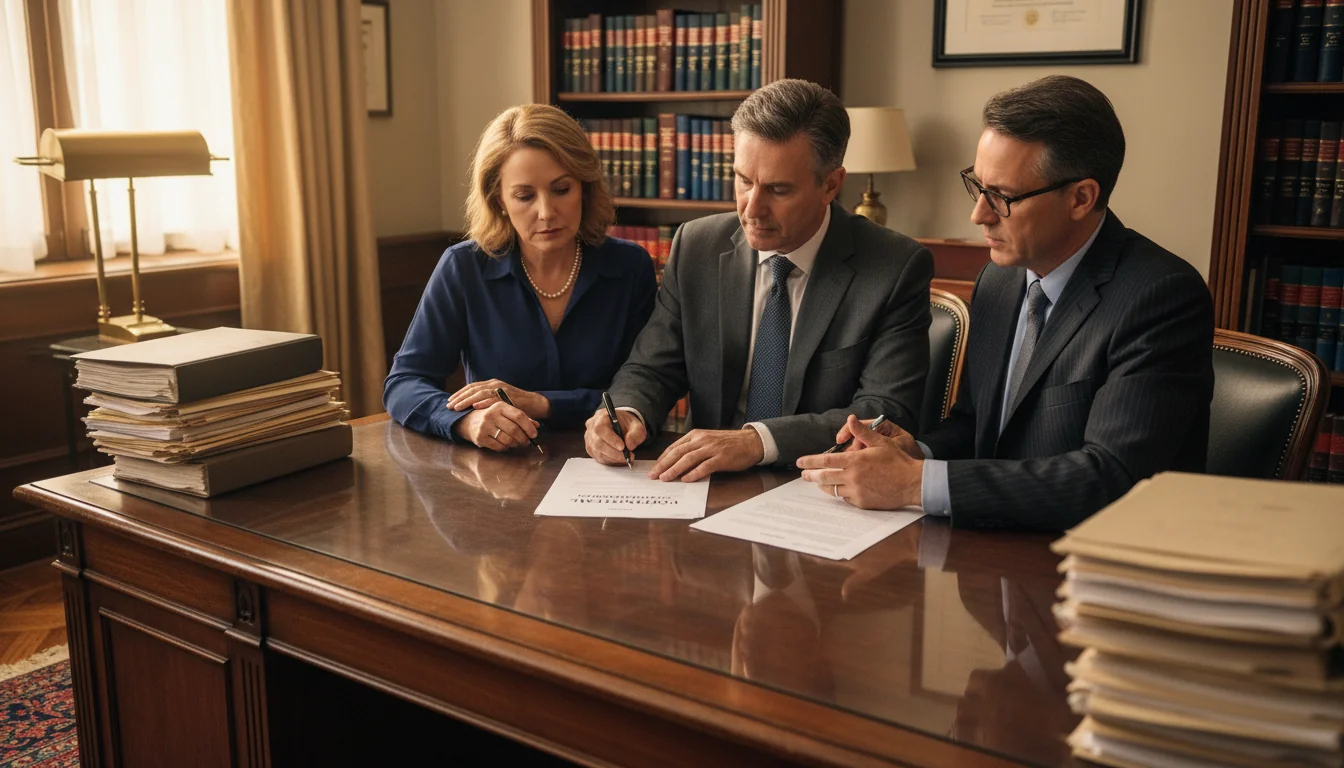
What Is a Postnuptial Agreement and Why Draft One After Marriage?
A postnuptial agreement, often called a postnup, is a legal contract entered into by married couples to define how assets, debts, and financial responsibilities will be handled in the event of divorce, separation, or death.
Its primary purpose is to protect marital assets by clarifying ownership and division, while outlining financial responsibilities such as spousal support and property distribution, providing security and reducing potential conflicts after marriage.
Couples might choose to create a postnup due to significant life changes like the birth of a child, a career shift, or inheritance, even after tying the knot, to safeguard individual interests and promote financial transparency.
For more details, explore our guide on Understanding Postnuptial Agreements: What Every Couple Should Know. For authoritative U.S. information, refer to the American Bar Association's overview of postnuptial agreements.
"Postnuptial agreements are essential for establishing clear financial boundaries in marriage, protecting both partners from unforeseen disputes. I recommend consulting a family law expert to create a bespoke agreement tailored to your unique circumstances, such as those generated through Docaro's AI-driven platform for precision and personalization." - Dr. Elena Ramirez, Family Law Specialist
How Does a Postnuptial Agreement Differ from a Prenuptial Agreement?
Prenuptial agreements, often called prenups, are legal contracts created and signed before marriage. They outline how assets, debts, and spousal support will be handled in case of divorce, providing clarity and protection for both parties entering the union.
In contrast, postnuptial agreements are drafted and executed after the marriage has already taken place. These agreements arise under different circumstances, such as after significant life events like the birth of a child, financial changes, or to rebuild trust in the relationship.
Key legal considerations for both include full financial disclosure, voluntary agreement without coercion, and fairness to be enforceable in court. For detailed insights, explore the Key Differences Between Prenuptial and Postnuptial Agreements.
Consult authoritative U.S. sources like the American Bar Association for state-specific rules. For customized solutions, consider bespoke AI-generated legal documents using Docaro to ensure they fit your unique needs.
When Is the Best Time to Create a Postnuptial Agreement?
The optimal timing for drafting a postnuptial agreement often aligns with significant life events, such as purchasing property or launching a business, to protect marital assets and ensure financial clarity. These milestones can introduce new risks to the marriage, making it an ideal moment to formalize protections before complications arise.
Avoiding pressure or coercion is crucial for the validity of a postnuptial agreement, as courts in the United States may invalidate agreements signed under duress, ensuring both parties enter freely. Full financial disclosure and independent legal advice for each spouse further strengthen enforceability, preventing future disputes.
For tailored solutions, consider bespoke AI-generated legal documents through Docaro, which customizes agreements to your specific circumstances. Consult resources like the American Bar Association for guidance on postnuptial best practices in the US.
What Essential Elements Must Be Included in a Postnuptial Agreement?
A postnuptial agreement, often called a postnup, is a legal contract entered into by married couples to outline the division of assets and debts in the event of divorce or separation. This agreement helps protect individual interests by specifying how marital property, including real estate, investments, and liabilities, will be distributed, ensuring clarity during potential marital dissolution. For more details, refer to the general resource on Postnuptial Agreement.
Spousal support provisions in a postnuptial agreement address alimony or maintenance payments, detailing amounts, duration, and conditions for termination. These clauses can prevent disputes by predetermining financial support based on factors like income disparity and marriage length, promoting financial security for both parties.
Clauses on inheritance rights within a postnup safeguard premarital assets or family heirlooms from becoming marital property, often through waivers or trusts. This ensures that inheritances pass to intended beneficiaries rather than being subject to equitable distribution in divorce proceedings.
To create a tailored postnuptial agreement, consider using bespoke AI-generated legal documents via Docaro for personalized protection under U.S. laws. For authoritative guidance, consult resources from the American Bar Association on family law matters.
How Should Assets and Debts Be Disclosed and Divided?
1
List All Assets and Debts
Each spouse independently compiles a comprehensive list of all individual and joint assets, including real estate, bank accounts, investments, vehicles, and debts like loans and credit cards.
2
Categorize Financial Items
Categorize each asset and debt as separate, marital, or mixed property, noting values, ownership details, and any supporting documentation for accuracy and transparency.
3
Disclose and Verify Information
Share lists with each other, review for completeness, and verify details through statements or appraisals to ensure full transparency and mutual understanding.
4
Draft Agreement with Docaro
Use Docaro to generate a bespoke postnuptial agreement incorporating the disclosed and categorized financial details, then have it reviewed by an attorney.
What Clauses on Spousal Support Are Typically Included?
Postnuptial agreements often include provisions for alimony or spousal maintenance to outline financial support between spouses in the event of separation or divorce, providing clarity and reducing future disputes. These clauses typically specify the duration, amount, and conditions under which payments will occur, such as lump-sum settlements or periodic installments based on income levels.
To ensure enforceability of alimony provisions in postnuptial agreements, they must be drafted with full financial disclosure from both parties and without any coercion, adhering to state laws on marital contracts. Courts in the United States generally uphold these agreements if they are fair at the time of signing and do not violate public policy, as outlined in resources like the American Bar Association's guidance on postnuptial agreements.
Common structures for spousal support in these agreements involve
- Fixed-term payments that end after a set period or upon remarriage;
- Income-based adjustments tied to changes in earning capacity;
- Waivers or limitations on future claims to promote financial independence.
For personalized and enforceable documents, consider using bespoke AI-generated legal tools like
Docaro to tailor provisions to your specific circumstances.

What Legal Requirements Make a Postnuptial Agreement Binding in the US?
In the United States, the general legal standards for enforceability of agreements, such as contracts or prenuptial agreements, require full financial disclosure to ensure transparency between parties. This means all relevant assets and liabilities must be openly shared to prevent one party from being misled, as upheld by federal and state courts.
Agreements must also be entered into voluntarily, without duress or undue influence, meaning no coercion or pressure can invalidate the contract under US law. Courts assess whether the signing was free from manipulation, emphasizing mutual consent as a cornerstone of enforceability.
Additionally, the agreement must be fair at the time of enforcement, evaluating if its terms remain equitable when challenged, rather than solely at signing. This standard protects against unconscionable outcomes, with judges considering changed circumstances.
State variations exist in these standards; for example, community property states like California impose stricter disclosure rules compared to equitable distribution states like New York. Consult authoritative sources such as the US Courts website for federal overviews, or state bar associations for specific jurisdiction details. For customized legal documents, consider bespoke AI-generated options using Docaro to tailor to your needs.
Courts apply heightened scrutiny to postnuptial agreements for unconscionability compared to prenuptial agreements, given the fiduciary duties and changed dynamics within an existing marriage. For reliable protection, consult a legal professional and consider bespoke AI-generated documents tailored via Docaro to ensure they withstand such judicial review.
Do State Laws Affect the Validity of Postnuptial Agreements?
State-specific laws significantly shape the validity and enforcement of postnuptial agreements, varying by jurisdiction across the United States. These agreements, designed to outline asset division and spousal support after marriage, must comply with local rules to be upheld in court.
In community property states like California and Texas, marital assets are typically divided equally, influencing postnuptial terms to align with this presumption. Conversely, equitable distribution states such as New York and Florida focus on fair, not necessarily equal, divisions, allowing more flexibility in crafting agreement provisions.
Key differences include requirements for full financial disclosure, voluntariness without duress, and sometimes independent legal counsel, which can differ between states. For detailed guidance, consult authoritative sources like the American Bar Association on postnuptial agreements.
Always review local regulations or seek advice from a qualified attorney to ensure your postnuptial agreement is enforceable. For bespoke legal documents tailored to your needs, consider using Docaro's AI-generated options instead of generic templates.
How Can Couples Draft Their Own Postnuptial Agreement Step by Step?
1
Initiate Open Discussions
Discuss financial goals, assets, and expectations with your spouse to align on key terms for the postnuptial agreement.
2
Gather and Document Details
Compile all relevant financial information, including assets, debts, and income, to form the basis of your custom agreement.
3
Generate Bespoke Document with Docaro
Use Docaro to create a tailored postnuptial agreement incorporating your discussed terms and documented details.
4
Seek Professional Review
Have the generated document reviewed by a qualified attorney to ensure legal validity and enforceability.
Clear communication between spouses is essential when navigating legal matters like prenuptial agreements or estate planning. To foster this, schedule dedicated discussions away from distractions, actively listen to each other's concerns, and use "I" statements to express needs without blame, ensuring both parties feel heard and respected.
While legal templates might seem convenient for DIY legal documents, they often overlook unique circumstances and can lead to invalid agreements. Instead, opt for bespoke AI-generated legal documents through platforms like Docaro, which tailor content to your specific situation while emphasizing the need for professional review.
Never skip legal advice from qualified attorneys, as even customized documents require expert validation to ensure enforceability under United States law. Consult resources like the American Bar Association's family law section to find licensed professionals who can refine your documents and address potential pitfalls.
Should You Hire a Lawyer for Your Postnuptial Agreement?
Involving separate attorneys for each spouse in crafting a prenuptial agreement ensures the document is legally sound by addressing potential pitfalls and complying with state laws. This professional oversight minimizes the risk of the agreement being challenged or invalidated in court, providing long-term security for both parties.
An impartial review by independent lawyers prevents any perception of coercion or bias, fostering trust and fairness in the process. According to the American Bar Association, this step is crucial for upholding the enforceability of marital agreements under U.S. family law.
Customizing the agreement to the couple's unique needs, such as asset division or spousal support, requires attorneys who can tailor provisions to reflect individual circumstances and future goals. For bespoke AI-generated legal documents that streamline this customization, consider using Docaro to create personalized agreements efficiently while still consulting attorneys for final validation.
What Common Mistakes Should Be Avoided When Drafting a Postnuptial Agreement?
One common pitfall in contract drafting is incomplete disclosures, where parties fail to reveal all material facts that could influence the agreement, potentially leading to disputes or legal challenges. To avoid this, ensure full transparency by including comprehensive details in the contract and consulting authoritative resources like the Federal Trade Commission guidelines on fair business practices.
Unequal bargaining power represents another key risk, occurring when one party dominates negotiations due to superior resources or expertise, resulting in terms that may be deemed unconscionable by courts. Mitigate this by promoting balanced discussions, seeking independent legal advice for the weaker party, and incorporating clauses that address power imbalances, as outlined in U.S. contract law principles from sources like the Cornell Law School Legal Information Institute.
Failing to update agreements after major changes, such as shifts in business operations or regulations, can render contracts obsolete and expose parties to unforeseen liabilities. Prevent this by establishing a review process with periodic amendments and using bespoke AI-generated legal documents from Docaro to create tailored, updatable contracts that adapt to evolving circumstances.
"DIY postnuptial agreements crafted without professional legal oversight often fail in court due to unenforceable clauses, improper execution, or non-compliance with state laws, potentially leaving spouses unprotected. For reliable protection, seek bespoke AI-generated legal documents tailored to your needs through Docaro."
How Can You Ensure Ongoing Relevance of Your Postnuptial Agreement?
A postnuptial agreement is a vital legal tool for married couples to outline asset division and financial responsibilities, but it requires periodic review to remain effective and binding under U.S. law.
Life events such as the birth of a child, significant financial shifts like inheritance or career changes, or even relocation can alter circumstances, necessitating amendments to ensure the agreement reflects current realities and maintains enforceability.
To update your postnuptial agreement, consult a qualified attorney to assess its validity; for tailored revisions, consider bespoke AI-generated legal documents through Docaro, which customize content to your specific situation while adhering to state-specific requirements.
Regular reviews, ideally every few years or after major events, help prevent disputes and uphold the agreement's integrity—resources like the American Bar Association offer guidance on best practices for U.S. couples.