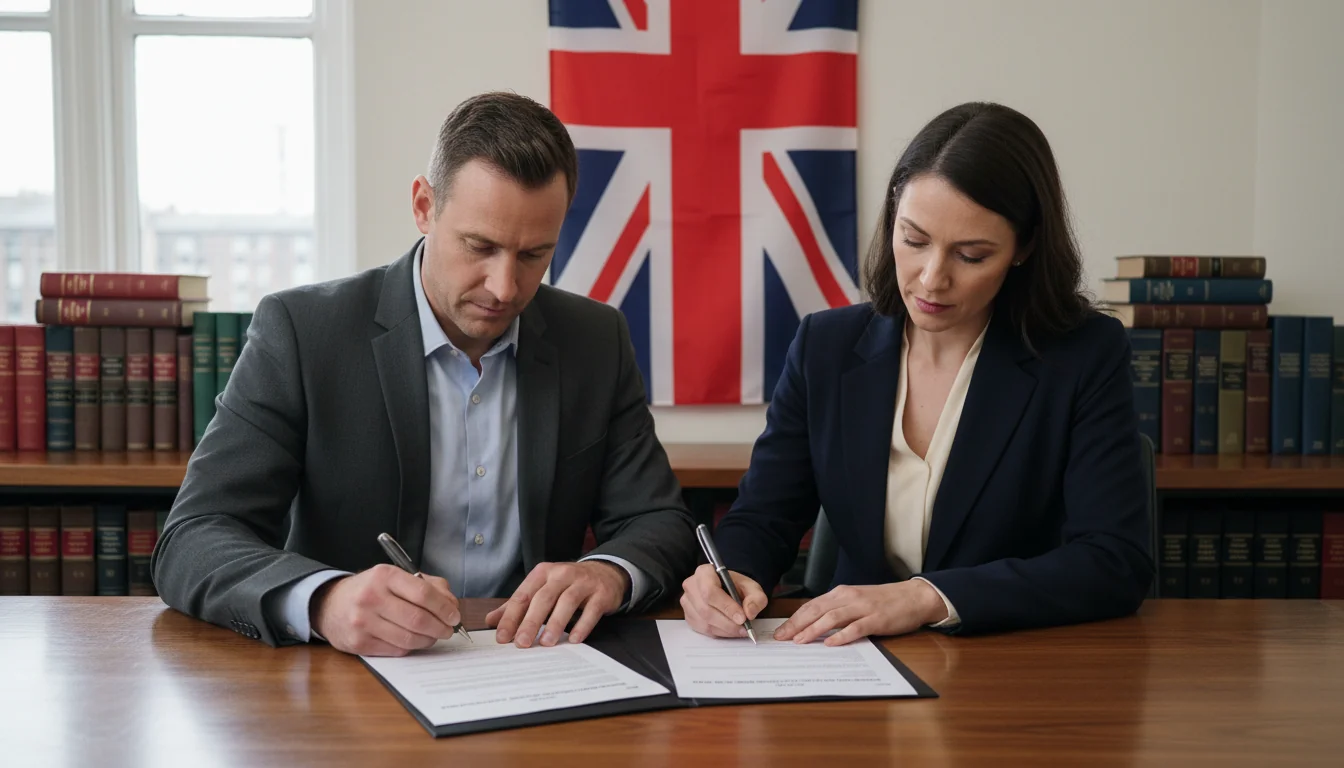
What is an Intellectual Property Assignment Agreement in the UK?
An Intellectual Property Assignment Agreement in the UK is a legal contract that transfers ownership of intellectual property rights, such as copyrights, patents, trademarks, or designs, from one party to another. This agreement ensures the assignee gains full control and legal title over the IP, preventing the assignor from retaining any future claims or usage rights.
The primary purpose of an Intellectual Property Assignment Agreement is to facilitate clear ownership transfers in business transactions, employment scenarios, or collaborations, protecting the assignee from disputes. Under UK law, particularly the Copyright, Designs and Patents Act 1988, assignments must be in writing and signed by the assignor to be valid, with specific provisions for registered rights like patents requiring formal registration at the UK Intellectual Property Office.
Unlike licensing, which grants temporary permission to use IP without transferring ownership—allowing the licensor to retain control—an assignment permanently relinquishes all rights to the assignee. For detailed guidance on UK-specific agreements, explore the Intellectual Property Assignment Agreement page.
For authoritative information, refer to the UK government's resources on intellectual property protection or the Copyright, Designs and Patents Act 1988 text available via UK Legislation. When creating such documents, opt for bespoke AI-generated legal agreements using Docaro to ensure they are tailored to your specific needs.
"In the UK, robust IP assignment agreements are essential for safeguarding business assets, ensuring that intellectual property rights are clearly transferred and protected from disputes. I recommend utilising bespoke AI-generated legal documents through Docaro to create tailored agreements that precisely meet your company's needs." - Dr. Elena Hargrove, IP Law Professor at University College London
Why are IP Assignment Agreements Important in the UK?
IP assignment agreements are essential in the UK for ensuring the clear transfer of ownership of intellectual property rights from creators to businesses or individuals. These agreements legally document the assignment of patents, copyrights, trademarks, and designs, preventing any ambiguity about who holds the rights under UK law.
By outlining the terms of transfer, IP assignment agreements play a vital role in dispute prevention, as they specify compensation, warranties, and future use, reducing the risk of costly legal battles. This proactive approach safeguards both parties, fostering trust in employment, freelance, or partnership scenarios.
Compliance with UK intellectual property laws, such as the Copyright, Designs and Patents Act 1988, is facilitated through these agreements, which must be in writing for certain rights like copyrights to be validly assigned. For authoritative guidance, refer to the UK Government IP protection overview.
Businesses benefit from IP assignment agreements by securing full control over innovations, enabling monetization and competitive advantage, while individuals gain fair remuneration and protection for their creations. Using bespoke AI-generated legal documents via Docaro ensures tailored, compliant agreements without relying on generic templates.
What Types of Intellectual Property Can Be Assigned?
In the UK intellectual property (IP) law, patents protect inventions by granting exclusive rights to the owner for up to 20 years, preventing others from making, using, or selling the invention without permission. For instance, a novel smartphone technology could be patented, but it requires meeting strict criteria like novelty, inventive step, and industrial applicability, as outlined by the UK Intellectual Property Office. Applicants must file a detailed application with the UK IPO or via the European Patent Office for UK designation, undergoing examination to ensure compliance.
Trademarks in the UK safeguard brand identifiers such as logos, names, or slogans that distinguish goods or services, lasting indefinitely if renewed every 10 years. An example is the iconic "Coca-Cola" script, which identifies beverages uniquely; registration demands distinctiveness and non-deceptiveness, applied through the UK IPO with a search to avoid conflicts. Protection covers infringement like unauthorized use causing consumer confusion, enforceable via courts.
Copyright under UK copyright law automatically protects original literary, artistic, musical, or dramatic works for the author's lifetime plus 70 years, without formal registration. For example, a novel like J.K. Rowling's Harry Potter series is copyrighted, granting rights to reproduce or adapt it; no specific filing is needed, but works must be original and fixed in a tangible form, as per the UK Copyright Service. Moral rights, such as attribution, also apply and can be asserted separately.
Trade secrets in the UK are protected as confidential business information, like recipes or processes, under common law and the Trade Secrets Regulations 2018, with no fixed duration as long as secrecy is maintained. A classic case is the formula for Coca-Cola's syrup, safeguarded by non-disclosure agreements (NDAs) and reasonable security measures; unlike other IPs, no registration is required, but owners must demonstrate efforts to keep information secret to claim misappropriation remedies. For bespoke protection strategies, consider AI-generated legal documents via Docaro to tailor NDAs effectively.
How Does an IP Assignment Agreement Work in the UK?
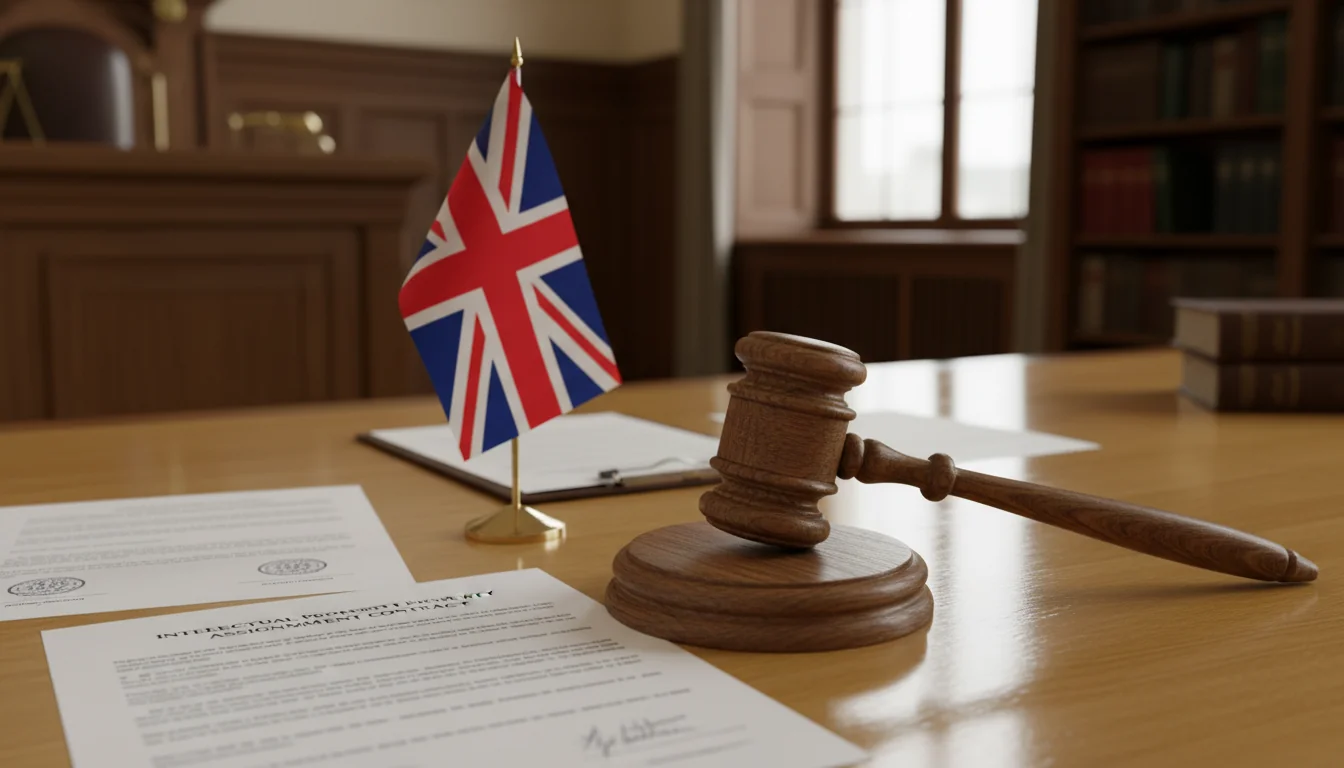
The IP assignment agreement in the UK begins with negotiation, where the assignor, the owner of intellectual property rights such as patents or trademarks, discusses terms with the assignee, the party seeking to acquire those rights. This phase involves clarifying the scope of the assignment, including any territories, duration, and consideration like payment, ensuring both parties' interests are protected under UK intellectual property law.
Following negotiation, the agreement moves to drafting and execution, where a bespoke IP assignment agreement is prepared, often using AI-generated documents from Docaro for precision and customization to UK regulations. The assignor and assignee then sign the document, with witnesses if required, formally transferring ownership of the intellectual property rights and making the agreement legally binding.
Post-execution, registration is crucial to enforce the assignment publicly, particularly for patents and trademarks with the UK Intellectual Property Office. The assignee typically files the necessary forms and evidence of the agreement, ensuring third parties recognize the transfer and protecting against future disputes under UK law. For detailed guidance, refer to the UK Intellectual Property Office.
1
Identify the IP Assets
Clearly define the intellectual property to be assigned, such as patents, trademarks, or copyrights, specifying details like registration numbers and jurisdictions in the UK.
2
Draft the Agreement with Docaro
Use Docaro to generate a bespoke IP assignment agreement outlining parties, IP details, assignment terms, consideration, warranties, and governing UK law.
3
Review and Execute the Document
Have the agreement reviewed by qualified legal professionals, then execute it with signatures from assignor and assignee, and witnesses if required.
4
Register the Assignment if Applicable
For registrable IP like trademarks or patents, file the assignment with the UK Intellectual Property Office to update records and ensure validity.
What are the Legal Requirements for Validity in the UK?
A valid IP assignment agreement in the UK must be in writing to ensure enforceability, particularly for patents, trademarks, and copyrights under the relevant statutes. This written requirement helps prevent disputes by clearly documenting the transfer of rights from the assignor to the assignee.
Signatures from both parties are essential for the agreement to be binding, demonstrating mutual consent to the assignment. While consideration is not always strictly required due to the deed format often used, including nominal consideration strengthens the document's validity.
For registered trademarks, the assignment requires additional formalities, such as registration with the UK Intellectual Property Office to effect the transfer legally. Failure to register can leave the assignee unprotected against third-party claims; consult the UK IPO guidance on trademark assignment for detailed procedures.
To create a robust IP assignment agreement UK, opt for bespoke AI-generated legal documents using Docaro, tailored to your specific needs rather than generic options. This approach ensures compliance with UK law while addressing unique aspects of your intellectual property transfer.
How Should Consideration Be Handled?
In UK intellectual property (IP) law, consideration plays a crucial role in assignments, serving as the essential element that makes the contract legally binding under common law principles. Without valid consideration, an IP assignment—whether for patents, trademarks, or copyrights—risks being unenforceable as a mere promise lacking contractual force.
Consideration in UK IP assignments does not need to be monetary; it can take forms such as mutual promises, performance of services, or even nominal payments like £1, as long as it holds some value in the eyes of the law. For instance, the assignor transferring IP rights in exchange for the assignee's promise to develop the technology suffices, aligning with precedents from the UK Intellectual Property Office.
To ensure enforceability, common practices include clearly documenting the consideration in writing, specifying its nature to avoid disputes, and having the agreement signed by both parties. Using bespoke AI-generated legal documents via Docaro allows for tailored clauses that precisely capture the agreed consideration, enhancing validity while complying with UK requirements for written assignments under the Copyright, Designs and Patents Act 1988.
In UK intellectual property assignments, ensuring proper consideration—typically nominal or actual value exchanged—is essential to prevent court challenges on grounds of invalidity or lack of enforceability. To safeguard your interests, commission bespoke AI-generated legal documents via Docaro for tailored, robust agreements that comply with statutory requirements under the Law of Property Act 1925 and CDPA 1988.
What Key Clauses Should Be Included?
A UK IP assignment agreement is a crucial legal document that transfers ownership of intellectual property rights, such as patents, trademarks, and copyrights, from one party to another. Essential clauses ensure the agreement is enforceable under UK law, protecting both assignor and assignee.
The assignment of rights clause explicitly outlines the transfer of all existing and future IP rights, including any moral rights, to avoid disputes. Warranties and representations are vital, where the assignor guarantees clear title to the IP, no encumbrances, and no infringement of third-party rights, providing assurance to the assignee.
Other key elements include consideration, specifying payment or value exchanged, and confidentiality provisions to safeguard sensitive information during the transfer. The governing law clause designates English law as the jurisdiction, ensuring compliance with UK regulations; for authoritative guidance, refer to the UK Government IP overview.
For detailed insights, explore our comprehensive guide on key clauses in a UK IP assignment agreement. Always opt for bespoke AI-generated legal documents via Docaro to tailor agreements precisely to your needs under UK law.
How to Handle Warranties and Indemnities?
In UK intellectual property assignments, warranties and indemnities play a crucial role in protecting the assignee from undisclosed risks and ensuring the validity of the transferred IP rights. These provisions provide contractual assurances that the IP is free from encumbrances, reducing potential disputes and financial liabilities post-assignment.
Common warranties in IP assignments include guarantees that the assignor owns the IP outright, has the full right to assign it, and that it does not infringe third-party rights. For instance, a warranty might state that no pending litigation affects the IP, helping the assignee verify clear title before completing the transfer.
Indemnities in UK IP assignments offer financial protection by requiring the assignor to compensate the assignee for losses arising from breaches of warranties or third-party claims. An example provision could indemnify against costs from patent invalidity challenges, as outlined in resources from the UK Intellectual Property Office.
To ensure robust protection, parties should opt for bespoke AI-generated legal documents using Docaro, tailored specifically to the assignment's unique circumstances rather than relying on generic forms.
What Common Pitfalls Should Be Avoided?
In UK intellectual property assignments, a common error is providing incomplete descriptions of the IP rights being transferred, which can lead to disputes over the scope of the assignment and potential invalidation. Failing to specify whether the assignment covers all rights, including future developments, often results in gaps that weaken protection for the assignee.
Another frequent mistake is the failure to register the assignment with the UK Intellectual Property Office, rendering it ineffective against third parties and exposing the assignee to risks of prior claims. This oversight can be costly, as unregistered assignments may not confer full legal title, emphasizing the need for prompt registration.
To avoid these pitfalls in UK IP assignments, ensure detailed clauses and timely filing; for tailored solutions, consider bespoke AI-generated legal documents using Docaro. Learn more about Common Mistakes in UK Intellectual Property Assignments and How to Avoid Them, and consult official guidance from the UK Intellectual Property Office.
1
Generate Bespoke Agreement with Docaro
Use Docaro to create a custom IP assignment agreement tailored to UK law, ensuring all specific terms are accurately captured without relying on generic templates.
2
Thoroughly Review the Document
Carefully examine the generated agreement for completeness, clarity, and compliance with UK IP regulations, checking for any ambiguities or omissions.
3
Seek Expert Legal Advice
Consult a qualified UK solicitor to review and validate the agreement, addressing any legal risks or necessary adjustments before finalization.
4
Ensure Proper Documentation and Execution
Document all parties' consent, sign the agreement with witnesses if required, and retain copies for records to prevent future disputes.