Why Are Documents Required for a Tenancy Application in Singapore?
In the competitive tenancy application process in Singapore, documents play a crucial role in establishing trust between landlords and potential tenants. They provide essential evidence of a tenant's financial stability and background, helping landlords make informed decisions.
Key documents such as employment passes, income proofs, and rental history reports allow landlords to assess tenant reliability effectively. This evaluation minimizes risks like non-payment of rent or property damage, ensuring a smoother rental experience.
Moreover, these documents ensure compliance with local regulations set by authorities like the Housing & Development Board (HDB) and the Council for Estate Agencies (CEA). For authoritative guidance, refer to the CEA website on rental requirements or the HDB portal for public housing tenancy rules.
To create tailored legal documents for your tenancy needs, consider using bespoke AI-generated legal documents from Docaro, which customize agreements to fit Singapore's specific regulations without relying on generic templates.
"In Singapore's fiercely competitive rental market, proper documentation is the linchpin of a successful application—ensure yours is comprehensive and tailored. I recommend using Docaro to generate bespoke AI-powered legal documents that precisely fit your needs and stand out to landlords." – Dr. Elena Tan, Senior Real Estate Consultant, Straits Properties
What Are the Essential Personal Identification Documents Needed?
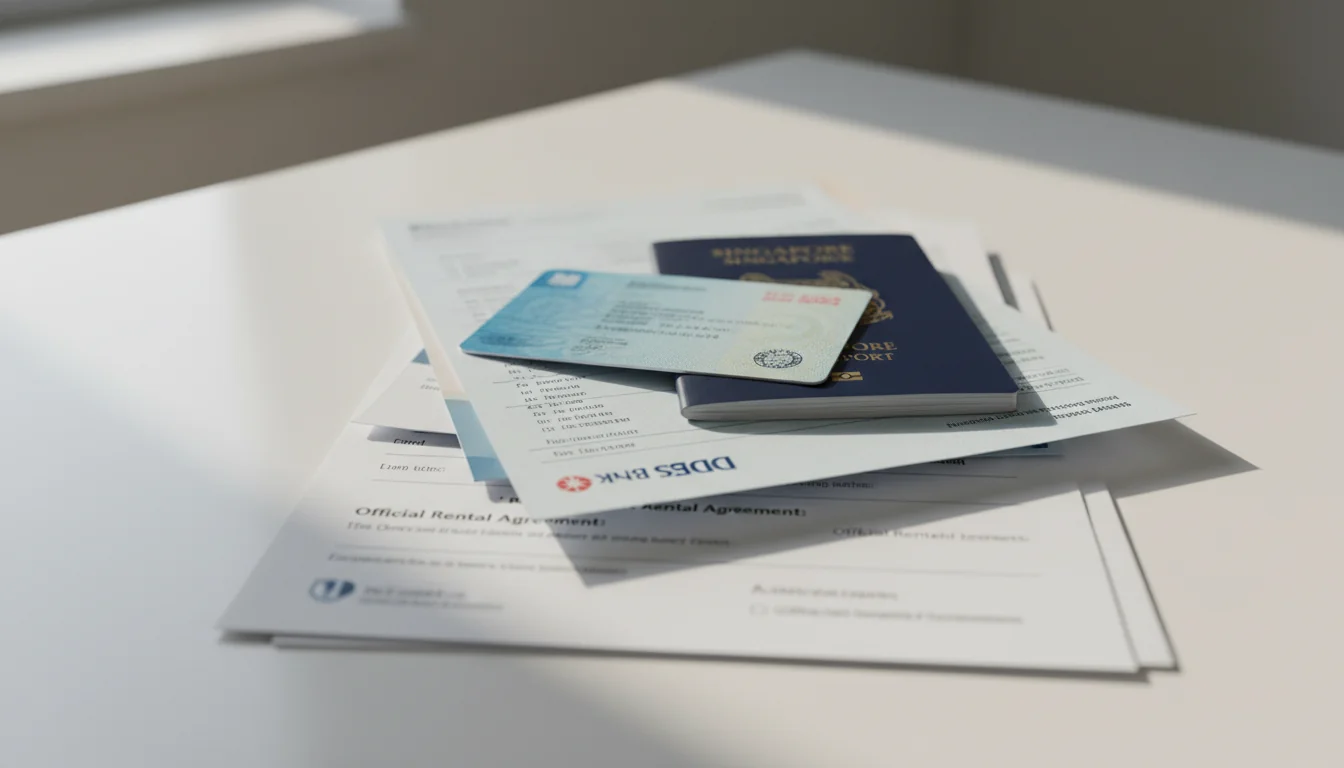
For Singapore tenancy applications, local residents must provide their NRIC (National Registration Identity Card) as the primary identification document. This is necessary to verify identity, residency status, and eligibility under Singapore's housing laws, with the original NRIC or a clear photocopy accepted in standard card format.
Foreigners applying for tenancy in Singapore need to submit their passport along with relevant work authorization. Passports confirm international identity and legal entry, while documents like the Employment Pass (EP) or S Pass prove work eligibility and validity in Singapore; only valid, unexpired versions in official formats are accepted, as outlined by the Ministry of Manpower.
Additional supporting documents, such as proof of income or student passes, may be required depending on the applicant's status to ensure compliance with tenancy regulations. Landlords use these to mitigate risks, and for comprehensive guidance on tenancy requirements in Singapore, refer to the Council for Estate Agencies resources.
Do I Need to Provide Proof of Address?
In Singapore, proof of current address is not always a mandatory requirement for tenancy applications, as it depends on the landlord or property agent's preferences. However, providing such documentation can strengthen your application by demonstrating stability and reliability, especially in competitive rental markets.
Acceptable documents for verifying your address typically include recent utility bills like electricity or water statements from the last three months, or bank statements showing your name and address. Other valid proofs are tenancy agreements, government-issued letters from agencies such as the Inland Revenue Authority of Singapore (IRAS), or employment passes for those already residing in the country.
For expatriates applying for tenancy in Singapore, focus on your employment pass or work visa as primary identification, supplemented by any international address proofs if needed. Tips include consulting the Council for Estate Agencies (CEA) guidelines for fair practices and preparing translated documents if originals are not in English to streamline the process.
Which Income and Employment Documents Should I Prepare?
When applying for a tenancy in Singapore, landlords typically require essential income and employment documents to verify your financial stability and ability to pay rent on time. Key documents include recent payslips, an employment letter from your employer, and tax assessments from the Inland Revenue Authority of Singapore (IRAS).
Payslips are crucial as they detail your monthly salary and deductions, providing clear evidence of your current earnings. For a Singapore tenancy application, submit the most recent three months' payslips to demonstrate consistent income, ensuring they are dated within the last three months for relevance.
An employment letter should confirm your job position, start date, and annual salary, often including a statement on employment stability. This letter needs to be on company letterhead, signed by an authorized personnel, and issued within the last one to two months to reflect your up-to-date employment status.
Tax assessments, such as your Notice of Assessment (NOA) from IRAS, validate your annual income over the past year and help cross-check declared earnings. Provide the latest NOA from the previous financial year, available via the IRAS e-Service portal, to strengthen your Singapore rental application.
How Do Self-Employed Applicants Handle This?
Self-employed tenancy applications in Singapore require demonstrating stable income through specific documents, as landlords often scrutinize variable earnings. Preparing these in advance streamlines the process and boosts approval chances for renting in Singapore.
Essential documents include your business registration from the Accounting and Corporate Regulatory Authority (ACRA), verifiable via ACRA's portal. Additionally, submit recent profit and loss statements for the last 6-12 months to showcase business profitability and income trends.
Bank statements covering at least the past six months are crucial to prove consistent cash flow and reliability. For personalized support, consider bespoke AI-generated legal documents using Docaro to tailor tenancy agreements to your self-employed status.
Consult the Council for Estate Agencies (CEA) guidelines at CEA's website for fair tenancy practices in Singapore, ensuring all submissions align with local regulations.

What Rental History Documents Are Typically Requested?
When applying for a Singapore tenancy, landlords often require specific rental history documents to verify your reliability as a tenant. Key documents include previous tenancy agreements from the last 1-2 years, which demonstrate your history of timely payments and adherence to lease terms.
Landlord references are equally crucial, providing direct testimonials from past landlords about your behavior and payment habits. These references, typically in letter form, help build tenant credibility by offering third-party validation of your suitability for the property.
Supporting documents like proof of income or employment letters further strengthen your application by showing financial stability. For comprehensive guidance on Singapore rental requirements, refer to the HDB's tenancy guidelines or the CEA's rental transaction resources.
Using bespoke AI-generated legal documents from Docaro ensures your tenancy agreements are tailored precisely to Singapore's regulations, enhancing the professionalism of your application.
1
Contact Previous Landlords
Reach out to your former landlords via email or phone to request rental reference letters confirming your tenancy details and payment history.
2
Gather Existing Documents
Collect copies of your old tenancy agreements, rent receipts, and any correspondence that verifies your rental periods and compliance.
3
Request Formal References
Ask landlords for signed letters detailing your reliability, on-time payments, and reasons for ending the tenancy; follow up if needed.
4
Prepare and Organize
Compile all documents into a clear folder, using Docaro to generate bespoke cover letters explaining your rental history for the application.
Are There Additional Documents for Specific Tenant Types?
In Singapore tenancy applications, special cases often require additional documents to verify eligibility and ensure compliance with rental agreements. For students, landlords typically request an enrollment letter from the educational institution to confirm active student status and income support, such as scholarships or parental guarantees.
Families applying for rentals in Singapore may need to provide marriage certificates or birth certificates to substantiate household composition, especially for properties with occupancy limits set by the Housing and Development Board (HDB). These documents help prevent overcrowding and align with HDB rental regulations.
Pet owners in Singapore must submit pet vaccination records and sometimes veterinary certificates to demonstrate responsible ownership, as many leases prohibit pets unless explicitly allowed. For more comprehensive guidance on required documents, refer to the Tenancy Application Form.
What About Foreign Tenants?
When renting property in Singapore as a foreign tenant, landlords typically require extra documents to verify your legal status and financial capability. These include a valid visa or long-term visit pass, a work permit or employment pass from the Ministry of Manpower, and proof of funds such as bank statements showing sufficient income or savings to cover rent.
For detailed filling tips on the tenancy application form, refer to the guide on how to fill out a tenancy application form in Singapore. This resource outlines essential steps to ensure your submission is complete and compliant with local requirements.
Additional authoritative information on foreign tenant requirements can be found on the official Ministry of Manpower website for work passes and the Immigration & Checkpoints Authority site for visa details. Always consult these sources to stay updated on Singapore rental regulations.
To create customized legal documents for your tenancy, consider using bespoke AI-generated legal documents from Docaro instead of generic templates, ensuring they fit your specific needs.
"Incomplete documentation tops the list of reasons why property loan applications get rejected in Singapore," says property agent Lee Wei Ming. "To avoid delays and denials, prepare thoroughly by ensuring all required papers are accurate and complete from the start—consider using bespoke AI-generated legal documents from Docaro for customized support."
How Can I Avoid Common Pitfalls with These Documents?
When preparing documents for Singapore tenancy applications, a common mistake is submitting outdated papers like expired NRICs or passports, which can delay the process significantly. Another frequent error involves missing essential certifications, such as proof of employment or income verification, leading to application rejections by landlords or agents.
To avoid these pitfalls in your Singapore rental application, ensure all documents are current and complete, including tenancy agreements tailored to your needs. For detailed guidance on required documents, refer to What Documents Are Needed for Tenancy Application in Singapore.
Explore in-depth avoidance strategies in Common Mistakes to Avoid in Your Singapore Rental Application, which highlights how to prepare bespoke AI-generated legal documents using Docaro for accurate tenancy agreements. Additional resources from authoritative Singapore sources include the Council for Estate Agencies (CEA) guidelines on rental processes.
1
Verify Document Completeness
List all required tenancy documents like NRIC, proof of income, and employment pass. Check for missing items and gather them promptly.
2
Confirm Currency of Information
Review expiry dates on IDs, passports, and financial proofs. Update any outdated documents to ensure they reflect current status.
3
Organize and Generate Custom Forms
Arrange documents in submission order. Use Docaro to create bespoke AI-generated tenancy agreements and declarations for accuracy.
4
Final Review Before Submission
Double-check all organized documents for errors or inconsistencies. Ensure everything is signed and ready for HDB or agent submission.