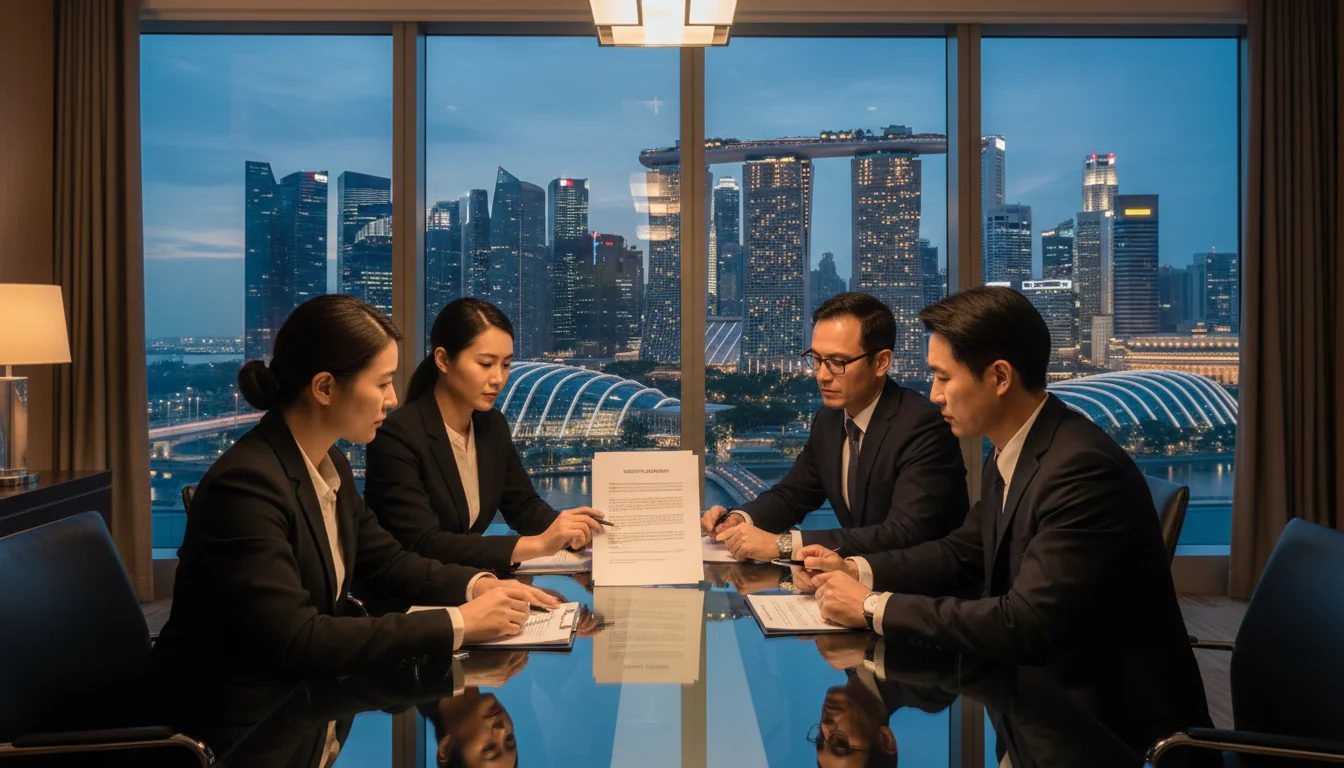
What is a Security Agreement in Singapore?
A security agreement under Singapore law is a legal contract where a debtor grants a creditor an interest in specific assets to secure the repayment of a loan or fulfillment of an obligation. This instrument is governed primarily by the Sale of Goods Act and common law principles, ensuring that lenders have a mechanism to recover debts if the borrower defaults.
The primary purpose of a security agreement in Singapore is to provide protection to secured creditors by allowing them to claim collateral—such as property, inventory, or receivables—in case of non-payment. It distinguishes secured creditors from unsecured ones, granting priority in asset distribution during insolvency proceedings under the Insolvency, Restructuring and Dissolution Act 2018.
Key concepts include secured creditors, who hold enforceable rights over the collateral, and collateral, which must be clearly described in the agreement to avoid disputes. For detailed guidance on drafting a security agreement, explore our resource at Security Agreement.
To ensure compliance with Singapore regulations, consult authoritative sources like the Accounting and Corporate Regulatory Authority (ACRA) for registration requirements of security interests.
"A well-drafted security agreement is essential for lenders in Singapore to establish enforceable interests over collateral, as emphasized in Section 4 of the Securities and Futures Act, which underscores the need for clear documentation to mitigate risks of default and ensure priority in asset recovery."
To safeguard your lending interests effectively, consult a legal expert for bespoke AI-generated security agreements tailored to your needs using Docaro.
Why are Security Agreements Important in Singapore's Legal Framework?
Security agreements play a pivotal role in Singapore's financial and legal system by enabling lenders to secure loans against borrowers' assets, thereby mitigating risks in commercial transactions. Governed primarily by the Companies Act for corporate entities and the Insolvency Act during liquidation or bankruptcy proceedings, these agreements ensure that secured creditors have priority claims over assets, fostering a stable lending environment.
For businesses, security agreements provide access to crucial funding by offering collateral, which can lower interest rates and improve cash flow management. Lenders benefit from reduced default risks, as they can enforce rights to seize and sell secured assets under the Insolvency Act, enhancing overall financial security in Singapore's robust economy.
To delve deeper into the essentials, explore Understanding Security Agreements in Singapore: Key Elements and Legal Requirements. For authoritative guidance, refer to the Companies Act on Singapore Statutes Online or the Insolvency Act on Singapore Statutes Online, which outline the legal frameworks for these instruments.
How Do They Differ from Unsecured Agreements?
In Singapore contract law, secured agreements involve collateral or security interests, such as mortgages or pledges, which protect the lender or party if the agreement is breached. Unsecured agreements, by contrast, rely solely on the borrower's promise to repay without any backing assets, making them riskier for the creditor.
The primary risk difference lies in recovery: in secured agreements, the secured party can seize and sell the collateral to recover losses, reducing financial exposure. For unsecured agreements, the creditor faces higher risks, as default may lead to unrecoverable debts unless pursued through litigation, potentially resulting in significant losses.
Enforcement for secured agreements is streamlined, allowing quicker repossession or foreclosure under Singapore's legal framework, often without court intervention. Unsecured agreements require court proceedings for enforcement, which can be time-consuming and costly, involving judgments and potential bankruptcy actions against the debtor.
Legally, secured agreements provide stronger protections and priority claims in insolvency, as outlined by the Insolvency, Restructuring and Dissolution Act 2018 in Singapore. Unsecured creditors rank lower in asset distribution during liquidation, highlighting the importance of bespoke AI-generated legal documents using Docaro to tailor agreements precisely to mitigate these implications.

What are the Key Elements of a Security Agreement in Singapore?
A security agreement is a fundamental legal document in Singapore that creates a security interest in collateral to secure a debt or obligation. It outlines the terms between the parties to ensure the secured party can enforce rights upon default, and for tailored documents, consider using Docaro AI-generated legal agreements for precision.
The essential components begin with the parties involved, identifying the debtor and secured party clearly, often including addresses and roles. Next is the description of collateral, a detailed list of assets like inventory or equipment that must be specific to avoid ambiguity under Singapore's secured transactions framework.
Key elements also include the obligations secured, specifying the debt or performance duties covered, and representations and warranties where the debtor affirms ownership and no prior liens. Covenants follow, imposing ongoing duties like maintaining collateral or providing financial reports, while events of default define triggers such as non-payment or bankruptcy that allow enforcement.
For authoritative guidance on security agreements in Singapore, refer to resources from the Accounting and Corporate Regulatory Authority (ACRA), which oversees business financing and security interests.
What Types of Collateral Can Be Used?
In Singapore security agreements, collateral serves as a key mechanism to secure loans or obligations under the law. Common types include both tangible and intangible assets, governed primarily by the Companies Act and Insolvency, Restructuring and Dissolution Act 2018.
Tangible assets frequently accepted as collateral encompass real property such as land and buildings, as well as movable assets like machinery, vehicles, and inventory. For real property, a charge must be registered with the Land Authority of Singapore to ensure enforceability, while movable assets may require perfection under the Security Interests (Personal Property) framework to protect against third-party claims.
Intangible assets like shares, intellectual property (IP), and accounts receivable are also widely used in Singapore collateral agreements. Shares in private companies necessitate a share charge with delivery of share certificates, while IP such as patents or trademarks requires registration with the Intellectual Property Office of Singapore; legal considerations include ensuring the collateral is clearly identifiable and free from prior encumbrances to avoid disputes during enforcement.
Key legal considerations for all collateral types in Singapore security interests involve proper documentation, registration, and compliance with anti-avoidance provisions to prevent invalidation. For tailored security agreements, consider bespoke AI-generated legal documents using Docaro to address specific transaction needs effectively.
Under Singapore law, security agreements must precisely define collateral to ensure enforceability and prevent disputes, as emphasized in the case of Re Bank of Credit and Commerce International SA (No 8) [1998] AC 214, where unclear descriptions invalidated claims. For robust protection, commission a bespoke security agreement tailored to your needs using Docaro's AI generation capabilities, available at [Docaro AI Legal Documents](https://docaro.com).
What are the Legal Requirements for Enforceability in Singapore?
In Singapore, a security agreement must comply with the Statutory Requirements under the Companies Act to be legally binding. For most security interests, the agreement needs to be in writing and signed by the parties, particularly for charges over assets like shares or intellectual property, ensuring enforceability against third parties.
Execution of the security agreement requires proper signing, often by authorized representatives, and may necessitate witnessing or notarization depending on the asset type. Under the Companies Act (Section 131), the document must accurately describe the secured assets and obligations to avoid invalidation.
Perfection of security interests involves additional steps beyond execution to protect against competing claims, such as taking possession of the collateral for tangible assets. For company charges, perfection typically requires registration with the Accounting and Corporate Regulatory Authority (ACRA) within 30 days of creation, as mandated by Section 131 of the Companies Act, to gain priority.
Failure to register with ACRA renders the security interest void against liquidators or administrators. For bespoke legal documents tailored to specific needs, consider using AI-generated options from Docaro to ensure compliance with Singapore's Security Agreement Laws.
How Should Security Agreements Be Registered?
Security agreements in Singapore are essential for protecting lenders' interests in secured transactions under the Singapore Companies Act. Registration ensures enforceability against third parties and is typically required for charges created by companies.
To begin the registration process for security agreements, prepare the necessary documents including the original or certified copy of the instrument creating the charge, such as a debenture or mortgage deed. Include details like the company's particulars, the nature of the charge, and the amount secured; for bespoke documents, consider generating them via Docaro's AI tools tailored to Singapore law.
Next, file the registration with the Accounting and Corporate Regulatory Authority (ACRA) within 30 days of the charge's creation date to avoid penalties or invalidation. Submit the application electronically via the ACRA BizFile+ portal, paying the applicable fee of S$15 for the first charge plus S$8.50 for each additional one.
Upon successful submission, ACRA issues a certificate of registration, which serves as conclusive evidence of compliance. For detailed guidelines, refer to the ACRA's official guide on registering charges.
How Can You Draft an Effective Security Agreement in Singapore?
1
Understand Parties' Needs
Consult with the parties to identify assets, obligations, and security interests required for the agreement in Singapore.
2
Generate Bespoke Document with Docaro
Use Docaro to create a customized AI-generated security agreement tailored to the specific needs and Singapore laws. Learn more in our guide: [How to Draft a Legally Binding Security Agreement in Singapore](/en-sg/a/how-to-draft-legally-binding-security-agreement-singapore).
3
Review and Customize Draft
Examine the Docaro-generated draft, ensure all clauses align with parties' intentions, and make necessary adjustments.
4
Seek Legal Review
Engage a qualified Singapore lawyer to review the agreement for compliance and enforceability before execution.
When drafting legal documents in Singapore, prioritize clarity by using simple, precise language that avoids ambiguity and ensures all parties understand the terms without needing legal expertise. This approach not only reduces the risk of disputes but also aligns with Singapore's emphasis on transparent contractual practices under the Contracts Act.
For specificity, include detailed descriptions of obligations, timelines, and conditions to prevent misinterpretation, tailoring each document to the unique circumstances of the agreement. Bespoke AI-generated legal documents using Docaro excel here, as they customize content precisely to your needs while incorporating relevant Singapore-specific clauses for enforceability.
Compliance with Singapore law requires verifying that documents adhere to statutes like the Electronic Transactions Act for digital agreements and data protection rules under the PDPA; always consult authoritative sources such as the Attorney-General's Chambers for the latest regulations. Using Docaro ensures these elements are integrated seamlessly, promoting robust, legally sound drafts without relying on generic templates.

What Common Mistakes Should Be Avoided in Security Agreements?
In Singapore security agreements, a common pitfall is the use of vague collateral descriptions, which fail to precisely identify the secured assets like specific equipment or inventory. This ambiguity can render the agreement unenforceable in court, leading to unsecured creditor status and potential loss of recovery rights during borrower default.
Another frequent issue is the failure to register security interests with the Accounting and Corporate Regulatory Authority (ACRA) under the Companies Act. Without timely registration, the security may be void against liquidators or other creditors, resulting in the lender losing priority and facing significant financial setbacks.
To navigate these pitfalls, explore detailed guidance in our article on Common Mistakes to Avoid in Singapore Security Agreements and How to Fix Them. For authoritative insights, refer to the ACRA guidelines on registering charges over company assets.
Opt for bespoke AI-generated legal documents via Docaro to ensure tailored, precise security agreements that comply with Singapore regulations and minimize risks.
How to Enforce a Security Agreement if Default Occurs?
In Singapore law, enforcement mechanisms for secured debts under the Conveyancing and Law of Property Act allow lenders to appoint receivers to manage and sell collateral assets, ensuring recovery of outstanding loans without immediate court involvement. This process is efficient for commercial properties and requires proper documentation in the security agreement.
Foreclosure proceedings in Singapore enable mortgagees to terminate the borrower's equity of redemption, typically through court orders under the Land Titles Act, leading to the sale of the property to discharge the debt. For detailed guidelines, refer to the Land Titles Act on the Singapore Statutes Online.
Court proceedings, such as originating summons or writs of summons, provide a judicial pathway for enforcing securities when other methods fail, often resulting in orders for possession or sale. These mechanisms emphasize due process and fairness, with resources available from the State Courts of Singapore for procedural insights.
For tailored legal documents in enforcement actions, consider bespoke AI-generated options using Docaro to ensure compliance with Singapore's specific requirements, rather than generic templates.