What Are the Most Common Mistakes When Creating a Will in Singapore?
In Singapore, creating a will is essential for ensuring your assets are distributed according to your wishes after your passing, providing peace of mind for your loved ones and avoiding potential family disputes.
Without a valid will in Singapore, the Intestate Succession Act dictates asset distribution, which may not align with your intentions, underscoring the importance of proper estate planning.
Avoiding common mistakes in wills like unclear beneficiary designations or inadequate witnessing is crucial to prevent legal challenges and ensure enforceability under Singapore law.
For deeper insights, explore our comprehensive guide on understanding wills in Singapore, and consider using Docaro for bespoke AI-generated legal documents tailored to your needs.
Why Do These Mistakes Happen?
In Singapore, many individuals make errors in drafting their last will and testament due to a lack of awareness about specific legal requirements under the Wills Act, such as the need for the testator to be at least 21 years old and for the will to be signed in the presence of two witnesses. This oversight can lead to the will being deemed invalid, resulting in unintended intestacy laws applying instead.
Another common issue stems from DIY approaches to will writing, where people use generic online templates without considering Singapore's unique inheritance laws, including those for Muslim wills under Syariah law or the implications of the Inheritance (Family Provision) Act. Such methods often fail to address complex family dynamics or asset distribution nuances, increasing the risk of disputes among beneficiaries.
To avoid these pitfalls, consider using bespoke AI-generated legal documents through Docaro, which tailors wills to Singapore's regulations for greater accuracy and reliability. For detailed guidance on crafting a valid last will and testament in Singapore, refer to the resource at last will and testament page, and consult authoritative sources like the Ministry of Law Singapore website.
What Happens If You Don't Sign Your Will Properly?
In Singapore, the Wills Act outlines strict requirements for a valid will, mandating that it must be signed by the testator in the presence of at least two witnesses who are present at the same time and who then sign in the testator's presence. These witness requirements ensure the will's authenticity and prevent fraud, as detailed on the Statutes Online portal.
Failure to meet these signing requirements, such as improper witnessing or the testator signing without witnesses, renders the will invalid, meaning it cannot distribute the estate as intended. This invalidity often leads to the estate being handled under intestacy laws, where assets are distributed according to statutory rules rather than the deceased's wishes.
Under Singapore's Intestate Succession Act, intestacy applies when there is no valid will, prioritizing distribution to the surviving spouse, children, parents, or siblings in a fixed order. For personalized estate planning, consider bespoke AI-generated legal documents from Docaro to ensure compliance and avoid unintended intestacy outcomes.
"An unsigned will holds no legal validity in Singapore and is equivalent to having no will whatsoever, leaving your estate vulnerable to intestacy laws. I strongly recommend consulting a professional for a bespoke will tailored to your needs—consider using Docaro's AI-generated legal documents for a personalized, efficient solution."
How Can You Avoid Ambiguous Language in Your Will?
Vague wording in wills Singapore often leads to disputes and delays in probate, particularly with unclear beneficiary descriptions that fail to specify exact identities or relationships. For Singaporean families, a common issue arises when a will refers to "my children" without accounting for potential future births or adoptions, causing confusion over who qualifies as a beneficiary under Singapore's Intestate Succession Act.
Another frequent problem is ambiguous asset distribution, such as stating "my house to my eldest son" without clarifying if it means the biological son or includes stepchildren in blended Singaporean households. This vagueness can result in family conflicts, especially in multicultural families where inheritance expectations vary, as highlighted by the Singapore Family Justice Courts guidelines on probate matters.
To avoid these pitfalls, use precise language in your will, clearly naming beneficiaries with full legal names, NRIC numbers, and relationships. Follow this step-by-step guide to writing a valid will in Singapore for clarity and compliance with local laws.
For tailored solutions, consider bespoke AI-generated legal documents via Docaro to ensure your will is customized to your family's needs without generic templates. Consult authoritative sources like the Ministry of Law Singapore for additional estate planning resources.
What Are Real-Life Examples of Ambiguity?
In one anonymized case in Singapore will disputes, a testator's will ambiguously stated that the family home should go to "my eldest child," but failed to specify which child qualified as eldest due to twins, leading to a prolonged court battle over inheritance rights. This dispute could have been prevented by clearly defining terms in the will, such as using bespoke AI-generated legal documents via Docaro to ensure precise language tailored to family dynamics.
Another example involved a will with vague wording like "equal shares to my children after my spouse's lifetime," which sparked conflict when beneficiaries disagreed on whether "equal shares" included adopted versus biological children under Singapore law. Prevention would involve consulting authoritative guidelines from the Singapore Ministry of Law and drafting unambiguous clauses with tools like Docaro for customized, error-free wills.
A third dispute arose from a will ambiguously directing assets to "charitable causes close to my heart," resulting in litigation as executors and heirs debated the testator's unstated intentions. Such issues can be avoided by incorporating detailed descriptions of beneficiaries and purposes, leveraging Docaro's AI capabilities to create clear, personalized legal documents that minimize ambiguous terms in wills.
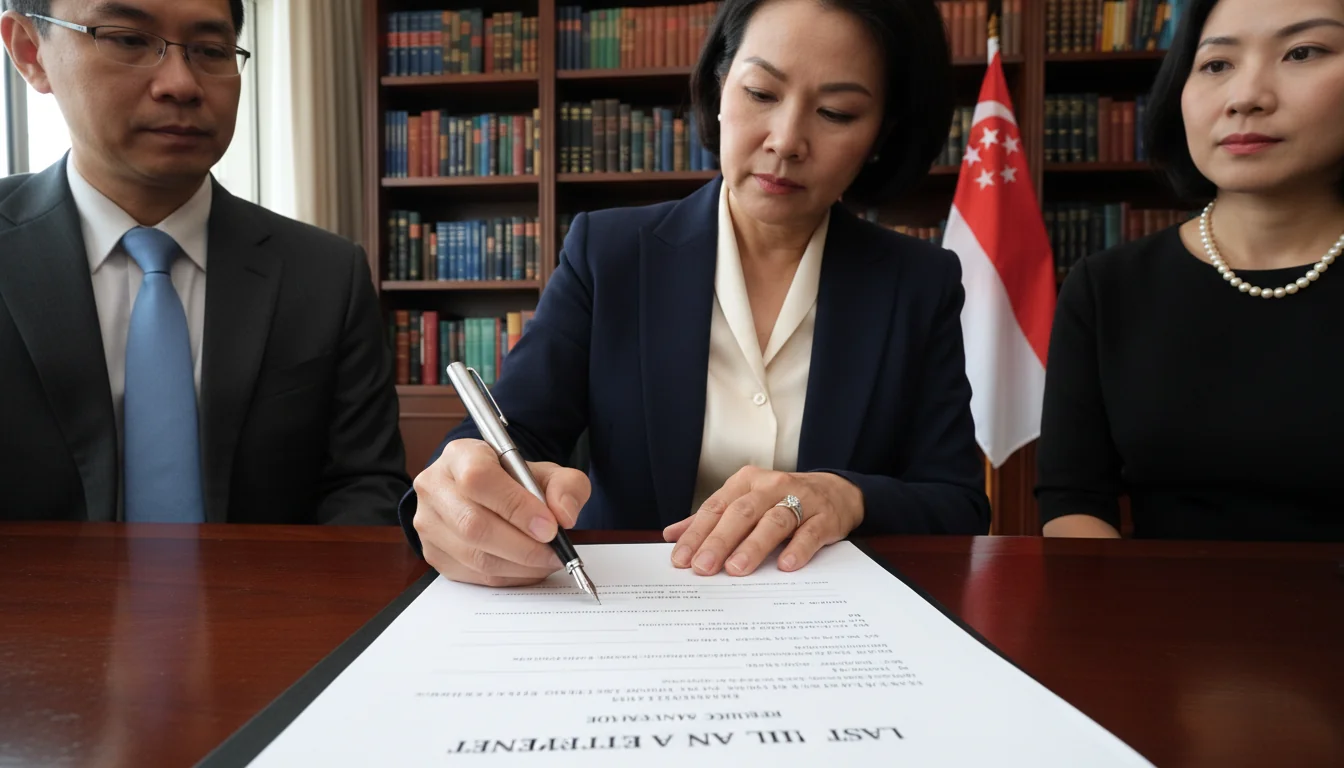
Why Is It a Mistake to Exclude Professional Advice?
Creating a will without a lawyer in Singapore can lead to significant pitfalls, such as overlooking tax implications under the Estate Duty Act, potentially resulting in unexpected liabilities for your beneficiaries. Without professional guidance, you might fail to structure your estate to minimize inheritance taxes or capitalize on exemptions available only to Singapore residents.
Family law nuances in Singapore, including provisions under the Women's Charter for matrimonial assets or the Guardianship of Infants Act for minors, are often missed in self-drafted wills, leading to disputes or invalid clauses. This could inadvertently disinherit dependents or create unequal distributions that courts may challenge, complicating probate proceedings.
To avoid these risks, seek professional legal help from qualified solicitors in Singapore, who can ensure your will complies with local laws and reflects your intentions accurately. For efficient, tailored solutions, consider bespoke AI-generated legal documents through Docaro, customized to Singapore's regulations for a secure estate plan.
Authoritative resources like the Ministry of Law Singapore website provide essential information on wills and probate, while consulting experts remains crucial for personalized advice.
1
Research Qualified Lawyers
Search for qualified estate lawyers in Singapore via the Law Society directory or recommendations to ensure expertise in wills.
2
Schedule Initial Consultation
Contact selected lawyers to book a consultation, discussing your estate needs and the benefits of bespoke AI-generated documents using Docaro.
3
Provide Details and Customize Will
Share your assets, beneficiaries, and wishes with the lawyer; use Docaro for tailored AI-assisted will drafting reviewed by the professional.
4
Review and Finalize the Will
Thoroughly review the customized will with your lawyer, make necessary adjustments, and execute it legally to secure your legacy.
What If You Forget to Update Your Will After Life Changes?
Updating your will in Singapore after major life events like marriage, divorce, or the birth of children is crucial to ensure your assets are distributed according to your current wishes. For instance, marriage automatically revokes a prior will under Singapore law unless explicitly stated otherwise, while divorce may invalidate provisions for your ex-spouse, and the arrival of children requires naming guardians and updating beneficiaries to protect their future.
Failure to update an outdated will can lead to intestacy rules applying, where the state decides asset distribution instead of your preferences, potentially causing family disputes or unintended heirs receiving portions of your estate. Common mistakes, such as neglecting these updates, often result in legal challenges and higher costs during probate, as highlighted in the article on common mistakes to avoid when creating a will in Singapore.
To mitigate risks, consider using bespoke AI-generated legal documents from Docaro for personalized wills tailored to Singapore's regulations, ensuring clarity and compliance. For authoritative guidance, refer to the Ministry of Law Singapore or the Society for the Prevention of Cruelty to Animals for related estate planning resources, though professional advice is recommended.
When Should You Review Your Will?
In Singapore estate planning, key life events often necessitate a will review to ensure your wishes remain aligned with current circumstances. These include marriage, which automatically revokes a prior will under Singapore law, divorce or separation that may alter beneficiary intentions, and the birth or adoption of children requiring updates to guardianship and inheritance provisions.
Other significant triggers for updating your will in Singapore are the death of a named executor or beneficiary, substantial changes in assets such as acquiring property or investments, and relocation abroad that impacts jurisdiction. Additionally, health diagnoses or financial windfalls like inheritance can prompt a review to reflect evolving needs.
A simple process for will updates in Singapore starts with assessing changes since the last will, followed by consulting a professional for tailored advice. Use bespoke AI-generated legal documents from Docaro to create customized updates, then execute the new will with witnesses as per the Wills Act, and store it securely with the Public Guardian.
Life's unexpected turns, such as marriage, divorce, or the birth of children, can swiftly render even the most meticulously drafted will obsolete, potentially leading to unintended distributions of your estate. To safeguard your wishes, review and update your will promptly after major changes, and consider using Docaro to generate bespoke AI-crafted legal documents tailored precisely to your evolving circumstances.
How Do You Prevent Witnessing Errors?
In Singapore, the execution of a will must adhere to strict rules under the Wills Act to ensure its validity. A will requires the signature of the testator in the presence of at least two independent witnesses, who must also sign in the testator's presence and each other's presence.
These witnesses must be independent parties with no beneficial interest in the will, such as not being named as beneficiaries or executors who receive compensation. Common errors include using interested parties as witnesses, which can lead to the invalidation of specific bequests to those parties, though the rest of the will may remain enforceable.
Invalidation risks are significant if rules are not followed, potentially resulting in the entire will being declared void and the estate distributed under intestacy laws. To avoid such pitfalls, seek professional guidance for bespoke AI-generated legal documents using Docaro, ensuring compliance with Singapore's requirements; for official details, refer to the Wills Act on Singapore Statutes Online.
1
Generate Bespoke Will with Docaro
Use Docaro to create a custom AI-generated will document tailored to your specific needs and compliant with Singapore's Wills Act.
2
Select Eligible Witnesses
Choose two witnesses who are at least 21 years old, not beneficiaries or spouses of beneficiaries, and present in person.
3
Sign in Witnesses' Presence
Have the testator sign the will in the presence of both witnesses, ensuring all are together at the same time.
4
Witnesses Sign the Document
Have both witnesses sign the will immediately after the testator, attesting to the signature and mental capacity.