What Is a Roommate Agreement and Why Do You Need One?
A written roommate agreement offers key benefits by preventing disputes and clarifying responsibilities among housemates. It sets clear expectations for rent payments, household chores, and guest policies, reducing misunderstandings that often lead to conflicts. By documenting these terms upfront, roommates can foster a harmonious living environment and avoid costly arguments.
Even though a roommate agreement may not always be legally enforceable like a formal lease, it provides a valuable legal framework for resolving issues. It serves as evidence of mutual consent in case of disagreements, potentially supporting claims in small claims court or mediation. For authoritative guidance, refer to resources from the Nolo legal encyclopedia on roommate rights.
This article focuses on essential clauses for a robust roommate agreement. To explore these in detail, visit our comprehensive guide at Essential Clauses for US Roommate Agreements. Incorporating these elements ensures your agreement is practical and effective for shared living.
What Are the Essential Clauses for Rent and Utilities?
When specifying roommate rent shares in a lease agreement, start by agreeing on a fair division based on factors like room size, private bathroom access, or income levels to ensure equitable rent splitting. For utilities, calculate shares proportionally to usage, such as equal splits for shared items like electricity and water, or individual metering for personal lines like internet. Document these details in a written roommate agreement to avoid disputes, using tools like spreadsheets for transparent cost allocation methods.
To handle missed payments, include provisions in the agreement requiring prompt notice of delays and outlining consequences like late fees or shared liability among roommates. Establish a system for collecting payments, such as a group bank account or apps like Splitwise, and define steps for eviction if issues persist. Always reference state-specific landlord-tenant laws, as variations exist; for example, check resources from the Nolo Legal Encyclopedia for your state's rules on shared housing and utilities.
How Should You Handle Security Deposits?
1
Discuss and Agree on Initial Contribution
Roommates meet to agree on equal or proportional security deposit amounts, specifying total deposit and each person's share in the lease agreement.
2
Document Deposit Payment
Record each roommate's contribution to the security deposit, including date, amount, and payment method, and attach receipts to the roommate agreement.
3
Establish Damage Tracking Protocol
Outline rules for reporting and documenting any damages or issues during tenancy, such as joint inspections and photo logs, in the agreement.
4
Define Refund Process
Specify how the deposit will be refunded at move-out, including damage deductions, equal split of remainder, and timelines for reconciliation.
How Can You Divide Household Chores Effectively?
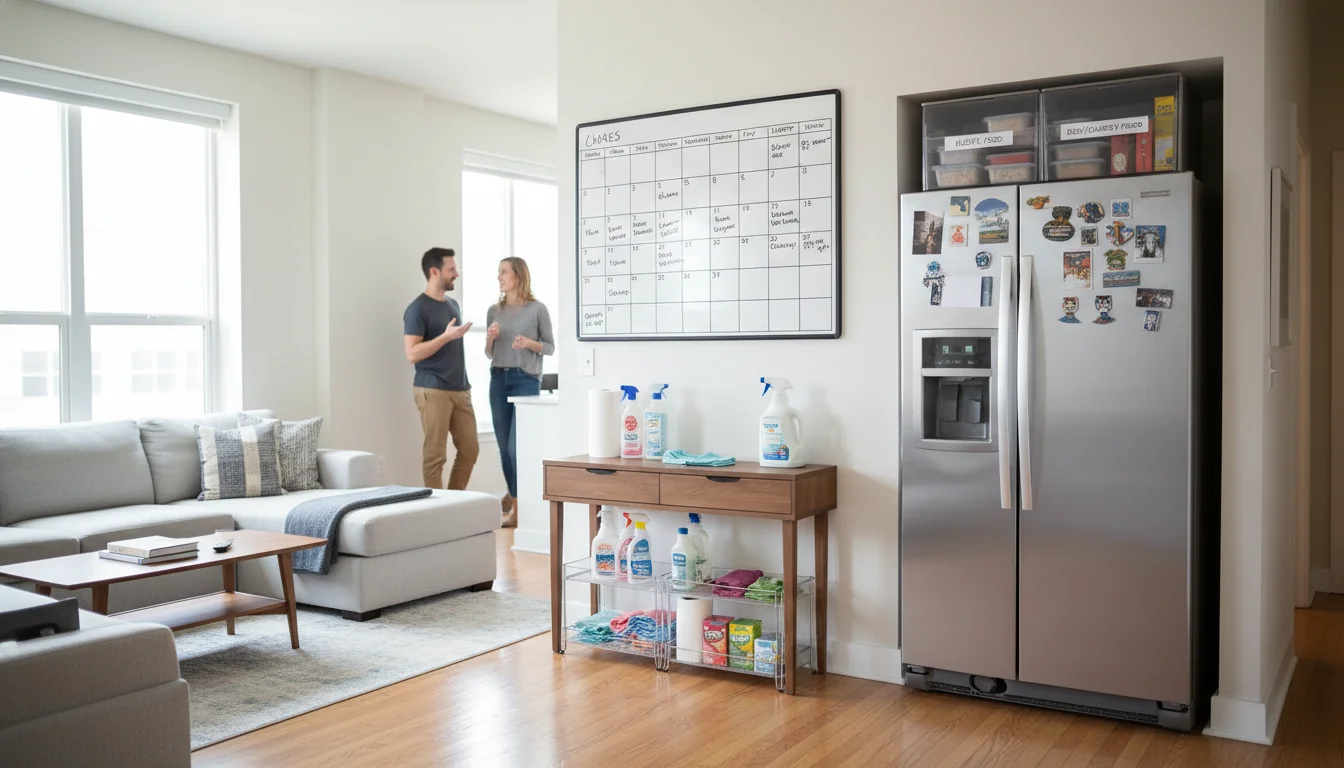
Effective chore division methods are essential for maintaining household harmony and ensuring fair distribution of tasks. One popular approach is the rotating schedule, where responsibilities like cleaning, cooking, and laundry cycle among household members weekly or monthly to promote equality and prevent resentment. Another method involves assigned tasks based on individual strengths or preferences, such as designating one person for yard work and another for meal prep, which can be outlined in a shared calendar or app for clarity.
To enforce chore division successfully, establish clear rules from the start and use tools like reminder apps or visual charts to track progress. Regular family meetings can help review adherence and adjust as needed, fostering accountability. For non-compliance, implement consequences such as loss of privileges, like reduced screen time, or monetary fines contributed to a household fund, ensuring everyone understands the importance of participation.
Explore more on fair chore division strategies through authoritative resources, including this APA guide on family chores or Psychology Today article for expert tips on enforcement and equity.
"Establishing explicit, written agreements on chore responsibilities from the outset is essential for preempting misunderstandings and resentment among roommates, fostering a harmonious living environment."
What Clauses Should Cover Guests and Quiet Hours?
Guest policies for short-term rentals often include duration limits to ensure fair usage and prevent long-term occupancy without proper agreements. For instance, a sample clause might state that stays are limited to a maximum of 30 consecutive nights, with extensions requiring advance approval from the host. This helps maintain the property's availability for other guests and complies with local housing regulations, promoting sustainable rental practices.
Notification requirements are essential in guest policies to facilitate smooth check-ins and address any issues promptly. Guests should be required to notify the host at least 24 hours in advance of arrival, providing details like the number of occupants and vehicle information. Such clauses, as recommended by NAR guidelines, enhance security and allow hosts to prepare, ultimately improving the overall guest experience in vacation rentals.
To respect sleep schedules and work-from-home setups, quiet hours should be clearly defined in guest policies, typically from 10 PM to 7 AM. During these periods, guests must avoid excessive noise, including loud music or conversations, to minimize disturbances for neighbors and remote workers. Hosts can enforce this by including reminders in house rules, fostering a peaceful environment that supports both relaxation and productivity in shared living spaces.
How Do You Address Shared Spaces and Personal Belongings?
1
Discuss Needs
Gather all roommates to openly discuss individual needs, preferences, and expectations for shared spaces to build mutual understanding.
2
Assign Zones
Divide shared spaces into specific zones and assign responsibility to each person for maintenance and organization.
3
Set Cleaning Protocols
Establish clear cleaning schedules, tools, and tasks, ensuring everyone agrees on frequency and methods for upkeep.
4
Review Periodically
Schedule regular meetings to assess rule effectiveness, address issues, and adjust protocols as needs evolve.
What Should Be Included for Lease and Termination Rules?
To align your roommate agreement with the primary lease, start by reviewing the master lease's terms on occupancy, rent responsibilities, and house rules, ensuring the roommate document mirrors these without adding conflicting clauses. For instance, if the primary lease prohibits pets, your agreement should enforce the same to avoid violations. This alignment prevents legal disputes and maintains compliance with landlord expectations in the United States.
Regarding subletting rules, incorporate the primary lease's provisions directly into the roommate agreement, such as requiring written landlord approval before allowing a subtenant. Specify that any subletting must adhere to the original lease's duration and conditions to protect all parties. Clearly outline consequences for unauthorized subletting, like shared liability for damages, to promote accountability among roommates.
For notice periods for termination, match the roommate agreement's requirements to the primary lease, typically 30 to 60 days, to ensure smooth transitions and avoid breach claims. Include clauses for early termination scenarios, such as job relocation, while requiring mutual consent or lease-compliant notice. To enforce these terms legally in the United States, refer to detailed guidance at enforce roommate agreement legally United States, and consult authoritative sources like the Nolo legal encyclopedia on roommates' rights for state-specific advice.
How Can You Plan for Potential Disputes?
Resolving disputes with roommates starts with establishing open communication protocols to address issues promptly and fairly. Begin by scheduling regular check-ins, such as weekly meetings, where each person can voice concerns without interruption, fostering a roommate agreement that emphasizes mutual respect. This approach helps prevent small disagreements from escalating into major conflicts in shared living spaces.
For more complex issues, consider involving third-party mediation through services like community dispute resolution centers or online platforms such as those offered by the American Arbitration Association (adr.org). A neutral mediator can facilitate dialogue and suggest compromises tailored to roommate dynamics, ensuring all parties feel heard. Always document agreements in writing to avoid future misunderstandings.
Common pitfalls in dispute resolution include avoiding confrontation, which allows problems to fester, or escalating arguments emotionally without seeking resolution tools. Be wary of assuming bad intentions, as this can poison relationships; instead, focus on behaviors and solutions. For additional roommate agreement tips and strategies to avoid mistakes, visit our guide on avoiding common errors.

How Do You Make Your Roommate Agreement Legally Sound?
1
Review All Clauses
Carefully read through every clause in the roommate agreement to ensure mutual understanding and agreement on terms like rent, responsibilities, and rules.
2
Obtain Signatures
Have all roommates sign the agreement to make it binding, dating each signature for official record.
3
Seek Legal Consultation
Consult a lawyer or legal expert to verify the agreement's enforceability and address any potential issues.