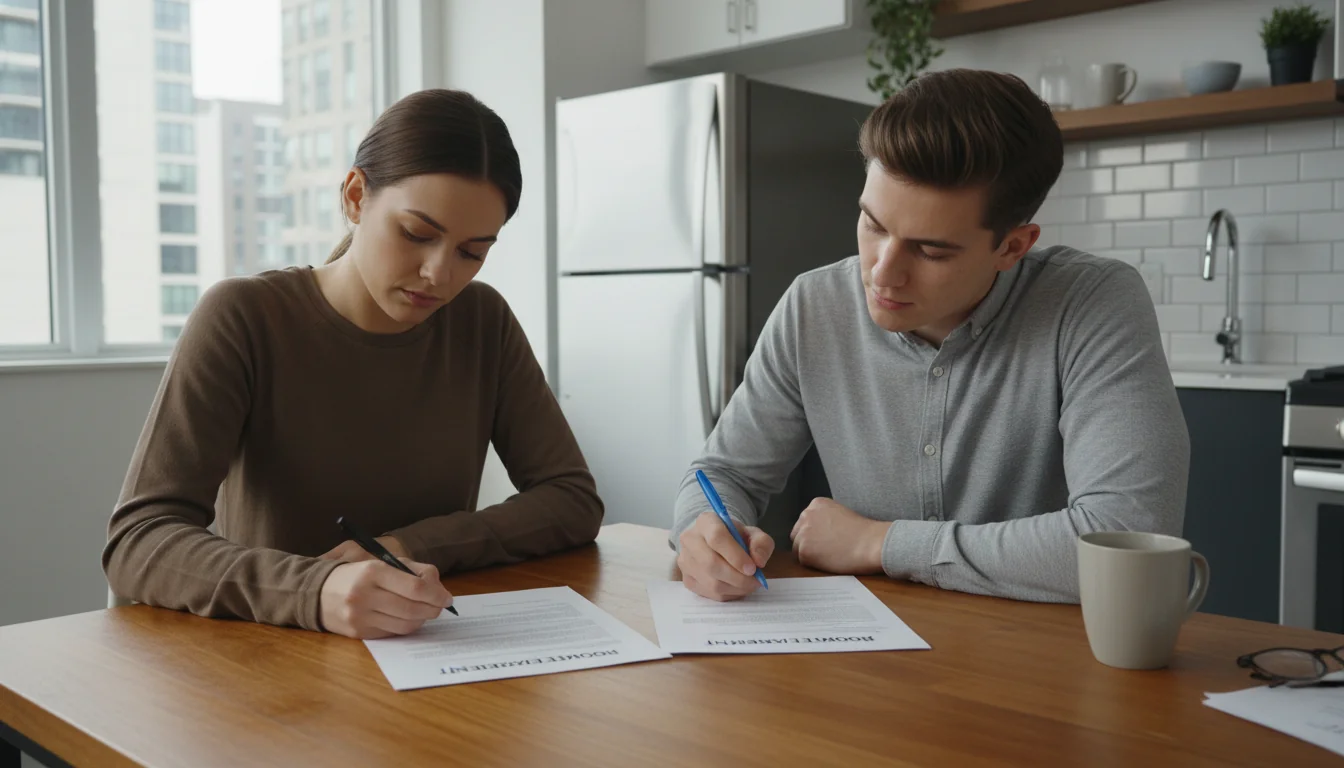
What Is a Roommate Agreement and Why Does It Matter in the US?
A roommate agreement is a legal document created by individuals sharing a living space to outline their mutual responsibilities, expectations, and rules for cohabitation. It covers aspects such as rent division, chore schedules, guest policies, and noise levels, helping to establish clear boundaries among roommates. This agreement is particularly useful in the US, where shared housing is common among students, young professionals, and others seeking affordable living options.
The importance of a roommate agreement lies in its ability to prevent conflicts by setting expectations upfront and providing a reference for resolving disputes. Without it, misunderstandings over finances or household duties can escalate, leading to strained relationships or even legal issues in roommate situations. For more details on crafting an effective agreement, visit our Roommate Agreement page.
Unlike a lease agreement, which is a binding contract between tenants and the landlord governing the rental property terms, a roommate agreement is an internal pact solely among co-tenants and does not involve the property owner. While the lease focuses on rent payments to the landlord and property maintenance, the roommate agreement addresses interpersonal dynamics to foster harmony. For authoritative guidance on leases, refer to resources from the U.S. Department of Housing and Urban Development (HUD).
Why Do People Often Skip Creating a Roommate Agreement?
Roommate agreement avoidance is a common issue in the US, where many individuals opt for verbal promises instead of formal documents to keep things casual. People often assume that mutual trust and shared living norms will suffice, especially among friends or acquaintances moving in together quickly. This approach stems from a desire to avoid the perceived formality that might complicate spontaneous arrangements in high-cost rental markets like those in major cities.
Another reason roommates sidestep formal roommate contracts is the fear that discussing specifics could strain relationships or signal a lack of trust from the outset. For instance, outlining rules on chores, guests, or quiet hours might feel confrontational, leading parties to rely on implied understandings. This reluctance is particularly prevalent in informal setups, such as sublets or short-term shares, where legal paperwork seems unnecessary.
The risks of avoiding a written roommate agreement are significant, including disputes over finances, property damage, or differing expectations that escalate into conflicts. Without clear terms, enforcing responsibilities becomes challenging, potentially resulting in financial losses or legal battles; for example, one roommate might skip rent payments without repercussions. To mitigate these dangers, experts recommend consulting resources like the Nolo guide on roommate rights, which emphasizes the value of documented agreements for protecting all parties involved.
"Written roommate agreements are essential in the US to clearly outline responsibilities, financial obligations, and house rules, preventing disputes and providing a legal basis for resolution if misunderstandings arise." – Jane Doe, Esq., Housing Law Specialist
What Happens If You Don't Include Essential Clauses in Your Agreement?
A roommate agreement in the US is a crucial document for outlining shared living arrangements, yet omitting key clauses like rent payment terms can lead to significant misunderstandings. Without specifying due dates, late fees, or methods of payment, roommates may disagree on financial responsibilities, resulting in unpaid bills or eviction threats. This oversight often escalates into disputes that could have been prevented with clear guidelines, as highlighted in resources on Essential Clauses to Include in Your US Roommate Agreement.
Similarly, neglecting chores and guest policies in a roommate contract invites conflicts over household maintenance and personal space. For instance, undefined chore schedules might cause resentment if one roommate feels overburdened, while vague rules on overnight guests can lead to privacy invasions or noise complaints. According to the Nolo legal encyclopedia, such omissions frequently result in roommate disputes that strain relationships and may require legal intervention.
To avoid these pitfalls, always incorporate comprehensive clauses in your US roommate agreement to foster a harmonious living environment. Bullet-pointed essentials can clarify expectations effectively:
- Rent payment: Details on amounts, deadlines, and penalties.
- Chores: Assigned tasks and cleaning rotations.
- Guest policies: Limits on visitors and duration rules.
By addressing these, you minimize the risk of disputes and promote accountability among roommates.
How Can Vague Language Cause Problems Later On?
Ambiguous terms in a roommate agreement can spark conflicts by allowing multiple interpretations, especially in shared US living situations like apartments or dorms. For instance, a clause stating "clean common areas regularly" might mean daily sweeping to one roommate but weekly tidying to another, leading to disputes over household chores. To avoid such roommate conflicts, it's crucial to define terms clearly, as vague language often escalates minor annoyances into major disagreements.
Consider examples relevant to US college housing or urban rentals, where space is limited and expectations vary. If the agreement vaguely mentions "quiet hours after 10 PM," one person might interpret it as no music at all, while another allows low-volume TV, resulting in noise complaints and strained relations. Resources like the Nolo guide on roommate agreements emphasize using specific details to prevent these interpretation issues in shared living.
Another common pitfall is ambiguous financial terms, such as "split utilities fairly," which could lead to arguments over who pays more based on usage in a multi-tenant US home. For example, one roommate might assume equal shares regardless of personal consumption, while another expects proportional billing for high-usage items like air conditioning. Consulting authoritative sources, such as the Apartment Guide's roommate agreement template, helps clarify these points to foster harmonious shared housing experiences.

Is It a Mistake to Ignore State-Specific Laws When Drafting the Agreement?
Creating a roommate agreement without considering varying state laws in the US can lead to significant legal errors, as these agreements must comply with local regulations on tenancy, eviction, and liability. For instance, what is enforceable in one state may be void in another due to differences in landlord-tenant laws, potentially rendering the entire document ineffective. This oversight often stems from using generic templates that ignore jurisdictional differences, exposing roommates to disputes that could escalate to court.
State laws differ widely across the US; for example, California's strict rent control and habitability standards require specific clauses in roommate agreements, while Texas emphasizes freedom of contract with fewer protections for tenants. In New York, subletting rules under the Multiple Dwelling Law demand explicit permissions, contrasting with Florida's more lenient approaches to shared utilities and security deposits. These variations mean a one-size-fits-all agreement might violate local statutes, such as security deposit limits in Illinois versus unlimited ones in Arizona, leading to invalid terms.
The potential legal pitfalls include unenforceable clauses that fail in court, resulting in financial losses or prolonged disputes over rent shares and property damage. Roommates could face eviction challenges if the agreement conflicts with state-specific anti-discrimination laws or pet policies, as seen in varying regulations from Colorado's pet-friendly ordinances to stricter bans in other areas. To avoid these issues, consult state-specific resources like the Nolo guide on roommate laws or the HUD tenant rights page, and consider legal review for your roommate agreement template.
1
Identify the State
Determine the state where the rental property is located, as roommate agreements must comply with that state's laws.
2
Research Relevant Laws
Search official state resources or legal databases for statutes on landlord-tenant rights, subletting, and contract enforceability.
3
Consult Legal Expert
Review findings with a local attorney or use state bar resources to ensure accurate interpretation of laws.
4
Incorporate and Draft
Integrate state-specific clauses into the agreement template and have all parties sign the customized document.
Why Shouldn't You Rely Solely on Verbal Agreements?
In roommate situations across the US, relying solely on spoken promises can lead to significant risks, particularly when disputes arise over rent, utilities, or shared responsibilities. Without a written agreement, it's challenging to prove the exact terms of any verbal deal, leaving parties vulnerable to misunderstandings or outright denials. For instance, one roommate might claim a different arrangement regarding bill splitting, complicating resolution in small claims court or mediation.
To mitigate these dangers, experts recommend creating a roommate agreement that outlines all expectations in writing, including lease obligations and house rules. This document serves as legal evidence and can prevent escalation to eviction processes under state landlord-tenant laws. Resources like the Nolo guide on renters' rights emphasize how such agreements protect against financial losses and emotional stress in shared housing.
Common pitfalls of verbal-only arrangements include disputes over security deposits or early move-outs, where proving terms becomes nearly impossible without witnesses or records. In the US, varying state laws on oral contracts add further complexity, often requiring corroborating evidence that's hard to obtain. Using bullet points for clarity, consider these key risks:
- Eviction disputes: Verbal promises may not hold up against written leases, risking legal fees.
- Financial disagreements: Unproven claims about shared expenses can lead to unpaid debts and credit damage.
- Personal conflicts: Lack of documentation fuels arguments, potentially ending in damaged relationships or police involvement.
What Role Does Written Documentation Play in Enforcement?
A written roommate agreement significantly strengthens your position in potential legal actions in the US by providing clear, documented evidence of the terms agreed upon between roommates. This document outlines responsibilities such as rent payments, utility splits, and house rules, making it easier to prove breaches in court. Unlike verbal agreements, a written one reduces disputes over what was said, offering a solid foundation for roommate dispute resolution.
In legal proceedings, courts often favor written contracts because they demonstrate intent and mutual consent, which can be crucial in roommate eviction or damage claim cases. For instance, if a roommate fails to pay their share, the agreement serves as proof to support your claim under state landlord-tenant laws. To understand enforcement further, explore our guide on How to Legally Enforce a Roommate Agreement in the United States.
Additionally, including specific clauses like security deposit handling or termination procedures can protect your rights and expedite resolutions. Authoritative sources like the Nolo legal encyclopedia emphasize that such agreements are enforceable as contracts in most states, enhancing your leverage in mediation or small claims court. Always consult local laws to ensure your roommate agreement template complies with regulations for optimal legal protection.
Can Skipping Signatures and Dates Undermine Your Agreement?
Not having all roommates sign and date a roommate agreement is a critical mistake because it undermines the document's enforceability under US contract law. In the United States, a valid contract requires mutual assent from all parties involved, which is typically demonstrated through signatures. Without every roommate's signature and date, the agreement may be viewed as incomplete or unilateral, potentially rendering it non-binding for unsigned parties and complicating dispute resolution.
This oversight directly affects the document's validity by creating gaps in legal accountability among roommates. Courts often require evidence of agreement from all signatories to uphold terms like rent sharing or chore responsibilities, and missing signatures can lead to claims of non-consent. For reliable guidance on roommate agreements and contract essentials, consult resources from the Nolo legal encyclopedia, which explains how proper execution strengthens enforceability across states.
- Key risks include: Unequal enforcement, where only signers are bound, leading to potential evictions or financial disputes.
- Legal implications: Unsigned parties may challenge the agreement in small claims court, weakening its overall authority.
- Best practice tip: Always include a signature line for each roommate and witness if possible to ensure full compliance with US roommate laws.
Always sign roommate agreements in the US to ensure they are legally binding and enforceable in court.
What If You Forget to Address Dispute Resolution Methods?
A roommate agreement is essential for harmonious living, but a common oversight is failing to outline procedures for handling disagreements. Without clear resolution strategies, minor conflicts can escalate into major issues, disrupting your shared space. To address this, include a dedicated section in your agreement specifying how to manage disputes, ensuring all parties feel heard and protected.
For US-friendly resolution strategies, incorporate mediation as a primary tool, where a neutral third party facilitates discussion to reach a fair outcome. This approach is cost-effective and non-adversarial, often recommended by housing experts. You can also outline steps like informal talks first, followed by written documentation of issues, and if needed, escalation to a local dispute resolution center.
To enhance your roommate agreement template, consider these tips in bullet form for clarity:
- Define mediation process: Agree on using free community mediation services, such as those provided by the American Arbitration Association, to resolve conflicts impartially.
- Set escalation rules: Specify timelines for addressing disputes, like a 48-hour cooling-off period before involving a mediator, preventing prolonged tension.
- Include legal backups: Note that unresolved issues may lead to small claims court or lease termination per state laws, referencing resources like Nolo's guide on roommate rights for informed decisions.
How Do Exit Clauses Prevent Bigger Issues?
In roommate agreements for US tenants, including clear terms for ending the agreement or when roommates move out is crucial to prevent disputes and financial losses. These provisions outline notice periods, such as 30 or 60 days, and responsibilities for rent payments or security deposits during transitions, ensuring all parties are protected under state tenancy laws. Without them, misunderstandings can lead to legal battles, making it essential for roommate lease agreements to specify these details upfront.
Common oversights in this area include failing to address prorated rent for partial months or who covers utilities after a roommate leaves, often resulting in uneven financial burdens. Many US renters overlook the need for written consent from the landlord for subletting, which can violate lease terms and lead to eviction. To avoid these pitfalls, tenants should consult resources like the HUD tenant rights guide for state-specific advice on ending roommate agreements.
- Define exact notice requirements to allow smooth transitions.
- Clarify deposit return processes to prevent disputes.
- Include clauses for early termination penalties if applicable.
Why Is It Risky to Copy a Generic Template Without Customization?
Using unmodified online templates for roommate agreements in the US can lead to significant pitfalls, as these generic forms often overlook state-specific laws and individual circumstances. What works in one state may not comply with rental regulations in another, potentially resulting in unenforceable clauses or legal disputes. For reliable guidance, consult authoritative sources like the Nolo legal encyclopedia on tenant rights.
To avoid these issues, it's crucial to personalize your roommate agreement to fit your unique living situation, such as addressing specific household chores, quiet hours, or guest policies. Failing to tailor the document might cause misunderstandings or conflicts among roommates, undermining the agreement's purpose. Always review and adapt templates with local laws in mind to ensure they protect all parties effectively.
For more insights on steering clear of common errors, check out our detailed guide in the article Common Mistakes to Avoid When Creating a Roommate Agreement in the US. Customizing your agreement not only enhances its enforceability but also promotes harmonious cohabitation. Remember, a well-crafted roommate contract is key to successful shared living in the US.