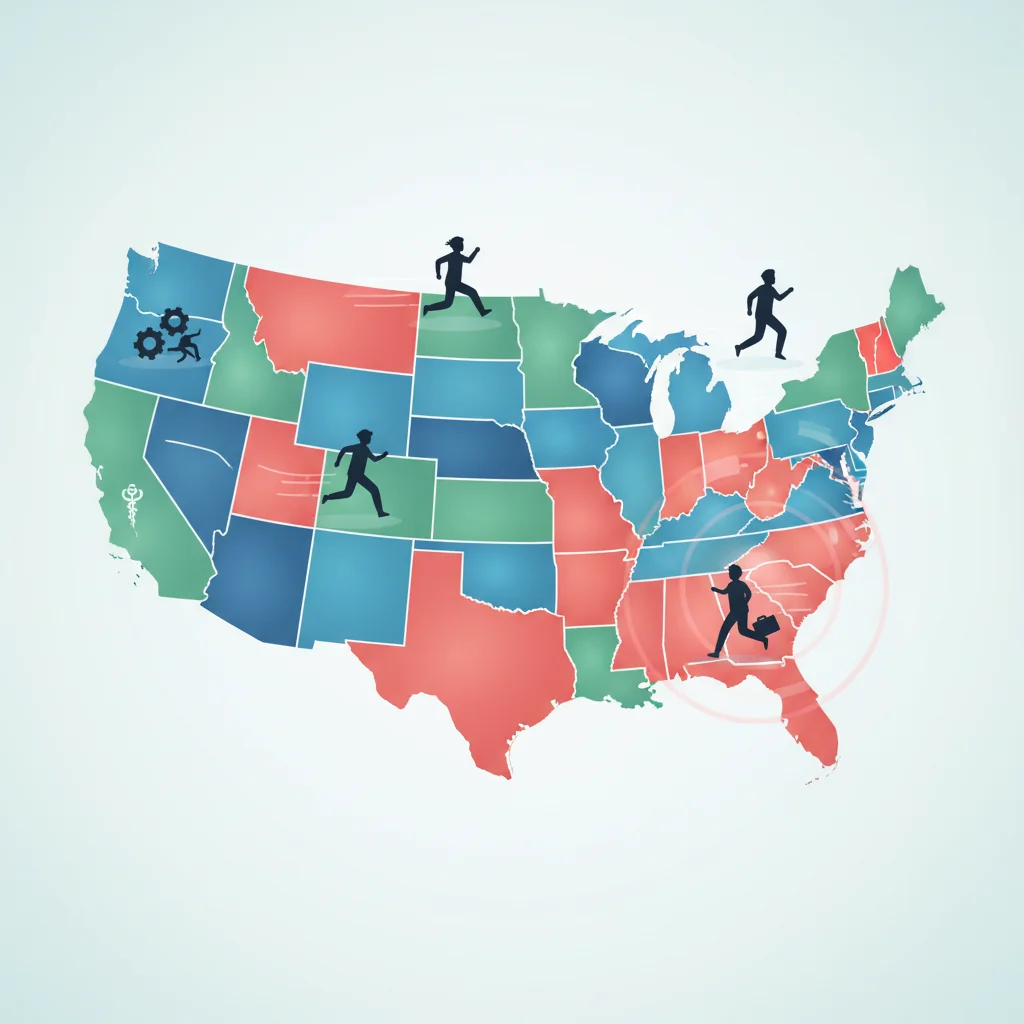
What Are Non-Compete Agreements and Why Do State Laws Vary?
Non-compete agreements, also known as non-competition clauses, are contractual provisions designed to protect employers' legitimate business interests by restricting employees from joining rival companies or starting competing ventures for a specified period after leaving their job. These agreements aim to safeguard sensitive information like trade secrets and client relationships, ensuring that businesses can invest in employee training and development without immediate risk of that knowledge benefiting competitors. However, they must balance these protections with employee rights, such as the freedom to pursue career opportunities, often requiring courts to evaluate their reasonableness in scope, duration, and geographic area to prevent undue restrictions on workers' mobility.
Variations in non-compete laws across U.S. states stem from differing economic priorities, where states with robust tech or innovation sectors like California largely ban them to foster competition and talent flow, while others enforce them to shield traditional industries. Historical precedents also play a role; for instance, early common law views on restraints of trade influenced states to adopt more permissive stances in the industrial era. Under federalism, state autonomy allows each jurisdiction to tailor laws to local needs, reflecting diverse policy goals without a uniform federal standard.
For a deeper dive into the key legal basics of non-compete agreements in the United States, explore our detailed guide: Understanding Non-Compete Agreements in the United States: Key Legal Basics. Authoritative resources like the Federal Trade Commission provide insights into ongoing regulatory efforts. Key considerations include:
- Enforceability factors: Reasonableness in time and geography.
- State-specific bans: Full prohibitions in states like North Dakota and Oklahoma.
- Employee protections: Increasing focus on low-wage worker exemptions.
Which States Have Banned or Severely Restricted Non-Compete Agreements?
Non-compete agreements, as defined in the Non-Compete Agreement resource, are contracts that restrict employees from working for competitors after leaving a job. States like California have outright banned most non-compete clauses under California Business and Professions Code Section 16600, which voids agreements that limit someone from pursuing a lawful profession. This legal rationale stems from promoting free competition and employee mobility, with key cases like Edwards v. Arthur Andersen LLP (2008) affirming the ban's broad application.
North Dakota similarly prohibits non-competes except in limited cases like business sales, based on public policy favoring unrestricted labor markets, as seen in statutes like North Dakota Century Code § 9-08-06. Oklahoma heavily restricts them, allowing enforcement only for protecting trade secrets or client relationships under 15 O.S. § 219A, with courts in cases like Bayly, Inc. v. Barnes (1988) emphasizing narrow application to avoid undue hardship. These restrictions aim to balance employer interests with employee rights, reducing the rationale for overly broad restraints on trade.
The impacts on employees in these states include greater job flexibility and wage growth, as workers can switch jobs without fear of litigation, supported by studies from the U.S. Federal Trade Commission. For employers, challenges arise in retaining talent and protecting proprietary information, often leading to alternatives like non-disclosure agreements. Overall, these bans foster innovation and economic mobility while encouraging businesses to invest in employee retention strategies.
How Does California's Ban Work in Practice?
California's Business and Professions Code Section 16600 fundamentally prohibits non-compete agreements, declaring them void except in specific circumstances such as the sale of a business or ownership interest. This law, rooted in protecting employee mobility and fostering innovation, states that every contract by which anyone is restrained from engaging in a lawful profession, trade, or business of any kind is to that extent void. Enforcement challenges arise due to the broad interpretation of "restraint," leading to litigation over clauses like non-solicitation or confidentiality agreements that might indirectly restrict competition. Real-world examples include the 2008 case of Edwards v. Arthur Andersen LLP, where a non-compete was struck down, reinforcing California's strict stance, and recent tech industry disputes highlighting ongoing legal battles over employee poaching.
To explore further, refer to the official text at California Legislative Information for authoritative details on non-compete enforcement in California. These cases underscore the importance of consulting legal experts to avoid void agreements, impacting business sales exceptions and employee rights across industries.
What Are the Most Employer-Friendly States for Non-Competes?
In states like Florida, Texas, and Georgia, employers enjoy favorable enforcement of non-compete agreements under non-compete laws that prioritize protecting business interests. Florida, for instance, explicitly presumes that restrictions up to six months are reasonable in duration, while geographic scopes limited to areas where the employee worked are upheld if they safeguard legitimate interests like trade secrets. For more on crafting these, see our guide on How to Draft an Enforceable Non-Compete Agreement in the US, which offers essential drafting tips for compliance.
Texas courts apply a reasonableness test for non-competes, requiring durations of one year or less to be enforceable, especially when tied to confidential information, and geographic limits that reflect the company's actual market. Georgia similarly favors employers by reforming overly broad non-competes rather than voiding them entirely, with reasonable scopes focusing on preventing unfair competition within the employer's operational radius. These enforceable non-competes help businesses in competitive industries; for authoritative details, refer to the Federal Trade Commission guidelines on competition rules.
- Florida: Strong employer support; duration up to 2 years often reasonable if justified.
- Texas: Emphasizes ancillary to employment; geography must be narrowly tailored.
- Georgia: "Blue pencil" doctrine allows courts to modify agreements for enforceability.
Why Is Florida Considered a Leader in Enforceability?
Florida Statute 542.335(1)(b) declares it the public policy of Florida "to protect the right of the owner of a trade secret to keep that information confidential, to prohibit the wrongful use or disclosure of such information, and to provide civil remedies for the misappropriation of trade secrets." In upholding this, the Florida Supreme Court in Ansaarie v. First Coast Cardiovascular Institute, P.A. (2011), affirmed that the statute's strict enforcement standards reflect the state's strong commitment to safeguarding legitimate business interests, including trade secrets, through enforceable non-compete agreements. To protect your trade secrets effectively, consult a Florida attorney to draft or review non-compete clauses compliant with §542.335.
How Do Moderate States Balance Interests in Non-Compete Enforcement?
In states like New York, Illinois, and Washington, non-compete agreements are evaluated under a rule of reason framework, which assesses whether the restrictions protect legitimate business interests such as trade secrets or client relationships, while balancing potential employee harm and broader public policy considerations. Courts in these jurisdictions scrutinize non-competes to ensure they are not overly broad, often reforming or voiding clauses that unduly restrict worker mobility or stifle competition. This approach contrasts with blanket bans in other states, emphasizing case-by-case analysis to promote fairness in non-compete enforcement.
Variations in duration limits exist across these states, with New York typically upholding restrictions of up to two years for employees and five years for executives if justified, while Illinois permits up to two years for non-solicitation but scrutinizes longer periods under the rule of reason. Washington courts enforce durations of one to two years when tied to legitimate interests, often rejecting anything exceeding that as against public policy. For geographic scopes, New York allows worldwide restrictions for global businesses but narrows them to specific areas for localized operations, whereas Illinois requires scopes reasonably related to the employer's actual market, and Washington favors limits to the areas where the employee worked to avoid undue hardship.
These differences highlight the nuanced state-specific non-compete laws, influencing how employers draft agreements to withstand judicial review. For detailed guidance, consult authoritative resources like the FTC's non-compete overview or state bar associations. Understanding these variations is crucial for employment law compliance in competitive markets.
What Recent Changes Have Occurred in Illinois?
In 2022, Illinois amended the Illinois Freedom to Work Act to impose significant restrictions on non-compete agreements, particularly targeting protections for low-wage workers. The amendments prohibit employers from entering into or enforcing non-competes with employees earning less than $75,000 annually, with this threshold set to increase to $80,000 by 2027, adjusted for inflation. This change aims to promote worker mobility and prevent undue restrictions on employment opportunities in a competitive job market.
Additionally, the law requires adequate consideration for any enforceable non-compete, mandating at least two years of employment post-signing or other substantial benefits to ensure fairness. Employers must also provide advance notice of restrictive covenants and refrain from advising workers to consult attorneys without genuine opportunity to do so. These provisions underscore the need for transparency and equity in employment contracts under Illinois law.
For employers in Illinois, the amendments carry key implications, including the risk of voided agreements and potential civil penalties up to $5,000 for violations, plus liability for lost wages. Businesses must review and revise existing contracts to comply, especially for low-wage employees, to avoid litigation and foster better talent retention. For more details, refer to the official Illinois General Assembly or the Illinois Department of Labor resources.
What Federal Influences Are Shaping State Non-Compete Laws?
The Federal Trade Commission's 2023 proposed nationwide ban on non-compete agreements aims to prohibit employers from restricting worker mobility, potentially affecting millions of American employees across industries. This FTC non-compete rule could override varying state laws, standardizing protections for workers by deeming most non-competes unfair competition under Section 5 of the FTC Act. For more details, visit the FTC's official page on the rule.
Complementing the FTC's efforts, the NLRB's stance on worker mobility through decisions like the McLaren Macomb case reinforces that non-competes may violate the National Labor Relations Act by chilling employees' rights to organize. Ongoing litigation, including challenges from business groups arguing the FTC exceeds its authority, has delayed implementation, with a federal court in Texas hearing arguments in 2024. States like California, which already ban non-competes, support federal action, while others like Texas resist, highlighting a patchwork of state responses to non-compete bans.
- Key litigation updates: The FTC rule faces lawsuits in multiple districts, potentially reaching the Supreme Court.
- State-level actions: Over a dozen states have enacted or expanded non-compete restrictions since 2023, aligning with federal momentum.
- For NLRB insights, see the McLaren Macomb decision.
How Should Businesses Prepare for Potential Federal Changes?
1
Audit Existing Agreements
Review all current non-compete clauses for compliance with federal proposals, identifying overly broad restrictions and potential risks.
2
Consult Legal Experts
Engage employment law specialists to assess agreements and get tailored advice on adapting to new regulations.
3
Explore Alternatives
Consider replacing non-competes with NDAs, non-solicitation clauses, or training repayment agreements to protect interests legally.
4
Update and Implement Policies
Revise contracts based on audits and advice, then train HR on new practices to ensure ongoing compliance.
How Can Employers Navigate State Variations Effectively?
For multistate employers navigating non-compete agreements, it's essential to tailor clauses to comply with varying state non-compete laws across the United States. Start by reviewing specific restrictions in each employee's primary work state, such as time limits, geographic scope, and legitimate business interests, to ensure enforceability. For a comprehensive overview, refer to our internal resource on State Variations in Non-Compete Laws Across the United States, which details key differences like California's outright ban versus more permissive states like Texas.
Incorporate choice-of-law clauses carefully, as many states, including California and Oklahoma, refuse to enforce them if they attempt to evade local protections for employees. Instead, consider drafting state-specific agreements or using a "least restrictive" approach that defaults to the law most favorable to the employee. Pair this with severability provisions to salvage the agreement if one state's law invalidates a clause, ensuring the rest remains intact and protecting your business interests.
To enhance compliance, consult authoritative sources like the Federal Trade Commission guidelines on non-compete regulations and state bar associations for updates. Use bullet points for quick reference in your policies:
- Assess employee location: Customize based on where the employee works and resides.
- Test enforceability: Include narrow scopes to avoid overreach in strict states.
- Monitor changes: Stay updated on evolving laws, such as recent FTC proposals banning non-competes nationwide.