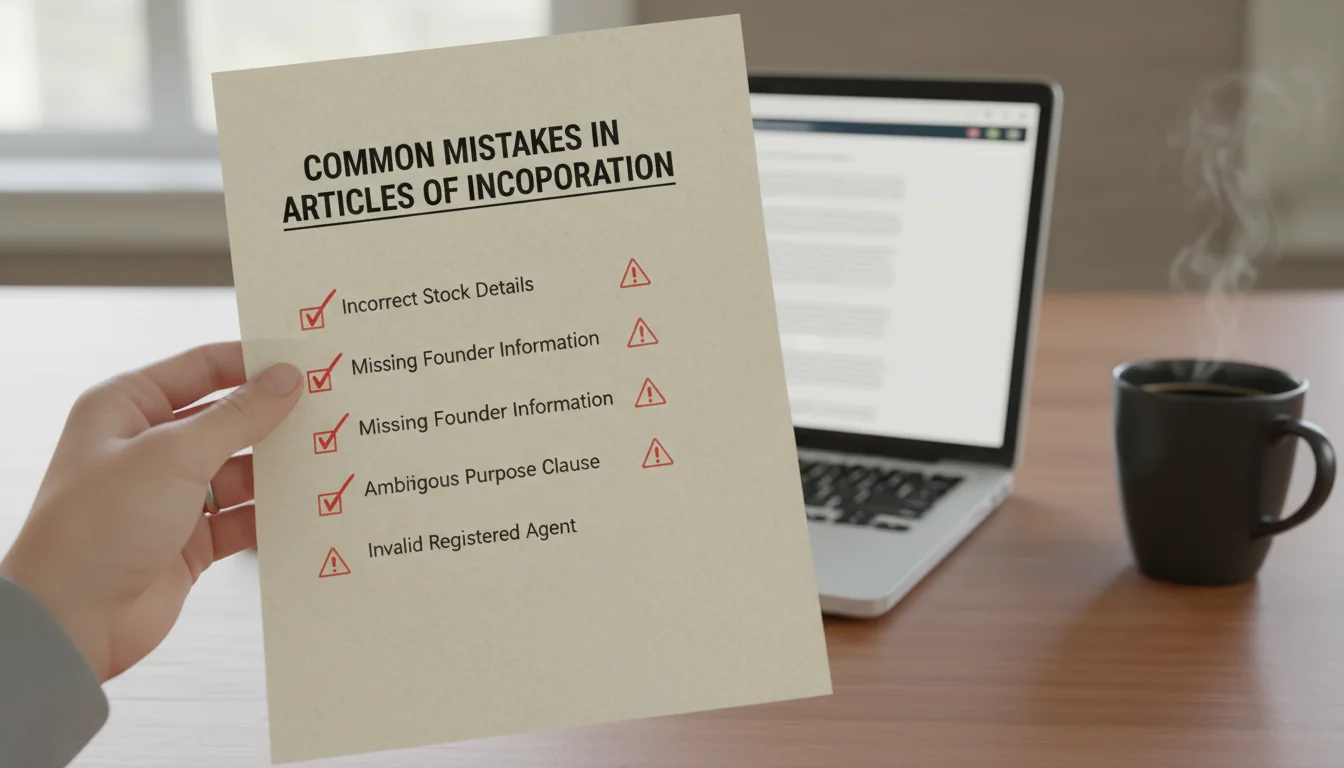
What Are Articles of Incorporation and Why Do They Matter?
Articles of incorporation serve as the foundational legal document for establishing a corporation, outlining essential details such as the company's name, purpose, and structure. This document is filed with the state to officially create the entity as a separate legal person, providing limited liability protection to shareholders. For more in-depth guidance on articles of incorporation, visit our detailed page on Articles of Incorporation.
The primary purpose of articles of incorporation in forming a corporation is to comply with state laws and define the business's core framework, ensuring clarity for operations and governance. By specifying key elements like authorized shares and registered agent, they help prevent disputes and facilitate smooth incorporation. Avoiding mistakes in drafting is crucial for legal compliance, as errors can lead to rejection, delays, or invalidation by authorities.
Drafting errors in articles of incorporation can jeopardize business success by exposing the company to liabilities, regulatory penalties, or challenges in raising capital. To ensure accuracy, consult authoritative resources like the U.S. Small Business Administration for best practices. Proper preparation not only secures legal standing but also builds a strong foundation for long-term growth and investor confidence.
Well-drafted articles of incorporation establish the essential legal foundation of your corporation; ensure they are precise to avoid future disputes and operational challenges.
What Are the Most Common Mistakes in Naming the Corporation?
Choosing a corporation's name for articles of incorporation requires careful consideration to avoid common errors that can delay or invalidate your filing. One frequent mistake is using prohibited words like "bank," "insurance," or "trust" without proper regulatory approval, as these imply government affiliation or regulated status. Additionally, failing to check name availability through your state's business registry can lead to rejections if the name is already in use, wasting time and resources.
Another key error is omitting required designators such as 'Inc.', 'Corporation', or 'Corp.' at the end of the name, which states mandate to clearly indicate the business structure. Consequences of these mistakes include filing rejections, legal disputes over trademarks, or even forced name changes after incorporation, potentially incurring extra fees and delays. To avoid them, always search your state's secretary of state database for availability and consult guidelines from authoritative sources like the U.S. Small Business Administration.
For step-by-step guidance on the entire process, including name selection, refer to our detailed resource: How to File Articles of Incorporation in the United States. By verifying compliance upfront, you ensure a smoother path to establishing your corporation and protect your brand identity effectively. This proactive approach minimizes risks and supports long-term business success in corporate formation.
How Can You Verify Name Availability?
1
Search State Database
Access your state's secretary of state website and search for the proposed corporate name to check for existing registrations.
2
Check Federal Trademarks
Use the USPTO's TESS database to verify if the name is federally trademarked or conflicts with existing marks.
3
Conduct Business Name Search
Perform a general internet search and check domain availability to ensure the name is unique in the marketplace.
4
Consult Legal Expert
Review findings with an attorney to confirm availability and avoid potential legal issues before filing.
Why Is Specifying the Purpose Statement So Tricky?
Drafting the purpose clause in articles of incorporation is crucial for defining a corporation's scope, but pitfalls like being too vague can lead to legal challenges. If the clause is overly broad, such as stating a generic intent to "engage in any lawful business," courts may interpret it as failing to limit activities, potentially exposing the entity to ultra vires claims where actions outside implied purposes are invalidated. Conversely, an overly restrictive purpose clause might hinder future growth, limiting the corporation's ability to adapt and pursue new opportunities without amending the articles, which involves time and costs.
The legal implications of a poorly drafted purpose clause include regulatory scrutiny and disputes with shareholders, as seen in cases where vague language invites lawsuits over corporate authority. To craft an appropriate statement, balance specificity with flexibility by outlining core activities while allowing for related pursuits, such as "to develop and sell software solutions and related technologies." For more on foundational documents, see our guide on Key Differences Between Articles of Incorporation and Bylaws, and consult authoritative resources like the U.S.
What If the Purpose Is Too Broad?
An overly broad purpose statement in corporate governance can expose a company to significant risks, particularly in the form of legal and regulatory challenges to its activities. For instance, if the statement is too vague, it may invite scrutiny from authorities or shareholders who argue that certain business practices fall outside the intended scope, leading to lawsuits or forced restructurings. This ambiguity can also dilute brand identity and confuse stakeholders about the company's core mission.
To balance flexibility with specificity in crafting a purpose statement, companies should aim for language that outlines key objectives while allowing room for innovation and adaptation. Guidance includes consulting legal experts to ensure compliance and incorporating measurable goals that align with long-term strategy.
How Do Errors in Registered Agent Details Affect Your Corporation?
One common mistake in designating a registered agent is providing an incorrect or outdated address, which can severely disrupt legal service processes. When the agent's address is wrong, official documents like lawsuits or tax notices may not reach the business in time, leading to default judgments or missed compliance deadlines. This error not only risks financial penalties but also undermines the company's legal compliance status, potentially resulting in dissolution of the entity.
Another frequent issue is choosing an unqualified registered agent, such as an individual without proper knowledge or availability, which compromises the reliability of receiving and forwarding legal documents. An unqualified agent might fail to promptly notify the business of important filings, causing delays in responding to subpoenas or regulatory actions. To avoid these pitfalls, businesses should select a professional service experienced in registered agent services, as recommended by the Texas Secretary of State.
Overall, these mistakes in registered agent designation can lead to broader compliance failures, including fines from state authorities and reputational damage. For instance, failing to maintain a qualified agent might trigger automatic suspension of the business's good standing. Consulting authoritative resources like the U.S. Small Business Administration can help ensure proper selection and ongoing management.
Choosing the Wrong Agent Type
1
Research and Select Agent
Identify a reliable individual or service authorized in your state to accept legal documents. Ensure they have a physical address in the state of incorporation.
2
Verify Agent's Consent
Confirm the selected agent's willingness to serve. Obtain their agreement in writing if required by state laws.
3
Include in Articles
In the articles of incorporation, specify the agent's full name and exact physical street address. Do not use a P.O. box.
4
File with State
Submit the completed articles of incorporation to the state's secretary of state office for approval and official appointment.
What Happens If You Omit Key Officer or Director Information?
One of the frequent oversights in corporate formation documents is inaccurately stating the number of directors or initial officers, which can lead to compliance issues during business incorporation. For instance, many states require a minimum of one director for corporations, but states like California mandate at least three for certain entities unless it's a close corporation. This error often stems from using generic templates without verifying state-specific requirements, potentially delaying approvals from the Secretary of State.
Accuracy in specifying the number of directors and officers is essential for governance because it ensures proper decision-making structures and adherence to fiduciary duties from the outset. Incorrect numbers can invalidate bylaws or expose the company to legal challenges, such as disputes over authority in board meetings.
Including accurate director details in your incorporation documents is essential to ensure compliance with corporate laws and avoid delays in registration or potential legal penalties.
Are There Mistakes in Share Structure That Can Derail Your Business?
Authorizing shares in articles of incorporation requires careful consideration to avoid errors like setting unrealistic numbers of shares, which can hinder a company's ability to raise capital. For instance, authorizing too few shares may limit future funding rounds, forcing costly amendments that delay operations and increase legal fees. Forgetting par value considerations can lead to compliance issues, as shares issued below par value might trigger tax liabilities or state penalties, impacting overall financial health.
These mistakes directly affect funding by complicating investor confidence and operational scalability, often resulting in diluted ownership or missed growth opportunities. To mitigate such risks, consult authoritative resources like the SEC's guidelines on exempt offerings for best practices in share authorization.
Misjudging Authorized Shares
Incorrectly specifying authorized shares in a corporation's charter can lead to significant legal and financial consequences, such as the need for costly amendments to increase the number of shares, which often requires shareholder approval and incurs additional fees. This misalignment may dilute ownership if shares are issued without proper authorization, potentially triggering disputes among stakeholders and violating securities regulations. For businesses, failing to align authorized shares with growth projections can hinder fundraising efforts, as investors may view the limitation as a sign of poor planning in corporate governance.
To align authorized shares with business goals, companies should forecast future capital needs and set the initial number high enough to accommodate expansion without frequent revisions. Consulting legal experts or using resources like the SEC's guidelines ensures compliance and strategic foresight. Key tips include:
- Assess long-term objectives, such as mergers or product launches, to determine share requirements.
- Balance over-authorization to avoid unnecessary tax implications with under-authorization risks.
- Regularly review and adjust during board meetings to support scalable business growth strategies.