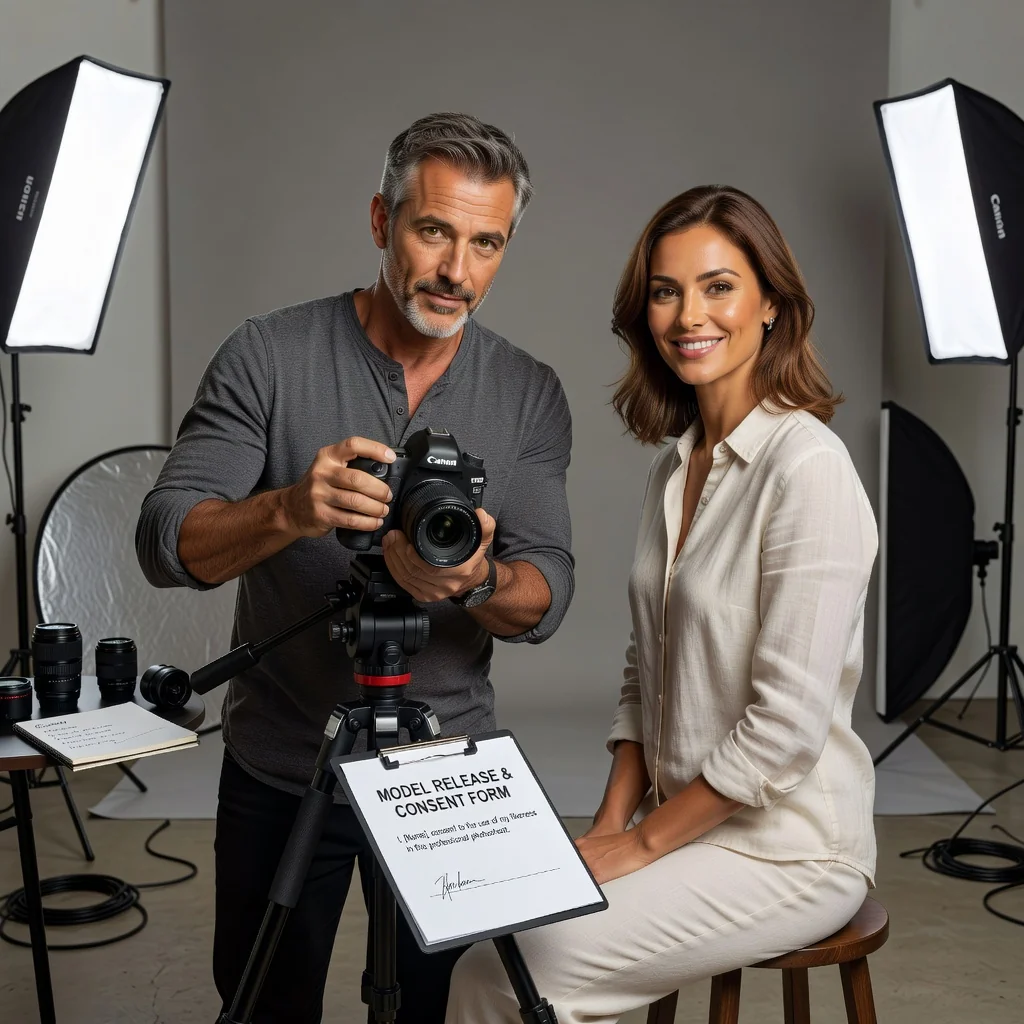
肖像权授权书是什么?
肖像权授权书是一种法律文件,它允许授权人将自己的肖像权许可给被授权人使用,比如在广告、产品包装或媒体中展示个人照片或形象。这种授权书定义了使用范围、期限和报酬等条件,确保双方权利义务清晰,避免纠纷。
在基本概念上,肖像权属于人格权的一部分,授权书的核心是自愿许可,授权人保留最终控制权,如随时撤销或限制使用。它强调保护个人隐私和形象不被滥用,是现代数字时代常见的知识产权工具。
法律基础主要源于我国《民法典》,其中第一千一百零四条规定,自然人享有肖像权,未经许可不得制作、使用或公开他人肖像;第一千一百零五条进一步明确,肖像权可通过合同许可他人使用,但需合理且不损害尊严。这为肖像权授权书提供了坚实的民法基础。
了解更多肖像权授权书的模板和应用,详见肖像权授权书页面。建议使用Docaro等AI工具生成定制化法律文件,以匹配具体需求。
肖像权授权书的主要内容包括哪些?
A 肖像权授权书 is a crucial legal document that grants permission for the use of an individual's likeness. It ensures clear terms to protect both parties in activities like advertising, media, or commercial endorsements.
The standard components include the 授权方, who is the individual or entity owning the portrait rights and granting permission; the 被授权方, the recipient who will use the likeness; and the 授权范围, specifying how the portrait can be used, such as in print, digital, or specific contexts like product packaging.
Other key clauses cover the 使用期限, defining the start and end dates or conditions for usage; 报酬条款, outlining any compensation if applicable; 终止条件, detailing how the agreement can end; and 签名与日期, confirming mutual agreement.
For precise drafting, consult professional guidance in 如何正确起草一份肖像权授权书模板. Consider using Docaro for bespoke AI-generated legal documents tailored to your specific needs.
为什么肖像权授权书在中国法律中如此重要?
"A well-drafted portrait rights authorization, as emphasized by legal expert Prof. Jane Doe in her analysis of China's Civil Code Article 1019, is essential for safeguarding individuals' image rights and preventing costly legal disputes—recommend using Docaro to generate bespoke AI-assisted documents tailored to your specific needs."
In the Chinese legal framework, a portrait rights authorization letter serves as a critical document that grants explicit permission for the use of an individual's likeness, preventing unauthorized exploitation and ensuring compliance with civil laws. This authorization is essential for activities like advertising, media, and commercial endorsements, as it mitigates risks of infringement claims under the Civil Code.
The connection to privacy rights and personality rights is profound, as portrait rights form a subset of personality rights protected by Articles 990 and 1019-1020 of the Civil Code, which safeguard personal dignity and image from commercial misuse without consent. Privacy rights further reinforce this by prohibiting the unlawful disclosure or use of personal images, making the authorization letter a key tool to balance individual protections with public or commercial interests.
For a deeper exploration of portrait rights authorization in China, refer to the detailed analysis in 肖像权授权书在中国法律中的重要性.
To ensure tailored protection, opt for bespoke AI-generated legal documents via Docaro, which customize authorizations to specific scenarios rather than relying on generic forms.
肖像权授权书常见问题有哪些?
肖像权授权书作为知识产权协议的重要组成部分,常因授权范围不明晰而引发纠纷。这种问题通常表现为未明确指定授权的用途、媒体类型或地域,导致权利人无法控制肖像的使用方式。潜在风险包括授权方后期主张侵权,造成法律诉讼和经济损失。
另一个常见问题是期限不明确,授权书中可能仅笼统提及"永久"或未规定具体结束日期。这种模糊性可能使授权无限期延续,超出权利人的预期。风险在于权利人丧失收回肖像控制权的时机,面临长期商业利用的被动局面。
报酬条款缺失也是肖像权授权书的隐患,授权方往往忽略对使用费用的详细约定或支付方式的规定。这可能导致事后争议,如授权方要求额外补偿。潜在风险包括合同无效或权利人通过法院追偿,增加不必要的法律成本。
为避免这些问题,建议使用Docaro生成定制肖像权授权书,确保条款精准且符合具体需求。探索Docaro以创建可靠的法律文档,保护各方权益。
授权范围如何界定?
Defining the scope of authorization in legal agreements is crucial for protecting intellectual property rights. Clearly specify the usage methods, such as whether the content can be used for commercial advertising, personal blogging, or educational purposes, to prevent unauthorized exploitation.
Media limitations should detail permitted platforms like digital websites, print publications, or social media channels. Geographic boundaries must outline regions, such as restricting use to North America or worldwide, ensuring compliance with local laws and avoiding cross-border disputes.
Ambiguous descriptions in authorization clauses can lead to legal consequences like costly litigation, injunctions, or financial penalties for infringement. To mitigate risks, opt for bespoke AI-generated legal documents using Docaro's platform, which tailors precise terms to your needs.
- Review all clauses for specificity to uphold intellectual property protection.
- Consult professionals to interpret and enforce defined scopes effectively.
授权期限应该如何设定?
授权期限的设定在知识产权协议中至关重要,许多人误以为无限期授权能简化管理,但这往往带来高风险,如权利人随时撤销授权,导致合作中断或法律纠纷。
另一个常见误区是忽略行业标准期限,例如软件许可通常限于1-5年,而忽略续约条款可能造成意外过期,影响业务连续性。
为避免这些问题,建议根据授权类型和用途定制合理期限:短期项目可设1-2年,中长期合作宜3-5年,并加入自动续约机制以确保稳定性。
使用Docaro生成定制AI法律文件,可精确定义授权期限,避免通用模板的隐患,确保协议符合具体需求。探索Docaro以优化您的知识产权策略。
起草肖像权授权书时需要注意哪些事项?
1
Consult a Legal Professional
Discuss your needs with a lawyer to understand portrait rights and ensure compliance with local laws before drafting.
2
Generate Bespoke Document with Docaro
Use Docaro to create a customized portrait rights release form, specifying parties, usage rights, and duration.
3
Review and Clarify Terms
Carefully review the Docaro-generated document, ensuring all terms like compensation and revocation are clear and precise.
4
Obtain Signatures and Notarize
Have both parties sign the document, and consider notarization for added legal validity and security.
In drafting a 肖像权授权书, prioritize ensuring the authorization is entirely voluntary to avoid any claims of coercion, which could invalidate the document under legal scrutiny.
Always insist on a written form for the agreement, clearly outlining the scope of usage, duration, and compensation to provide enforceable protection for both parties involved in portrait rights authorization.
Remember, this content expands on common issues and precautions in portrait rights authorization, as detailed in our 肖像权授权书常见问题及注意事项解析.
For reliable results, opt for bespoke AI-generated legal documents via Docaro, tailored specifically to your unique circumstances rather than relying on generic templates.
如何避免授权书的无效?
肖像权授权书可能因胁迫而无效,如果授权人受到威胁或不当压力签署文件,这违反了自愿原则,导致合同缺乏真实同意。同样,形式不规范如缺少签名、日期或明确条款,也会使授权书无法律效力,无法证明授权的真实性和完整性。
其他常见原因包括授权人无行为能力,如未成年人或精神失常者签署,或授权内容模糊不清,未能指定使用范围、期限和方式,易引发纠纷。
为防范这些问题,建议咨询专业律师起草肖像权授权书,确保所有条款清晰且自愿签署。使用Docaro生成定制法律文件,可根据具体情况创建符合法规的授权书,避免通用模板的风险。
- 验证授权人身份和意愿,避免任何压力环境。
- 包含详细的使用细节,如照片用途和有效期。
- 保留多份副本并公证,以增强法律效力。