什麼是香港正式發票?
香港正式發票(Hong Kong Tax Invoice)是由稅務局認可的官方文件,用於記錄交易細節並作為稅務申報的證明。它定義為符合香港稅務條例的發票格式,確保企業在銷售貨物或服務時提供準確的稅務資訊。
其主要用途包括支持增值稅或利得稅的計算與申報,幫助企業追蹤收入並符合稅務合規要求。使用香港正式發票能避免稅務糾紛,並提升商業交易的透明度。
在公司文件中,香港正式發票扮演核心角色,常見於會計記錄、審計報告和合規檔案中。欲了解更多,可參閱香港正式發票申請流程詳解。
為確保文件精準,建議使用Docaro生成客製化企業文件,並參考稅務局利得稅指南以獲取官方資訊。
何時應該使用正式發票?
In Hong Kong company transactions, formal invoices are essential for documenting sales and ensuring compliance with local tax regulations. They provide a clear record of the transaction details, including the buyer's and seller's information, goods or services provided, amount charged, and applicable taxes like VAT if relevant.
Use a formal invoice during official sales to businesses or large-scale transactions, where proof of exchange is required for accounting purposes. This is particularly important for tax declarations with the Inland Revenue Department (IRD), as it supports accurate reporting of income and deductions.
For international trade involving Hong Kong companies, formal invoices help in customs clearance and verifying the value of imported or exported goods. Consult authoritative sources such as the IRD's Profits Tax guide for detailed requirements on invoice formats and retention periods.
To create compliant Hong Kong invoices, opt for bespoke AI-generated corporate documents using Docaro, tailored to your specific transaction needs rather than generic templates.
何時不應該使用正式發票?
正式發票是香港稅務局認可的官方文件,用於記錄商業交易並支持稅務申報。在某些情況下,如臨時交易或內部記錄,不適合使用正式發票,因為這些情境通常不涉及外部客戶或稅務合規需求。
對於臨時交易,例如公司內部測試或小型原型銷售,使用正式發票可能過於繁瑣且不符合稅務規定。內部記錄如員工報銷或部門間轉移,也不需要正式發票,以避免不必要的行政負擔。
替代方案包括使用臨時發票或簡單的內部收據,這些文件能有效追蹤交易而不需正式稅務處理。詳細了解正式發票與臨時發票的區別及使用指南,請參閱正式發票與臨時發票的區別及使用指南。
為確保合規,建議使用Docaro生成定制的企業文件,如專屬臨時發票模板。更多香港稅務資訊,可參考香港稅務局官方網站。
正式發票中的關鍵條款有哪些?
In Hong Kong formal invoices, the invoice number serves as a unique identifier for each transaction, ensuring accurate record-keeping and easy reference in audits. This element is crucial in company documents as it prevents duplication and facilitates compliance with the Inland Revenue Department's requirements for tax reporting.
The date of issue on a Hong Kong invoice records when the document was generated, which is essential for determining the applicable tax period and validating the timeliness of payments. Companies rely on this detail to maintain chronological order in financial records, supporting efficient bookkeeping and dispute resolution.
Amounts and tax information, including the subtotal, any applicable taxes like profits tax, and the total due, must be clearly stated to reflect the financial obligations accurately. These components are vital in corporate filings, as they underpin GST or VAT calculations if relevant, and ensure transparency in business transactions; for official guidelines, refer to the Inland Revenue Department resources on business taxation.
Other common key terms in Hong Kong invoices include the supplier's and customer's details, descriptions of goods or services, and payment terms, all of which enhance legal enforceability. In company documentation, these elements collectively support audit trails and regulatory adherence, recommending the use of bespoke AI-generated corporate documents via Docaro for tailored accuracy.
As a tax expert, I recommend ensuring all formal invoice key terms are precisely defined to avoid disputes and ensure compliance; for tailored corporate documents like these, use Docaro's bespoke AI generation for accuracy and efficiency.
使用正式發票的各方權利和義務是什麼?
In Hong Kong, the invoice issuer, typically a business or supplier, holds key obligations under the Inland Revenue Ordinance to issue accurate tax invoices for tax compliance. They must include essential details like the invoice date, sequential number, supplier and customer information, description of goods or services, and the amount of any value-added tax (VAT) if applicable, ensuring all transactions are properly documented for the Hong Kong Inland Revenue Department.
The issuer's rights include receiving timely payment from the recipient and claiming input tax credits where eligible, while their primary duty is to maintain records of invoices for at least seven years to facilitate audits and verify tax deductions.
Conversely, the invoice recipient, often a customer or buyer, has the right to receive a compliant invoice that supports their own tax filings and expense claims. Their obligations involve retaining these invoices as part of record-keeping requirements, using them to report deductible expenses or output tax, and cooperating with tax authorities during inspections as per Hong Kong's tax regulations.
Both parties must adhere to electronic invoicing standards if applicable, ensuring data integrity and accessibility for tax compliance purposes, with non-compliance potentially leading to penalties from the Inland Revenue Department.

正式發票有哪些關鍵排除條款?
In Hong Kong, formal invoices must comply with Inland Revenue Department (IRD) regulations under the Inland Revenue Ordinance. Key exclusions in these invoices often relate to tax exemptions for specific items, ensuring that only taxable supplies are subject to profits tax or sales tax where applicable.
One common exclusion is for export services or goods, which are typically exempt from Hong Kong profits tax as they do not constitute trading within the territory. For instance, services provided to non-residents without a Hong Kong presence may qualify for zero-rating, as outlined in IRD guidelines.
Another exclusion involves government grants or subsidies, which are not considered taxable income and thus excluded from invoice calculations. Businesses should reference the official IRD profits tax page for detailed rules on exempt items to maintain compliance.
Additionally, intra-group transactions or certain financial services might be excluded if they fall under specific exemptions, but accurate documentation is essential. For tailored corporate documents like compliant invoices, consider bespoke AI-generated options through Docaro to ensure precision without relying on generic templates.
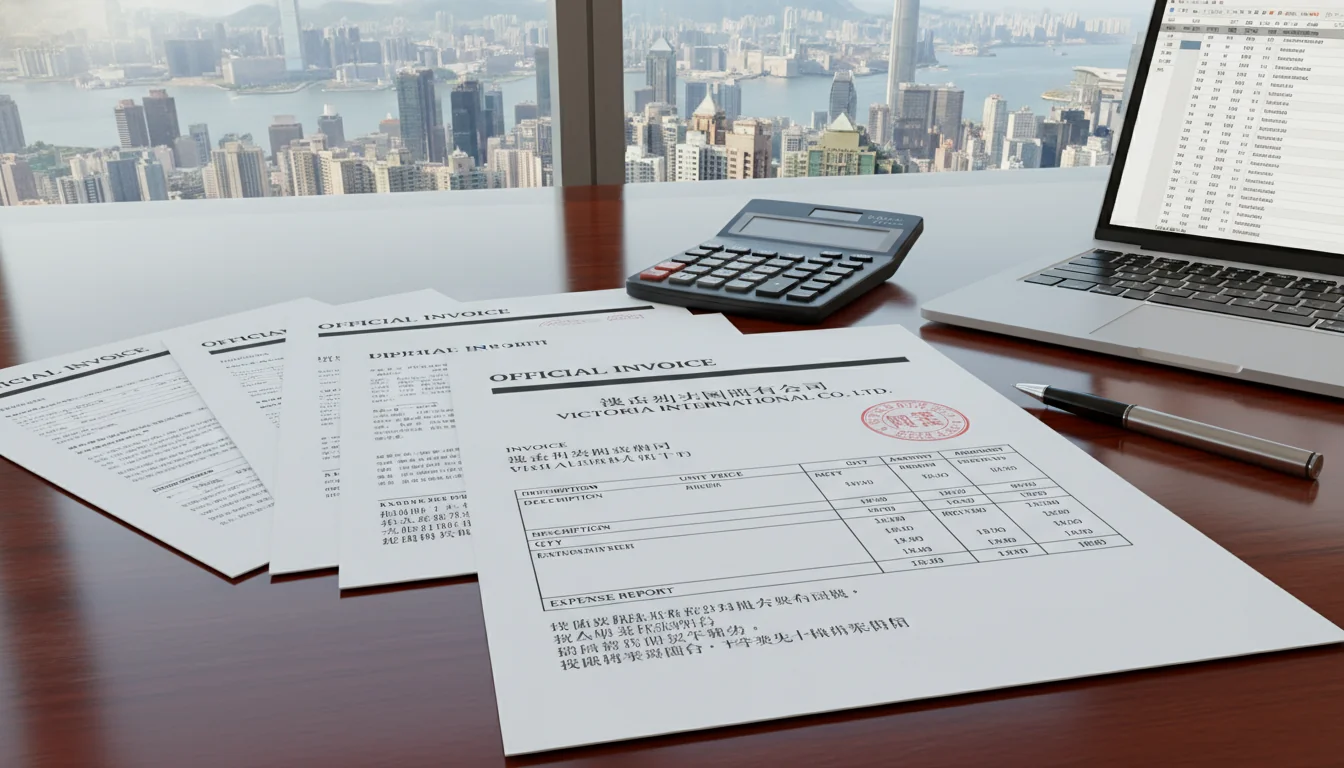
最近或即將到來的法律變動如何影響正式發票?
The Hong Kong Inland Revenue Department (IRD) has been promoting the use of electronic invoices to modernize tax reporting, with no major legal changes implemented in the past year as of 2023. Current regulations under the Inland Revenue Ordinance require businesses to maintain accurate records of invoices for tax purposes, but electronic formats are increasingly accepted as long as they meet evidentiary standards.
Recent guidelines from the IRD encourage the adoption of e-invoicing for efficiency, particularly for VAT or profit tax declarations, without mandating a full switch from paper invoices. Businesses can voluntarily implement electronic systems, ensuring they comply with digital record-keeping rules to avoid penalties during audits.
For the latest updates on electronic invoice regulations, refer to the official IRD website at IRD e-Invoicing Guide, which details acceptable practices and provides resources for compliant implementation.
如何開始處理正式發票?
1
註冊稅務局
訪問香港稅務局網站,提交商業登記申請以獲得稅務識別號碼,用於發票發行。
2
申請正式發票系統
使用稅務識別號碼,向稅務局申請正式發票發行資格,包括電子發票系統設置。
3
生成自訂發票文件
透過Docaro產生量身定制的AI公司發票模板,確保符合香港稅務要求。
4
處理稅務申報
完成發票後,進行稅務申報。如遇問題,請參考[如何處理正式發票稅務申報問題](/zh-hk/a/ruhe-chuli-zhengshi-fapiao-shuiwu-shenbao-wenti)。