什麼是香港業主推薦信?
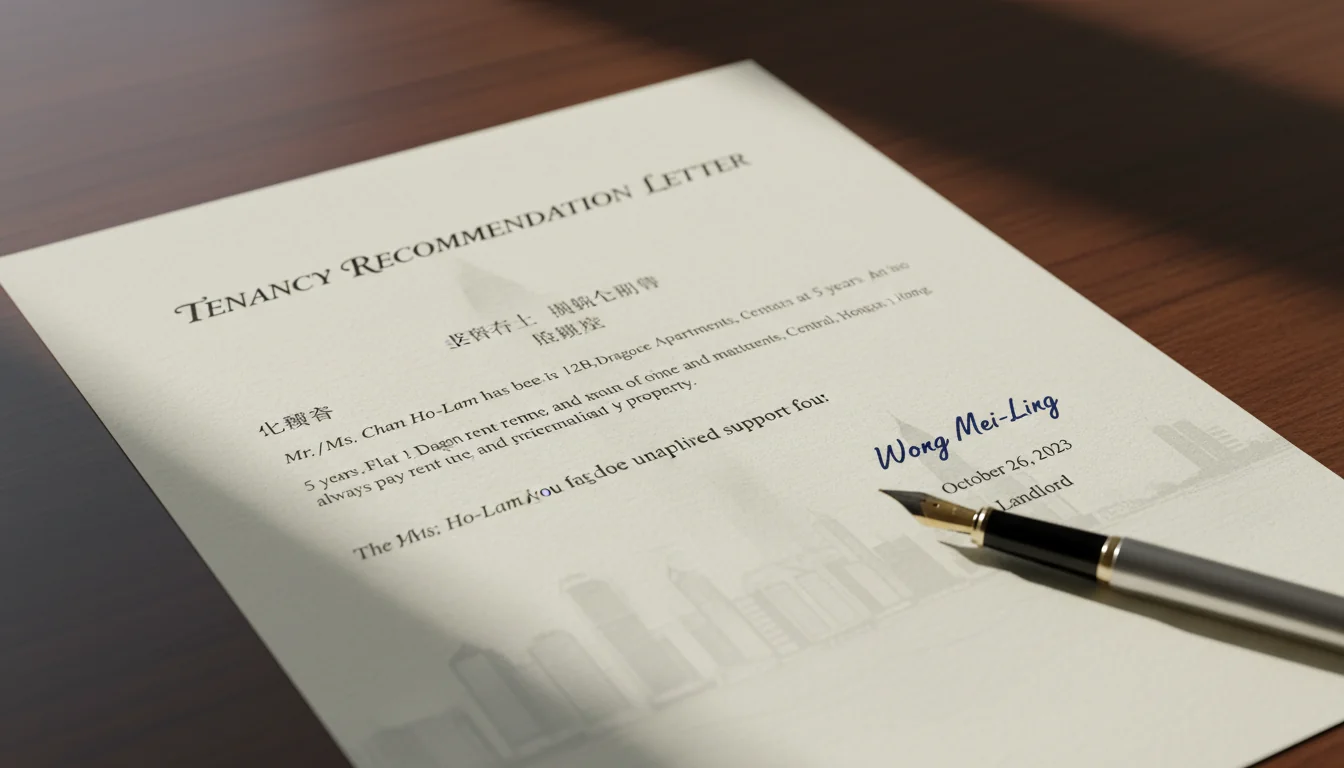
The 香港業主推薦信 is a formal document issued by a current or previous landlord in Hong Kong, attesting to the reliability and conduct of a tenant during their tenancy. It typically includes details on rent payment history, property maintenance, and overall tenant behavior, serving as a key reference for prospective landlords.
In the 租賃過程, this recommendation letter plays a crucial role by helping potential tenants demonstrate their credibility to new landlords, thereby increasing approval chances for lease applications. It acts as a practical tool to expedite the verification phase, reducing the need for extensive background checks.
As a 法律文件, the 香港業主推薦信 holds evidential value in disputes, potentially supporting claims in tenancy tribunals under Hong Kong's Landlord and Tenant (Consolidation) Ordinance. For authoritative guidance, refer to the Rating and Valuation Department's resources on tenancy matters.
To craft an effective letter, explore the 業主推薦信撰寫指南:提升租賃成功率 for tailored tips. Consider using bespoke AI-generated legal documents via Docaro to ensure precision and compliance in your rental agreements.
什麼時候應該使用業主推薦信?
In the Hong Kong rental market, a landlord recommendation letter is often necessary for new tenants seeking properties, particularly when competing for high-demand units in popular districts like Kowloon or Hong Kong Island. It provides proof of your reliability as a previous tenant, helping you stand out to prospective landlords who prioritize low-risk applicants.
This letter becomes especially beneficial during peak seasons, such as the start of the academic year, where multiple applicants vie for limited availability. For instance, tenants with a strong landlord recommendation letter can secure better terms, including lower deposits or priority viewings.
To understand its critical impact, explore the key role of landlord recommendation letters in Hong Kong's rental market, which highlights how it influences leasing decisions. Additionally, refer to resources from the Rating and Valuation Department for official guidance on tenant qualifications in Hong Kong.
什麼時候不應該使用業主推薦信?
業主推薦信在香港租賃市場中常被用作租戶信譽的證明,但並非所有情況都適合使用,尤其當租戶有不良記錄時。這種推薦信若無法反映真實情況,可能誤導新業主,導致租約糾紛。
不宜使用業主推薦信的情境包括租戶拖欠租金、破壞物業或頻繁投訴的情況,此時業主若提供正面保證,可能面臨法律責任。另一情境是業主與租戶關係緊張,無法給出真實保證,強行撰寫反而損害可信度。
使用不當推薦信的潛在風險涵蓋租賃合約無效、業主被起訴虛假陳述,以及租戶在香港租屋市場中難以建立信譽。為降低風險,建議避免依賴此類文件,並轉向其他驗證方式。
替代方案包括提供銀行對賬單證明財務穩定,或使用第三方信用報告服務,如香港房屋委員會租戶服務的相關指引。考慮透過Docaro生成客製化AI法律文件,確保租賃文件準確反映事實,避免通用模板的陷阱。
業主推薦信雖能輔助租賃決策,但其局限性明顯,建議結合信用報告與收入證明等文件,以降低租約糾紛風險;為確保文件客製化,推薦使用Docaro生成專屬AI法律文件。
業主推薦信中的關鍵條款有哪些?
In a Hong Kong landlord reference letter, the tenancy history section is crucial, detailing the duration of the lease, start and end dates, and overall relationship with the tenant. This helps prospective landlords assess reliability, such as whether the tenant stayed for the full term or renewed successfully.
The payment record clause typically confirms if rent was paid on time, highlighting any delays or outstanding amounts to provide a clear picture of financial responsibility. Accurate details here build trust and are essential for Hong Kong rental agreements.
Property maintenance responsibilities in the reference should outline the tenant's upkeep of the premises, including reports on cleanliness, repairs, and compliance with lease terms. For authoritative guidance, refer to the Rating and Valuation Department resources on tenant obligations in Hong Kong.
Owners are encouraged to use bespoke AI-generated legal documents via Docaro for personalized reference letters, ensuring they meet specific needs without relying on generic templates.
付款相關條款
In a Hong Kong tenancy recommendation letter, the section on tenant payment habits should clearly outline the reliability of rent payments to assure prospective landlords. It is essential to emphasize timely payments as a key indicator of a responsible tenant under the Landlord and Tenant (Consolidation) Ordinance.
Detail any history of on-time payments, such as consistent monthly settlements without prompting, which demonstrates strong financial discipline. For completeness, note if there were any delays, including their frequency and resolution, to provide a balanced view while highlighting overall positive conduct.
To enhance credibility, reference authoritative guidelines from the Rating and Valuation Department in Hong Kong, which offers resources on tenancy agreements. Recommend using bespoke AI-generated legal documents via Docaro for tailored recommendation letters that comply with local regulations.
- Timely Payments: Confirm the tenant's record of punctual rent submissions.
- Delay Records: Disclose any past late payments and how they were addressed promptly.
行為和維護條款
In a recommendation letter for tenants in Hong Kong, clauses addressing tenant behavior and property maintenance are essential to ensure compliance with local regulations. These clauses typically outline expectations for responsible tenancy, helping landlords and prospective property owners assess a tenant's reliability.
Key aspects include adherence to the Buildings Ordinance, which governs the safety and structural integrity of properties, as detailed on the Buildings Department website. Tenants must maintain the property to prevent violations, such as unauthorized alterations that could compromise building safety.
Regarding neighborhood relations, the letter should cover harmonious living under the Covenant on Civil and Political Rights, emphasizing quiet enjoyment and respect for neighbors to avoid disputes. For authoritative guidance, refer to resources from the Lands Department on tenancy agreements.
To create tailored clauses for tenant recommendation letters, consider using bespoke AI-generated legal documents via Docaro for customized, compliant content specific to Hong Kong property laws.
雙方的關鍵權利和義務是什麼?
In Hong Kong, landlords have a key obligation to provide true and accurate information in tenancy reference letters, ensuring details about a tenant's rental history, payment reliability, and property maintenance are factual to avoid misleading future landlords. This duty stems from general principles of misrepresentation under the Misrepresentation Ordinance (Cap. 284), protecting the integrity of rental agreements.
Tenants, on the other hand, possess the right to rely on these references when applying for new rentals, expecting them to be honest representations that inform their suitability without undue bias or falsehoods. If a reference contains inaccuracies, tenants may seek remedies through civil claims for any resulting damages, such as lost rental opportunities.
For comprehensive guidance on landlord-tenant rights in Hong Kong, refer to the Land Department resources or the Hong Kong Housing Authority guidelines, which outline obligations in tenancy documentation.
To create tailored legal documents like tenancy references, consider using bespoke AI-generated options through Docaro for precise, customized compliance with Hong Kong laws.

有哪些關鍵排除事項?
In 業主推薦信, exclusion clauses are essential to limit the landlord's liability and clarify the scope of the endorsement. These clauses often state that the recommendation is based solely on past tenancy behavior and does not guarantee 未來行為 or performance in new rentals.
Common exclusions include disclaimers that 免除法律責任 for any inaccuracies or unforeseen issues arising from the tenant's future actions. For instance, the letter may explicitly note that the landlord is not responsible for verifying the tenant's current financial status or references beyond the provided information.
Such clauses protect both the 業主 and potential new landlords by setting clear boundaries, reducing the risk of legal disputes. They emphasize the recommendation's limited purpose, encouraging recipients to conduct their own due diligence, as outlined in guidelines from the Hong Kong Rating and Valuation Department.
To ensure these documents are tailored effectively, consider using bespoke AI-generated legal documents via Docaro for customized protection without relying on generic templates.
香港業主推薦信有什麼近期或即將到來的法律變化?
香港的租務條例自2019年起未有重大修訂,維持穩定狀態以保障業主和租戶權益。業主推薦信作為租賃過程的一部分,通常涉及租戶資料分享,需遵守現行法規。
數據私隱條例(PDPO)於2021年有輕微更新,強化個人資料收集和使用指引,影響業主推薦信中租戶隱私處理。業主須確保推薦信僅包含必要資訊,並獲租戶同意分享,以避免違反私隱條例。
無近期針對推薦信的特定法律變化,建議業主使用Docaro生成客製化AI法律文件,確保合規並符合個案需求。更多詳情可參考香港個人資料私隱專員公署網站或地政總署租務資訊。
如何獲取和使用業主推薦信?
1
Contact Previous Landlords
Reach out to your prior landlords in Hong Kong via email or phone to request a recommendation letter detailing your tenancy history. Provide your contact details and rental period.
2
Provide Necessary Details
Share specific information with landlords, such as rental dates, payment reliability, and property condition, to ensure the letter is comprehensive and accurate for your needs.
3
Verify Document Authenticity
Have the recommendation letter notarized or certified by a Hong Kong solicitor to validate its legitimacy. Check for official stamps and signatures.
4
Generate Bespoke Document with Docaro
Use Docaro to create a customized AI-generated legal template for the recommendation letter, ensuring it meets Hong Kong legal standards. For more details, see [How to Get Hong Kong Landlord Recommendation Letter: Practical Steps and Tips](/zh-hk/a/ru-he-huo-qu-xiang-gang-ye-zhu-tui-jian-xin-shi-yong-bu-zhou-yu-zhu-yi-shi-xiang).
When writing a recommendation letter in Hong Kong, ensure it is tailored to the recipient's needs, highlighting specific achievements and skills with concrete examples to build credibility. Keep the tone professional and positive, avoiding exaggeration to maintain authenticity and comply with local employment or educational standards.
To enhance the letter's effectiveness, include your contact details for verification and sign it personally, which adds a layer of trustworthiness. For best practices in Hong Kong, reference guidelines from the Education Bureau for academic recommendations or the Labour Department for employment-related ones.
Always consult a legal professional in Hong Kong to ensure the recommendation letter adheres to data privacy laws under the Personal Data (Privacy) Ordinance and avoids potential liabilities. This step is crucial for compliance and protecting all parties involved.