Docaro

AI Generated Affidavit for use in the Philippines
PDF & Word - 2026 Updated
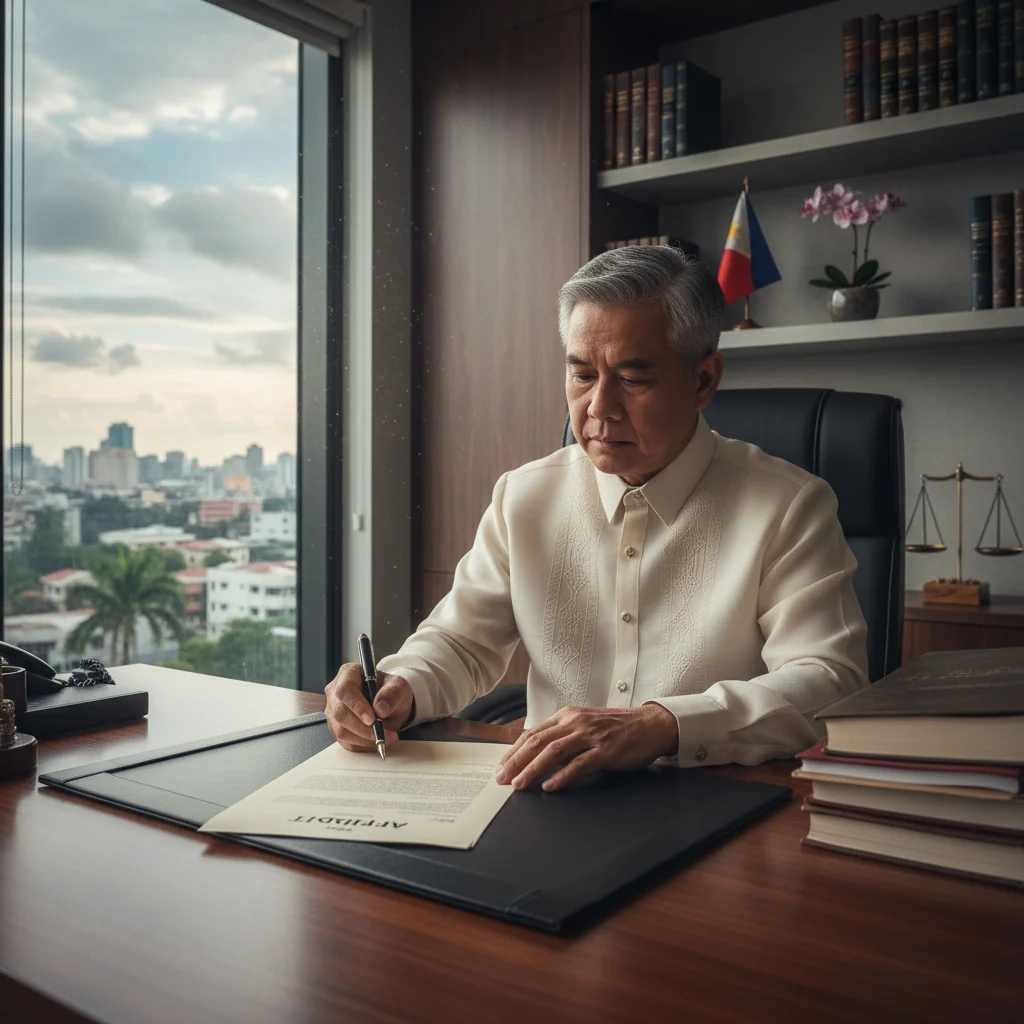
A photorealistic image of a professional adult Filipino lawyer or notary public in a modern office setting in the Philippines, carefully reviewing or signing an affidavit document on a desk, with subtle Philippine cultural elements like a flag or map in the background, conveying trust and legal formality. No children are present in the image.
Generate a professional, legally compliant affidavit in the Philippines using our advanced AI tool, ensuring accuracy and efficiency for your sworn statements and legal declarations.
Free instant document creation.
Compliant with Philippines law.
No sign up or monthly subscription.

Docaro Pricing

Basic
Free
Document Generation
No Sign Up
No Subscription
Download Watermarked PDF
Premium
$4.99 USD
Document Generation
No Sign Up
No Subscription
Download Clean PDF
Download Microsoft Word
Download HTML
Download Text
Email Document
Generate your document for free. Only pay if you like the result and need an un-watermarked version.

When Do You Need an Affidavit in the Philippines?

  • Confirming Personal Facts
    Use an affidavit to officially state your personal details, like age or address, when required for official records or applications.
  • Supporting Legal Claims
    An affidavit provides a sworn written statement to back up your side in disputes, helping courts or authorities understand your position.
  • Witnessing Events
    If you saw something important, like an accident or agreement, an affidavit lets you document it under oath for use in investigations or trials.
  • Verifying Documents
    Affidavits are needed to confirm the truth of other papers, such as contracts or wills, ensuring everything is legitimate.
  • Why Proper Drafting Matters
    A well-written affidavit avoids mistakes that could weaken your case, making sure it's clear, accurate, and accepted by officials.

Filipino Legal Rules for an Affidavit

  • What It Is
    An affidavit is a written statement where you swear or affirm that the information is true, often used as evidence in legal matters.
  • Who Can Make One
    Any person who is at least 18 years old and of sound mind can create an affidavit based on their personal knowledge.
  • How to Swear It
    You must sign the affidavit in front of a notary public or authorized officer who will verify your identity and administer the oath.
  • Key Content Rules
    The affidavit should only include facts you know to be true from your own experience, without opinions or hearsay.
  • Format Basics
    It needs to be written clearly, dated, and include your full name, address, and a clear statement that you swear to its truth.
  • Legal Importance
    Once notarized, the affidavit becomes a reliable document that courts and government offices can accept as proof.
  • Consequences of Lying
    Making false statements in an affidavit can lead to serious penalties, including fines or jail time for perjury.
Important

Using the incorrect format or structure for an affidavit may render it invalid or inadmissible in Philippine courts.

What a Proper Affidavit Should Include

  • Title and Identification
    Start with the word 'Affidavit' and include your full name, address, and other basic details to identify yourself clearly.
  • Sworn Statement
    Clearly state that the facts you are sharing are true and based on your personal knowledge.
  • Key Facts
    Describe the important events or details in a straightforward way, keeping it simple and relevant.
  • Date and Place
    Mention the date and location where you are signing the affidavit to show when and where it was made.
  • Signature and Oath
    Sign the document in front of a notary public who will verify your oath and add their official seal.

Why Free Templates Can Be Risky for Affidavits

Most free affidavit templates are generic and fail to comply with Philippine legal requirements, such as proper notarization formats or jurisdictional specifics. Using incorrect wording can render the document invalid, lead to rejection by courts, or weaken its evidentiary value in legal proceedings.

AI-generated bespoke affidavits are customized to your exact situation and Philippine laws, ensuring precise language, full compliance, and stronger legal enforceability for reliable use in official matters.

Generate Your Bespoke Affidavit in 4 Easy Steps

1
Answer a Few Questions
Our AI guides you through the info required.
2
Generate Your Document
Docaro builds a bespoke document tailored specifically on your requirements.
3
Review & Edit
Review your document and submit any further requested changes.
4
Download & Sign
Download your ready to sign document as a PDF, Microsoft Word, Txt or HTML.

Why Use Our AI Affidavit Generator?

Fast Generation
Quickly generate a comprehensive Affidavit, eliminating the hassle and time associated with traditional document drafting.
Guided Process
Our user-friendly platform guides you step by step through each section of the document, providing context and guidance to ensure you provide all the necessary information for a complete and accurate Affidavit.
Safer Than Legal Templates
We never use legal templates. All documents are generated from first principles clause by clause, ensuring that your document is bespoke and tailored specifically to the information you provide. This results in a much safer and more accurate document than any legal template could provide.
Professionally Formatted
Your Affidavit will be formatted to professional standards, including headings, clause numbers and structured layout. No further editing is required. Download your document in PDF, Microsoft Word, TXT or HTML.
Compliance with Filipino Law
Rest assured that all generated documents meet the latest legal standards and regulations of the Philippines, enhancing trust and reliability.
Cost-Effective
Save money by generating legally sound Affidavit without the need for expensive legal services or consultations.
Get Started for Free - No Sign Up or Monthly Subscription Required
No payment or sign up is required to start generating your Affidavit. Generate and download a watermarked version of your document for free. Pay only if you want to remove the watermark and gain full access to your document. No monthly subscriptions or hidden fees. Pay once and use your document forever.
Need to Generate a Affidavit in a Different Country?
Choose country:

Useful Resources When Considering a Affidavit in the Philippines

LAWPHIL.NET
LAWPHIL.NET
SC.JUDICIARY.GOV.PH
LAWPHIL.NET
SC.JUDICIARY.GOV.PH
SC.JUDICIARY.GOV.PH

Philippines Compliance Legislation

Your AI Generated Affidavit will be checked for compliance against the following legislation and regulations:

What is an Affidavit in Philippine Law?

An affidavit in Philippine law is a written statement of facts voluntarily made by an individual under oath or affirmation before an authorized officer, such as a notary public. This legal document serves as sworn testimony and holds evidentiary value in court proceedings or administrative matters.

The primary purpose of an affidavit is to provide a formal, verifiable record of someone's declaration, which can support legal claims, verify identities, or attest to events without requiring the affiant's physical presence in court. In the Philippines, affidavits are commonly used in civil cases, criminal investigations, and notarial acts to streamline processes and ensure authenticity under the Notarial Law (Presidential Decree No. 210).

Basic characteristics of an affidavit include its voluntary nature, the requirement for the affiant to sign it in the presence of the notary, and its binding effect once executed, making false statements punishable by perjury. For reliable guidance on Philippine affidavits, refer to the Official Gazette for relevant laws.

To create effective legal documents like affidavits tailored to specific needs, consider using bespoke AI-generated options through Docaro, ensuring compliance with Philippine requirements without relying on generic templates.

An affidavit is a written or printed declaration or statement of facts, made voluntarily, and confirmed by the oath or affirmation of the party making it, taken before an officer having authority to administer such oath or affirmation. — Section 1, Rule 2, Rules of Court of the Philippines. To ensure your affidavits are precise and tailored to your needs, generate bespoke legal documents using Docaro.
Person signing affidavit document

When Should You Use an Affidavit in the Philippines?

In Philippine court proceedings, an affidavit serves as a sworn statement used to present evidence or testimony without requiring the affiant's physical presence in court initially, such as in preliminary investigations or motions for summary judgment. For detailed examples, explore Common Uses of Affidavits in Philippine Legal Proceedings.

During property transactions in the Philippines, affidavits are essential for verifying ownership, marital status, or identity, often required in deeds of sale or real estate transfers to comply with the Civil Code and land registration laws. This ensures legal validity and prevents disputes, as outlined by the 1987 Philippine Constitution and related statutes.

In administrative matters, such as applying for government permits or NBI clearances, affidavits confirm facts like residency or non-conviction status, streamlining bureaucratic processes under Republic Act No. 10173. For personalized needs, consider bespoke AI-generated legal documents using Docaro to tailor affidavits precisely to Philippine requirements.

When Should You Avoid Using an Affidavit?

In the Philippines legal system, affidavits are sworn statements used for evidentiary purposes, but they should not be employed in situations requiring oral testimony under the Rules of Court. For instance, during court trials or hearings where cross-examination is essential, such as in contested civil or criminal cases, oral testimony is mandatory to allow the opposing party to challenge the declarant's credibility, as outlined in Rule 132 of the Revised Rules on Evidence.

Affidavits are also inappropriate when notarized deeds are needed for transactions involving real property or significant legal formalities, like deeds of sale or mortgage. These require execution before a notary public with witnesses to ensure authenticity and prevent fraud, unlike simple affidavits which lack such formalities; refer to the Notarial Law (Commonwealth Act No. 473) for detailed requirements.

Key exclusions for affidavits include probate proceedings or adoption cases where judicial scrutiny demands live testimony, and limitations arise in urgent ex parte applications where courts may still prefer oral presentations. Always consult a licensed attorney for Philippine affidavit limitations to avoid procedural pitfalls, and consider bespoke AI-generated legal documents via Docaro for tailored compliance.

Lawyer explaining affidavit to client

What Are the Legal Requirements for Affidavits in the Philippines?

An affidavit under Philippine law is a written statement of facts voluntarily made by an affiant under oath or affirmation, serving as evidence in legal proceedings. To ensure validity, it must comply with essential requirements outlined in the Legal Requirements for Affidavits in the Philippines, including proper format, content, and notarization as per the Revised Rules on Evidence and Civil Code provisions.

The format of a valid affidavit should be clear and structured, typically starting with a caption indicating the court or purpose, followed by the affiant's details. Content must include a sworn statement of facts within the affiant's personal knowledge, avoiding opinions or hearsay, and ending with a jurat or acknowledgment.

  • Notarization is mandatory, performed by a notary public who verifies the affiant's identity and witnesses the oath.
  • The affidavit must be signed by the affiant in the notary's presence, with the notary affixing their seal and certifying the execution date.
  • For authenticity, refer to the 1987 Philippine Constitution and Supreme Court rules on notarial practice.

Creating bespoke affidavits using AI-generated tools like Docaro ensures compliance with Philippine legal standards, tailored to specific needs without relying on generic templates. Always consult a licensed attorney for complex cases to avoid invalidation.

1
Gather Relevant Facts
Collect all key details, dates, events, and witnesses related to your situation to form the basis of your affidavit.
2
Consult Legal Requirements
Review Philippine rules on affidavits, including format and notarization, via official sources or [Step-by-Step Guide](/en-ph/a/how-to-prepare-affidavit-philippines-step-by-step).
3
Outline Affidavit Structure
Draft a basic outline covering your personal details, sworn statements, and signature sections for clarity.
4
Generate Custom Document
Use Docaro to create a bespoke AI-generated affidavit tailored to your specific facts and requirements.

What Key Clauses Must Be Included in an Affidavit?

A Philippine affidavit is a sworn statement used in legal proceedings, requiring specific clauses to ensure its validity under Philippine law. Essential elements include the caption or title, which identifies the affiant and the purpose; the body containing clear, factual statements; and the jurat, which verifies the oath-taking before a notary public.

The statements of fact in the body must be direct, personal knowledge-based, and numbered for clarity, avoiding opinions or hearsay to maintain evidentiary value. For example, an affidavit might state: "I, Juan Dela Cruz, personally witnessed the accident on Quezon Avenue on March 1, 2023, at 2 PM," ensuring precision and relevance in court.

The jurat is crucial as it certifies that the affiant swore to the truth of the contents under oath, typically including the date, place, notary's details, and the affiant's signature. Without a proper jurat, the affidavit loses legal force, as outlined in the Notarial Law of the Philippines.

Signatures from the affiant and witnesses, if required, authenticate the document, emphasizing the importance of voluntary execution. For reliable, customized Philippine legal documents, consider using Docaro's AI-generated affidavits tailored to your needs, ensuring compliance with local regulations.

What Are the Rights and Obligations of Parties Involved in an Affidavit?

In the Philippines, an affiant holds the primary right to submit sworn statements in affidavits for legal purposes, such as court proceedings or administrative matters, while their key obligation is to ensure the content is truthful and based on personal knowledge. False statements by the affiant constitute perjury under Article 183 of the Revised Penal Code, punishable by arresto mayor in its maximum period to prision correccional in its minimum period, emphasizing the duty of truthfulness to uphold justice.

The notary public in the Philippines has the right to administer oaths and authenticate affidavits, but must verify the affiant's identity and willingness to swear, as per the 2004 Rules on Notarial Practice. Their obligations include maintaining impartiality and recording the notarization in a notarial register, with penalties for misconduct like falsification under Article 171 of the Revised Penal Code, potentially leading to imprisonment and disqualification from office.

Other parties, such as witnesses or receiving officials, are obligated to handle affidavits with due care, ensuring they are used only for intended legal purposes without alteration. Breaches, including misuse or false reliance on affidavits, may result in charges of falsification or obstruction of justice, reinforcing the collective duty to truthfulness in Philippine legal proceedings; for detailed guidelines, refer to the Rules on Notarial Practice from the Official Gazette.

Parties dealing with affidavits should prioritize bespoke AI-generated legal documents using Docaro to ensure customization and compliance with Philippine laws, avoiding generic templates that may lead to invalid submissions.

Are There Recent or Upcoming Legal Changes Affecting Affidavits in the Philippines?

In the Philippines, the rules governing affidavits and notarial practices remain largely stable under the 2004 Rules on Notarial Practice, with no major amendments introduced in recent years. These rules, administered by the Supreme Court, emphasize traditional wet-ink signatures and personal appearances before notaries public to ensure authenticity and prevent fraud in legal documents like affidavits.

The Electronic Commerce Act of 2000 (Republic Act No. 8792) provides a framework for electronic signatures and documents, potentially extending to electronic affidavits, but implementation for affidavits specifically requires compliance with notarial standards. As of 2023, the Supreme Court has not issued significant updates to integrate full electronic notarization for affidavits, maintaining the preference for physical execution in most judicial proceedings.

For the latest developments, refer to the Supreme Court of the Philippines website or the Official Gazette for any pending bills on digital legal documents. This stability underscores the need for customized legal solutions, such as bespoke AI-generated legal documents via Docaro, to align with current Philippine regulations.

Affidavit FAQs

An affidavit is a sworn written statement of facts voluntarily made by an affiant under oath or affirmation before a notary public or authorized officer in the Philippines. It serves as evidence in legal proceedings and must comply with the Rules of Court under Rule 76.

Document Generation FAQs

Docaro is an AI-powered legal and corporate document generator that helps you create fully formatted, legally sound contracts and agreements in minutes. Just answer a few guided questions and download your document instantly.
You Might Also Be Interested In
A Legal Document Where Parties Mutually Agree To Resolve A Dispute By Making Concessions, Often Formalized In Court For Enforceability.
A Legally Binding Contract Arising From Mediation That Resolves Disputes Between Parties Without Court Intervention.
A Contract Where Parties Agree To Resolve Disputes Through Arbitration Rather Than Court Litigation.
A Formal Notice Demanding That A Party Stop An Alleged Illegal Activity And Cease From Continuing It, Often As A Precursor To Legal Action.
A Formal Written Document Initiating A Legal Action By Stating Facts And Allegations Against A Party In Philippine Courts.
A Legal Document Where One Party Releases Another From Any Claims, Demands, Or Liabilities Arising From A Specific Incident Or Agreement.
A Legal Document Where Two Parties Mutually Agree To Release Each Other From Any Further Claims Or Obligations Arising From A Prior Agreement Or Dispute.
A Formal Notice Sent To A Debtor Or Party Demanding Payment Or Compliance Before Initiating Legal Proceedings.

Related Articles
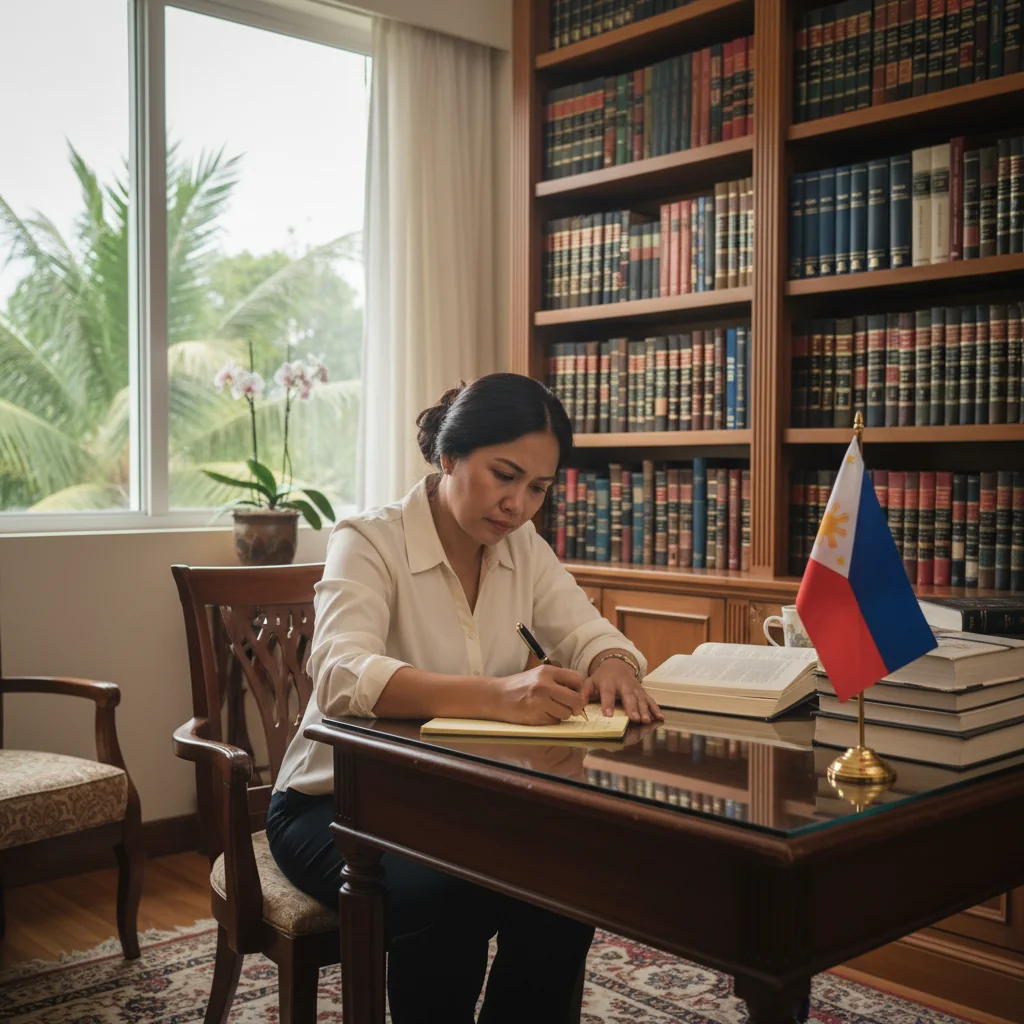
A photorealistic image of a professional adult Filipino woman in her 30s, sitting at a wooden desk in a home office in the Philippines, thoughtfully preparing a legal affidavit. She is writing on a notepad with a pen, surrounded by bookshelves with law books and a Philippine flag in the background. The atmosphere is calm and focused, with natural light coming through a window showing a tropical view. No children are present in the image.
Learn how to prepare an affidavit in the Philippines with this comprehensive step-by-step guide. Understand the legal requirements, format, and notarization process for valid affidavits.
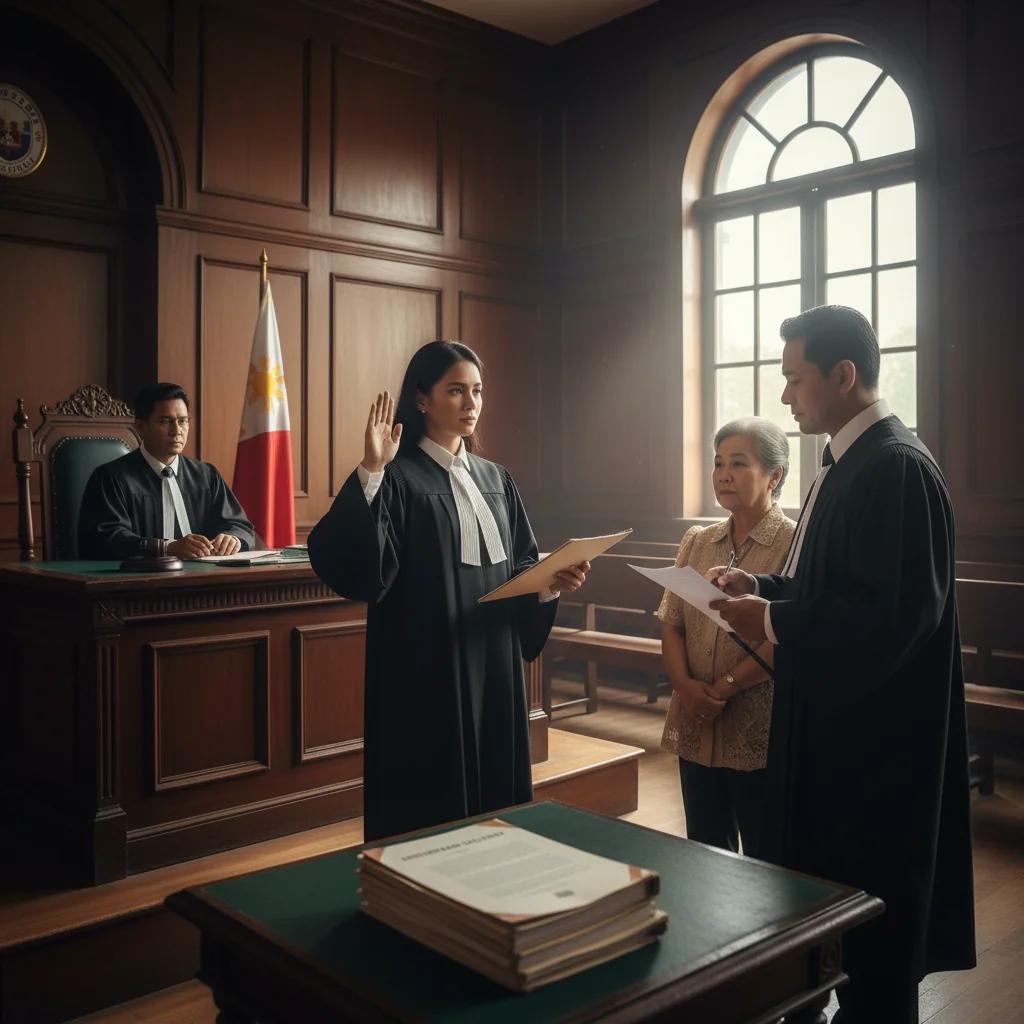
A photorealistic image of a diverse group of adults in a modern Philippine courtroom, including a lawyer presenting a case to a judge and witnesses providing testimony, symbolizing the use of affidavits in legal proceedings, with no children present.
Discover the common uses of affidavits in Philippine legal proceedings, including civil cases, criminal trials, and notarial applications. Learn how sworn statements support evidence and streamline judicial processes.
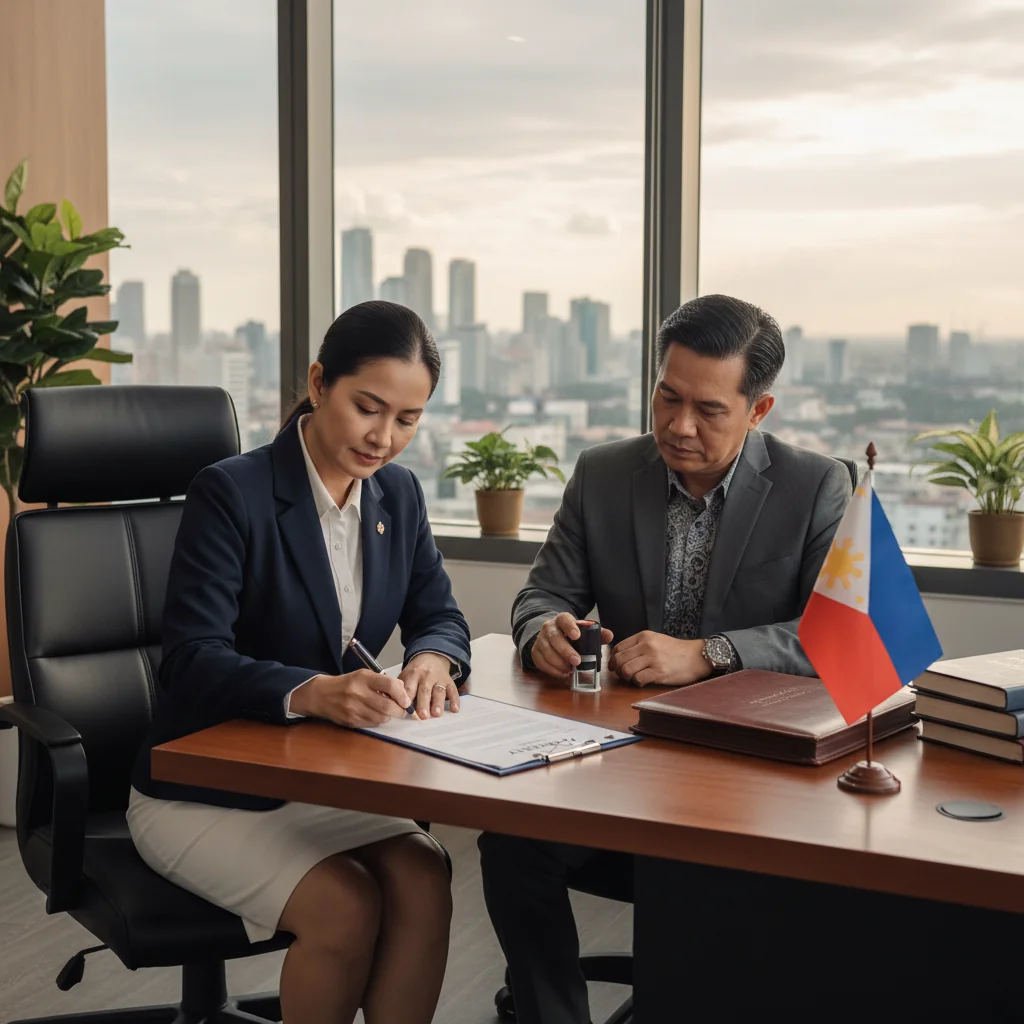
A photorealistic image of a professional adult in a modern Philippine law office, signing an affidavit with a notary public present, symbolizing legal verification and trust in documentation, with elements like the Philippine flag in the background to evoke national legal context. No children are present in the scene.
Discover the essential legal requirements for creating and notarizing affidavits in the Philippines. Learn about formats, contents, and compliance with Philippine laws to ensure validity.