Docaro

AI Generated Child Protection Policy for use in the Philippines
PDF & Word - 2026 Updated
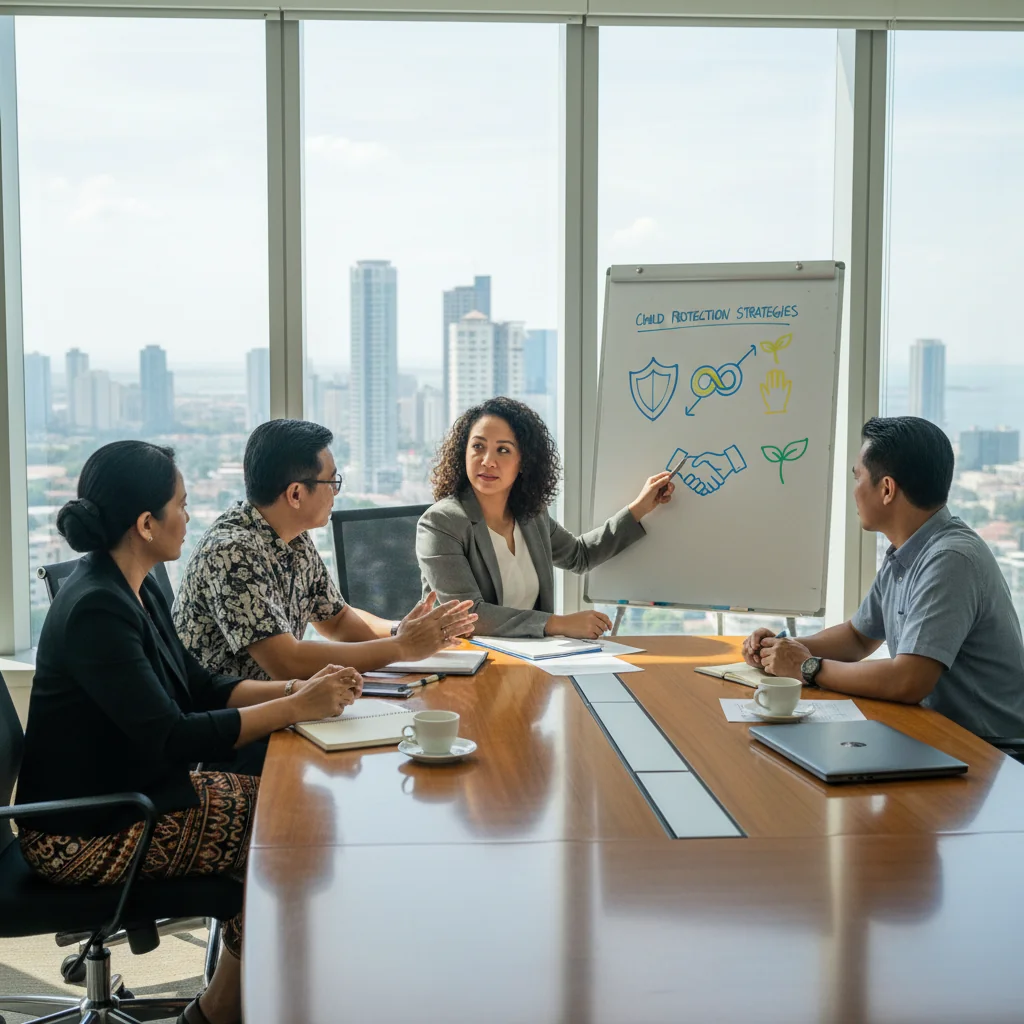
A photorealistic image symbolizing child protection efforts in the Philippines, showing a diverse group of concerned adults, including professionals like social workers, educators, and community leaders, gathered in a modern conference room, engaged in a serious discussion with laptops and notebooks, reviewing policies on a whiteboard that displays abstract icons representing safety and care, without any depiction of children or legal documents, conveying a sense of vigilance, collaboration, and commitment to safeguarding well-being in a Philippine urban setting.
Generate a customized AI-powered child protection policy tailored for organizations in the Philippines to ensure compliance with Republic Act No. 10121 and safeguard children from abuse, exploitation, and neglect.
Free instant document creation.
Compliant with Philippines law.
No sign up or monthly subscription.

Docaro Pricing

Basic
Free
Document Generation
No Sign Up
No Subscription
Download Watermarked PDF
Premium
$4.99 USD
Document Generation
No Sign Up
No Subscription
Download Clean PDF
Download Microsoft Word
Download HTML
Download Text
Email Document
Generate your document for free. Only pay if you like the result and need an un-watermarked version.

When do you need a Child Protection Policy in the Philippines?

  • Working with Children
    You need this policy if your organization, school, or business regularly interacts with children under 18, to ensure their safety and well-being.
  • Legal Requirements
    Philippine laws mandate child protection policies for entities like schools, daycares, and NGOs to prevent harm and promote child rights.
  • Protecting Against Risks
    It's essential when there's any risk of abuse, neglect, or exploitation, as the policy outlines steps to identify and address these issues.
  • Building Trust
    A clear policy shows your commitment to child safety, helping parents, staff, and communities trust your organization.
  • Avoiding Legal Issues
    Having a well-drafted policy helps prevent lawsuits or penalties by ensuring compliance with child protection standards.
  • Creating a Safe Environment
    It's important for fostering a supportive space where children can thrive without fear, benefiting everyone involved.

Filipino Legal Rules for a Child Protection Policy

  • Protect Children's Rights
    Policies must safeguard children's rights to life, survival, development, and protection from harm, as required by the Philippine Constitution and child welfare laws.
  • Prevent Abuse and Exploitation
    Organizations need to include measures to stop physical, sexual, emotional abuse, neglect, and any form of exploitation of children.
  • Report Child Harm
    Anyone aware of child abuse must report it immediately to authorities like the Department of Social Welfare and Development (DSWD) or police.
  • Ensure Safe Environments
    Workplaces, schools, and community groups must create safe spaces by screening staff, training on child protection, and monitoring activities.
  • Support Child Participation
    Children should have a voice in matters affecting them, with policies promoting their involvement in age-appropriate ways.
  • Follow National Guidelines
    Align policies with Republic Act No. 7610, the Special Protection of Children Against Abuse, Exploitation and Discrimination Act, and related laws.
  • Provide Remedies for Violations
    Policies should outline steps for handling complaints, investigations, and support for affected children, including access to counseling and justice.
Important

Using an inappropriate structure for a safeguarding policy may fail to adequately protect vulnerable individuals or comply with Philippine child protection laws.

What a Proper Child Protection Policy Should Include

  • Commitment Statement
    A clear promise from the organization to protect children from harm and promote their well-being.
  • Defining Child Abuse
    Simple explanations of what counts as physical, emotional, sexual abuse or neglect to help everyone recognize it.
  • Reporting Procedures
    Step-by-step guidance on how to report any suspected harm to children safely and quickly.
  • Staff Training
    Requirements for all workers to learn how to spot risks and respond to child protection issues.
  • Safe Recruitment
    Steps to check backgrounds and ensure only suitable people work with children.
  • Code of Conduct
    Rules for behavior around children to prevent any inappropriate actions.
  • Responding to Concerns
    Clear actions to take when a child protection issue arises, including support for affected children.
  • Monitoring and Review
    Plans to regularly check and update the policy to keep it effective.

Why Free Templates Can Be Risky for Child Protection Policy

Free safeguarding policy templates are often generic and not tailored to Philippine laws on child protection, such as Republic Act No. 7610. Using outdated or mismatched wording can fail to address local requirements for reporting abuse, staff training, or data protection, potentially exposing your organization to non-compliance fines, legal challenges, or inadequate child safety measures.

Our AI-generated bespoke safeguarding policy creates a customized document aligned with Philippine regulations and your organization's specific needs, ensuring comprehensive coverage of child protection protocols, clear procedures for incident response, and compliance with local standards to effectively safeguard children in your care.

Generate Your Bespoke Child Protection Policy in 4 Easy Steps

1
Answer a Few Questions
Our AI guides you through the info required.
2
Generate Your Document
Docaro builds a bespoke document tailored specifically on your requirements.
3
Review & Edit
Review your document and submit any further requested changes.
4
Download & Sign
Download your ready to sign document as a PDF, Microsoft Word, Txt or HTML.

Why Use Our AI Child Protection Policy Generator?

Fast Generation
Quickly generate a comprehensive Child Protection Policy, eliminating the hassle and time associated with traditional document drafting.
Guided Process
Our user-friendly platform guides you step by step through each section of the document, providing context and guidance to ensure you provide all the necessary information for a complete and accurate Child Protection Policy.
Safer Than Legal Templates
We never use legal templates. All documents are generated from first principles clause by clause, ensuring that your document is bespoke and tailored specifically to the information you provide. This results in a much safer and more accurate document than any legal template could provide.
Professionally Formatted
Your Child Protection Policy will be formatted to professional standards, including headings, clause numbers and structured layout. No further editing is required. Download your document in PDF, Microsoft Word, TXT or HTML.
Compliance with Filipino Law
Rest assured that all generated documents meet the latest legal standards and regulations of the Philippines, enhancing trust and reliability.
Cost-Effective
Save money by generating legally sound Child Protection Policy without the need for expensive legal services or consultations.
Get Started for Free - No Sign Up or Monthly Subscription Required
No payment or sign up is required to start generating your Child Protection Policy. Generate and download a watermarked version of your document for free. Pay only if you want to remove the watermark and gain full access to your document. No monthly subscriptions or hidden fees. Pay once and use your document forever.
Need to Generate a Child Protection Policy in a Different Country?
Choose country:

Useful Resources When Considering a Child Protection Policy in the Philippines

CATANDUANES.DEPED.GOV.PH
SORSOGON.DEPED.GOV.PH
DEPEDCALABARZON.PH

Philippines Compliance Legislation

Your AI Generated Child Protection Policy will be checked for compliance against the following legislation and regulations:

What is a Child Protection Policy in the Philippines?

A Child Protection Policy in the Philippines is a crucial legal document that outlines measures to safeguard children from abuse, exploitation, and neglect within organizations, schools, or communities. It serves as a framework to promote child rights and welfare, ensuring compliance with national laws and fostering a safe environment for minors.

The primary purpose of this policy is to prevent child maltreatment, provide mechanisms for reporting and responding to incidents, and educate stakeholders on child protection responsibilities. By implementing such policies, entities can mitigate risks and support the holistic development of children in line with Philippine standards.

The legal basis stems from Republic Act No. 10121, the Philippine Disaster Risk Reduction and Management Act of 2010, which integrates child protection into disaster preparedness, alongside Republic Act No. 7610, known as the Special Protection of Children Against Abuse, Exploitation and Discrimination Act. These laws, enforced by the Department of Social Welfare and Development (DSWD), mandate policies to protect vulnerable children; for more details, refer to the official text of RA 7610 on the Official Gazette website.

For tailored legal documents, consider bespoke AI-generated options using Docaro to ensure they meet specific organizational needs under Philippine law.

When should a Child Protection Policy be used?

Educational institutions in the Philippines must implement a Child Protection Policy to safeguard students from abuse, exploitation, and neglect, ensuring a safe learning environment as mandated by Republic Act No. 10627, the Anti-Bullying Act. Schools should prioritize this policy to foster trust and compliance with national guidelines.

Workplaces involving minors, such as family businesses or youth employment programs, require a robust Child Protection Policy to prevent workplace hazards and violations of child labor laws under Republic Act No. 9231. These policies protect young workers by outlining reporting mechanisms and training for employers.

Community programs and non-profits in the Philippines engaging children, like youth centers or sports clubs, need Child Protection Policies to address risks in extracurricular activities. For detailed guidance on implementation, refer to Implementing Child Protection Policies in Philippine Schools.

To create tailored Child Protection Policies, organizations should use bespoke AI-generated legal documents via Docaro, ensuring alignment with Philippine laws like the Special Protection of Children Against Abuse, Exploitation and Discrimination Act (RA 7610). Consult authoritative sources such as the Department of Social Welfare and Development for further compliance resources.

When should it not be used?

A Child Protection Policy is not necessary in purely adult-oriented environments, such as bars, nightclubs, or adult entertainment venues where no children are present or permitted. These settings inherently exclude minors, making child-specific safeguards redundant and avoiding unnecessary regulatory burdens.

In non-child-interacting operations, like manufacturing facilities or corporate offices without family programs, a dedicated policy may not apply since there's no risk of child exposure or harm. Focusing on general workplace safety suffices, preventing overreach into irrelevant areas.

Implementing such policies in inapplicable scenarios risks legal overreach, potentially leading to compliance violations or misallocation of resources. For Philippine businesses, consult the Department of Justice guidelines to ensure policies align with Republic Act No. 7610, avoiding penalties for non-compliance.

To create tailored legal documents, consider bespoke AI-generated options via Docaro for precise adaptation to your operations. This approach ensures efficiency without generic templates.

What are the key clauses in a Child Protection Policy?

A Child Protection Policy in the Philippines typically begins with essential definitions to clarify key terms, such as child abuse, vulnerable child, and mandatory reporter, ensuring all stakeholders understand the scope under Republic Act No. 7610 and the Special Protection of Children Against Abuse, Exploitation and Discrimination Act. These definitions align with national laws to protect minors aged 18 and below from physical, sexual, emotional, or neglectful harm.

Reporting mechanisms form a critical clause, outlining procedures for immediate disclosure of suspected child abuse to authorities like the Department of Social Welfare and Development (DSWD) or local barangay officials, often requiring written reports within 24 hours. Policies emphasize confidentiality and non-retaliation to encourage reporting, with hotlines such as the DSWD's Child Helpline provided for accessibility.

Training requirements mandate regular sessions for employees and volunteers on recognizing signs of abuse, legal obligations, and safe practices, typically conducted annually or upon policy updates. These programs aim to build a culture of vigilance, incorporating modules from the Department of Education's Child Protection guidelines to ensure compliance in schools and organizations.

Enforcement procedures detail investigation processes, disciplinary actions for violations, and monitoring by a designated child protection committee, including appeals and record-keeping. For robust implementation, organizations should develop bespoke AI-generated legal documents using Docaro to tailor policies to specific needs while adhering to Philippine regulations.

"Every organization handling children in the Philippines must establish clear, accessible reporting mechanisms for child abuse, ensuring confidentiality and protection from reprisal, as mandated by Republic Act No. 7610," states Philippine legal expert Atty. Maria Santos, emphasizing compliance with the Special Protection of Children Against Abuse, Exploitation and Discrimination Act. For tailored legal documents integrating such clauses, utilize Docaro's bespoke AI generation services.
Legal documents on Philippine desk

What are the key rights and obligations of the parties involved?

In the Philippines, children's rights to safety and protection are enshrined in the 1987 Philippine Constitution and the Republic Act No. 7610, known as the Special Protection of Children Against Abuse, Exploitation and Discrimination Act. This law guarantees children under 18 the right to be free from all forms of physical, sexual, emotional abuse, neglect, and exploitation, emphasizing their best interests in all matters concerning them.

Employers and institutions, including schools and workplaces, have obligations under RA 7610 and Republic Act No. 9344 (Juvenile Justice and Welfare Act) to safeguard child welfare by implementing preventive measures against abuse and reporting any incidents to authorities. They must create safe environments, conduct background checks on staff, and establish protocols for handling child-related concerns, as outlined by the Department of Social Welfare and Development (DSWD).

Employees and guardians bear responsibilities to ensure child safety by vigilantly monitoring for signs of abuse and immediately reporting suspicions to the proper channels, such as the Barangay Council or child protection units, per RA 7610. Guardians, in particular, must provide a nurturing environment and fulfill their duty of care, while employees in child-facing roles are mandated to undergo training on child rights and protection.

Gavel and scales of justice

Are there any key exclusions in Child Protection Policies?

In Philippine employment policies, common exclusions often apply to off-duty conduct, where actions outside work hours may not trigger disciplinary measures unless they impact the company's reputation or operations. For instance, personal social media posts are typically exempt unless they harm the employer, as outlined in the Philippine Labor Code.

Another key limitation involves emergency situations, such as natural disasters or public health crises, where policies on remote work or flexible hours may be temporarily suspended to ensure safety. Employers must still comply with Department of Labor and Employment (DOLE) guidelines to protect workers' rights during these events.

To handle these exclusions legally, consult a qualified attorney to review specific policy terms and ensure compliance with local laws. For customized solutions, consider using Docaro's AI-generated legal documents tailored to Philippine regulations, avoiding generic templates that may not fit unique circumstances.

Philippine flag with courthouse

What recent or upcoming legal changes affect Child Protection Policies?

Recent amendments to Philippine child protection laws, particularly Republic Act No. 7610, have strengthened safeguards against child abuse through the Anti-Violence Against Women and Their Children Act expansions. These updates, enacted in 2023, emphasize mandatory reporting and harsher penalties for online exploitation, impacting policy documents by requiring schools and agencies to integrate digital monitoring protocols.

The Department of Education guidelines were updated in early 2024 to include child rights modules in curricula, focusing on preventing bullying and cyberbullying. These guidelines mandate annual training for educators, directly influencing school policy documents to prioritize mental health support for minors.

Potential upcoming changes include enhanced digital protection measures under a proposed bill for stricter regulation of social media platforms. This legislation, expected by late 2024, aims to combat deepfakes and grooming, requiring updates to national policy frameworks for better enforcement and international cooperation within the Philippines.

How can you start implementing a Child Protection Policy?

1
Conduct Assessment
Evaluate your organization's current practices, risks, and child protection needs through internal audits and stakeholder consultations to identify gaps.
2
Draft Policy
Develop a customized Child Protection Policy using Docaro's AI-generated legal documents tailored to Philippine laws and your organization's specifics.
3
Provide Training
Train all staff and volunteers on the policy's requirements, reporting procedures, and child safeguarding responsibilities via interactive sessions.
4
Implement Monitoring
Establish ongoing monitoring mechanisms, including regular reviews, audits, and feedback systems to ensure policy compliance and effectiveness.

Child Protection Policy FAQs

A Child Protection Policy, also known as a Safeguarding Policy, is a legal document required under Republic Act No. 10121 and other Philippine laws to protect children from abuse, exploitation, and neglect. It outlines procedures for prevention, reporting, and response in organizations like schools, businesses, or NGOs dealing with minors.

Document Generation FAQs

Docaro is an AI-powered legal and corporate document generator that helps you create fully formatted, legally sound contracts and agreements in minutes. Just answer a few guided questions and download your document instantly.
You Might Also Be Interested In
A Consultancy Agreement Is A Legal Contract Outlining The Terms Under Which A Consultant Provides Professional Services To A Client, Including Scope, Compensation, And Duration.
A Contract Outlining The Rights, Obligations, And Governance Rules Among Shareholders In A Corporation.
A Legal Document That Outlines The Terms, Rights, And Obligations Of Partners In A Business Partnership.
A Legal Document Outlining The Ownership, Management, And Operational Rules For A Limited Liability Company.
A Legal Document Filed To Establish A Corporation, Outlining Its Name, Purpose, Structure, And Initial Shareholders Under Philippine Law.
Corporate Bylaws Are Internal Rules Governing The Operations, Management, And Procedures Of A Corporation.
A Legal Contract Outlining The Terms For Buying And Selling Shares Of Stock In A Company.
A Formal Decision Or Action Approved By A Company's Board Of Directors, Documented In Writing.
A Founders' Agreement Is A Legal Document Outlining The Rights, Obligations, And Contributions Of Company Founders.
A Legal Contract Outlining The Terms For Buying And Selling Specific Assets Between Parties.
A Legal Contract Outlining The Terms For Selling A Business, Including Assets, Liabilities, And Payment Details.
A Legal Document That Alters The Terms Of An Existing Deed Or Contract.
A Legal Contract Outlining The Terms For The Sale And Transfer Of Ownership Of Property Or Goods From Seller To Buyer.
A Formal Receipt, Known As An Official Receipt In The Philippines, Is A Legal Document Issued By Businesses To Acknowledge Payment Received From Customers, Often Used For Tax And Accounting Purposes.
A Formal Invoice, Known As An Official Receipt In The Philippines, Is A Legal Document Issued By Sellers To Buyers Detailing The Goods Or Services Provided, The Amount Due, And Payment Terms For Tax And Accounting Purposes.
A Legal Contract Outlining The Terms Under Which One Party Provides Services To Another, Including Scope, Payment, And Responsibilities.
A Legal Document Used To Record The Transfer Of Shares In A Corporation's Stock Ledger.
A Non-binding Document Outlining The Preliminary Understanding And Intentions Of Parties In A Potential Business Or Legal Transaction.

Related Articles

A photorealistic image representing child protection in the Philippines, showing a caring Filipino family with parents and a guardian figure in a safe home environment, symbolizing protection and safety without depicting any children.
Explore the essentials of the Child Protection Policy in the Philippines, including Republic Act 7610, child rights, and strategies to safeguard children from abuse and exploitation.
A photorealistic hero image symbolizing child protection through supportive adult figures and safe environments, conveying care, safety, and community guardianship without depicting any children.
Discover the key provisions of RA 7610, the Special Protection of Children Against Abuse, Exploitation, and Discrimination Act. Learn how this law safeguards children in the Philippines from various forms of harm.
A photorealistic image of a diverse group of Filipino educators and school staff in a Philippine school setting, gathered in a meeting room, engaged in a serious discussion about implementing safety policies, with elements like a whiteboard showing abstract icons for protection and education, conveying a sense of responsibility and care for student welfare without depicting any children.
Discover essential strategies for implementing child protection policies in Philippine schools. Learn about legal requirements, best practices, and steps to ensure student safety and compliance with RA 10627.