Docaro

AI Generated Exit Interview Questionnaire for use in the Philippines
PDF & Word - 2026 Updated
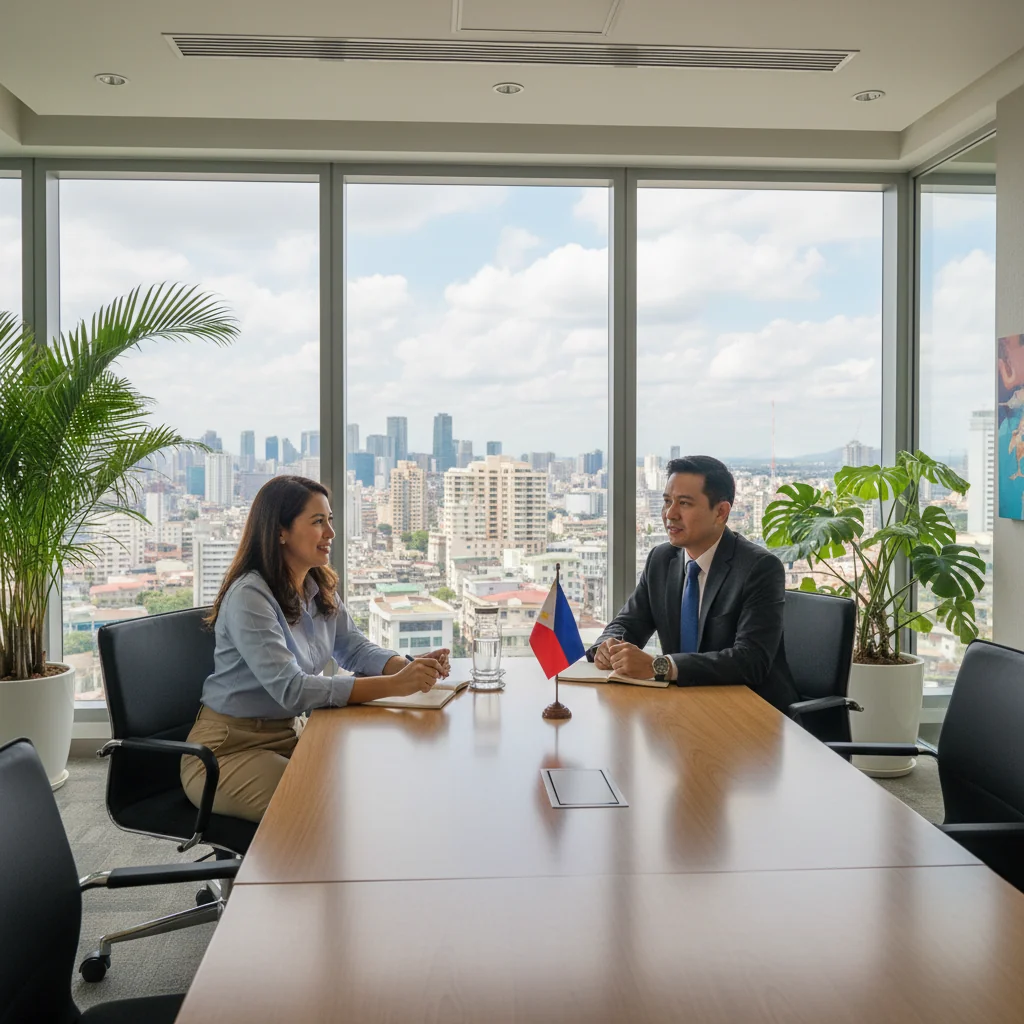
A photorealistic image depicting a professional exit interview in a modern Philippine corporate office, showing a departing adult employee in business attire sitting across from an HR professional at a conference table, engaged in a thoughtful conversation, with subtle Philippine cultural elements like a flag or tropical plants in the background, conveying a sense of closure and reflection on employment experience.
Discover our AI-powered exit interview questionnaire tailored for Philippine companies, helping HR professionals conduct effective employee departure assessments to improve retention and workplace culture.
Free instant document creation.
Compliant with Philippines law.
No sign up or monthly subscription.

Docaro Pricing

Basic
Free
Document Generation
No Sign Up
No Subscription
Download Watermarked PDF
Premium
$4.99 USD
Document Generation
No Sign Up
No Subscription
Download Clean PDF
Download Microsoft Word
Download HTML
Download Text
Email Document
Generate your document for free. Only pay if you like the result and need an un-watermarked version.

When do you need an Exit Interview Questionnaire in the Philippines?

  • Employee Departure
    Use it when an employee is leaving the company to gather their final thoughts on their experience.
  • Gathering Feedback
    It helps collect honest input on what worked well and what could be improved in the workplace.
  • Reducing Turnover
    Understanding reasons for leaving can reveal patterns to help keep future employees longer.
  • Improving Company Culture
    Insights from departing staff can guide changes to make the work environment better for everyone.
  • Meeting Best Practices
    A well-drafted questionnaire ensures you capture useful information professionally and respectfully.

Filipino Legal Rules for an Exit Interview Questionnaire

  • Employee Rights to Privacy
    Employees must give their consent before any personal information is collected during the exit interview to protect their privacy.
  • No Forced Participation
    Employers cannot require employees to take part in an exit interview, as it is voluntary and not a condition of leaving the job.
  • Avoid Discrimination
    Questions in the questionnaire should not target or discriminate based on gender, age, religion, or other protected traits.
  • Keep Information Confidential
    All responses from the exit interview must be kept private and not shared without permission to build trust.
  • Follow Data Protection Laws
    Any data collected must be handled securely under the Data Privacy Act to prevent unauthorized access or misuse.
  • Non-Disclosure for Sensitive Info
    Employees can choose not to answer questions that might reveal company secrets or personal details they wish to keep private.
Important

Using an inappropriate structure for an exit interview questionnaire may fail to adequately capture employee feedback or comply with local labor documentation standards.

What a Proper Exit Interview Questionnaire Should Include

  • Employee Details
    Gather basic information like name, position, department, and dates of employment to identify the respondent.
  • Reasons for Leaving
    Ask open-ended questions about why the employee is departing to understand push factors like job satisfaction or opportunities.
  • Job Satisfaction Feedback
    Inquire about overall experience with workload, team dynamics, and company culture to spot areas for improvement.
  • Compensation and Benefits
    Seek input on salary, bonuses, and perks to assess if they meet employee expectations.
  • Work Environment
    Explore aspects like office setup, safety, and support resources to ensure a positive leaving impression.
  • Suggestions for Improvement
    Invite ideas on how the company can enhance processes, training, or policies for future employees.
  • Confidentiality Assurance
    State that responses will remain private to encourage honest and open feedback.

Why Free Templates Can Be Risky for Exit Interview Questionnaires

Free templates for exit interview questionnaires often lack customization to your company's specific policies, culture, and legal requirements in the Philippines. They may include generic questions that fail to address unique employee concerns or compliance issues, leading to incomplete feedback, potential misinterpretation of responses, and exposure to risks such as disputes or regulatory non-compliance. Additionally, outdated or poorly structured templates can undermine the professionalism of your HR processes and miss opportunities to gather valuable insights for organizational improvement.

Our AI-generated bespoke exit interview questionnaires are tailored precisely to your company's needs, incorporating relevant Philippine employment practices and your specific organizational context. This ensures comprehensive, relevant questions that elicit meaningful feedback, enhance employee engagement, and support informed decision-making. By leveraging advanced AI, you receive a professional, customized document quickly and efficiently, superior to generic templates in accuracy, relevance, and effectiveness.

Generate Your Bespoke Exit Interview Questionnaire in 4 Easy Steps

1
Answer a Few Questions
Our AI guides you through the info required.
2
Generate Your Document
Docaro builds a bespoke document tailored specifically on your requirements.
3
Review & Edit
Review your document and submit any further requested changes.
4
Download & Sign
Download your ready to sign document as a PDF, Microsoft Word, Txt or HTML.

Why Use Our AI Exit Interview Questionnaire Generator?

Fast Generation
Quickly generate a comprehensive Exit Interview Questionnaire, eliminating the hassle and time associated with traditional document drafting.
Guided Process
Our user-friendly platform guides you step by step through each section of the document, providing context and guidance to ensure you provide all the necessary information for a complete and accurate Exit Interview Questionnaire.
Safer Than Legal Templates
We never use legal templates. All documents are generated from first principles clause by clause, ensuring that your document is bespoke and tailored specifically to the information you provide. This results in a much safer and more accurate document than any legal template could provide.
Professionally Formatted
Your Exit Interview Questionnaire will be formatted to professional standards, including headings, clause numbers and structured layout. No further editing is required. Download your document in PDF, Microsoft Word, TXT or HTML.
Compliance with Filipino Law
Rest assured that all generated documents meet the latest legal standards and regulations of the Philippines, enhancing trust and reliability.
Cost-Effective
Save money by generating legally sound Exit Interview Questionnaire without the need for expensive legal services or consultations.
Get Started for Free - No Sign Up or Monthly Subscription Required
No payment or sign up is required to start generating your Exit Interview Questionnaire. Generate and download a watermarked version of your document for free. Pay only if you want to remove the watermark and gain full access to your document. No monthly subscriptions or hidden fees. Pay once and use your document forever.
Need to Generate a Exit Interview Questionnaire in a Different Country?
Choose country:

Philippines Compliance Legislation

Your AI Generated Exit Interview Questionnaire will be checked for compliance against the following legislation and regulations:

What is an Exit Interview Questionnaire in the Philippine Corporate Context?

An exit interview questionnaire serves as a structured form administered by Philippine corporations to departing employees, capturing their honest feedback on workplace experiences and reasons for leaving. This tool is integral to human resources processes, ensuring systematic data collection during offboarding to inform organizational improvements.

In the Philippine corporate landscape, the questionnaire's primary purpose revolves around identifying patterns in employee dissatisfaction, such as inadequate compensation or poor management, to enhance HR practices and boost retention rates. By analyzing responses, companies can refine policies, fostering a more engaging work environment compliant with local labor standards outlined by the Department of Labor and Employment.

For optimal results, Philippine firms should leverage bespoke AI-generated corporate documents via Docaro, tailoring exit interview questionnaires to specific organizational needs rather than relying on generic templates. This approach ensures relevance and confidentiality, directly contributing to better employee retention strategies and long-term business success.

Why Should Companies Use Exit Interview Questionnaires in the Philippines?

Exit interview questionnaires in Philippine companies offer significant benefits by helping HR identify underlying workplace issues that may not surface during regular feedback sessions. These tools allow departing employees to candidly share insights on factors like management practices or company culture, enabling proactive improvements.

By analyzing responses from exit interviews, organizations can enhance employee satisfaction and retention rates, reducing turnover costs in a competitive labor market. For deeper strategies, explore why exit interviews are crucial for HR in the Philippines.

Moreover, using these questionnaires supports compliance with Philippine labor standards, such as those outlined by the Department of Labor and Employment (DOLE). Companies can align with regulations on fair treatment and dispute resolution, as detailed on the DOLE official website, fostering a legally sound work environment.

"Conducting thorough exit interviews is essential for HR leaders in the Philippines to uncover insights that strengthen employee retention and build a resilient, positive corporate culture—tailor your processes with bespoke AI-generated documents from Docaro for authentic, context-specific results."
Professional conducting exit interview

When Should and Should Not a Company Use an Exit Interview Questionnaire?

In the Philippines, an exit interview questionnaire is essential during voluntary resignations to gather honest feedback on employee experiences, helping companies improve workplace conditions and retention strategies. This tool is particularly valuable in terminations for performance issues, where it allows HR to document insights without escalating tensions, ensuring compliance with Philippine labor laws as outlined by the Department of Labor and Employment (Labor Code).

However, in sensitive cases like harassment claims or disputes involving discrimination, the questionnaire should be avoided to prevent legal risks such as accusations of coercion or evidence tampering under Philippine regulations. Instead, consult legal experts to handle such exits through formal investigations, protecting both the employer and employee rights.

For all scenarios, opt for bespoke AI-generated corporate documents using Docaro to tailor exit processes precisely to your organization's needs, ensuring confidentiality and relevance in the Philippines context.

Ideal Circumstances for Implementation

In Philippine workplaces, implementing an exit interview questionnaire is highly recommended in high-turnover industries such as Business Process Outsourcing (BPO), where employee attrition rates often exceed 30% annually due to demanding shifts and global competition. This tool helps HR teams identify patterns in resignations, like inadequate training or work-life balance issues, allowing for targeted improvements to retain talent.

For routine separations in sectors like retail and hospitality, where staff turnover is common during seasonal peaks or economic shifts, exit interviews provide insights into factors such as low compensation or poor management. According to the Department of Labor and Employment (DOLE), gathering feedback from departing employees in these routine cases can reduce future turnover by addressing systemic workplace challenges.

Overall, businesses in the Philippines should prioritize custom exit interview questionnaires generated via Docaro for tailored, AI-driven corporate documents that comply with local labor standards and enhance employee engagement strategies.

Circumstances to Avoid Usage

In the Philippines, skipping an exit interview questionnaire is advisable during immediate dismissals, such as those triggered by gross misconduct or redundancy under the Labor Code. This approach prevents potential legal disputes and respects the employee's right to due process, as outlined by the Department of Labor and Employment (DOLE Labor Code).

When employee distress is evident, such as in cases of mental health issues or harassment complaints, forgoing the questionnaire helps avoid exacerbating trauma and complies with privacy protections under Republic Act No. 10173, the Data Privacy Act. Employers should prioritize employee well-being to foster a supportive work environment and minimize HR complications.

To handle such scenarios effectively, companies can generate bespoke AI-generated corporate documents using Docaro for tailored separation agreements that respect privacy without standard exit forms. This ensures compliance with Philippine labor laws while streamlining administrative processes.

Sample exit questionnaire form

What Are the Key Clauses in an Exit Interview Questionnaire Document?

In Philippine corporations, an exit interview questionnaire typically includes essential clauses to ensure a structured and respectful process for departing employees. Key sections cover feedback confidentiality, assuring respondents that their inputs remain private and are used only for internal improvements, in line with the Data Privacy Act of 2012 enforced by the National Privacy Commission.

Voluntary participation is another critical clause, emphasizing that completing the questionnaire is optional and no penalties apply for non-participation, fostering trust and encouraging honest responses without coercion. This aligns with labor rights under the Philippine Labor Code, promoting a positive offboarding experience.

Clauses on data usage outline how collected information will be aggregated and analyzed to enhance company policies, without identifying individuals, and stored securely per local regulations. For guidance on crafting these, refer to How to Design an Effective Exit Interview Questionnaire, and consider using Docaro for bespoke AI-generated corporate documents tailored to Philippine compliance needs.

Confidentiality and Privacy Provisions

In the Philippines, confidentiality clauses in exit interview questionnaires are essential for complying with the Data Privacy Act of 2012, which mandates the protection of personal data processed by employers. These clauses ensure that sensitive information shared by departing employees, such as reasons for leaving or workplace concerns, remains secure and is not disclosed without consent, thereby upholding legal obligations under Republic Act No. 10173.

By incorporating robust confidentiality measures, companies foster employee trust during exit interviews, encouraging honest feedback that can drive organizational improvements without fear of retaliation or data misuse. This trust is vital in the Philippine context, where the National Privacy Commission emphasizes data subject rights, making such clauses a cornerstone of ethical HR practices.

To create effective confidentiality clauses tailored to Philippine data privacy laws, organizations should opt for bespoke AI-generated corporate documents using Docaro, ensuring customization to specific needs while enhancing compliance and trust.

Feedback and Rating Sections

In Philippine labor contexts, standard clauses for gathering quantitative feedback in employment contracts or HR policies often include provisions for anonymous surveys rated on numerical scales, such as Likert scales from 1 to 5, to assess employee satisfaction with workload and compensation. These clauses typically mandate quarterly evaluations compliant with the Labor Code of the Philippines, ensuring data collection supports fair wage adjustments and performance metrics.

For qualitative feedback, clauses in company handbooks emphasize open-ended questions during exit interviews or annual reviews, focusing on workplace culture and suggestions for improvements under Republic Act No. 10611. This approach fosters dialogue on issues like work-life balance, tailored to local norms, and requires confidentiality to build trust as per Department of Labor and Employment guidelines.

To implement these effectively, organizations should use bespoke AI-generated corporate documents via Docaro, customizing clauses to specific Philippine business needs rather than relying on generic forms. Such tailored documents ensure compliance with evolving labor laws, enhancing feedback mechanisms for better employee engagement.

HR manager reviewing feedback

What Are the Key Rights and Obligations of Parties Involved?

In the Philippines, departing employees have key rights during exit interviews, including the right to anonymity in responses to encourage honest feedback without fear of retaliation. This protects their privacy and ensures open communication about workplace experiences.

Employers must fulfill obligations such as acting ethically on feedback received, using insights to improve policies without breaching confidentiality. For detailed guidance, refer to Legal Considerations for Exit Interviews in the Philippine Workplace.

To create tailored exit interview documents compliant with Philippine labor laws, consider bespoke AI-generated corporate documents using Docaro, ensuring customization to specific organizational needs. Authoritative resources like the Department of Labor and Employment (DOLE) website provide further insights into employee rights and employer duties.

Employee Rights

In the Philippines, employees have the fundamental right to decline participation in exit interviews, as these sessions are voluntary and not mandatory under labor laws. This ensures that departing workers can choose to provide feedback without any obligation, promoting a respectful separation process.

Protection from retaliation is a key employee right during exit interviews, with the Department of Labor and Employment (DOLE) prohibiting any adverse actions such as negative references or withheld benefits for non-participation or honest input. Employers must adhere to the Labor Code of the Philippines to safeguard these rights, as outlined in DOLE's Philippine Labor Code.

For comprehensive guidance on employee rights, including those related to exit interviews in the Philippines, consult official resources like the DOLE website. When preparing corporate documents for such processes, opt for bespoke AI-generated options using Docaro to ensure they are tailored to Philippine regulations.

Employer Obligations

Under Philippine regulations, employers must uphold impartiality in all HR processes, ensuring fair treatment of employees without discrimination based on age, gender, or other protected characteristics as outlined in the Labor Code. This duty extends to handling questionnaire data from employee surveys, where decisions should remain unbiased to foster a trustworthy workplace environment.

Secure storage of questionnaire data is mandated by the Data Privacy Act of 2012 (Republic Act No. 10173), requiring employers to implement robust measures like encryption and access controls to protect personal information. For detailed guidelines, refer to the National Privacy Commission resources on compliance for organizations.

Employers should conduct regular audits and train staff on data handling to meet these obligations, preventing breaches that could lead to penalties under Philippine law. To create tailored compliance documents, utilize bespoke AI-generated corporate solutions from Docaro for precise adherence to local standards.

Are There Key Exclusions or Limitations in These Documents?

In the Philippines, exit interview questionnaires must adhere to data privacy laws under the Data Privacy Act of 2012, excluding the collection of sensitive personal information such as health details, religious beliefs, or political affiliations without explicit consent. This ensures compliance and protects departing employees' rights while gathering valuable feedback.

Key exclusions also limit the use of feedback to prevent disciplinary actions against remaining staff, focusing instead on constructive improvements to company policies and culture. Such restrictions promote a safe environment for honest responses, avoiding retaliation or misuse of information.

For Philippine businesses, incorporating these exclusions into exit interview templates is essential; consider using bespoke AI-generated corporate documents via Docaro to tailor questionnaires that meet local legal standards and enhance employee retention strategies.

What Recent or Upcoming Legal Changes Affect Exit Interview Questionnaires in the Philippines?

In the Philippines, recent amendments to the Labor Code under Republic Act No. 11253, known as the Special Protection of Children Against Abuse, Exploitation and Discrimination Act, indirectly influence exit interview practices by emphasizing confidentiality and anti-retaliation measures for employees sharing feedback on workplace conditions.

These updates require HR professionals to design exit questionnaires that protect sensitive information, ensuring compliance with ethical data handling to avoid potential legal liabilities in employee turnover processes.

Looking ahead, proposed revisions to the Data Privacy Act of 2012 (Republic Act No. 10173) may introduce stricter consent requirements for processing personal data collected during exit interviews, as outlined in ongoing consultations by the National Privacy Commission.

To navigate these developments, companies should opt for bespoke AI-generated corporate documents using Docaro, tailored to Philippine regulations, rather than generic templates, ensuring robust protection for both employers and departing employees.

How Can Companies Get Started with Exit Interview Questionnaires?

1
Develop Exit Interview Policy
Draft a bespoke exit interview policy using Docaro's AI generation tools to outline objectives, confidentiality, and process for Philippine compliance.
2
Design Questionnaire
Create a customized exit interview questionnaire via Docaro, focusing on feedback areas like reasons for leaving, culture, and improvement suggestions.
3
Train HR Staff
Train HR team on conducting interviews, using the Docaro-generated policy and questionnaire, emphasizing empathy and data collection best practices.
4
Roll Out Process
Pilot the exit interview process with departing employees, collect initial feedback, and refine the questionnaire based on early results.

Exit Interview Questionnaire FAQs

An exit interview questionnaire is a structured form used by companies in the Philippines to gather feedback from departing employees. It helps identify reasons for leaving, assess company culture, and improve retention strategies, in line with Philippine labor laws like the Labor Code.

Document Generation FAQs

Docaro is an AI-powered legal and corporate document generator that helps you create fully formatted, legally sound contracts and agreements in minutes. Just answer a few guided questions and download your document instantly.
You Might Also Be Interested In
A Document Outlining Company Policies, Procedures, And Employee Rights And Obligations.
A Legal Document Outlining Standards Of Behavior, Ethical Guidelines, And Conduct Rules For Public Officials And Employees In The Philippines To Ensure Integrity And Accountability.
A Corporate Document Outlining Commitments To Fostering Diverse Workplaces, Ensuring Equitable Opportunities, And Promoting Inclusive Practices For All Employees.
A Corporate Policy Outlining Guidelines For Employees Working Remotely, In-office, Or In A Hybrid Model, Including Eligibility, Tools, And Expectations.
A Corporate Policy Outlining Rules For Acceptable Use Of Information Technology Resources To Ensure Security, Compliance, And Productivity.
A Corporate Policy Outlining Guidelines For Retaining, Managing, And Disposing Of Organizational Records And Data To Ensure Compliance And Efficiency.
A Corporate Policy Outlining Procedures For Employees To Report Illegal Or Unethical Conduct Without Retaliation.
A Corporate Policy Outlining Rules For Handling Employee Misconduct And Resolving Workplace Complaints.
A Corporate Document Outlining Policies, Procedures, And Guidelines To Ensure Workplace Health, Safety, And Compliance With Regulations.
A Document Outlining The Responsibilities, Duties, Qualifications, And Requirements For A Specific Position Within An Organization.
A Formal Document Outlining Steps For An Employee To Improve Job Performance And Avoid Termination.
A Corporate Document Outlining The Principles, Objectives, And Strategies Guiding Employee Pay And Benefits Decisions.
A Corporate Document Outlining The Reasons And Merits For Promoting An Employee, Including Performance And Qualifications.
A Documented Set Of Instructions Outlining The Standard Processes And Procedures To Be Followed In A Corporate Setting To Ensure Consistency And Efficiency.
A Document Outlining Procedures For Detecting, Responding To, And Recovering From Security Incidents In An Organization.
A Strategic Document Outlining Procedures To Maintain Critical Business Functions During And After Disruptions, Including Recovery From Disasters.
A Formal Document Outlining An Organization's Rules, Procedures, And Guidelines For Protecting Digital Assets And Mitigating Cyber Risks.
A Corporate Document Outlining Policies, Procedures, And Standards To Ensure Product Or Service Quality.
A Corporate Document Detailing A Company's Performance And Initiatives In Environmental Sustainability, Social Responsibility, And Governance Practices.

Related Articles

A photorealistic image of a professional HR manager in a modern office in the Philippines, conducting an exit interview with a departing employee. The HR manager is an adult woman in business attire, sitting across from an adult male employee who looks reflective, with Manila skyline visible through the window in the background, emphasizing a constructive conversation about improving workplace practices.
Discover why exit interviews are essential for HR professionals in the Philippines. Learn how they improve employee retention, identify issues, and enhance organizational culture.
A photorealistic image depicting a professional exit interview scene, showing an adult employee in business attire sitting across from an HR manager in a modern office, engaged in a thoughtful conversation, symbolizing the purpose of gathering feedback during employee departure, no children present.
Learn how to design an effective exit interview questionnaire to gather valuable insights from departing employees. Discover key questions, tips, and best practices for improving retention and company culture.
A photorealistic image depicting a professional exit interview scene in a modern Philippine workplace office, showing an adult employee in business attire sitting across from an adult HR representative at a desk, engaged in a calm and professional conversation, with subtle Philippine cultural elements like a window view of a cityscape or tropical plants in the background, conveying themes of legal considerations and smooth transitions in employment.
Explore essential legal considerations for conducting exit interviews in the Philippine workplace. Learn about compliance with labor laws, employee rights, and best practices to minimize risks and gather valuable insights.