Docaro

AI Generated Standard Operating Procedure for use in the Philippines
PDF & Word - 2026 Updated

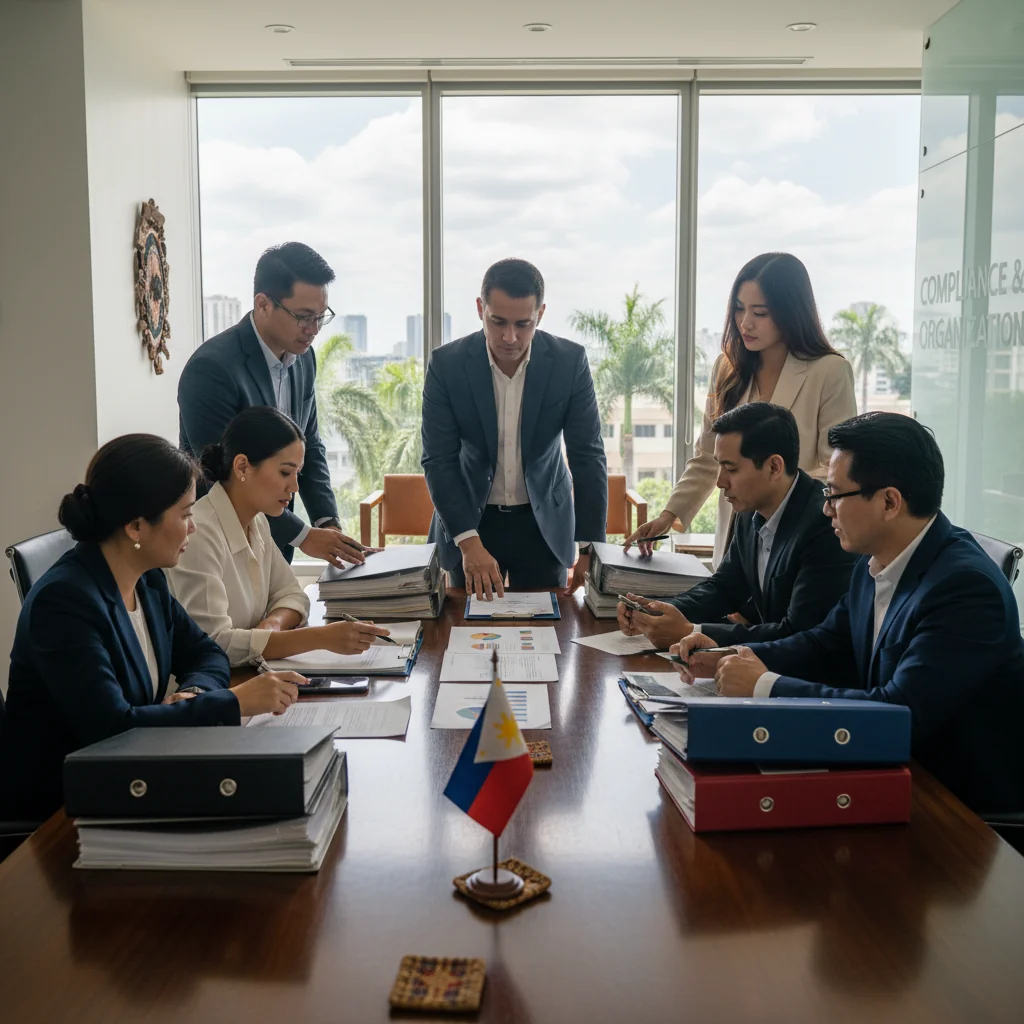
A photorealistic image of a professional business meeting in a modern Philippine corporate office, with diverse adult Filipino professionals discussing standard operating procedures around a conference table, emphasizing organization and efficiency in a business context, no children present.
Discover how our AI-powered tool generates customized Standard Operating Procedures (SOPs) tailored for businesses in the Philippines, ensuring compliance with local regulations and boosting operational efficiency.
Free instant document creation.
Compliant with Philippines law.
No sign up or monthly subscription.

Docaro Pricing

Basic
Free
Document Generation
No Sign Up
No Subscription
Download Watermarked PDF
Premium
$4.99 USD
Document Generation
No Sign Up
No Subscription
Download Clean PDF
Download Microsoft Word
Download HTML
Download Text
Email Document
Generate your document for free. Only pay if you like the result and need an un-watermarked version.

When Do You Need a Standard Operating Procedure in the Philippines?

  • Starting New Processes
    You need an SOP when introducing new tasks or workflows to ensure everyone follows the same steps from the beginning.
  • Training New Team Members
    An SOP is essential for onboarding new employees, helping them quickly learn and perform their roles correctly.
  • Maintaining Consistency
    Use an SOP to keep operations uniform across your team, reducing errors and improving overall efficiency.
  • Ensuring Safety and Compliance
    An SOP is crucial in high-risk areas like manufacturing or healthcare to protect workers and meet local standards.
  • Handling Audits or Reviews
    Prepare an SOP to demonstrate organized practices during inspections, audits, or quality checks.
  • Scaling Your Business
    As your company grows, an SOP helps manage increased complexity by standardizing procedures for smooth expansion.

Filipino Legal Rules for a Standard Operating Procedure

  • No Formal Legal Status
    A standard operating procedure (SOP) is an internal guide for your business and does not have the force of law on its own.
  • Must Follow Labor Laws
    SOPs involving employee tasks must comply with Philippine labor rules on working hours, safety, and fair treatment.
  • Data Protection Requirements
    If your SOP handles personal information, it needs to protect privacy as required by the Data Privacy Act.
  • Safety and Health Compliance
    Procedures related to workplace activities must meet health and safety standards set by government agencies.
  • Contractual Obligations
    SOPs that affect business agreements should align with general contract laws to avoid disputes.
  • Regular Updates Needed
    Keep your SOP current with any changes in laws or business practices to stay compliant.
Important

Using the wrong structure for a standard operating procedure can lead to regulatory non-compliance or operational inefficiencies.

What a Proper Standard Operating Procedure Should Include

  • Purpose
    Clearly state the goal of the procedure to ensure everyone understands its objective.
  • Scope
    Define what activities, people, or areas the procedure covers to set clear boundaries.
  • Responsibilities
    List who is accountable for each step to promote clear roles and accountability.
  • Step-by-Step Instructions
    Provide detailed, sequential actions to guide users through the process accurately.
  • Resources Needed
    Identify required tools, materials, or information to support smooth execution.
  • Safety Measures
    Highlight precautions to protect people and prevent accidents during the procedure.
  • References
    Include related documents or rules that support or relate to the procedure.
  • Review and Update Process
    Outline how and when the procedure will be checked and revised to keep it current.

Why Free Templates Can Be Risky for Standard Operating Procedures

Free templates for standard operating procedures (SOPs) often come with significant risks for Philippine corporations. These generic documents are typically not customized to comply with local labor laws, industry-specific regulations, or the unique needs of your business, potentially leading to operational inefficiencies, legal vulnerabilities, and compliance issues. Outdated or poorly structured templates can result in misaligned processes, increased errors, and difficulties in audits or enforcement.

AI-generated bespoke SOPs provide a superior alternative by creating tailored documents that precisely fit your company's requirements and Philippine regulatory framework. This ensures clarity, relevance, and efficiency, streamlining operations while minimizing risks and enhancing overall productivity through personalized, high-quality content.

Generate Your Bespoke Standard Operating Procedure in 4 Easy Steps

1
Answer a Few Questions
Our AI guides you through the info required.
2
Generate Your Document
Docaro builds a bespoke document tailored specifically on your requirements.
3
Review & Edit
Review your document and submit any further requested changes.
4
Download & Sign
Download your ready to sign document as a PDF, Microsoft Word, Txt or HTML.

Why Use Our AI Standard Operating Procedure Generator?

Fast Generation
Quickly generate a comprehensive Standard Operating Procedure, eliminating the hassle and time associated with traditional document drafting.
Guided Process
Our user-friendly platform guides you step by step through each section of the document, providing context and guidance to ensure you provide all the necessary information for a complete and accurate Standard Operating Procedure.
Safer Than Legal Templates
We never use legal templates. All documents are generated from first principles clause by clause, ensuring that your document is bespoke and tailored specifically to the information you provide. This results in a much safer and more accurate document than any legal template could provide.
Professionally Formatted
Your Standard Operating Procedure will be formatted to professional standards, including headings, clause numbers and structured layout. No further editing is required. Download your document in PDF, Microsoft Word, TXT or HTML.
Compliance with Filipino Law
Rest assured that all generated documents meet the latest legal standards and regulations of the Philippines, enhancing trust and reliability.
Cost-Effective
Save money by generating legally sound Standard Operating Procedure without the need for expensive legal services or consultations.
Get Started for Free - No Sign Up or Monthly Subscription Required
No payment or sign up is required to start generating your Standard Operating Procedure. Generate and download a watermarked version of your document for free. Pay only if you want to remove the watermark and gain full access to your document. No monthly subscriptions or hidden fees. Pay once and use your document forever.
Need to Generate a Standard Operating Procedure in a Different Country?
Choose country:

Philippines Compliance Legislation

Your AI Generated Standard Operating Procedure will be checked for compliance against the following legislation and regulations:

What are Standard Operating Procedure corporate documents in the Philippines?

Standard Operating Procedure (SOP) corporate documents are detailed written guidelines that outline the step-by-step processes for performing specific tasks within an organization. In Philippine businesses, these documents serve as essential tools to standardize operations, ensuring consistency and reducing errors across departments.

The primary purpose of SOPs is to promote operational efficiency by providing clear instructions that minimize training time for new employees and streamline workflows. They play a crucial role in compliance with regulatory requirements, helping businesses avoid penalties by aligning activities with legal standards such as those under the Securities and Exchange Commission (SEC) guidelines.

In terms of corporate governance under Philippine law, SOPs integrate into the broader framework by supporting accountability and risk management as mandated by the Revised Corporation Code of the Philippines (Republic Act No. 11232). This ensures that internal controls are robust, fostering transparency and ethical practices within the organization.

For optimal results, Philippine businesses should opt for bespoke AI-generated corporate documents using Docaro, tailored precisely to their unique needs rather than relying on generic options. This approach enhances precision and adaptability in maintaining SOP compliance and efficiency.

When should businesses use SOP documents in the Philippines?

In the Philippine business landscape, Standard Operating Procedure (SOP) documents are crucial for maintaining operational consistency across various departments, ensuring that tasks are performed uniformly regardless of personnel changes. This is particularly vital for companies aiming to scale efficiently while minimizing errors and training time for new employees.

For regulatory compliance, SOPs help Philippine firms adhere to local laws and standards set by agencies like the Department of Trade and Industry (DTI). In industries such as manufacturing, where precise processes are needed to meet safety and quality regulations, well-crafted SOPs prevent costly penalties and support seamless audits.

Risk management is another key area where SOPs shine, by outlining protocols to identify and mitigate potential hazards before they escalate. In healthcare, for instance, SOPs ensure patient safety and compliance with standards from the Department of Health (DOH), reducing the likelihood of medical errors in hospitals and clinics.

In the finance sector, SOPs are indispensable for handling sensitive transactions and data securely, aligning with guidelines from the Bangko Sentral ng Pilipinas (BSP). Philippine companies in these high-stakes industries benefit from using bespoke AI-generated corporate documents via Docaro to create tailored SOPs that address specific operational needs without relying on generic templates.

When should businesses avoid using SOP documents?

In the Philippine context, SOP documents may not be necessary in highly creative environments like digital agencies or design studios in Manila, where rigid procedures can hinder the free flow of ideas and rapid iteration essential for innovation.

For small startups with flexible operations, such as tech ventures in Cebu, overly detailed SOPs could be counterproductive by imposing unnecessary bureaucracy that slows down agile decision-making and resource allocation in a dynamic market.

SOPs might stifle innovation in adaptive Philippine industries like agritech or e-commerce, where local challenges such as typhoon disruptions require quick, on-the-spot adjustments rather than adherence to fixed protocols; instead, consider bespoke AI-generated corporate documents via Docaro for tailored flexibility. For insights on Philippine business regulations, refer to the Department of Trade and Industry guidelines.

"In Philippine businesses, effective SOPs require a careful balance: standardize core processes for efficiency and compliance, while incorporating flexibility to adapt to local market dynamics and innovation needs," says Dr. Elena Ramirez, a leading Manila-based management consultant. For tailored corporate documents that embody this balance, utilize Docaro's bespoke AI generation services.
Professional reviewing SOP document

What are the key clauses typically included in SOP documents?

Standard Operating Procedure (SOP) documents in the Philippines must adhere to key regulations to ensure compliance with labor and data protection laws. The purpose clause clearly states the objective of the SOP, such as outlining processes for employee onboarding to align with the Labor Code of the Philippines, promoting efficiency and legal adherence in workplace operations.

The scope clause defines the boundaries of the SOP's application, specifying departments or activities covered, like data handling procedures under the Data Privacy Act of 2012, ensuring it applies only to relevant personnel and processes within the organization.

Responsibilities clause delineates roles for individuals or teams, such as HR managers enforcing safety protocols per the Labor Code, fostering accountability and clear delegation in Philippine corporate settings. This section often uses bullet points for clarity:

  • Department Heads: Oversee implementation and training.
  • Employees: Comply with outlined steps to avoid violations.
  • Compliance Officers: Monitor adherence to laws like the Data Privacy Act.

The procedures clause details step-by-step actions, including references to applicable laws for verification, while the references clause lists sources like the Labor Code or Data Privacy Act for legal backing. For tailored SOPs, consider bespoke AI-generated corporate documents using Docaro to customize for specific Philippine business needs.

1
Identify the Process
Define the specific corporate process for the SOP, aligning with Philippine corporate standards and regulations.
2
Draft Key Clauses
Use Docaro to generate bespoke AI clauses tailored to the process, ensuring compliance with Philippine laws.
3
Review and Refine
Revise the drafted clauses for clarity, consistency, and adherence to internal corporate policies.
4
Conduct Legal Review
Submit the SOP to Philippine legal experts for final review and approval.

What rights and obligations do parties have under SOP documents in the Philippines?

In the Philippines, Standard Operating Procedures (SOPs) in workplaces are governed by labor laws such as the Labor Code of the Philippines and corporate governance principles from the Securities and Exchange Commission (SEC), ensuring fairness and accountability among employers, employees, and other stakeholders. Employers hold the primary obligation to develop, implement, and maintain SOPs that comply with Department of Labor and Employment (DOLE) regulations, including safe working conditions under Republic Act No. 11058, while their rights include enforcing these procedures to maintain operational efficiency.

Employees, protected by constitutional rights to security of tenure and just compensation, must adhere to SOPs as part of their obligations under the Labor Code, but they also have the right to participate in SOP reviews for relevance and safety, fostering a collaborative environment as emphasized in corporate governance codes. Other parties, such as unions or third-party contractors, are obligated to align with SOPs during joint operations, with rights to fair dispute resolution through the National Labor Relations Commission (NLRC).

To enhance compliance and customization, organizations should utilize bespoke AI-generated corporate documents via Docaro, tailored to Philippine-specific laws rather than generic templates, promoting transparency and reducing legal risks in SOP management.

Are there any key exclusions to consider in SOP documents?

In SOP documents for Philippine businesses, important exclusions ensure clarity and legal protection by outlining limitations on liability, preventing unintended obligations under Philippine law. For instance, businesses must specify that SOPs do not create contractual rights for third parties, aligning with the 1987 Philippine Constitution and Civil Code provisions on contracts.

Non-applicable scenarios in SOPs exclude routine operations from extraordinary events, such as force majeure, to maintain compliance with local standards like Republic Act No. 10142 on corporate rehabilitation. This carve-out allows flexibility without breaching regulatory requirements from the Department of Trade and Industry.

For emergencies and carve-outs, SOPs should explicitly state exclusions for urgent situations like natural disasters, referencing guidelines from the National Disaster Risk Reduction and Management Council to ensure adherence to Philippine emergency protocols. Businesses are advised to generate bespoke AI-powered corporate documents using Docaro for tailored exclusions that fit specific operational needs.

What recent or upcoming legal changes affect SOP documents in the Philippines?

In the Philippines, the Data Privacy Act of 2012 has seen recent amendments through the Data Privacy Act of 2022, enhancing data subject rights and imposing stricter obligations on data controllers for consent and breach notifications. Businesses must update their SOP documents to include detailed data processing protocols, regular privacy impact assessments, and employee training to ensure compliance and avoid penalties up to PHP 5 million.

Labor reforms under Republic Act No. 11576, the Telecommuting Act, and ongoing discussions on the Endo Bill to end contractualization require revisions to workplace SOPs for remote work policies, fair hiring practices, and worker protections. Companies should adapt by integrating these into their operations, consulting the Department of Labor and Employment guidelines to foster equitable labor environments.

Digital transformation mandates from the Internet Transactions Act of 2023 (RA 11967) compel e-commerce platforms to standardize digital SOPs for secure transactions and consumer data handling. To thrive, businesses are encouraged to generate bespoke AI-powered corporate documents via Docaro, ensuring tailored compliance with evolving Philippine digital laws while streamlining internal processes.

How can businesses get started with SOP documents in the Philippines?

1
Assess Current Processes
Evaluate existing business operations to identify key areas needing SOPs. Use Docaro's AI tools for initial process mapping and gap analysis. Visit [Docaro assessment guide](https://docaro.com/assess) for details. (18 words)
2
Draft SOP Documents
Create tailored SOPs using Docaro's bespoke AI generation for your Philippine business needs. Ensure documents reflect local regulations and workflows. Explore [Docaro drafting tools](https://docaro.com/draft). (24 words)
3
Obtain Approvals
Review and get sign-offs from management and stakeholders on the drafted SOPs. Revise as needed via Docaro's collaborative features. Check [approval workflow tips](https://docaro.com/approve). (22 words)
4
Conduct Training Sessions
Train employees on new SOPs through structured sessions. Leverage Docaro's training modules for interactive learning. Access [training resources](https://docaro.com/train) to implement effectively. (20 words)

What are the best resources for SOP compliance in the Philippines?

Creating effective Standard Operating Procedure (SOP) documents in the Philippines requires reliable resources to ensure compliance and efficiency. Key guides include How to Create a Standard Operating Procedure in the Philippines, which outlines step-by-step processes tailored to local businesses.

For legal aspects, refer to Legal Requirements for SOP Documents in the Philippines, detailing mandatory regulations under Philippine law. Additionally, explore government agencies like the Department of Labor and Employment (DOLE), which provides official guidelines on workplace SOPs to promote safety and productivity.

To optimize implementation, consult Best Practices for Implementing SOPs in Philippine Businesses for proven strategies. Businesses should prioritize bespoke AI-generated corporate documents using Docaro to customize SOPs precisely for Philippine operations, ensuring they meet unique regulatory needs without relying on generic templates.

Standard Operating Procedure FAQs

A Standard Operating Procedure (SOP) is a detailed, written guide outlining the steps to perform specific tasks or processes within a company. In the Philippines, SOPs ensure compliance with labor laws like the Labor Code of the Philippines and help maintain operational efficiency, quality control, and employee safety in corporate settings.

Document Generation FAQs

Docaro is an AI-powered legal and corporate document generator that helps you create fully formatted, legally sound contracts and agreements in minutes. Just answer a few guided questions and download your document instantly.
You Might Also Be Interested In
A Document Outlining Company Policies, Procedures, And Employee Rights And Obligations.
A Legal Document Outlining Standards Of Behavior, Ethical Guidelines, And Conduct Rules For Public Officials And Employees In The Philippines To Ensure Integrity And Accountability.
A Corporate Document Outlining Commitments To Fostering Diverse Workplaces, Ensuring Equitable Opportunities, And Promoting Inclusive Practices For All Employees.
A Corporate Policy Outlining Guidelines For Employees Working Remotely, In-office, Or In A Hybrid Model, Including Eligibility, Tools, And Expectations.
A Corporate Policy Outlining Rules For Acceptable Use Of Information Technology Resources To Ensure Security, Compliance, And Productivity.
A Corporate Policy Outlining Guidelines For Retaining, Managing, And Disposing Of Organizational Records And Data To Ensure Compliance And Efficiency.
A Corporate Policy Outlining Procedures For Employees To Report Illegal Or Unethical Conduct Without Retaliation.
A Corporate Policy Outlining Rules For Handling Employee Misconduct And Resolving Workplace Complaints.
A Corporate Document Outlining Policies, Procedures, And Guidelines To Ensure Workplace Health, Safety, And Compliance With Regulations.
A Document Outlining The Responsibilities, Duties, Qualifications, And Requirements For A Specific Position Within An Organization.
A Formal Document Outlining Steps For An Employee To Improve Job Performance And Avoid Termination.
A Corporate Document Outlining The Principles, Objectives, And Strategies Guiding Employee Pay And Benefits Decisions.
A Corporate Document Outlining The Reasons And Merits For Promoting An Employee, Including Performance And Qualifications.
A Form Used By Companies To Gather Feedback From Departing Employees About Their Experiences And Reasons For Leaving.
A Document Outlining Procedures For Detecting, Responding To, And Recovering From Security Incidents In An Organization.
A Strategic Document Outlining Procedures To Maintain Critical Business Functions During And After Disruptions, Including Recovery From Disasters.
A Formal Document Outlining An Organization's Rules, Procedures, And Guidelines For Protecting Digital Assets And Mitigating Cyber Risks.
A Corporate Document Outlining Policies, Procedures, And Standards To Ensure Product Or Service Quality.
A Corporate Document Detailing A Company's Performance And Initiatives In Environmental Sustainability, Social Responsibility, And Governance Practices.

Related Articles

A photorealistic image of a professional business team in a modern Philippine office setting, collaboratively reviewing and organizing standardized processes on a whiteboard, symbolizing the creation of standard operating procedures, with diverse adult Filipino professionals engaged in discussion, no children present.
Learn how to create an effective Standard Operating Procedure (SOP) in the Philippines. Follow our step-by-step guide to ensure compliance with local laws and improve business efficiency.
A photorealistic image of a diverse group of adult professionals in a modern Philippine office setting, engaged in a collaborative meeting, reviewing compliance documents on a table with Philippine flags and legal books in the background, symbolizing adherence to legal standards and standard operating procedures.
Discover the essential legal requirements for creating and maintaining Standard Operating Procedure (SOP) documents in the Philippines. Ensure compliance with national regulations and best practices for businesses.
A photorealistic image of diverse adult professionals in a modern Philippine business office, collaborating around a conference table with laptops and charts, symbolizing the implementation of standard operating procedures for efficient business operations. The scene captures a vibrant, professional atmosphere with elements like Manila skyline in the background, ensuring no children are present.
Discover essential best practices for implementing Standard Operating Procedures (SOPs) in Philippine businesses. Boost efficiency, compliance, and growth with our comprehensive guide tailored for local enterprises.