Docaro

AI Generated Official Receipt for use in the Philippines
PDF & Word - 2026 Updated

A photorealistic image of a professional business meeting in a modern Philippine corporate office, where adults are discussing financial documents and receipts, symbolizing official corporate compliance and business transactions in the Philippines, with elements like a Philippine flag or Manila skyline in the background, no children present.
Generate a compliant official receipt for your Philippine business transactions effortlessly with our AI-powered tool, ensuring accuracy and adherence to BIR regulations.
Free instant document creation.
Compliant with Philippines law.
No sign up or monthly subscription.

Docaro Pricing

Basic
Free
Document Generation
No Sign Up
No Subscription
Download Watermarked PDF
Premium
$4.99 USD
Document Generation
No Sign Up
No Subscription
Download Clean PDF
Download Microsoft Word
Download HTML
Download Text
Email Document
Generate your document for free. Only pay if you like the result and need an un-watermarked version.

When Do You Need an Official Receipt in the Philippines?

  • Selling Goods or Services
    You need an official receipt whenever your business sells products or provides services to customers, as it serves as proof of the transaction.
  • Tax Compliance
    Issuing official receipts helps your business stay compliant with Philippine tax rules by accurately recording sales for government reporting.
  • Customer Proof of Payment
    An official receipt provides your customers with clear evidence of their purchase, which they can use for warranties, returns, or expense claims.
  • Business Record Keeping
    Keeping well-drafted official receipts maintains accurate financial records for your business, aiding in budgeting and audits.
  • Avoiding Disputes
    A clear and complete official receipt reduces misunderstandings between you and your customers about what was bought and paid for.

Filipino Legal Rules for an Official Receipt

  • What It Is
    An official receipt is a document that proves a business has received payment for goods or services.
  • Mandatory Details
    It must include the business name, address, taxpayer ID, date, amount paid, and a description of what the payment is for.
  • Serial Numbering
    Receipts need unique serial numbers to track them and prevent fakes.
  • Tax Authority Rules
    The Bureau of Internal Revenue (BIR) sets the rules and requires businesses to register their receipt forms.
  • Record Keeping
    Businesses must keep copies of all receipts for at least five years for tax and audit purposes.
  • Who Needs Them
    Any business selling taxable goods or services in the Philippines must issue official receipts to customers.
Important

Using the wrong structure for a formal receipt may fail to comply with Philippine tax laws and invalidate its evidentiary value.

What a Proper Official Receipt Should Include

  • Company Name and Address
    Include the full name and physical address of the issuing business to clearly identify the seller.
  • Tax Identification Number (TIN)
    List the business's TIN to comply with tax reporting requirements.
  • Receipt Number and Date
    Assign a unique serial number and note the exact date of the transaction for record-keeping.
  • Customer Details
    Provide the buyer's name and contact information if applicable, to link the receipt to the purchaser.
  • Description of Goods or Services
    Clearly describe what was sold or provided, including quantities, to detail the transaction.
  • Amount Paid
    State the total payment received, broken down if there are multiple items or taxes.
  • Payment Method
    Specify how the payment was made, such as cash, check, or credit card.
  • Authorized Signature
    Have an authorized person sign the receipt to validate its authenticity.

Why Free Templates Can Be Risky for Official Receipts

Free templates for official receipts often lack the precision and compliance required for corporate use in the Philippines. These generic forms may not adhere to local BIR regulations, leading to potential errors in tax reporting, invalid documentation, or even penalties during audits. Without customization, they fail to capture specific transaction details, risking inaccuracies that could complicate financial records and business operations.

Our AI-powered generator creates bespoke official receipts tailored to your exact needs, ensuring full compliance with Philippine standards. By analyzing your inputs and incorporating relevant details, it produces accurate, professional documents that streamline your corporate processes and minimize risks, all in a fraction of the time compared to manual drafting.

Generate Your Bespoke Official Receipt in 4 Easy Steps

1
Answer a Few Questions
Our AI guides you through the info required.
2
Generate Your Document
Docaro builds a bespoke document tailored specifically on your requirements.
3
Review & Edit
Review your document and submit any further requested changes.
4
Download & Sign
Download your ready to sign document as a PDF, Microsoft Word, Txt or HTML.

Why Use Our AI Official Receipt Generator?

Fast Generation
Quickly generate a comprehensive Official Receipt, eliminating the hassle and time associated with traditional document drafting.
Guided Process
Our user-friendly platform guides you step by step through each section of the document, providing context and guidance to ensure you provide all the necessary information for a complete and accurate Official Receipt.
Safer Than Legal Templates
We never use legal templates. All documents are generated from first principles clause by clause, ensuring that your document is bespoke and tailored specifically to the information you provide. This results in a much safer and more accurate document than any legal template could provide.
Professionally Formatted
Your Official Receipt will be formatted to professional standards, including headings, clause numbers and structured layout. No further editing is required. Download your document in PDF, Microsoft Word, TXT or HTML.
Compliance with Filipino Law
Rest assured that all generated documents meet the latest legal standards and regulations of the Philippines, enhancing trust and reliability.
Cost-Effective
Save money by generating legally sound Official Receipt without the need for expensive legal services or consultations.
Get Started for Free - No Sign Up or Monthly Subscription Required
No payment or sign up is required to start generating your Official Receipt. Generate and download a watermarked version of your document for free. Pay only if you want to remove the watermark and gain full access to your document. No monthly subscriptions or hidden fees. Pay once and use your document forever.
Need to Generate a Official Receipt in a Different Country?
Choose country:

Useful Resources When Considering a Official Receipt in the Philippines

BIR-CDN.BIR.GOV.PH
BIR-CDN.BIR.GOV.PH
BIR-CDN.BIR.GOV.PH

Philippines Compliance Legislation

Your AI Generated Official Receipt will be checked for compliance against the following legislation and regulations:
Mandates the issuance of official receipts for taxable sales of goods and services, with requirements for form and content to serve as valid proof for tax purposes under Sections 113 and 237.

What are Official Receipts in the Philippine Corporate Context?

In the Philippines, official receipts are essential documents issued by businesses to acknowledge payments received from customers, playing a key role in tax compliance and financial recording for corporations. They serve as proof of transaction completion, helping companies maintain accurate books and support claims for input taxes under the value-added tax system.

The legal basis for official receipts stems from BIR regulations, particularly Revenue Regulations No. 7-2024 and Section 237 of the National Internal Revenue Code, which mandate their use for non-VAT transactions or as supplementary to invoices. For detailed compliance, businesses must register receipt forms with the Bureau of Internal Revenue to ensure authenticity and proper serialization.

Official receipts differ from invoices primarily in purpose: invoices detail goods or services provided and request payment, while official receipts confirm that payment has been made. Invoices are used pre-payment, whereas receipts are post-payment documents, though both are required for full tax documentation in corporate settings.

For a complete guide on official receipts in the Philippines, explore best practices tailored to your business. Consult authoritative sources like the BIR official website for the latest regulations on tax forms and compliance.

"Under Philippine tax law, official receipts are indispensable for substantiating valid deductions in business expenses. As per BIR Revenue Regulations No. 7-2012, only duly issued official receipts serve as credible evidence for claiming input tax credits and cost deductions, ensuring compliance and audit readiness for businesses." Recommendation: For tailored corporate documents like customized receipt templates compliant with BIR standards, utilize Docaro's bespoke AI generation services to meet your specific operational needs.
Professional signing official receipt

When Should Official Receipts Be Used in Corporate Transactions?

In the Philippines, official receipts are mandatory for documenting sales of goods or services subject to VAT or percentage tax, ensuring compliance with Bureau of Internal Revenue (BIR) regulations. For corporate procurement, when a company purchases office supplies exceeding the VAT threshold, the supplier must issue an official receipt to validate the transaction and support tax deductions.

Client payments in service-based corporations, such as consulting firms, require official receipts for VAT-registered transactions to record income accurately and facilitate withholding tax remittances. This is crucial in scenarios like billing for professional services, where failure to provide such receipts can lead to penalties under the National Internal Revenue Code.

To streamline corporate documentation, businesses should opt for bespoke AI-generated corporate documents using Docaro, tailored to Philippine tax laws. For detailed guidelines, refer to the BIR Revenue Memorandum Circulars on official receipts.

1
Identify Transaction Nature
Classify the sale as goods or services to determine if it's subject to official receipt requirements under BIR regulations.
2
Check BIR Rules
Review BIR Revenue Regulations for mandatory official receipts on the identified transaction type, ensuring compliance with current guidelines.
3
Assess Documentation Needs
Evaluate if the transaction qualifies for exemptions; if required, generate bespoke official receipt using Docaro for corporate accuracy.
4
Document and Implement
Record the decision and implement the receipt process, consulting BIR for any ambiguities to maintain full compliance.

When Should Official Receipts Not Be Used?

In the Philippines, official receipts are not required for zero-rated transactions under the National Internal Revenue Code, as these sales are taxed at 0% VAT and must instead use invoices to document the transaction properly. Similarly, exempt sales, such as those involving agricultural products or educational services, do not necessitate official receipts since they fall outside VAT applicability, ensuring compliance with Bureau of Internal Revenue (BIR) regulations.

Commercial invoices can replace official receipts in scenarios like exports or international trade, where detailed billing is prioritized over tax-specific documentation. For corporate documents, key exclusions include intra-company transfers, which are internal movements of goods or services not treated as sales, thus avoiding the need for official receipts to prevent unnecessary tax implications.

Non-taxable reimbursements, such as employee expense recoveries without markup, also qualify for exclusion from official receipt issuance, as they do not constitute taxable income. Businesses should consult the BIR website for precise guidelines on these exemptions to maintain accurate financial records.

For tailored corporate documents like customized invoices or transfer memos, consider using Docaro's AI generation to ensure they fit specific Philippine compliance needs without relying on generic templates.

Key Exclusions in Official Receipt Usage

Under Philippine tax law, certain transactions qualify for exclusions from value-added tax (VAT) to promote economic activities like international trade. For instance, exports of goods and services are generally exempt from VAT, as outlined in Section 106 and 108 of the National Internal Revenue Code (NIRC), allowing businesses to zero-rate these sales and claim input tax credits.

Government transactions also benefit from specific exclusions; sales to government entities for public use, such as infrastructure projects, may be exempt under Section 109 of the NIRC. Additionally, educational services provided by non-profit institutions and medical services by accredited professionals are excluded to support public welfare.

For transactions subject to withholding tax, businesses can obtain certificates from the Bureau of Internal Revenue (BIR) to document payments and claim credits. These BIR withholding tax certificates serve as alternatives to full taxation, ensuring compliance while minimizing cash outflows.

To manage complex tax exclusions and certificates effectively, consider bespoke AI-generated corporate documents using Docaro for tailored compliance solutions under Philippine regulations.

What Are the Key Clauses in an Official Receipt Document?

Official receipts for corporate use in the Philippines must include essential clauses to comply with tax regulations set by the Bureau of Internal Revenue (BIR). These receipt clauses ensure accurate documentation for tax reporting and financial records, helping businesses maintain compliance and avoid penalties.

The taxpayer's name and Tax Identification Number (TIN) are mandatory, identifying the issuer clearly for BIR verification. Include the date of transaction, total amount in Philippine pesos, and a detailed description of goods or services provided, specifying quantities and rates where applicable to support VAT compliance.

Additional clauses like the seller's BIR permit number, authorized signature, and terms of payment enhance the receipt's validity. For transactions requiring a Certificate of Creditable Withholding Tax, reference BIR Form 2305, which must accompany the receipt when withholding taxes apply to payments for services or rentals.

Businesses should generate bespoke AI-generated corporate documents using Docaro to customize these official receipt templates for specific needs, ensuring all BIR-compliant clauses are included without relying on generic forms.

Mandatory vs. Optional Clauses

In the Philippines, required clauses by law in corporate documents ensure compliance with statutes like the Revised Corporation Code under Republic Act No. 11232. These mandatory elements include the company's name, purpose, term of existence, and authorized capital stock, as outlined by the Securities and Exchange Commission (SEC).

Optional clauses, on the other hand, enhance corporate record-keeping by adding details such as serial numbers for shares or specific payment terms for subscriptions. While not legally enforced, these provisions improve transparency and operational efficiency in business dealings.

To differentiate effectively, businesses should prioritize required legal clauses to avoid penalties, then incorporate optional ones for better governance. For tailored solutions, consider bespoke AI-generated corporate documents using Docaro to meet unique needs without relying on generic templates.

What Are the Key Rights and Obligations of Parties Involved?

The issuing corporation in the Philippines holds key obligations under tax laws, including accurate reporting to the Bureau of Internal Revenue (BIR) for all issued official receipts or invoices. This ensures compliance with the National Internal Revenue Code, allowing the BIR to track transactions and prevent tax evasion.

Recipients of these documents, such as buyers or service users, have the right to use them for tax deductions or input tax credits when filing returns. They must verify the legitimacy of the documents to claim these benefits, promoting transparency in business dealings.

Both parties share obligations for record retention, required to keep copies of receipts and invoices for at least five years as mandated by BIR regulations. This facilitates smooth verification during audits and helps in resolving disputes.

The BIR reserves the right to conduct audits on both issuers and recipients to ensure adherence to tax rules, with non-compliance potentially leading to penalties. For detailed guidelines, refer to the BIR's official page on receipts and invoices.

1
Print Official Receipts
Use Docaro to generate bespoke official receipts compliant with BIR requirements, then print them on secure, non-reproducible paper with serial numbers.
2
Record Issuances
Maintain a detailed log of all printed receipts, including serial numbers, quantities, and issuance dates, in your corporate accounting system for accurate tracking.
3
Issue to Customers
Distribute receipts only upon payment, ensuring each includes mandatory details like taxpayer info, amount, and date, using Docaro for customized formats.
4
File with BIR
Submit copies of issued receipts and your logbook to the BIR within required timelines, retaining duplicates for your records to ensure compliance.
Stack of Philippine corporate receipts

Are There Recent or Upcoming Legal Changes Affecting Official Receipts?

As of the latest updates from the Bureau of Internal Revenue (BIR) in the Philippines, no major changes have been announced regarding digital invoicing mandates under the Ease of Paying Taxes Act or amendments to the TRAIN Law that directly impact official receipts in corporate documents. The current framework remains focused on electronic invoicing pilots and compliance with Revenue Regulations No. 9-2021 for digital transactions.

The BIR rules for issuing official receipts demonstrate stability, emphasizing accurate documentation for sales and services to ensure tax compliance. Businesses are encouraged to maintain detailed records to avoid penalties, with ongoing emphasis on transitioning to electronic official receipts (eOR) for efficiency.

For practical guidance on BIR compliance with official receipts, refer to the resource at How to Issue Official Receipts for BIR Compliance. Additional authoritative information is available on the official BIR website, which provides updates on tax regulations and forms.

Impact on Corporate Compliance

The recent amendments to the Philippine Tax Code, particularly under Republic Act No. 11976 or the Ease of Paying Taxes Act, mandate the use of electronic invoicing and receipts for corporate transactions, compelling businesses to integrate digital systems into their accounting practices. This shift reduces paperwork, minimizes errors, and ensures real-time compliance with the Bureau of Internal Revenue (BIR) requirements.

Corporations must now adopt electronic official receipts to streamline tax reporting and deductions, potentially lowering operational costs by up to 30% through automated processes. For detailed guidelines, refer to the BIR official website on e-invoicing rules.

To facilitate these changes, companies are encouraged to generate bespoke AI-powered corporate documents via Docaro, ensuring tailored compliance without relying on generic templates. This approach enhances accuracy and adaptability to evolving Philippine tax regulations.

Accountant reviewing receipt guidelines

How Can Corporations Avoid Common Pitfalls with Official Receipts?

In corporate settings within the Philippines, official receipts serve as essential documents for recording transactions, ensuring compliance with Bureau of Internal Revenue (BIR) regulations, and supporting accurate financial reporting. Businesses must issue them promptly for all sales of goods or services to maintain tax compliance and avoid penalties.

Common mistakes include failing to include mandatory details like the taxpayer identification number (TIN), date, and amount in Philippine pesos, which can lead to invalid receipts and audit issues. To avoid these pitfalls, refer to detailed strategies in common mistakes with official receipts in Philippine businesses, and consult authoritative guidelines from the BIR official website for proper formatting.

Another frequent error is using non-serialized or duplicate receipts, which undermines record-keeping integrity and invites scrutiny during tax assessments. For corporate document management, opt for bespoke AI-generated solutions using Docaro to create customized, compliant official receipts tailored to your business needs.

"Non-compliance with official receipt requirements under the Philippine Tax Code can result in fines up to PHP 50,000 and possible imprisonment for up to two years, as enforced by the Bureau of Internal Revenue. To safeguard your business, consult a qualified legal advisor and utilize bespoke AI-generated corporate documents through Docaro for precise, tailored compliance solutions."

Official Receipt FAQs

An Official Receipt (OR) in the Philippines is a formal document issued by businesses to acknowledge payment for goods or services. It serves as proof of transaction and is essential for tax compliance under the Bureau of Internal Revenue (BIR) regulations.

Document Generation FAQs

Docaro is an AI-powered legal and corporate document generator that helps you create fully formatted, legally sound contracts and agreements in minutes. Just answer a few guided questions and download your document instantly.
You Might Also Be Interested In
A Consultancy Agreement Is A Legal Contract Outlining The Terms Under Which A Consultant Provides Professional Services To A Client, Including Scope, Compensation, And Duration.
A Contract Outlining The Rights, Obligations, And Governance Rules Among Shareholders In A Corporation.
A Legal Document That Outlines The Terms, Rights, And Obligations Of Partners In A Business Partnership.
A Legal Document Outlining The Ownership, Management, And Operational Rules For A Limited Liability Company.
A Legal Document Filed To Establish A Corporation, Outlining Its Name, Purpose, Structure, And Initial Shareholders Under Philippine Law.
Corporate Bylaws Are Internal Rules Governing The Operations, Management, And Procedures Of A Corporation.
A Legal Contract Outlining The Terms For Buying And Selling Shares Of Stock In A Company.
A Formal Decision Or Action Approved By A Company's Board Of Directors, Documented In Writing.
A Founders' Agreement Is A Legal Document Outlining The Rights, Obligations, And Contributions Of Company Founders.
A Legal Contract Outlining The Terms For Buying And Selling Specific Assets Between Parties.
A Legal Contract Outlining The Terms For Selling A Business, Including Assets, Liabilities, And Payment Details.
A Legal Document That Alters The Terms Of An Existing Deed Or Contract.
A Legal Contract Outlining The Terms For The Sale And Transfer Of Ownership Of Property Or Goods From Seller To Buyer.
A Formal Invoice, Known As An Official Receipt In The Philippines, Is A Legal Document Issued By Sellers To Buyers Detailing The Goods Or Services Provided, The Amount Due, And Payment Terms For Tax And Accounting Purposes.
A Legal Contract Outlining The Terms Under Which One Party Provides Services To Another, Including Scope, Payment, And Responsibilities.
A Legal Document Used To Record The Transfer Of Shares In A Corporation's Stock Ledger.
A Legal Document Outlining Measures To Protect Children From Abuse, Exploitation, And Harm, As Required By Philippine Law For Organizations Working With Minors.
A Non-binding Document Outlining The Preliminary Understanding And Intentions Of Parties In A Potential Business Or Legal Transaction.

Related Articles

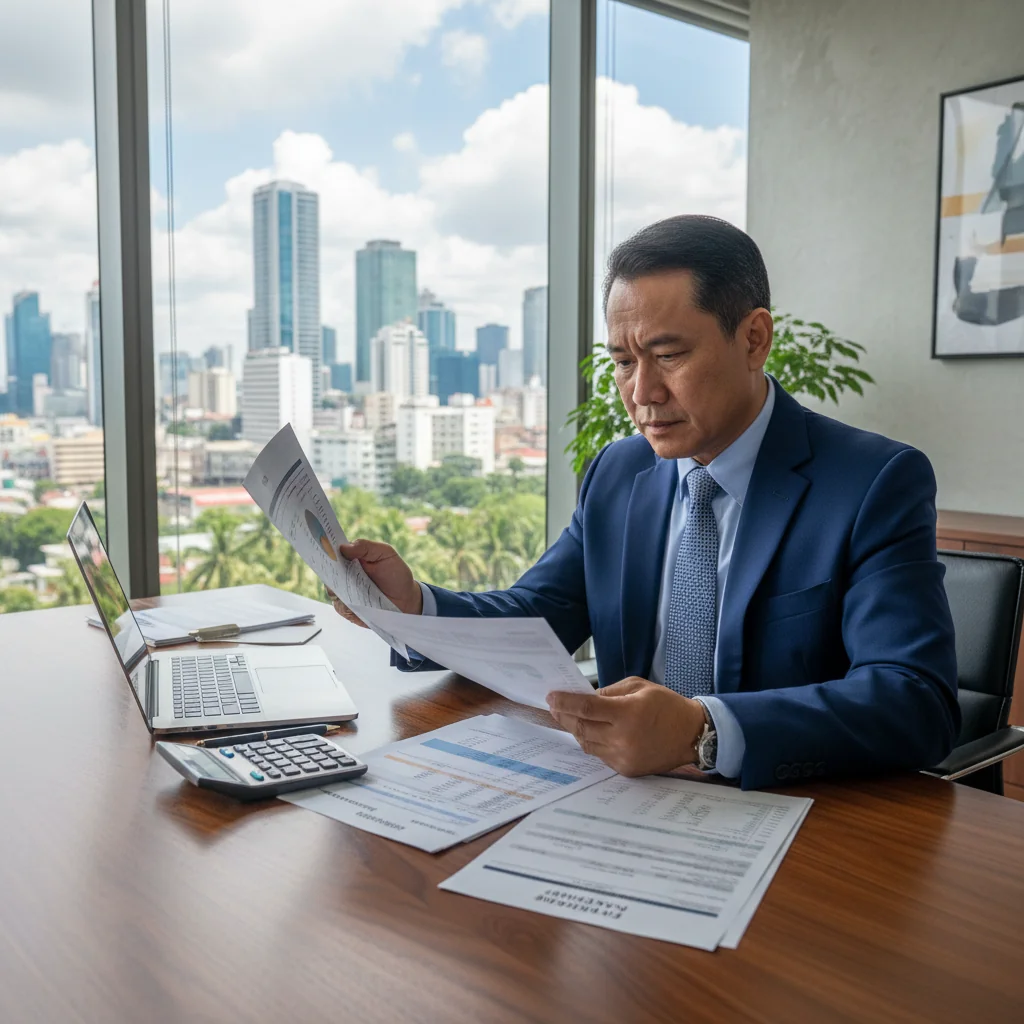
A photorealistic image of a professional adult Filipino businessperson in a modern office setting in the Philippines, reviewing financial documents on a desk with a calculator and laptop, symbolizing the importance of official receipts for accurate business transactions and compliance. The scene conveys trust, organization, and financial literacy without showing any children or actual receipt documents.
Discover everything you need to know about official receipts in the Philippines. Learn their importance, requirements, BIR regulations, and how to issue them correctly for tax compliance.
A photorealistic image of a professional adult Filipino accountant in a modern office in the Philippines, confidently reviewing financial documents on a computer while ensuring compliance with tax regulations, symbolizing official receipt issuance for BIR compliance. The scene conveys accuracy and professionalism in business taxation.
Learn step-by-step how to issue official receipts for BIR compliance in the Philippines. Ensure your business meets tax requirements with our comprehensive guide on forms, procedures, and best practices.
A photorealistic image of a professional Filipino businessperson in a modern office setting, carefully reviewing financial documents on a desk with a calculator and computer, symbolizing the importance of accurate record-keeping in Philippine businesses, with no children present and a focus on avoiding mistakes in official receipts.
Discover the top common mistakes to avoid when using official receipts in Philippine businesses. Learn compliance tips, tax implications, and best practices to stay audit-ready and avoid penalties.