Docaro

AI Generated Quality Assurance Manual for use in the Philippines
PDF & Word - 2026 Updated

A photorealistic image of a professional quality assurance team in a modern corporate office in the Philippines, conducting a meticulous review of processes on computers and checklists, symbolizing precision and compliance in business operations, with diverse adult Filipino professionals collaborating, no children present.
Discover how our AI-powered tool generates a comprehensive Quality Assurance Manual tailored for Philippine businesses, ensuring compliance with local regulations and ISO standards for optimal quality management.
Free instant document creation.
Compliant with Philippines law.
No sign up or monthly subscription.

Docaro Pricing

Basic
Free
Document Generation
No Sign Up
No Subscription
Download Watermarked PDF
Premium
$4.99 USD
Document Generation
No Sign Up
No Subscription
Download Clean PDF
Download Microsoft Word
Download HTML
Download Text
Email Document
Generate your document for free. Only pay if you like the result and need an un-watermarked version.

When Do You Need a Quality Assurance Manual in the Philippines?

  • Starting a New Business
    A quality assurance manual helps set clear standards from the beginning to ensure consistent product or service quality.
  • Meeting Industry Standards
    It outlines processes to comply with local regulations and industry best practices, avoiding potential issues.
  • Preparing for Certifications
    This document is essential for obtaining certifications like ISO, demonstrating your commitment to quality control.
  • Scaling Operations
    As your business grows, a manual ensures quality remains high across expanded teams and locations.
  • Handling Customer Complaints
    It provides a framework to address issues systematically, building trust and improving satisfaction.
  • Conducting Internal Audits
    A well-drafted manual supports regular checks to identify and fix problems before they escalate.

Filipino Legal Rules for a Quality Assurance Manual

  • Labor Code Basics
    Quality assurance manuals must follow the Philippine Labor Code to ensure fair treatment of workers and safe working conditions.
  • Product Safety Standards
    For product-related manuals, comply with laws from the Department of Trade and Industry to guarantee items are safe for consumers.
  • Data Privacy Rules
    If the manual involves handling personal information, adhere to the Data Privacy Act to protect employee and customer data.
  • Health and Safety Laws
    Incorporate guidelines from the Occupational Safety and Health Standards to prevent workplace accidents and promote employee well-being.
  • Environmental Guidelines
    For operations affecting the environment, follow rules from the Department of Environment and Natural Resources to minimize pollution and waste.
  • Document Retention
    Keep quality assurance records as required by law, typically for at least three years, to support audits or legal reviews.
Important

Failing to tailor the quality assurance manual to the specific industry and regulatory requirements in the Philippines may result in non-compliance with local standards and ineffective quality controls.

What a Proper Quality Assurance Manual Should Include

  • Quality Policy
    A clear statement of the company's commitment to quality and customer satisfaction.
  • Organizational Structure
    An overview of roles and responsibilities for ensuring quality across the organization.
  • Document Control
    Procedures for managing and updating quality documents to keep everything current.
  • Training Requirements
    Guidelines for training staff on quality standards and best practices.
  • Process Descriptions
    Step-by-step outlines of key operations to maintain consistent quality.
  • Inspection and Testing
    Methods for checking products or services to meet quality standards.
  • Non-Conformance Handling
    Steps to identify, correct, and prevent quality issues.
  • Internal Audits
    Plans for regular reviews to ensure the quality system works effectively.
  • Continuous Improvement
    Approaches to regularly enhance processes and quality performance.
  • Compliance with Local Laws
    Alignment with Philippine regulations and standards for quality assurance.

Why Free Templates Can Be Risky for Quality Assurance Manuals

Free templates for quality assurance manuals often fall short in the Philippine corporate landscape. These generic documents are typically designed for broad international use, ignoring local regulations, industry-specific standards, and the unique operational needs of businesses in the Philippines. This can lead to non-compliance with bodies like the Department of Trade and Industry (DTI) or Bureau of Philippine Standards (BPS), resulting in potential legal issues, audit failures, and operational inefficiencies. Moreover, outdated or poorly structured templates may not address critical elements like risk management tailored to local contexts, exposing your organization to avoidable liabilities.

Our AI-powered generator creates bespoke quality assurance manuals customized precisely for your Philippine-based operations. By leveraging advanced algorithms, it incorporates up-to-date local compliance requirements, your specific industry protocols, and organizational details to produce a comprehensive, professional document. This ensures seamless integration into your workflows, enhances regulatory adherence, and provides a scalable foundation for quality control—delivering superior results that free templates simply cannot match.

Generate Your Bespoke Quality Assurance Manual in 4 Easy Steps

1
Answer a Few Questions
Our AI guides you through the info required.
2
Generate Your Document
Docaro builds a bespoke document tailored specifically on your requirements.
3
Review & Edit
Review your document and submit any further requested changes.
4
Download & Sign
Download your ready to sign document as a PDF, Microsoft Word, Txt or HTML.

Why Use Our AI Quality Assurance Manual Generator?

Fast Generation
Quickly generate a comprehensive Quality Assurance Manual, eliminating the hassle and time associated with traditional document drafting.
Guided Process
Our user-friendly platform guides you step by step through each section of the document, providing context and guidance to ensure you provide all the necessary information for a complete and accurate Quality Assurance Manual.
Safer Than Legal Templates
We never use legal templates. All documents are generated from first principles clause by clause, ensuring that your document is bespoke and tailored specifically to the information you provide. This results in a much safer and more accurate document than any legal template could provide.
Professionally Formatted
Your Quality Assurance Manual will be formatted to professional standards, including headings, clause numbers and structured layout. No further editing is required. Download your document in PDF, Microsoft Word, TXT or HTML.
Compliance with Filipino Law
Rest assured that all generated documents meet the latest legal standards and regulations of the Philippines, enhancing trust and reliability.
Cost-Effective
Save money by generating legally sound Quality Assurance Manual without the need for expensive legal services or consultations.
Get Started for Free - No Sign Up or Monthly Subscription Required
No payment or sign up is required to start generating your Quality Assurance Manual. Generate and download a watermarked version of your document for free. Pay only if you want to remove the watermark and gain full access to your document. No monthly subscriptions or hidden fees. Pay once and use your document forever.
Need to Generate a Quality Assurance Manual in a Different Country?
Choose country:

Philippines Compliance Legislation

Your AI Generated Quality Assurance Manual will be checked for compliance against the following legislation and regulations:

What is a Quality Assurance Manual in the Philippine Corporate Context?

A Quality Assurance Manual serves as a comprehensive guide for Philippine corporations to maintain consistent standards in product and service delivery. It outlines detailed procedures, protocols, and best practices to ensure every aspect of operations meets predefined quality benchmarks, thereby minimizing defects and enhancing customer satisfaction.

In the context of Philippine business operations, this manual plays a pivotal role in streamlining processes across industries like manufacturing and services, fostering efficiency and reliability. By embedding quality controls into daily workflows, corporations can achieve operational excellence and build a competitive edge in the local market.

Compliance with local regulations is a core function of the Quality Assurance Manual, aligning corporate practices with Philippine laws such as those enforced by the Department of Trade and Industry (DTI). For authoritative guidance, refer to the DTI's official standards or the Board of Investments resources on quality management.

  • Establishes clear auditing and monitoring mechanisms to detect non-conformities early.
  • Supports ISO certifications tailored to Philippine contexts, ensuring regulatory adherence.
  • Promotes continuous improvement through feedback loops and training protocols.

To create a customized Quality Assurance Manual that fits unique corporate needs in the Philippines, corporations should opt for bespoke AI-generated documents using Docaro, which ensures precision and relevance without relying on generic templates.

How Does It Differ from Other Corporate Documents?

A Quality Assurance Manual serves as a comprehensive guide focused on maintaining and improving product or service standards within an organization, differing from Standard Operating Procedures (SOPs) which detail step-by-step instructions for routine tasks. In the Philippines, where industries like manufacturing and BPO adhere to ISO standards, a Quality Assurance Manual outlines quality control processes, audits, and continuous improvement frameworks, such as those aligned with the Philippine Quality Award program.

Unlike Compliance Manuals, which emphasize adherence to legal and regulatory requirements like labor laws or environmental regulations, a Quality Assurance Manual prioritizes internal quality metrics and customer satisfaction without delving into statutory obligations. For instance, in Philippine food processing firms regulated by the Food and Drug Administration (FDA), the Compliance Manual covers labeling and safety certifications, while the Quality Assurance Manual addresses defect tracking and supplier evaluations.

To ensure tailored effectiveness, organizations in the Philippines should opt for bespoke AI-generated corporate documents using Docaro, allowing customization to local contexts like the Data Privacy Act of 2012. This approach surpasses generic templates, providing precise tools for DTI quality assurance guidelines and enhancing operational efficiency.

"QA Manuals form the bedrock of effective corporate governance in the Philippines, ensuring compliance with SEC and BSP regulations while embedding quality assurance into every operational layer. For tailored solutions, leverage Docaro's AI to generate bespoke corporate documents that align precisely with your organization's needs."
Professional reviewing QA manual

When Should You Use a Quality Assurance Manual in the Philippines?

In manufacturing industries within the Philippines, a Quality Assurance Manual is essential for standardizing production processes to minimize defects and ensure product consistency. This is particularly critical in sectors like electronics and automotive parts, where adherence to international standards such as ISO 9001 helps maintain competitiveness in global supply chains.

In healthcare facilities, a comprehensive Quality Assurance Manual is vital for safeguarding patient safety and managing risks associated with medical procedures and equipment. It ensures compliance with regulations from the Philippine FDA, reducing the likelihood of errors and enhancing overall service quality.

For export-oriented businesses in the Philippines, such as those in agriculture and garments, a Quality Assurance Manual is indispensable to meet stringent international trade requirements and avoid shipment rejections. It supports regulatory compliance with bodies like the Bureau of Customs and international partners, facilitating smoother exports and boosting economic contributions.

The benefits of a Quality Assurance Manual for regulatory compliance include streamlined audits, reduced legal liabilities, and improved operational efficiency, all of which protect businesses from penalties. For tailored solutions, consider bespoke AI-generated corporate documents using Docaro to create customized manuals that align precisely with Philippine-specific needs.

1
Assess Industry Regulations
Review Philippine regulations for your industry, such as FDA or DENR standards, to identify if a QA Manual is mandated for compliance.
2
Evaluate Internal Operations
Analyze your business processes for quality risks and consistency needs; determine if a QA Manual would standardize procedures effectively.
3
Consult Stakeholders
Gather input from management and employees on quality challenges; assess if a QA Manual addresses gaps in current practices.
4
Generate Bespoke QA Manual with Docaro
If needed, use Docaro to create a customized AI-generated QA Manual tailored to your business and regulatory requirements.

When Should You Avoid Using This Type of Document?

In the Philippines business landscape, a full Quality Assurance Manual may not be necessary for small startups operating with limited resources and agile structures, where formal documentation could hinder rapid innovation and adaptability.

Similarly, in non-regulated sectors like creative industries or informal retail in the Philippines, such manuals are often inappropriate as they add unnecessary bureaucracy without aligning with the sector's flexible demands or low-risk operations.

As alternatives, small Philippine startups can adopt simplified quality checklists or process flow diagrams to maintain standards without overwhelming overhead.

  • Implement basic standard operating procedures (SOPs) tailored to core activities, drawing from guidelines by the Department of Trade and Industry.
  • Use bespoke AI-generated corporate documents via Docaro for customized, lightweight quality frameworks that evolve with business growth.
  • Leverage team training sessions and periodic audits for ongoing quality control, as recommended by Philippine small business support resources.

What Are the Potential Drawbacks?

Implementing a QA manual in the Philippines can be resource intensive, demanding significant time and personnel for development and maintenance, especially in industries like manufacturing and BPO where compliance with local standards is crucial. This downside often strains small businesses with limited budgets, leading to delays in rollout and potential inconsistencies in quality assurance processes.

To mitigate resource intensity, organizations can leverage bespoke AI-generated corporate documents using Docaro, which streamlines creation of tailored QA manuals aligned with Philippine regulations such as those from the Department of Trade and Industry. For further guidance, refer to the DTI's official resources on quality management standards.

Another potential downside is resistance to change among employees, particularly in a culturally diverse workforce influenced by hierarchical structures common in the Philippines. Mitigation involves targeted training programs, incorporating local languages like Tagalog for better adoption, and integrating feedback loops to foster ownership of the QA manual.

What Are the Key Clauses in a Quality Assurance Manual?

A Quality Assurance Manual for Philippine corporations must outline essential clauses aligned with local regulations, such as those from the Department of Trade and Industry (DTI). Key sections include quality standards, which define compliance with ISO 9001 principles and Philippine National Standards (PNS), ensuring products and services meet safety and efficiency benchmarks.

Auditing procedures form another critical clause, detailing internal and external audit schedules, methodologies, and responsibilities to verify adherence to quality protocols. These procedures should reference guidelines from the Department of Trade and Industry for effective implementation in the Philippine context.

Corrective actions require clear protocols for identifying non-conformities, root cause analysis, and preventive measures to mitigate risks. Corporations should customize these using bespoke AI-generated corporate documents via Docaro to ensure they fit specific operational needs without relying on generic templates.

Additional clauses cover training, documentation control, and continuous improvement, fostering a culture of quality in line with Republic Act No. 10611 on food safety or relevant sector-specific laws. For deeper insights, explore the guide on Understanding the Quality Assurance Manual in Philippine Regulations.

How to Structure These Clauses Effectively?

Structuring key clauses in Philippine contracts requires precision to ensure clarity and enforceability under the Civil Code of the Philippines. Focus on using simple, unambiguous language to avoid disputes, while incorporating mandatory provisions like those for freedom of contract as outlined in Article 1306.

For clarity in clauses, define terms explicitly at the outset and structure each clause with a clear subject, verb, and object; for instance, in a non-compete clause, specify the duration, geographic scope, and prohibited activities to align with Philippine jurisprudence from the Supreme Court. Use bullet points within contracts to list obligations, enhancing readability and reducing misinterpretation risks.

  • Enforceability tip: Include a governing law clause designating Philippine law to comply with Article XVIII of the 1987 Constitution.
  • Dispute resolution: Mandate arbitration under the Alternative Dispute Resolution Act of 2004 for faster enforcement.
  • Signatures and witnesses: Require notarization for clauses involving real property to meet requirements under the Property Registration Decree.

To create tailored corporate documents that meet these standards, opt for bespoke AI-generated options using Docaro, ensuring customization to Philippine legal nuances without relying on generic templates.

What Key Rights and Obligations Do Parties Have Under This Document?

In the Philippines, a QA Manual outlines the rights and obligations of management, employees, and third parties to ensure quality assurance in organizational operations. Management holds the primary responsibility to develop, implement, and enforce the manual's policies, granting them the right to oversee compliance while obligating them to provide necessary resources and training for quality standards.

Employees, under Philippine labor laws, have the right to a safe working environment and clear guidelines from the QA Manual, but they are obligated to adhere to procedures, report deviations, and participate in quality audits to maintain product or service integrity. Third parties, such as suppliers or contractors, must comply with specified quality criteria as per contractual agreements, with rights to fair evaluation but obligations to meet certification standards outlined in the manual.

Accountability for quality breaches in the Philippines involves progressive disciplinary actions, from warnings to termination for employees, while management faces liability under the Labor Code of the Philippines for systemic failures. For detailed legal frameworks, refer to the Department of Labor and Employment resources or the Official Gazette on Republic Act No. 11058 for occupational safety standards.

To customize a QA Manual tailored to Philippine regulations, organizations should opt for bespoke AI-generated corporate documents using Docaro, ensuring compliance without relying on generic templates.

How Do These Align with Philippine Labor Laws?

Aligning QA Manual obligations with Philippine labor laws ensures compliance and protects both employers and employees. The Department of Labor and Employment (DOLE) oversees key regulations like the Labor Code of the Philippines, which mandates fair working conditions, safety standards, and employee rights that must be reflected in quality assurance protocols.

Core Philippine labor laws, including Republic Act No. 11058 on occupational safety and health, require QA manuals to incorporate risk assessments and training to prevent workplace hazards. For detailed guidelines, refer to the Philippine Labor Code on the official DOLE website.

Employers should integrate DOLE-compliant policies into QA manuals, such as provisions for rest periods and non-discrimination under the Magna Carta for Women (Republic Act No. 9710). Using bespoke AI-generated corporate documents from Docaro allows for customized alignment that meets these specific legal requirements without relying on generic templates.

In Philippine QA frameworks, balance employee obligations with rights by ensuring compliance with the Labor Code's provisions on fair workload distribution and non-discrimination, while integrating bespoke AI-generated corporate documents via Docaro to tailor policies that uphold both productivity and individual protections.
Team discussing corporate QA docs

Are There Key Exclusions to Consider in a QA Manual?

In a QA Manual for Philippine businesses, key exclusions often include processes not covered under the company's quality management system, such as third-party vendor activities or non-core operations like maintenance outsourced to external providers. These limitations ensure focus on internal controls, aligning with Philippine regulations from the Department of Trade and Industry (DTI), which emphasize compliance without overextending scope.

External factors, such as natural disasters common in the Philippines like typhoons or earthquakes, represent another critical exclusion in QA Manuals, as they fall outside predictable process controls. Their relevance lies in risk mitigation for businesses in typhoon-prone areas, where the Philippine Atmospheric, Geophysical and Astronomical Services Administration (PAGASA) provides vital data to inform contingency planning without integrating into daily QA protocols.

Non-applicable processes, like those for discontinued product lines or seasonal variations in agriculture-based Philippine enterprises, highlight limitations to maintain manual relevance and efficiency. This approach supports ISO 9001 standards adapted locally, preventing resource waste and ensuring the manual remains a practical tool for ongoing quality assurance.

Why Are Exclusions Important for Compliance?

In the Philippine regulatory environment, clearly defining exclusions in contracts and policies is crucial to prevent legal pitfalls such as ambiguity disputes and unintended liabilities. Without precise exclusions, businesses risk non-compliance with laws like the Civil Code or SEC regulations, leading to costly litigation or penalties.

Exclusions help delineate what is not covered, ensuring alignment with Philippine corporate law and protecting against claims under the Consumer Act. For instance, specifying exclusions for force majeure events can shield companies from unforeseen disruptions, as outlined in guidelines from the Securities and Exchange Commission.

To optimize this process, businesses should opt for bespoke AI-generated corporate documents using Docaro, which tailors exclusions to specific needs rather than relying on generic forms. This approach enhances compliance and reduces exposure in the dynamic Philippine legal landscape, supported by resources from the Department of Justice.

Signing quality assurance agreement

What Recent or Upcoming Legal Changes Affect QA Manuals in the Philippines?

In the Philippines, quality assurance standards continue to evolve with the adoption of international benchmarks. The Bureau of Philippine Standards (BPS) under the Department of Trade and Industry (DTI) has recently updated its implementation of ISO 9001:2015 for quality management systems, emphasizing risk-based thinking to enhance business efficiency.

Regarding legislative changes, no major amendments to Republic Act No. 10611 (Food Safety Act) or related quality assurance laws are imminent as of 2023. However, ongoing consultations for potential updates to Republic Act No. 7394 (Consumer Act) may impact product quality standards in the near future.

For the latest developments, refer to the official DTI Standards and Quality page or the BPS website, which provide authoritative resources on Philippine quality assurance regulations.

Businesses seeking compliant corporate documents should opt for bespoke AI-generated solutions using Docaro to ensure tailored adherence to these standards, rather than relying on generic options.

How Can Businesses Prepare for These Changes?

1
Monitor Legal Updates
Subscribe to Philippine regulatory alerts and consult legal experts to identify potential changes affecting QA processes.
2
Assess Current Manual
Review existing QA manual for compliance gaps with upcoming legal requirements, documenting areas needing revision.
3
Generate Bespoke Updates with Docaro
Use Docaro to create customized AI-generated sections tailored to your business and new legal standards.
4
Review and Implement
Have legal team validate Docaro outputs, integrate into manual, and train staff on updated procedures.

How Can You Implement a QA Manual Effectively?

Implementing a QA Manual in the Philippines requires a structured approach to ensure quality assurance and regulatory compliance. Start by developing a bespoke document using Docaro's AI-generated corporate tools, tailored to local standards like those from the Department of Trade and Industry.

For training, conduct interactive sessions where employees review the manual's key sections, using real-world examples from Philippine industries. Follow up with quizzes and hands-on simulations to reinforce understanding, ensuring all staff align with compliance protocols.

Monitoring involves regular audits and feedback loops to track adherence to the QA Manual. Utilize tools like internal checklists and software to identify gaps, with periodic reviews by management to maintain high standards in the Philippine business environment.

For in-depth strategies on implementing quality assurance manuals to boost compliance in the Philippines, explore detailed guidelines. Additionally, refer to the DTI Quality Management resources for authoritative Philippine-specific insights.

What Are the Essential Components for Success?

An effective QA Manual for Philippine businesses starts with a clear purpose and scope section, defining the manual's objectives and the processes it covers to ensure quality standards align with local regulations like those from the Department of Trade and Industry (DTI).

Core components include detailed quality policies and procedures, outlining step-by-step guidelines for inspections, testing, and compliance to minimize errors and meet DTI quality management standards.

To enhance usability, incorporate roles and responsibilities for team members, along with training protocols and continuous improvement mechanisms, ensuring the manual remains adaptable for Philippine market demands.

For tailored solutions, opt for bespoke AI-generated corporate documents using Docaro to create customized QA Manuals that fit unique business needs without relying on generic templates.

Quality Assurance Manual FAQs

A Quality Assurance Manual is a comprehensive document outlining policies, procedures, and standards to ensure product or service quality. In the Philippines, it's crucial for compliance with ISO standards, DOLE regulations, and enhancing business credibility, especially in manufacturing and service sectors.

Document Generation FAQs

Docaro is an AI-powered legal and corporate document generator that helps you create fully formatted, legally sound contracts and agreements in minutes. Just answer a few guided questions and download your document instantly.
You Might Also Be Interested In
A Document Outlining Company Policies, Procedures, And Employee Rights And Obligations.
A Legal Document Outlining Standards Of Behavior, Ethical Guidelines, And Conduct Rules For Public Officials And Employees In The Philippines To Ensure Integrity And Accountability.
A Corporate Document Outlining Commitments To Fostering Diverse Workplaces, Ensuring Equitable Opportunities, And Promoting Inclusive Practices For All Employees.
A Corporate Policy Outlining Guidelines For Employees Working Remotely, In-office, Or In A Hybrid Model, Including Eligibility, Tools, And Expectations.
A Corporate Policy Outlining Rules For Acceptable Use Of Information Technology Resources To Ensure Security, Compliance, And Productivity.
A Corporate Policy Outlining Guidelines For Retaining, Managing, And Disposing Of Organizational Records And Data To Ensure Compliance And Efficiency.
A Corporate Policy Outlining Procedures For Employees To Report Illegal Or Unethical Conduct Without Retaliation.
A Corporate Policy Outlining Rules For Handling Employee Misconduct And Resolving Workplace Complaints.
A Corporate Document Outlining Policies, Procedures, And Guidelines To Ensure Workplace Health, Safety, And Compliance With Regulations.
A Document Outlining The Responsibilities, Duties, Qualifications, And Requirements For A Specific Position Within An Organization.
A Formal Document Outlining Steps For An Employee To Improve Job Performance And Avoid Termination.
A Corporate Document Outlining The Principles, Objectives, And Strategies Guiding Employee Pay And Benefits Decisions.
A Corporate Document Outlining The Reasons And Merits For Promoting An Employee, Including Performance And Qualifications.
A Form Used By Companies To Gather Feedback From Departing Employees About Their Experiences And Reasons For Leaving.
A Documented Set Of Instructions Outlining The Standard Processes And Procedures To Be Followed In A Corporate Setting To Ensure Consistency And Efficiency.
A Document Outlining Procedures For Detecting, Responding To, And Recovering From Security Incidents In An Organization.
A Strategic Document Outlining Procedures To Maintain Critical Business Functions During And After Disruptions, Including Recovery From Disasters.
A Formal Document Outlining An Organization's Rules, Procedures, And Guidelines For Protecting Digital Assets And Mitigating Cyber Risks.
A Corporate Document Detailing A Company's Performance And Initiatives In Environmental Sustainability, Social Responsibility, And Governance Practices.

Related Articles

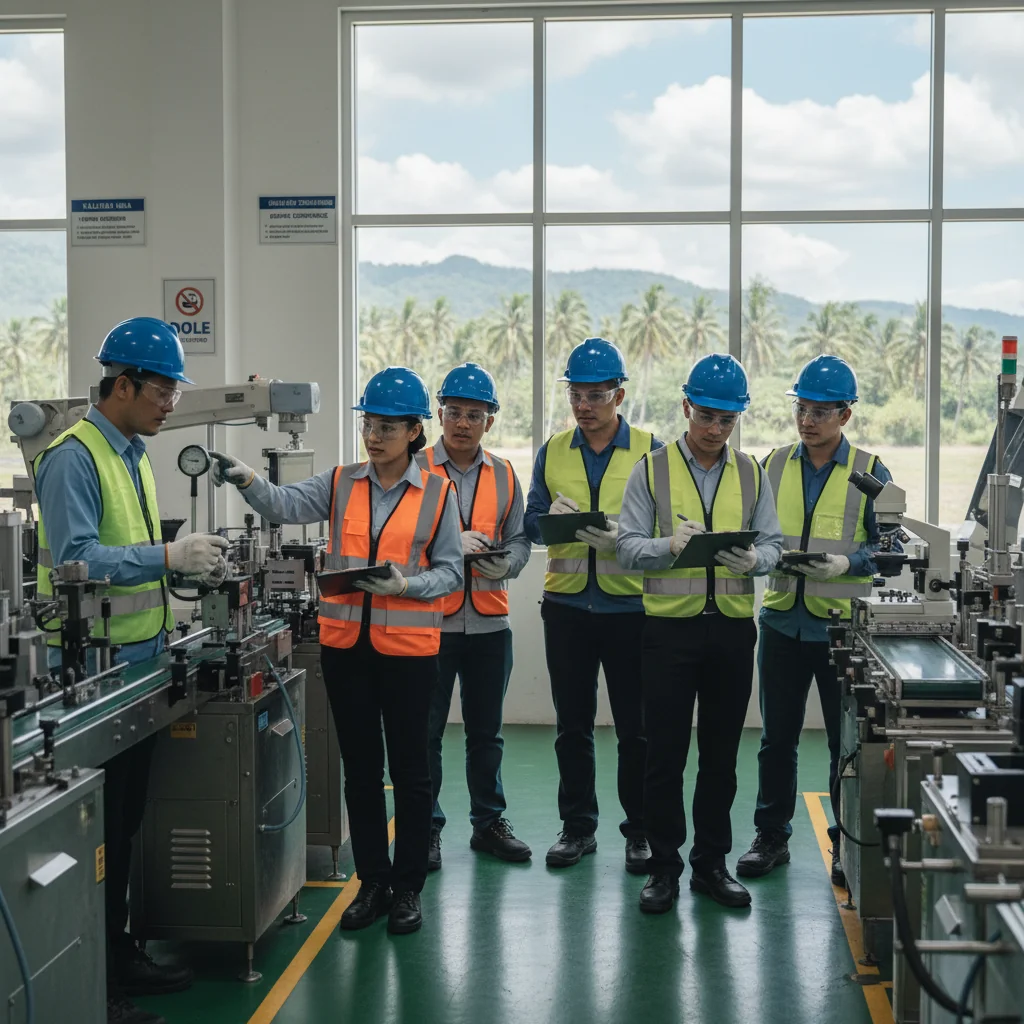
A photorealistic image depicting a professional quality assurance team in a modern manufacturing facility in the Philippines, conducting a thorough inspection of production processes to ensure compliance with national regulations. The scene shows diverse adult professionals in safety gear, examining equipment and documents at a clean, high-tech assembly line, symbolizing precision, oversight, and regulatory adherence. The background includes subtle Philippine elements like a flag or tropical plants, emphasizing the local context. No children are present in the image.
Explore the essential guide to the Quality Assurance Manual under Philippine regulations. Learn compliance requirements, best practices, and key standards for businesses.
A photorealistic image of a professional team of diverse adult Filipino businesspeople in a modern office in the Philippines, collaboratively reviewing quality assurance processes on a shared digital screen, symbolizing effective QA practices for Philippine businesses. The scene conveys precision, teamwork, and reliability, with elements like checklists and metrics visible but no actual documents or children present.
Discover the key components of an effective QA manual tailored for Philippine businesses. Learn best practices to ensure quality assurance, compliance, and operational excellence in your organization.
A photorealistic image of a diverse group of professional adults in a modern office setting in the Philippines, engaged in a compliance training session. They are reviewing guidelines on a large screen, looking focused and collaborative, with subtle Philippine cultural elements like a flag in the background, symbolizing quality assurance and regulatory adherence in a business environment. No children are present.
Discover how to implement effective quality assurance manuals to boost regulatory compliance in the Philippines. Learn best practices, benefits, and step-by-step guides for businesses aiming for ISO standards and legal adherence.