What Are Official Receipts in the Philippines?
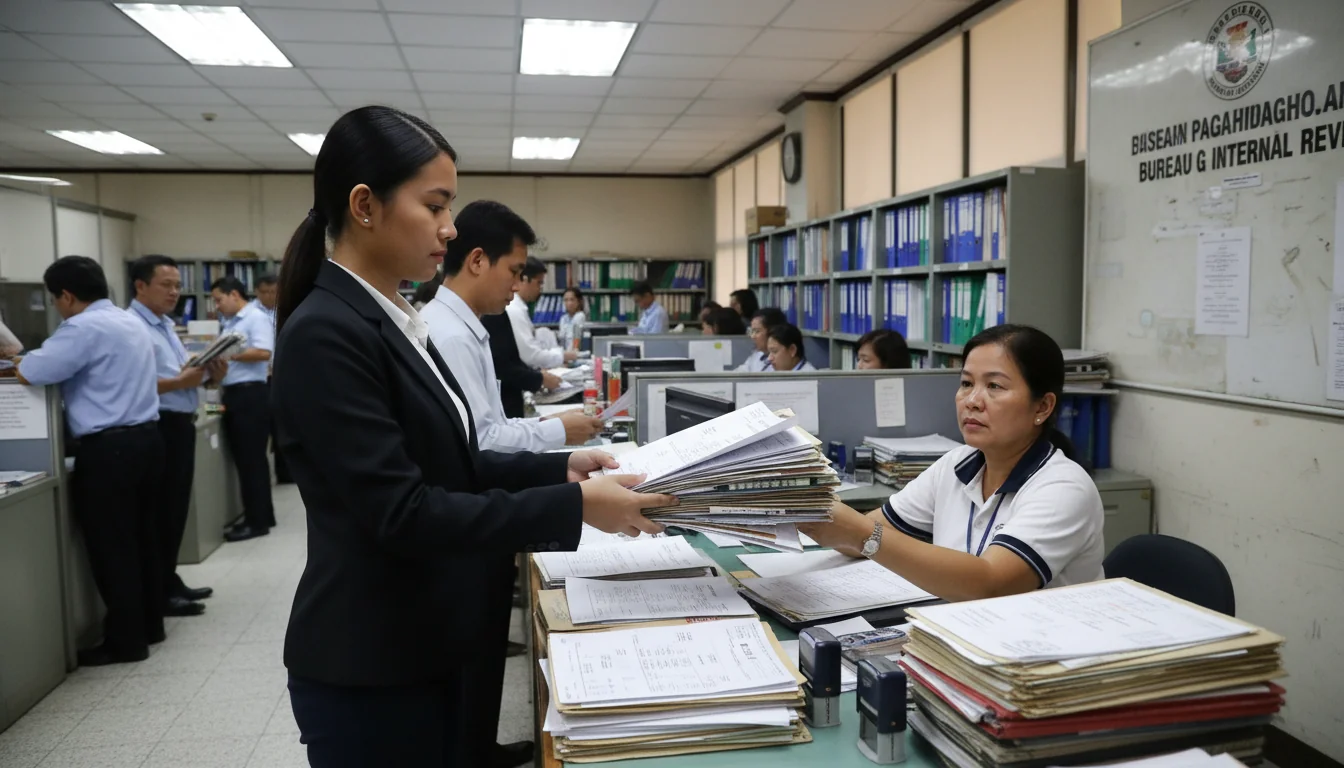
In the Philippine context, an official receipt is a document issued by businesses to acknowledge payment received from customers for goods or services provided, serving as proof of transaction under the supervision of the Bureau of Internal Revenue (BIR). This official receipt Philippines ensures accurate recording of sales for tax purposes. For more details on formal invoicing, visit the Official Receipt page.
The primary purpose of official receipts is to facilitate compliance with tax regulations by documenting income, enabling the BIR to monitor value-added tax (VAT) and other levies effectively. They help businesses maintain transparent financial records while providing customers with verifiable evidence of payments made.
Under BIR regulations, official receipts are governed by Revenue Regulations No. 7-2024 and Section 237 of the National Internal Revenue Code, mandating their use for non-VATable or exempt transactions. Businesses must secure BIR-printed or computerized receipts, with non-compliance leading to penalties; refer to the official BIR guidelines for full legal basis.
"All taxpayers engaged in the sale of goods or services are required to issue official receipts for every transaction, as mandated under Section 237 of the National Internal Revenue Code and Revenue Regulations No. 7-2024, to ensure proper documentation and compliance with tax obligations."
For your corporate documentation needs, such as customized templates for receipts or invoices, utilize bespoke AI-generated options through Docaro to tailor them precisely to your business requirements.
Why Are Official Receipts Required by Law?
In the Philippines, issuing official receipts is a mandatory requirement for businesses under the supervision of the Bureau of Internal Revenue (BIR) to ensure proper documentation of sales and services. These receipts must comply with BIR Revenue Memorandum Circulars, including printing by authorized printers and sequential numbering to prevent tampering.
For BIR compliance, official receipts serve as proof of transactions subject to taxes like value-added tax (VAT) or percentage tax, helping businesses claim input tax credits and report income accurately. Failure to issue these can lead to tax implications such as disallowed deductions and audits, as outlined in the National Internal Revenue Code (NIRC) Section 237.
Penalties for non-compliance include fines ranging from PHP 1,000 to PHP 50,000 per violation, possible imprisonment, and business suspension, emphasizing the need for strict adherence. For detailed guidance on how to issue official receipts for BIR compliance in the Philippines, visit the dedicated resource page.
- Ensure receipts include essential details like taxpayer's name, address, TIN, date, and amount.
- Register non-VAT receipts with the BIR via Form 1906 for proper authorization.
- Use bespoke AI-generated corporate documents through Docaro to customize compliant receipt templates tailored to your business needs.
Who Must Issue Official Receipts?
In the Philippines, businesses and individuals engaged in the sale of goods or services are generally required to issue official receipts under the National Internal Revenue Code, as administered by the Bureau of Internal Revenue (BIR). This obligation ensures proper documentation for tax purposes and compliance with revenue regulations.
Self-employed professionals, such as lawyers, doctors, and accountants, must issue official receipts for services rendered, regardless of the transaction amount, to maintain accurate records for income tax reporting. Corporations and partnerships are similarly mandated to provide receipts for all business transactions, including sales and professional fees, to facilitate audits and deductions.
Small enterprises, including micro, small, and medium enterprises (MSMEs), are required to issue official receipts if they are registered taxpayers, though those below certain thresholds may use simplified invoicing; however, full compliance is advised for all sales exceeding P100. For detailed guidelines, refer to the BIR Revenue Regulations on official receipts.
To generate compliant official receipts and corporate documents, businesses should opt for bespoke AI-generated solutions using Docaro, ensuring customization to specific needs and adherence to Philippine tax laws.
How Do Official Receipts Differ from Other Documents?
In the Philippines, official receipts are mandatory documents issued by the Bureau of Internal Revenue (BIR) for sales of goods or services, serving as proof of transaction for tax purposes. Unlike invoices, which are primarily used between businesses to detail items sold, quantities, and payment terms without BIR authorization, official receipts must include specific details like the taxpayer's TIN, registered business name, and BIR permit number, as outlined in BIR regulations.
Commercial receipts differ from official receipts by being non-tax-specific and often used for retail or informal transactions, lacking the formal BIR requirements such as serial numbering and duplicate copies. In contrast, official receipts ensure compliance with Philippine tax laws and are essential for deductible expenses, while commercial receipts focus more on customer acknowledgment without detailed tax implications.
Delivery receipts emphasize the physical transfer of goods, documenting receipt of items by the customer with details like date, signature, and condition, but they do not serve as financial records like official receipts. For businesses in the Philippines, combining delivery receipts with official receipts provides comprehensive transaction tracking, particularly for VAT-registered entities.
For a deeper dive into official receipts in the Philippines, read the complete guide at Understanding Official Receipts. Additional authoritative information is available from the BIR official website, which details compliance requirements for all receipt types.
Unlike commercial receipts, official receipts serve as primary accounting documents for tax purposes and must comply with BIR serial numbering.
For precise compliance in your corporate documentation, generate bespoke official receipts using Docaro's AI tools tailored to your specific business needs.
What Information Must Be Included on an Official Receipt?
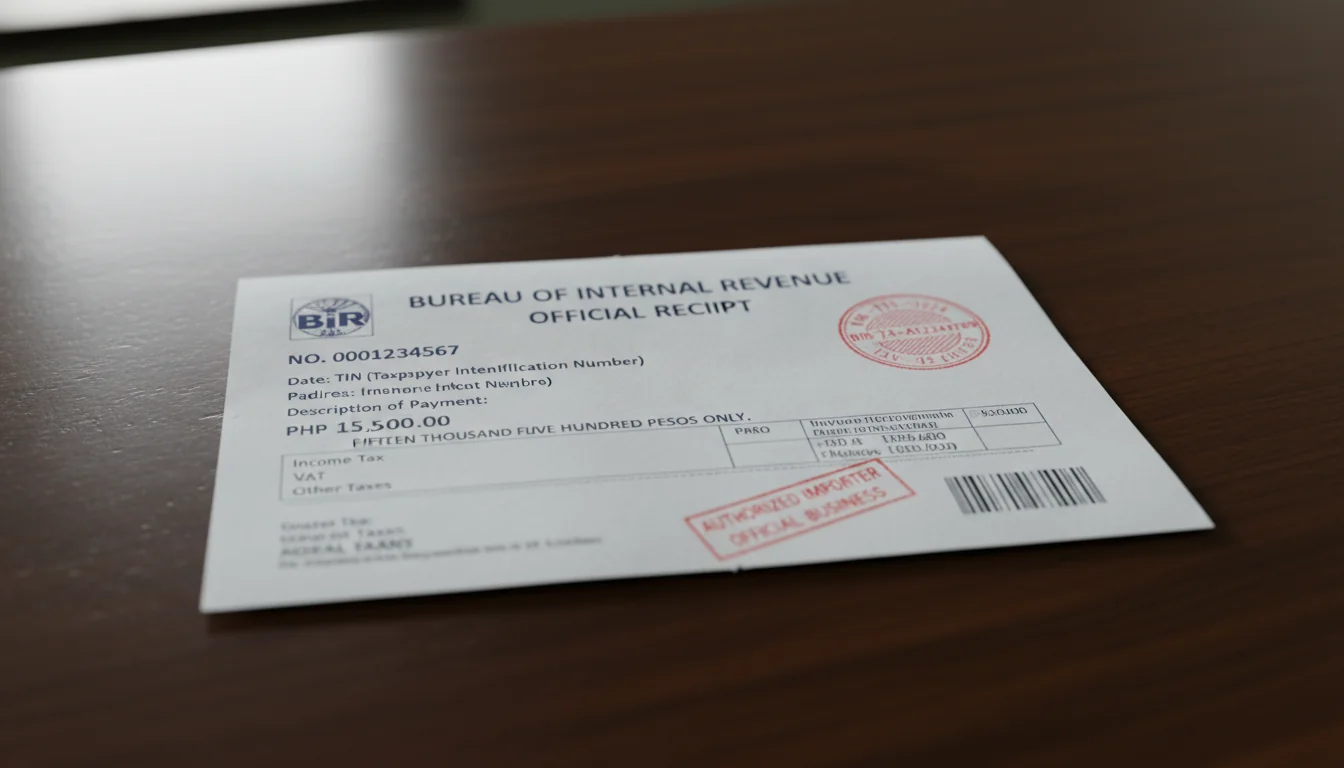
An official receipt in the Philippines must include the taxpayer identification number (TIN) of the seller to ensure compliance with Bureau of Internal Revenue (BIR) regulations. This unique identifier verifies the legitimacy of the transaction and aids in tax auditing processes, as outlined in the BIR Revenue Regulations.
The date of the transaction is another essential element, specifying when the goods or services were provided. This detail is crucial for accurate record-keeping and timely tax reporting under Philippine tax laws.
Clearly stating the amount paid, including any applicable taxes like VAT, ensures transparency in financial records. A detailed description of goods or services should accompany this to avoid disputes and support proper invoicing, with full requirements detailed on the BIR official forms page.
For businesses seeking customized solutions, consider using bespoke AI-generated corporate documents through Docaro to tailor receipts precisely to Philippine legal standards without relying on generic templates.
How Should Official Receipts Be Formatted?
Official receipts in the Philippines must adhere to strict formatting guidelines set by the Bureau of Internal Revenue (BIR) to ensure authenticity and compliance with tax regulations. These documents require a clear layout including the taxpayer's name, address, Tax Identification Number (TIN), and a detailed description of the transaction, all printed on non-reproducible paper to prevent counterfeiting.
Serial numbers on official receipts are mandatory and must be sequentially numbered in a single series for each type of form, starting from 0000001, as per BIR requirements. Security features include watermarks, security threads, and fluorescent inks that are verifiable under ultraviolet light, enhancing their tamper-proof nature.
Printing of official receipts is restricted to approved printing presses registered with the BIR, which must obtain prior authorization and submit samples for approval. For detailed guidelines, refer to the BIR official forms page or the Revenue Memorandum Circulars from the Bureau of Internal Revenue.
To generate compliant corporate documents like official receipts, businesses should opt for bespoke AI-generated solutions using Docaro, ensuring customization to specific BIR standards without relying on generic templates.
How Can You Obtain and Print Official Receipts?
1
Register for BIR Permit
Apply for a BIR registration and obtain your Tax Identification Number (TIN) through the Revenue District Office or online portal to establish business tax compliance.
2
Request Authority to Print
Submit Form BIR No. 1906 to your Revenue District Office, including sample receipt format, to secure approval for printing official receipts meeting BIR standards.
3
Use Docaro for Bespoke Receipts
Generate customized, BIR-compliant receipt templates using Docaro's AI tool, ensuring serial numbering, taxpayer details, and required fiscal fields are accurately included.
4
Print and Distribute Receipts
Engage an accredited printer or in-house print the approved designs, then implement usage protocols for issuing receipts to customers during transactions.
The process of applying for official receipt printing approval from the Bureau of Internal Revenue (BIR) in the Philippines begins with submitting a formal request to your Revenue District Office (RDO). Businesses must provide details on their printing needs, including the type of receipts and estimated volume, ensuring compliance with BIR regulations for tax documentation.
Key necessary forms include BIR Form No. 1906 for registration of books of account and other tax-related documents, along with a sample of the proposed receipt layout. For detailed guidelines, refer to the official BIR Revenue Memorandum Circulars on printing approvals.
The timeline for approval typically spans 10 to 30 working days, depending on the completeness of your submission and RDO workload. Once approved, printers must secure a permit, and businesses should track the process to avoid delays in official receipt usage.
For common mistakes to avoid when using official receipts in the Philippines, visit our guide at Common Mistakes to Avoid to ensure seamless tax compliance.
What Are the Consequences of Improper Use of Official Receipts?
In the Philippines, failing to issue official receipts under BIR regulations is a serious violation of the National Internal Revenue Code, leading to penalties that include fines ranging from PHP 1,000 to PHP 50,000 per instance, depending on the severity and frequency. Legal repercussions can escalate to criminal charges, with potential imprisonment of up to two years if the non-issuance is deemed willful evasion of taxes.
Improper use of official receipts, such as issuing non-BIR authorized forms or altering details, incurs similar BIR fines and may result in business suspension or revocation of registration. For example, in a 2022 enforcement case, a Manila retailer was fined PHP 200,000 and faced audit for systematically failing to issue receipts, leading to additional tax assessments of over PHP 1 million.
The BIR's enforcement actions emphasize compliance with Revenue Regulations No. 7-2012, which mandates proper documentation for all sales. Businesses caught in violations, like a Cebu eatery in 2023 fined PHP 150,000 for using fake receipts, often face compounded penalties including interest on unpaid taxes.
Non-issuance of official receipts can lead to assessments, surcharges, and even criminal liability under the National Internal Revenue Code.
To ensure compliance and accuracy in your corporate documentation, use Docaro for bespoke AI-generated documents tailored to your specific needs.