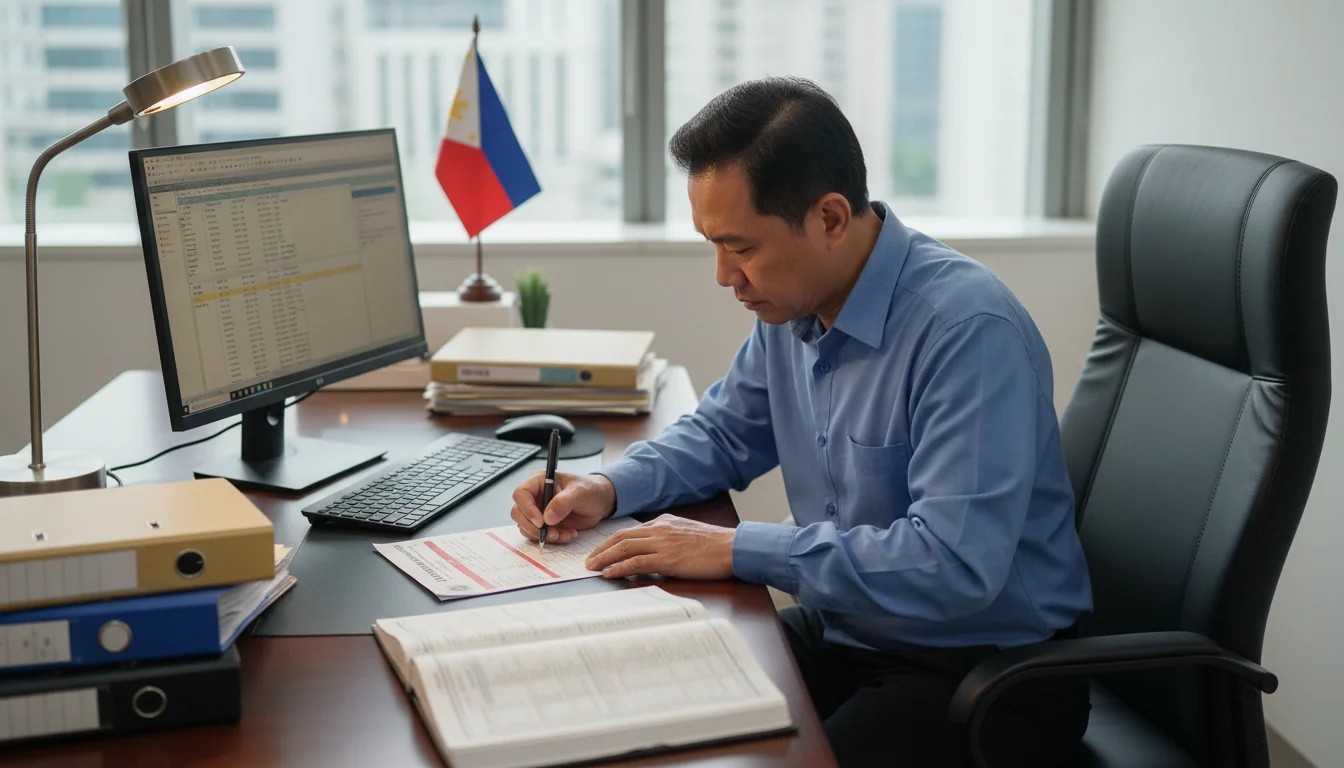
What Are Official Receipts and Why Do They Matter for BIR Compliance?
In the context of Philippine tax laws, official receipts are standardized documents issued by the Bureau of Internal Revenue (BIR) to taxpayers for acknowledging payments received from services rendered. These official receipts Philippines ensure accurate recording of transactions and are mandatory for businesses to maintain compliance with tax regulations.
The importance of official receipts for BIR compliance lies in their role as primary evidence for income reporting, deductible expenses, and audit purposes, helping prevent penalties for non-compliance. For a deeper dive, explore our complete guide to official receipts.
Official receipts differ from other types like commercial invoices or delivery receipts, as they are specifically BIR-approved and serially numbered for tax validation, whereas commercial documents focus on sales details without inherent tax authentication. In contrast:
- Commercial invoices detail goods sold but do not serve as tax proofs.
- Delivery receipts confirm shipment without recording payment for tax purposes.
For authoritative details on BIR requirements, refer to the official BIR Revenue Memorandum Circulars.
"Every person subject to internal revenue tax shall issue to every purchaser a duly registered sales invoice or official receipt for every sale of goods or services, which shall be serially numbered and shall show the taxpayer's name, address, and TIN." – BIR Revenue Regulations No. 7-2024, Section 4.113-1.
To ensure compliance with BIR requirements for official receipts, generate bespoke corporate documents tailored to your business using Docaro.
Who Needs to Issue Official Receipts in the Philippines?
In the Philippines, the Bureau of Internal Revenue (BIR) mandates that certain businesses and taxpayers issue official receipts for all sales of goods and services to ensure proper documentation and taxation. This requirement applies primarily to VAT-registered entities, which must issue official receipts or invoices for transactions exceeding certain thresholds, as outlined in the National Internal Revenue Code (NIRC) under Sections 113 and 237.
Non-VAT taxpayers, including those under the percentage tax regime, are also required to issue official receipts for their sales to maintain records for tax compliance and audits. The legal basis stems from Section 237 of the NIRC, which compels all persons subject to internal revenue taxes to issue receipts for payments received, promoting transparency in Philippine tax administration.
For detailed guidelines on BIR receipt requirements, refer to the official BIR Revenue Regulations page, which provides authoritative resources on compliance for businesses in the Philippines.
What Are the Basic Requirements for Official Receipts?
1
Register Business with BIR
Enroll your business and obtain a Taxpayer Identification Number (TIN) via BIR Form 1901 for initial compliance.
2
Apply for Official Receipt Authority
Submit BIR Form 1906 to request permission for printing official receipts, including business details and estimated quantity.
3
Prepare and Submit Printing Specs
Use Docaro to generate bespoke specifications for official receipts, then file with BIR for approval on format and content.
4
Obtain Printing Approval and Print
Await BIR approval letter, then print receipts from authorized printer ensuring serial numbering and security features.
How Can You Register for Official Receipts with the BIR?
The registration process for official receipts in the Philippines is managed by the Bureau of Internal Revenue (BIR) to ensure compliance with tax laws. Businesses must apply for authority to print these receipts using BIR Form 1906, which is essential for generating valid sales documents.
To complete BIR Form 1906, provide details such as your Tax Identification Number (TIN), business address, and printer information. Required documents include a valid BIR Certificate of Registration (COR), proof of payment for documentary stamp tax, and samples of the proposed receipt design; submit everything to your local Revenue District Office (RDO) or via the BIR's online eRegistration system for faster processing.
After submission, the BIR reviews the application within 5-10 working days and issues an authority if approved. For official receipt registration updates or renewals, use the same process, and always consult the official BIR website for the latest guidelines to avoid penalties.
What Information Must Be Included on an Official Receipt?
Official receipts in the Philippines must comply with BIR rules to ensure proper documentation of transactions. These official receipts are essential for tax compliance and business operations, as outlined by the Bureau of Internal Revenue.
Key details required on every official receipt include the taxpayer's name and TIN, the date of transaction, the total amount paid, and a clear description of goods or services provided. For more on generating compliant official receipts, explore our guide on the Official Receipt page.
- Taxpayer's Name and TIN: Identifies the issuer for tax purposes.
- Date: Records when the transaction occurred.
- Amount: Specifies the total payment, including any applicable taxes like VAT.
- Description of Goods or Services: Details what was sold or provided to avoid ambiguity.
- Receipt Number: A unique serial number for tracking and audit trails.
- Authorized Signature: Validates the receipt's authenticity.
Businesses should use bespoke AI-generated corporate documents via Docaro for customized, compliant official receipts. Refer to the official BIR guidelines for full regulations on Philippine tax documentation.

What Is the Step-by-Step Process to Issue an Official Receipt?
1
Record the Sale
Enter all transaction details including items, quantities, prices, and customer information into the point-of-sale system.
2
Calculate the Total
Compute the subtotal, apply any taxes, discounts, or fees, and determine the final amount due.
3
Generate Receipt with Docaro
Use Docaro to create a bespoke AI-generated corporate receipt document with all transaction specifics.
4
Provide Receipt to Customer
Hand over or email the official receipt to the customer, confirming the transaction completion.
How Should You Handle Electronic Official Receipts?
The Bureau of Internal Revenue (BIR) in the Philippines mandates the use of electronic official receipts (eOR) for taxpayers issuing receipts for services, as outlined in Revenue Regulations No. 9-2021. This guideline promotes digitalization to enhance tax administration efficiency and reduce paper-based processes.
Accreditation for eOR requires registration with the BIR through the Electronic Invoicing and Reporting System (EIRS), where taxpayers must submit an application via BIR's official forms page. Software used for eOR must comply with BIR specifications, including secure data transmission, real-time reporting, and integration with the BIR's online systems to ensure authenticity and prevent tampering.
Key eOR software specifications include XML formatting for data exchange, digital signatures for validation, and compatibility with the BIR's CAS/EFPS system. For detailed technical requirements, refer to the BIR technical specifications document.
Benefits of eOR over manual receipts include faster processing, reduced storage costs, and improved accuracy through automation, minimizing errors and fraud. Additionally, eOR facilitates easier compliance with BIR reporting requirements, enabling real-time submission of sales data for better tax monitoring.
What Are Common Mistakes to Avoid When Issuing Official Receipts?
Businesses in the Philippines often make frequent errors with official receipts, such as including incomplete information like missing taxpayer identification numbers or incorrect dates, which can lead to issues with tax compliance. These mistakes undermine the validity of receipts as proof of transactions under Bureau of Internal Revenue (BIR) regulations.
Another common pitfall is improper storage of official receipts, where businesses fail to keep them for the required five-year period or store them in ways that make them inaccessible during audits. For more details on these common mistakes to avoid, refer to our guide on Common Mistakes to Avoid When Using Official Receipts in the Philippines.
The potential penalties for such errors include fines ranging from PHP 1,000 to PHP 50,000 per violation, as outlined by the BIR, and in severe cases, could escalate to criminal charges for tax evasion. To ensure compliance, businesses should use bespoke AI-generated corporate documents via Docaro for accurate receipt management, and consult authoritative sources like the BIR official website for the latest guidelines.
Failure to issue official receipts as required under Section 237 of the National Internal Revenue Code may result in penalties including fines up to PHP 50,000 and imprisonment from 2 to 4 years, or both, at the discretion of the Bureau of Internal Revenue. To ensure full compliance and avoid such risks, maintain accurate records and issue receipts for every transaction without exception. For custom corporate compliance documents tailored to your needs, use Docaro's AI generation tools.
How Do You Store and Report Official Receipts for Audits?
In the Philippines, businesses must retain official receipts for a minimum of five years from the date of issuance or the filing of the corresponding tax return, whichever is later, as mandated by the Bureau of Internal Revenue (BIR) under Section 235 of the National Internal Revenue Code. This retention period ensures compliance during BIR audits, allowing tax authorities to verify income reporting and deductions. For authoritative guidance, refer to the BIR registration requirements.
Storage methods for official receipts include both physical and digital formats to maintain accessibility and integrity. Physical copies should be kept in secure, organized files or binders protected from damage, while digital storage requires scanned or electronic versions saved in tamper-proof systems with backups, adhering to BIR's e-invoicing guidelines for BIR audits preparation.
Reporting obligations for official receipts involve issuing them for all sales transactions and submitting summary lists or reports as required by BIR forms, such as the Quarterly Summary List of Sales and Purchases. Failure to comply can result in penalties, so businesses should integrate these into their accounting processes to facilitate smooth BIR audits. Consult the BIR taxpayer services for detailed filing instructions.
Where Can You Find More Resources on BIR Compliance for Receipts?
For BIR compliance in the Philippines, businesses can access official resources on the Bureau of Internal Revenue website, including guidelines for issuing official receipts. Key sections cover revenue regulations like RR No. 16-2005 on invoice and receipt requirements, available at BIR Revenue Regulations.
Additional templates and forms for official receipts are provided through the BIR's eFPS system and downloadable resources, such as the sample formats in Revenue Memorandum Circulars. Visit the BIR Forms page for essential documents to ensure Philippine tax compliance.
For personalized assistance, contact the BIR Revenue District Office nearest to your business location or use their hotline at 02-8981-7000. Explore our detailed guide on how to issue official receipts for BIR compliance for step-by-step instructions tailored to Philippine businesses.
Consider using Docaro for bespoke AI-generated corporate documents to meet specific BIR official receipt needs, ensuring accuracy and customization without relying on generic templates.